
ICICI Bank

Search documents
Sensex ends down 314 points due to selling in IT and auto shares
Rediff· 2025-11-25 11:47
Market Performance - Stock markets closed lower for the third consecutive session, with the benchmark Sensex dropping nearly 314 points due to selling in IT and auto shares as foreign fund outflows dampened investor sentiment [1] - The 30-share BSE Sensex fell by 313.70 points or 0.37 percent to settle at 84,587.01, with 24 constituents closing lower and six gaining [3] - The 50-share NSE Nifty declined 74.70 points or 0.29 percent to 25,884.80, having dropped 307 points or over 1 percent in three sessions since Friday [4] Sector Performance - Major laggards among Sensex stocks included Tata Motors Passenger Vehicles, Trent, Infosys, Power Grid, HDFC Bank, HCL Tech, Kotak Mahindra Bank, ICICI Bank, and Bajaj Finance [4] - Gainers included Bharat Electronics, State Bank of India, Tata Steel, Eternal, Bharti Airtel, and Reliance Industries [6] Institutional Activity - Foreign institutional investors (FIIs) offloaded equities worth Rs 4,171.75 crore on Monday, while domestic institutional investors (DIIs) bought stocks worth Rs 4,512.87 crore in the previous trade [6] - The domestic market experienced sharp volatility driven by a weakening INR and continued FII outflows [6] Investor Sentiment - Caution prevailed as investors awaited clarity on a possible rate cut in the upcoming FOMC meeting and progress on the Indo-US trade deal, despite some improving signals [7] Global Market Context - In Asian markets, South Korea's Kospi, Japan's Nikkei 225 index, Shanghai's SSE Composite index, and Hong Kong's Hang Seng index settled in positive territory [8] - Brent crude, the global oil benchmark, dipped 0.69 percent to $62.93 per barrel [8]

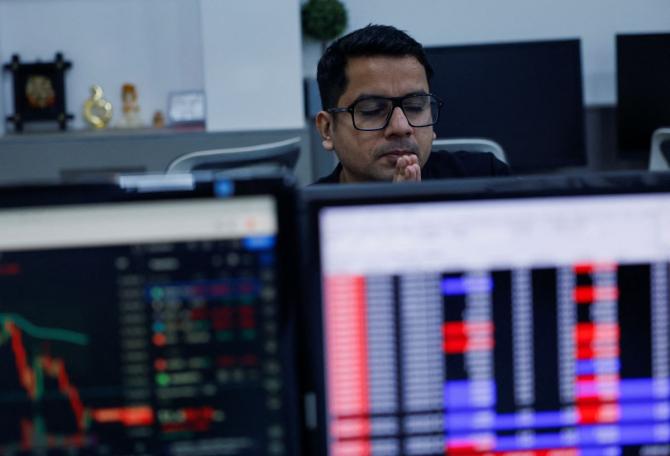
India spends big with credit cards in ecommerce, fest tango
The Economic Times· 2025-11-24 19:41
Core Insights - The festive season saw a significant boost in consumption due to GST rationalization, with credit card spending rising 19.6% year-on-year in October to ₹2.14 lakh crore, driven by strong e-commerce sales and festive purchases [8][6] - However, new credit card additions have slowed, with a drop to 6.27 lakh in October from 10.76 lakh in September, indicating a potential tapering off of festive momentum [8][7] - Private banks have strengthened their dominance in the credit card market, increasing their market share from 70.8% to 77.7%, while the share of other lenders has decreased from 29.2% to 22.3% [6][8] Credit Card Market Trends - New credit card originations have fallen 42% over eight quarters, from 76 lakh in Q2 FY24 to 44 lakh in Q2 FY26, highlighting a calibrated slowdown in acquisition [3][4] - Major issuers reported declines in net monthly additions, with HDFC Bank experiencing a 44% month-on-month decline, SBI Card down 26%, ICICI Bank down 46%, and Axis Bank down 25% [8][7] - The credit card market in India is highly consolidated, with the top four banks accounting for approximately 71% of all outstanding credit cards, around 77% of transaction volumes, and about 75% of transaction value [8][7] Customer Behavior and Asset Quality - New cards issued remain metro-centric, with private banks targeting higher-value customers, while asset quality pressures persist, with a portfolio-at-risk in the 31-180-day bucket at 4.1% [7][6] - The new-to-credit share has remained stable, indicating a maturing customer base, and there is a strategic shift towards driving higher spends from existing customers amid elevated delinquency concerns [7][6]

Dalal Street top movers: Reliance, Airtel lead gains; 7 of top-10 firms add Rs 1.28 lakh crore in valuation
The Times Of India· 2025-11-23 11:31
The BSE benchmark rose 669.14 points, or 0.79 per cent, during the week.Reliance, Airtel top weekly gainsThe market valuation of Reliance Industries increased by Rs 36,673 crore to Rs 20,92,052.61 crore, while Bharti Airtel’s mcap jumped Rs 36,579.01 crore to Rs 12,33,279.85 crore.Tata Consultancy Services added Rs 16,299.49 crore to reach Rs 11,39,715.66 crore, while Infosys gained Rs 17,490.03 crore, taking its valuation to Rs 6,41,688.83 crore.HDFC Bank’s mcap rose by Rs 14,608.22 crore to Rs 15,35,132.5 ...
Ahead of Market: 10 things that will decide D-Street action on Monday
The Economic Times· 2025-11-23 11:16
Market Overview - The Indian market ended lower due to profit-taking, with the Sensex and Nifty near record highs, led by declines in banking heavyweights ICICI Bank and HDFC Bank [1][2] - The S&P BSE Sensex dropped 400.76 points, or 0.47%, closing at 85,231.92, while the NSE Nifty 50 declined 124 points, or 0.47%, settling at 26,068.15 [1][12] Market Sentiment - Market sentiment was bearish, with 2,898 out of 4,338 stocks traded on the BSE declining, while only 1,278 advanced [11] - A soft manufacturing PMI reading, a weakening INR, and concerns over potential delays in India–US trade discussions contributed to the cautious market tone [3][12] U.S. Market Influence - Better-than-expected U.S. non-farm payroll data dampened expectations for a December rate cut, impacting Indian market sentiment [2][12] - U.S. stocks rallied sharply, with the S&P 500 climbing 64.89 points, or 0.99%, and the Dow Jones Industrial Average surging 505.03 points, or 1.08% [6][12] Technical Analysis - A bearish Harami pattern formed on the hourly chart of the Nifty, indicating further weakness in the coming sessions [8][12] - Resistance for the Nifty is placed at 26,166, while a decline could extend towards the 25,920–25,900 zone [9][12] Active Stocks - HDFC Bank was the most active stock in value terms at Rs 1,752 crore, followed by Kotak Mahindra Bank and Adani Wilmar [10][12] - In volume terms, Vodafone Idea led with 74.6 crore shares traded, followed by JP Power and YES Bank [10][12] Stock Performance - Over 87 stocks reached their 52-week highs, including Bharti Airtel and RIL, while 225 stocks hit their 52-week lows [10][12] - Notable selling pressure was observed in stocks like JP Power and GE Vernova T&D India [10][12]
Mcap of 7 of top-10 most valued firms surges ₹1.28 lakh crore; RIL, Airtel biggest gainers
BusinessLine· 2025-11-23 08:56
Core Insights - The combined market valuation of seven of the top-10 most valued firms increased by ₹1,28,281.52 crore last week, driven by a positive trend in equities [1] - Reliance Industries and Bharti Airtel were the biggest gainers in market valuation [1] Group 1: Gainers - Reliance Industries' market valuation rose by ₹36,673 crore, reaching ₹20,92,052.61 crore [2] - Bharti Airtel's valuation surged by ₹36,579.01 crore to ₹12,33,279.85 crore [2] - Infosys saw an increase of ₹17,490.03 crore, bringing its valuation to ₹6,41,688.83 crore [3] - Tata Consultancy Services (TCS) experienced a rally of ₹16,299.49 crore, with a market cap of ₹11,39,715.66 crore [3] - HDFC Bank's market cap grew by ₹14,608.22 crore to ₹15,35,132.56 crore [3] - State Bank of India rose by ₹4,846.08 crore to ₹8,97,769.87 crore [3] - Hindustan Unilever's market cap advanced by ₹1,785.69 crore to ₹5,71,972.75 crore [3] Group 2: Losers - Bajaj Finance's market valuation decreased by ₹8,244.79 crore, resulting in a total of ₹6,25,328.59 crore [3] - Life Insurance Corporation of India's (LIC) market cap tumbled by ₹4,522.38 crore to ₹5,70,578.04 crore [4] - ICICI Bank's market cap declined by ₹1,248.08 crore to ₹9,79,126.35 crore [4] Group 3: Market Overview - The BSE benchmark index increased by 669.14 points or 0.79% last week [1] - Reliance Industries remains the most valued domestic firm, followed by HDFC Bank, Bharti Airtel, TCS, ICICI Bank, State Bank of India, Infosys, Bajaj Finance, Hindustan Unilever, and LIC [4]

Stock markets fall in early trade dragged by weak global peers
BusinessLine· 2025-11-21 04:34
Market Overview - Benchmark indices Sensex and Nifty experienced declines in early trade, with Sensex dropping 285.28 points to 85,347.40 and Nifty falling 82.6 points to 26,109.55, following a two-day rally impacted by weak global market trends [1] - Asian markets also showed negative performance, with South Korea's Kospi down over 3 percent and Japan's Nikkei 225 index dropping more than 2 percent [2] Market Performance - The Nasdaq Composite fell by 2.15 percent, reflecting a 4.4 percent drop from its intra-day peak, indicating increased market volatility [3] - Foreign institutional investors (FIIs) purchased equities worth ₹283.65 crore, while domestic institutional investors (DIIs) bought stocks worth ₹824.46 crore on Thursday [3] Oil Prices - Brent crude oil benchmark decreased by 1.26 percent to $62.58 per barrel [4] Recent Trends - On the previous trading day, the Sensex had increased by 446.21 points, or 0.52 percent, closing at 85,632.68, while Nifty closed at 26,192.15 after gaining 139.50 points, or 0.54 percent [4]

CM or IBN: Which Is the Better Value Stock Right Now?
ZACKS· 2025-11-20 17:41
Core Viewpoint - The comparison between Canadian Imperial Bank (CM) and ICICI Bank Limited (IBN) indicates that CM presents a better value opportunity for investors at this time due to stronger earnings outlook and more attractive valuation metrics [1][3][7]. Valuation Metrics - CM has a forward P/E ratio of 12.83, while IBN has a forward P/E of 19.62, suggesting that CM is undervalued compared to IBN [5]. - The PEG ratio for CM is 1.36, compared to IBN's PEG ratio of 1.46, indicating that CM has a more favorable growth outlook relative to its valuation [5]. - CM's P/B ratio stands at 1.91, whereas IBN's P/B ratio is 2.75, further supporting the notion that CM is more attractively priced [6]. Earnings Outlook - CM has a Zacks Rank of 2 (Buy), reflecting a stronger improvement in its earnings outlook compared to IBN, which has a Zacks Rank of 4 (Sell) [3][7]. - The estimate revision activity for CM has been more favorable, reinforcing its position as the superior option for value investors [7].



NHAI launches Raajmarg Infra Investment Managers for highway monetization
The Economic Times· 2025-11-20 11:11
Core Viewpoint - The National Highways Authority of India (NHAI) is establishing the Raajmarg Infra Investment Trust (RIIT) as a Public InvIT to monetize National Highway assets, targeting retail and domestic investors [7]. Group 1: Investment Structure - Public InvITs allow retail investors to invest in operational infrastructure projects, with units traded on stock exchanges like NSE and BSE [1][7]. - Raajmarg Infra Investment Managers Pvt Ltd (RIIMPL) has been incorporated as the Investment Manager for the proposed InvIT, with equity participation from major banks and financial institutions [2][7]. Group 2: Financial Performance - NHAI has successfully monetized assets worth Rs 48,995 crore through the Toll-Operate-Transfer (TOT) model and raised approximately Rs 43,638 crore across four rounds of Private InvITs [5][7]. - The introduction of around 1,500 km of completed and operational National Highways into the Public InvIT is expected over the next 3-5 years, creating significant investment opportunities [6][7]. Group 3: Governance and Compliance - RIIMPL will focus on establishing strong governance standards aligned with SEBI's InvIT regulations, ensuring transparency and investor protection [6][7]. - The first issuance of InvIT units for retail and public investors is anticipated to launch in February 2026 [7].
Stock markets rally in early trade tracking firm global peers, fresh foreign fund inflows
The Hindu· 2025-11-20 05:10
Market Performance - Equity benchmark indices Sensex and Nifty were trading higher, with Sensex reaching a 52-week high of 85,470.96 and Nifty hitting 26,136, also a 52-week peak [1] - The Sensex increased by 513.45 points or 0.61% to settle at 85,186.47, while Nifty climbed 142.60 points or 0.55% to 26,052.65 [5] Sector and Stock Movement - Gainers among Sensex firms included Adani Ports, Reliance Industries, Tata Motors Passenger Vehicles, Axis Bank, Mahindra & Mahindra, and Power Grid [2] - Lagging stocks included HCL Tech, Tech Mahindra, ICICI Bank, and Maruti [2] Global Market Influence - U.S. markets ended positively, with significant gains in technology shares following Nvidia's strong earnings guidance, which boosted optimism in AI and semiconductor sectors [4] - Asian markets also showed positive trends, with South Korea's Kospi and Japan's Nikkei 225 index trading over 3% higher [2] Foreign Investment Activity - Foreign institutional investors (FIIs) purchased equities worth ₹1,580.72 crore, while domestic institutional investors (DIIs) bought stocks worth ₹1,360.27 crore [5]

2026 年印度股票策略展望 - 股市 2026 年有望强劲表现-2026 India Equity Strategy Outlook-Stocks Look Set for Strong 2026
2025-11-18 09:41
Summary of the 2026 India Equity Strategy Outlook Industry Overview - The report focuses on the Indian equity market, highlighting a strong recovery expected in 2026 after a significant underperformance over the past three decades [2][3]. Key Points and Arguments Market Recovery Expectations - Indian equities are anticipated to bounce back strongly in the next 12 months due to supportive policy changes and a recovery in nominal growth, which should enhance earnings growth [3][4]. - The BSE Sensex is projected to have a 13% upside through December 2026, with a target of 95,000, assuming continued macro stability, fiscal consolidation, and increased private investment [4][53]. Economic Projections - GDP growth is expected to be 6.8% for F2026, with a gradual decline to 6.5% in the following years [8]. - Sensex earnings are projected to compound at a 17% CAGR through F2028, with EPS growth of 7.0% in F2026 and increasing to 19.5% by F2028 [4][8][54]. Risks and Concerns - The primary risk identified is a potential slowdown in global growth, which could hinder the upside for Indian stocks despite their low beta [5]. - Concerns regarding the expanding issuance pipeline and poor trailing equity returns are deemed misplaced, as domestic flows remain strong [5][34]. Portfolio Strategy - The recommended strategy favors domestic cyclicals over defensives and external-facing sectors, with an overweight position in Financials, Consumer Discretionary, and Industrials, while underweighting Energy, Materials, Utilities, and Healthcare [6][57]. Structural Changes and Long-term Outlook - India's long-term growth story is reinforced by various reforms, including fiscal consolidation and a shift towards equity ownership among households [3][28]. - The report emphasizes a structural rise in discretionary consumption and improvements in macro stability, which are expected to lower real rates and enhance equity valuations [28][44]. Key Catalysts for Growth - The report identifies several catalysts for growth, including: - A positive growth surprise anticipated in the coming months due to policy shifts and reforms [27]. - The potential for a trade deal between India and the US, which could further boost market sentiment [43]. - The upcoming AI Impact Summit in 2026, which may enhance India's position in the global AI landscape [39][43]. Conclusion - The report concludes that the Indian equity market is poised for a significant turnaround in 2026, driven by macroeconomic stability, policy reforms, and a favorable domestic investment environment [25][44]. Additional Important Insights - The report highlights the importance of demographic advantages and a functioning democracy in supporting long-term growth [48]. - It also notes the potential for a consumption revolution in India, which could attract global investors [48]. This comprehensive outlook provides a detailed analysis of the Indian equity market's potential recovery and the factors influencing its trajectory in 2026.