Baron Capital

Search documents
Gold Smashes Beyond $5000, Treasury ETF Becomes Test For Tokenized Finance | ETF IQ 1/26/2026
Youtube· 2026-01-26 18:55
Group 1: ETF Market Overview - The global ETF industry is valued at nearly $19 trillion, with significant movements in equity markets driven by tech earnings and gold prices surpassing $5,000 per ounce for the first time [1][4]. - Inflows into ETFs have shown strong conviction, particularly in emerging markets, with VOO attracting $3 billion in a recent week [3][4]. - Gold ETFs have seen inflows exceeding $50 billion since the end of 2024, with investors experiencing gains of over 76% if invested at the beginning of 2025 [4][5]. Group 2: Precious Metals and Energy Trends - There is a notable trend of increased investment in precious metals, including gold, silver, and platinum, as investors seek exposure to these assets amid market volatility [6][7]. - Energy and materials sectors remain underweighted in the S&P 500, with discussions around potential shifts in investment flows due to changing market conditions [7][10]. - Natural gas prices have responded to cold weather, indicating a potential shift in energy investment dynamics [8][9]. Group 3: Japanese Market and Currency Concerns - There are growing concerns regarding the U.S. and Japan's potential intervention in currency markets, impacting investor sentiment towards Japanese equities [11][12]. - Investors are advised to consider hedging strategies when allocating to Japanese ETFs due to currency volatility [12][14]. Group 4: New ETF Developments - Baron Capital is launching a new ETF with significant allocations to private companies like SpaceX, raising questions about liquidity and transparency in ETF structures [15][19]. - The proposal to tokenize T-Bill ETFs aims to enhance liquidity and attract a new audience, pending SEC approval [28][30][31]. - Invesco is introducing a new ETF focused on tier one bonds in euros, indicating a competitive landscape in the European bond market [26][27]. Group 5: Bitcoin and Crypto Exposure - The BBB ETF, which combines 75% S&P 500 and 25% Bitcoin futures, has slightly outperformed the S&P 500 since its inception, appealing to investors hesitant about direct crypto exposure [36][38]. - The shift from Bitcoin futures to spot Bitcoin is planned for the BBB ETF, reflecting evolving investor preferences and market conditions [42][44]. - The potential for significant capital migration into the crypto space remains, with a focus on addressing the needs of Bitcoin-hesitant investors [45][46].


Freightos: Moving To The Sidelines Given Concerns On 2026 Revenue
Seeking Alpha· 2026-01-23 10:42
Group 1 - The fundamental rule of investment compounding is to buy quality and hold, emphasizing the importance of long-term investment in great growth companies [1] - Ron Baron, CEO of Baron Capital, highlights the necessity of holding quality companies for long-term growth as a key to successful investing [1] - Ariel Sokol has over twenty years of experience in corporate finance, focusing on subscription and edtech businesses, and has held significant roles in various companies including Pearson [1]

Billionaire investor Ron Baron is betting on a big spending mistake by the market, and it's not related to AI
CNBC· 2025-12-18 16:10
On Dec. 9, JPMorgan warned it would spend more next year than it had previously forecast. Shares tanked. Within days, the bank's stock had recovered. That trading dynamic is a rapid-fire microcosm of an approach that billionaire fund manager Ron Baron says underlies a key part of his investment philosophy: making bets on the companies that the market is punishing in the short-term for spending on the priorities they need for their long-term growth.Baron, the founder and CEO of Baron Capital, in recent years ...

Billionaire fund manager Ron Baron praises beaten-up financial stock whose new CEO he compares to Jamie Dimon
CNBC· 2025-12-17 17:54
While much of the market has bulked up on artificial intelligence and large technology companies in 2025, billionaire fund manager Ron Baron said on this week's CNBC "ETF Edge" that investors should be looking across more market caps and sectors for the best opportunities. That is starting to happen, as many investors rotate out of tech stocks and search for value across the market, including in the financial sector. Baron cited two financial sector companies that his firm Baron Capital owns, MSCI and FactS ...

Ron & Michael Baron on Baron Capital's ETF launch
Youtube· 2025-12-16 16:45
Core Viewpoint - Baron Capital is launching five new actively managed ETFs, extending its investment philosophy and process beyond mutual funds to include ETFs, aiming to enhance operational efficiency, tax efficiency, transparency, and intraday liquidity [1][2]. Group 1: Investment Philosophy and Process - Baron Capital maintains its long-term investment philosophy, focusing on fundamental views of portfolio companies, and aims to change lives for clients rather than just maximizing profits [1][2]. - The firm has a strong track record, with 97-98% of its assets outperforming the market, and the Baron Partners Fund being the top fund in the U.S. since 2003 [1][2]. - The investment strategy involves rigorous research, with a team of 45 investment professionals analyzing various sectors, including technology, healthcare, and financials, to construct a diverse portfolio [2]. Group 2: Research Methodology - The research methodology at Baron Capital emphasizes understanding the essence of companies, including their management teams, successes, failures, and motivations, to identify strong investment opportunities [2]. - The firm aims to find unique investment opportunities by evaluating the intellect, passion, and leadership skills of company executives, ensuring alignment with investor interests and societal benefits [2]. Group 3: Market Position and Future Outlook - Baron Capital's new ETFs are positioned to fill a gap in the market for fundamental stock pickers, as there are currently more ETFs than publicly traded companies, yet a lack of foundational portfolios for long-term investors [2]. - The firm is optimistic about its ability to generate significant profits, projecting to increase from $100 million in 1992 to five times that amount over the next decade [1].

Ron & Michael Baron on Baron Capital’s ETF launch… plus, the future of SpaceX
CNBC Television· 2025-12-16 16:15
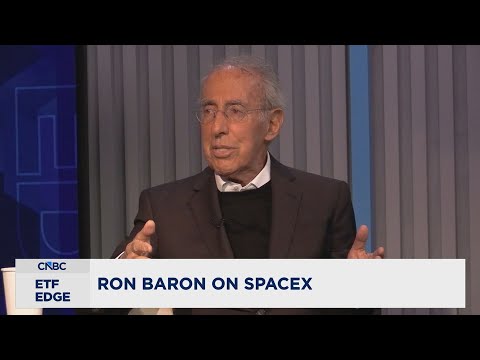
Welcome to ETF Edge, your go-to place for all things exchange traded funds. I'm your host, Dominic Chu. Mutual fund and long-term investing heavyweight Baron Capital is launching five new actively managed ETFs today. So, joining me now, fresh off ringing the opening bell at the New York Stock Exchange are Ron Baron and Michael Baron from Baron Capital. Gentlemen, thank you both for being with us here on ETF Edge. We appreciate the time. >> Thanks for inviting us. All right. So, maybe we'll start with the ne ...
X @Herbert Ong
Herbert Ong· 2025-12-16 03:31
Michael and @RonBaronAnalyst from Baron Capital break down why long-term investing still wins.They talk ETFs, decades of growth since 1982, big bets on Tesla and SpaceX, and why a future SpaceX IPO could be huge.This is conviction investing, not short-term trading. $TSLA https://t.co/U248fPadHW ...

Baron Capital Expands Active ETF Lineup With Five Funds
Etftrends· 2025-12-15 21:10
Core Viewpoint - Baron Capital has launched five active ETFs, continuing its strategy of investing in growth companies within the ETF structure [1] Group 1 - The launch of the five active ETFs represents an extension of Baron Capital's long-term investment approach [1] - The new ETFs are designed to target growth companies, aligning with the firm's established investment philosophy [1]

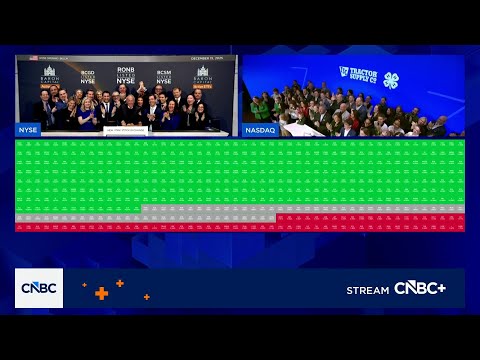
Baron Capital rolls out five active ETFs, SpaceX becomes the firm's biggest investment
CNBC· 2025-12-15 21:07
Core Insights - Baron Capital has launched five actively managed exchange-traded funds (ETFs), leveraging its long-term investment success to meet growing demand for active strategies in the ETF market [1][2] Group 1: New ETF Launch - The newly launched ETFs include Baron First Principles ETF (RONB), Baron Global Durable Advantage ETF (BCGD), Baron SMID Cap ETF (BCSM), Baron Financials ETF (BCFN), and Baron Technology ETF (BCTK), which began trading on Monday [2] - Each ETF is designed to reflect the investment strategies that Baron Capital has successfully employed over decades in its mutual funds and private accounts [2] Group 2: Investment Focus - SpaceX has become Baron Capital's largest investment at approximately $10 billion, surpassing Tesla, with its expanding Starlink satellite network being a key factor in the long-term investment thesis [3] - The firm is optimistic about the potential of space-based data centers, suggesting that such infrastructure could significantly lower energy and cooling costs [3][4] - Baron Capital has also invested in xAI, another company founded by Elon Musk, which is expected to benefit from the growth of satellite networks and space-based computing for AI services [4] Group 3: Performance and Future Goals - Baron Capital reports that 98% of its assets have outperformed their benchmarks, with around 60% ranking in the top 5% of funds, indicating strong historical performance [4] - The Baron Partners Fund has been recognized as the top-performing U.S. fund since 2003 [4] - Since its inception in 1992 with $100 million in assets, the firm has generated approximately $57 billion in profits and aims to quintuple that amount over the next decade [5]

Opening Bell: December 15, 2025
CNBC Television· 2025-12-15 14:50
A lot of people like to get people to move get people to get a mortgage so that they aren't stuck and thinking I'd like to move but I have a 2 and 12% mortgage so I'm not moving. We have to change that narrative. That is a very important zeitgeist issue in this country.I look at what I my mortgages mean I have a three. I have a 2.85% and I have a three. I don't want to lose that.I wouldn't like to sell something but I don't want to lose that mortgage. It makes me money. I'm making money on that for you.>> T ...