
Mitsubishi Heavy Industries

Search documents
Asia-Pacific markets set to open higher after U.S. captures Venezuela’s Maduro, oil slips
CNBC· 2026-01-05 00:07
Geopolitical Impact on Oil Prices - The U.S. has attacked Venezuela and captured President Nicolas Maduro, leading to a decline in oil prices as markets assess the geopolitical implications [1][2] - Brent crude prices fell more than 1% initially but later adjusted to a 0.25% decrease, while West Texas Intermediate crude prices dropped by 0.4% [2] Venezuela's Oil Reserves - Venezuela, a founding member of OPEC, possesses the largest proven crude oil reserves globally, totaling 303 billion barrels, which accounts for approximately 17% of the world's total reserves [3] Market Reactions in Asia-Pacific - Japan's Nikkei 225 index increased by 2.26% in its first trading session of the year, with defense stocks like Kawasaki Heavy Industries and Mitsubishi Heavy Industries rising by 5.7% and 6.4%, respectively [4] - South Korea's Kospi index reached a record high of 4,420.92, climbing 2.19%, while shares of defense giant Hanwha Aerospace rose by 4% [4] - Australia's ASX/S&P 200 index remained flat, while Hong Kong's Hang Seng Index futures indicated a higher opening [5]


Fortifying the Front Line: Tokyo Fast-Tracks Record Defense Spending
Defense World· 2026-01-01 06:32
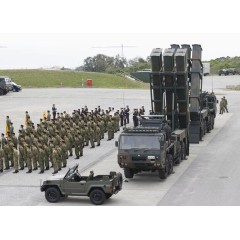
Core Insights - The Japanese Cabinet has approved a defense budget proposal exceeding 9 trillion yen ($58 billion) for the fiscal year starting April 2026, marking a 9.4% increase from the previous year and aiming to double military expenditure to 2% of GDP two years ahead of schedule [1][2] Defense Budget Overview - The budget reflects a significant shift in Japan's military strategy, moving from a strictly defensive posture to a more proactive military stance, with a focus on standoff capabilities [3][4] - A substantial allocation of over 970 billion yen is designated for advanced missile technologies, indicating a commitment to enhancing Japan's offensive capabilities [3][4] Military Enhancements - The initiative includes the acquisition and upgrade of Type-12 surface-to-ship missiles with a range of approximately 1,000 kilometers, with expedited deployment to the southwestern Kumamoto prefecture by March [5] - The budget also allocates 100 billion yen for the development of an unmanned defense network called SHIELD, set to launch in early 2028, utilizing aerial, surface, and underwater drones for surveillance and coastal defense [6][7] Regional Security Context - The budget coincides with escalating tensions between Japan and China, particularly regarding Taiwan, and increased military activities in the Pacific, including Chinese maneuvers near Iwo Jima [8][9] - In response to these tensions, Japan's Defense Ministry is establishing a dedicated office to counter China's naval expansion, while Beijing has criticized Japan's military budget as a departure from its peaceful development path [10] International Collaboration and Funding - Japan is enhancing its defense industrial base through partnerships with allies, including joint development of a next-generation fighter jet with the UK and Italy, expected to be operational by 2035 [11] - The ambitious defense spending plan faces domestic challenges, with funding reliant on unpopular tax increases, including corporate, tobacco, and income tax hikes starting in 2027, requiring parliamentary approval by March [12]
Weak Sentiment In Asian Markets After Fed's Rate Cut
RTTNews· 2025-12-11 10:01
Market Overview - Asian markets experienced weak sentiment as they reacted to the Federal Reserve's anticipated rate cut and forward guidance for 2026, with limited losses due to less hawkish guidance than expected [1] - The Shanghai Composite Index fell by 27 points or 0.70 percent, closing at 3,873.32, with a trading range between 3,862.82 and 3,904.96 [2] - The Japanese Nikkei 225 index decreased by 464 points or 0.92 percent, finishing at 50,139.00, with a trading range of 49,932.5 to 50,864 [2] - The Korean Kospi Index dropped by 24 points or 0.59 percent, closing at 4,110.62, with a trading range of 4,103.20 to 4,170.77 [4] - The Hang Seng Index in Hong Kong edged down by 10 points or 0.04 percent, closing at 25,530.51, with a trading range of 25,471.50 to 25,801.34 [4] Company Performance - Mitsui saw a significant increase of 4.85 percent, while Panasonic Corp and Advantest Corp both gained over 4.4 percent [3] - Toppan Printing rose by 3.2 percent, and Chugai Pharmaceutical increased by 2.8 percent [3] - SoftBank Group Corp led the losses with a decline of 7.7 percent, followed by Sumitomo Dainippon Pharma at 6.2 percent [3] - Catalyst Metals experienced the largest loss, declining by 8.9 percent, while Aerospace DroneShield fell by 6.6 percent [6] - James Hardie Industries topped gains in Australia with a surge of 7.1 percent, followed by Ramelius Resources at 6.7 percent [5] - The NZX 50 in New Zealand added 25 points or 0.19 percent, closing at 13,395.87, with a trading range of 13,355.70 to 13,433.41 [6]

电力成人工智能交易瓶颈,争论激烈-Debates Rage as Power Becomes the Bottleneck to the AI Trade
2025-11-25 01:19
Summary of Distributed Power Update Industry Overview - The distributed power industry is increasingly recognized as a critical component in addressing the anticipated power gap of 60 GW by 2028, particularly in relation to the AI trade [1][2][6] - The industry has shifted from being a temporary solution to becoming a primary power source for data centers, driven by long-term contracts with hyperscalers [4][10] Key Insights - **Power Gap Forecast**: The U.S. is expected to face a significant power gap starting in 2028, with only 41 GW of gas turbines projected to be delivered, while demand from hyperscalers and other data centers is estimated at 50 GW and 10 GW+, respectively [4][6] - **Distributed Power Growth**: Over the past 90 days, more than 5 GW in distributed power has been ordered, indicating a robust demand for medium-sized turbines and reciprocating engines [4][10] - **OEM Capacity Expansion**: Original Equipment Manufacturers (OEMs) are expanding capacity, but concerns about overbuilding are considered premature due to the substantial power gap and limited number of OEMs in the distributed power sector [4][5][10] Market Dynamics - **Natural Gas as a Key Resource**: Natural gas is expected to be the primary energy source for AI infrastructure due to its reliability and affordability, despite a shortage of gas turbines [6][10] - **Valuation Variability**: Companies involved in distributed power are experiencing varied valuations, with some like Solaris Energy Infrastructure seeing significant stock price increases [9][13][36] - **Investor Sentiment**: Investors are increasingly recognizing power as a bottleneck for the AI trade, leading to a re-evaluation of companies involved in distributed power solutions [9][10] Important Developments - **Contracts and Orders**: Notable contracts include VoltaGrid's 15-year agreement with Oracle for 2.3 GW of power and Solaris's joint venture with xAI [4][12][38] - **Legislative Impact**: Regulatory changes, such as Texas Senate Bill 6, are pushing large power users towards on-site generation solutions, further supporting the distributed power model [19][10] Challenges and Considerations - **Supply Chain Issues**: The supply chain for medium-sized turbines and reciprocating engines is becoming increasingly strained, which could impact expansion plans [42][10] - **Debates on Future Viability**: Key debates include whether distributed power is a temporary solution, the potential for OEMs to vertically integrate, and concerns about overbuilding in the market [9][38][10] Conclusion - The distributed power industry is positioned to play a crucial role in meeting the growing energy demands of the AI sector, with significant opportunities for growth and investment, despite challenges related to supply chain and market dynamics [1][2][10]
数据中心基础设施 2025 年第三季要点:周期向好趋势未改,技术趋势利好头部企业-EE_MI_ Data Center Infrastructure_ SC25 Takeaways_ Positive Tone On Cycle Intact, Technology Trends Favor The Majors
2025-11-24 01:46
Summary of Key Points from the Conference Call Industry Overview - The conference focused on the **Data Center Infrastructure** industry, particularly the developments and trends in cooling and power solutions for data centers, with a positive outlook on demand and infrastructure spending [1][4][9]. Core Insights and Arguments - **Strong Demand and Infrastructure Commitment**: The demand for data center infrastructure remains robust, with capital spenders committed to long-term investments, driven by productivity and diverse business models [1][4]. - **Technology Evolution**: Continuous advancements in cooling (CDUs) and power (HVDC) technologies are favoring major players, with larger format solutions becoming more prevalent. Smaller vendors are struggling to compete due to price pressures [1][4][9]. - **Competitive Landscape**: The competition is increasingly concentrated among larger, established players, with a growing moat around successful technology providers. The bear case of disruption and price pressure is being challenged by the emergence of critical partnerships and solutions [1][4][9]. - **AI and Infrastructure**: AI applications are driving demand for data centers, with companies like Microsoft highlighting the need for infrastructure that can support evolving AI workloads. The current demand exceeds supply, reinforcing the need for continued infrastructure investment [9][11]. Company-Specific Highlights Vertiv (VRT) - **Product Offerings**: Vertiv showcased AI-ready racks, modular power solutions, and advanced liquid cooling systems, emphasizing their comprehensive technology portfolio across power, cooling, and modular solutions [5][6]. - **Service Capabilities**: Vertiv has built a significant service organization with over 4,400 technicians globally, enabling them to provide lifecycle services and rapid response to customer needs [11][12]. - **Innovative Solutions**: The introduction of predictive maintenance services and advanced fluid management capabilities positions Vertiv as a leader in optimizing data center operations [12][11]. - **Power Management**: Vertiv is actively supporting the transition to 800V power systems, which will enhance efficiency and scalability for future data center architectures [13][9]. nVent - **New Product Launches**: nVent introduced a new portfolio of modular data center liquid cooling solutions, emphasizing reliability and user experience through a common control platform [18][19]. - **Market Positioning**: The company is participating in initiatives like Project Deschutes to accelerate liquid cooling adoption, positioning itself as a key player in the evolving data center landscape [20][19]. Motivair (Schneider Electric) - **Growth Projections**: Motivair is expected to achieve around $300 million in revenues, reflecting over 100% growth from the previous year, driven by its end-to-end liquid cooling portfolio [22]. - **Integration with Schneider**: The integration with Schneider Electric enhances Motivair's capabilities in deploying optimized electrical infrastructure alongside liquid cooling solutions [22]. Modine - **Innovative Chiller Design**: Modine announced a new stainless steel variant of its TurboChill DCS chiller, designed for high-pressure environments and optimized for liquid cooling systems [26]. - **Market Demand**: The company is experiencing strong demand, with significant orders anticipated from innovative hyperscalers, projecting potential revenues in the $250 million range [26]. Eaton - **HVDC Transition**: Eaton is preparing for the HVDC transition with new products and technologies that will support future data center power needs [27][28]. Boyd - **Advanced Cooling Technologies**: Boyd showcased its Chip to Ambient thermal circuit, designed to optimize energy consumption in liquid cooling systems for AI applications [29][30]. Additional Important Insights - **Market Dynamics**: The data center infrastructure market is witnessing a shift towards larger, more efficient cooling solutions, with significant growth expected in the adoption of CDUs and liquid cooling technologies [36]. - **Collaboration and Partnerships**: Companies are increasingly forming partnerships to enhance their product offerings and address the challenges of high-density computing environments [19][22]. - **Future Trends**: The industry is moving towards more integrated solutions that combine power and cooling, with a focus on modularity and scalability to meet the demands of modern AI workloads [25][29]. This summary encapsulates the key points discussed during the conference call, highlighting the positive outlook for the data center infrastructure industry and the strategic positioning of major players within it.

行业聚焦:全球PTAC 空调机组行业市场份额及排名调查(附厂商名单)
QYResearch· 2025-11-04 09:43
Core Viewpoint - The global PTAC (Packaged Terminal Air Conditioner) market is projected to reach USD 980 million by 2031, with a compound annual growth rate (CAGR) of 5.3% in the coming years [2]. Market Overview - The PTAC air conditioning units integrate cooling, heating, ventilation, and air filtration functions into a compact, standalone system, making them suitable for both commercial and residential applications [2]. - The price of PTAC units varies significantly based on type and brand, with single cooling units priced between USD 500 and USD 900, while cooling and heating units range from USD 800 to USD 2900 depending on features and brand reputation [6]. Industry Chain Analysis - The upstream components of the PTAC industry include compressors, eco-friendly refrigerants, heat exchanger materials, motors, and controllers, all of which are critical for the efficiency and functionality of the units [8]. - The downstream applications of PTAC units are primarily in hotels, medical institutions, office buildings, and school dormitories, where they provide localized temperature control [9][10]. Policy Analysis - Policies such as the "Energy Efficiency Standards for Room Air Conditioners" mandate that PTAC units meet specific energy efficiency ratings, with a prohibition on the sale of products below a certain efficiency level starting in 2025 [12]. - The implementation of low GWP (Global Warming Potential) refrigerants is also emphasized in national policies to reduce environmental impact [12]. Industry Development Trends - The integration of smart technology and green solutions is a significant trend, with AI algorithms and IoT systems being utilized for real-time adjustments in temperature and air quality [13]. - Health-focused features such as air purification and self-cleaning capabilities are increasingly being incorporated into PTAC units to meet the demands of various environments [13]. - Government initiatives are pushing for higher energy efficiency standards, with incentives for upgrading to more efficient models [13].
JAXA MHI Launches Maiden Flight of HTV-X 1 from Japan
The Launch Pad· 2025-10-25 11:48
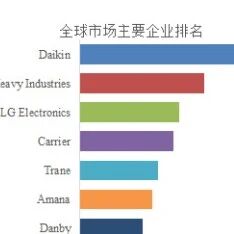
Watch LIVE as Mitsubishi Heavy Industries launches HTV-X 1 to a Low Earth Orbit from LA-Y2, Tanegashima Space Centre in Japan. HTV-X 1 is designed to be more affordable compared to the original H-II Transfer Vehicle. HTV-X will transport cargo to the International Space Station. 1 payload on board this launch comprising of a total mass of 16,000 kilogrammes. Join our community Discord! https://discord.com/invite/xCm9UpDPE4 This coverage is made possible by our amazing community! Consider becoming a The Laun ...
人工智能数据中心电力需求_推动增长与制约的 6 大要素-GS SUSTAIN_ AI_Data Center Power Demand_ The 6 Ps driving growth and constraints
2025-10-13 15:12
Summary of Key Points from the Conference Call Industry Overview - The focus is on the **data center power demand** driven by AI and non-AI applications, with a projected growth of **175% by 2030** compared to 2023 levels, equivalent to adding a top 10 consuming country [1][6][20]. Core Drivers of Power Demand 1. **Pervasiveness of AI**: The widespread adoption of AI solutions is critical for long-term demand growth and elasticity in response to energy and compute productivity gains [5][20]. 2. **Productivity of Servers**: New-generation AI chips and efficient compute usage are expected to influence aggregate power demand positively [15][20]. 3. **Electricity Prices**: Rising supply costs for both green and non-green power options are not anticipated to constrain demand significantly due to the strong financial positions of hyperscalers [36][39]. 4. **Policy Initiatives**: The sunsetting of the Inflation Reduction Act incentives may impact future sourcing but is not expected to affect near-term power capacity growth [38][39]. 5. **Parts Availability**: Equipment availability will be a key driver for power capacity growth, particularly in renewables and natural gas [12][48]. 6. **People Availability**: The need for skilled labor in infrastructure construction and maintenance poses a risk to meeting power demand growth [58][60]. Investment Opportunities - Attractive investment opportunities are identified across the power supply chain, particularly in utilities and companies involved in data center power demand ecosystems [2][13][14]. Power Demand Growth Projections - The **US power demand growth** is expected to accelerate to **2.6% CAGR through 2030**, with data centers contributing approximately **11%** of total demand by that year, up from **4%** in 2023 [69][70]. - An estimated **82 GW** of new capacity will be required to meet data center demand, with a split of **60%** from natural gas and **40%** from renewables [70][76]. Emissions and Environmental Impact - Data center emissions are projected to double by 2030 compared to 2023 levels, with a significant increase in carbon dioxide emissions expected [55][56]. Labor Market Implications - An estimated **510,000 jobs** will be needed in the US and **250,000 jobs** in Europe to meet the rising power demand by 2030, highlighting a potential labor shortage in skilled positions [58][62]. Conclusion - The data center power demand landscape is evolving rapidly, driven by AI advancements and increasing energy needs. The interplay of technological, economic, and policy factors will shape the future of power sourcing and investment opportunities in this sector.
亚洲主题投资-发掘亚洲新兴阿尔法机会-Asia Thematics-Theme Spotting Asia's Emerging Alpha
2025-10-09 02:00
Summary of Key Points from Morgan Stanley Asia's Thematic Opportunities (3Q25) Industry Overview - **Industry**: Various sectors within the Asia Pacific region, focusing on emerging investment themes and opportunities identified by Morgan Stanley's research department. Core Themes and Investment Opportunities 1. **Future of Energy** - Global solar market expected to see gross margins for integrated module players turn positive by 2026-27 due to anti-involution reforms [3][3] - Japan's natural gas demand projected to grow at a CAGR of +0.8% from 2023-2031, with LNG imports from the US expected to rise by +14% [3][3] - Global new nuclear capacity anticipated to reach 587GW by 2050, with significant growth in Asia, particularly China and India [3][3] 2. **Tech Diffusion** - AI data centers projected to consume up to 1,068 billion liters of water annually by 2028, an 11x increase from 2024, driven by cooling and electricity generation needs [3][3] - AI NAND market expected to account for 34% of the global NAND market by 2029, adding an incremental US$29 billion to the total addressable market [3][3] 3. **Multipolar World** - Defense spending in Asia (South Korea, Japan, Singapore, India) projected to expand at a 12% CAGR to US$354 billion by 2029, matching China's defense budget [3][3] - Vehicles with Level 2+ all-scenario smart driving expected to reach 28% of unit sales by 2030, up from 8% in 2024, with a global ADAS/AD market size estimated at US$200 billion by 2030 [3][3] 4. **Capital Market Reform** - MSCI China's ROE expected to rise to 13.3% by 2030, supported by policy execution and structural reforms [3][3] - Singapore's equity market reforms could drive ROE to 14% from 12%, potentially doubling market cap by 2030 [3][3] 5. **Longevity** - Innovative drug sales projected to comprise 53% of China's pharmaceutical market by 2030, up from 29% in 2023, with a CAGR of 21% from 2024 to 2030 [3][3] Additional Insights - **Water Consumption Risks**: AI's water consumption poses high local risks, especially in data center hubs facing water scarcity, highlighting the need for strategic investments in water-efficient technologies [27][27] - **Supply Chain Dynamics**: The report discusses the ongoing reorientation of supply chains due to geopolitical tensions, particularly between the US and China, and the shift towards onshoring production in the US for high-end products [56][56] - **Defense Industry Outlook**: The report emphasizes the expected super-cycle in Korea's defense industry, driven by rising global defense budgets and the need for modernization [64][64] Key Stock Implications - **Top Picks**: The report identifies several companies across various themes, including: - **Tech Diffusion**: KIOXIA, Samsung Electronics, and Hanwha Aerospace [12][12] - **Future of Energy**: Reliance Industries and Gulf Development PCL [12][12] - **Longevity**: Jiangsu Hengrui and Hansoh Pharmaceutical Group [12][12] This summary encapsulates the key themes and insights from Morgan Stanley's thematic opportunities report, highlighting potential investment avenues and risks within the Asia Pacific region.
Stocks Set to Open Higher on Fed Rate-Cut Hopes and Earnings Optimism
Yahoo Finance· 2025-10-06 10:09
Federal Reserve Insights - Chicago Fed President Austan Goolsbee emphasized the need for caution in rate cuts to balance inflation and employment goals [1] - Dallas Fed President Lorie Logan noted that the central bank is further from its inflation target than its employment goal, advocating for a cautious approach to interest rate cuts [1] - Fed Vice Chair Philip Jefferson stated that future policy rates will be evaluated based on incoming data and evolving outlooks [1] - Fed Governor Stephen Miran indicated a potential revision of inflation outlook if housing costs rise unexpectedly [1] Economic Data - The U.S. ISM services index fell to a 4-month low of 50.0 in September, below expectations of 51.8 [2] - The U.S. September S&P Global services PMI was revised higher to 54.2 from a preliminary reading of 53.9 [2] Market Movements - Wall Street's major equity averages closed mixed, with Humana (HUM) surging over +10% after reaffirming its full-year earnings guidance [3] - Rumble (RUM) jumped more than +15% following a partnership announcement to enhance video discovery with AI tools [3] - USA Rare Earth (USAR) climbed over +14% due to close communication with the White House [3] - Palantir Technologies (PLTR) fell more than -7% after reports of serious flaws in its battlefield communications system, which the company denied [3] Upcoming Events - Investors are focused on developments regarding the U.S. government shutdown and the Fed's latest policy meeting minutes [4][6] - The release of the Fed's minutes from the September meeting is anticipated for insights into policymakers' views on rate cuts [7] - Notable companies including PepsiCo (PEP), Delta Air Lines (DAL), and Constellation Brands (STZ) are set to report quarterly figures this week [10] International Market Developments - The Euro Stoxx 50 Index fell -0.56% due to political turmoil in France following the resignation of Prime Minister Sebastien Lecornu [12] - Eurozone's Sentix Investor Confidence Index came in at -5.4, better than expectations of -7.5, while retail sales rose +0.1% month-over-month [13] - Japan's Nikkei 225 Stock Index closed sharply higher, boosted by the election of Sanae Takaichi as the ruling party leader, with expectations of increased government spending [14]