Volvo

Search documents
Volvo Car Sales Fell in Three Months to End of January
WSJ· 2026-02-04 08:53
Group 1 - Global sales for the Swedish automaker decreased by 7.2% year-on-year [1] - The company now reports sales figures on a rolling three-month basis [1]


汽车-高度自动驾驶时代已至-Autos & Shared Mobility-Global Auto Monitor The Era of Abundant Autonomy Is Upon Us
2026-02-02 02:22
January 30, 2026 05:10 PM GMT Autos & Shared Mobility | North America Global Auto Monitor: The Era of Abundant Autonomy Is Upon Us After TSLA and GM earnings, autonomy looks less like a moonshot and more like a roadmap. Tesla sunsets S/X to prioritize robotaxi and Optimus, while GM pairs strong 2026 guidance and buybacks with a growing Super Cruise software base. What Others Are Reading - Our Most Read Reports [NORTH AMERICA] Exit Model X/S, Enter Robots: PT to $415 (29 Jan 2026) The wind down of Model X/S ...
Why The American EV Dream Is Falling Apart
CNBC· 2026-02-01 16:00
Companies invested more than $200 billion into US EV manufacturing across the US through 2024, mostly in Republican areas and much of it in the South. But now it's all in jeopardy. Automakers are canceling factories, cutting production, laying off workers and shifting back to gas.The federal government has rolled back EV funding and is planning to relax emissions standards. Now, some say automakers stand to lose $100 billion or more on their investments in the US. We've never seen anything like this in the ...


How the EV pullback is affecting factories and jobs in the South
CNBC· 2026-02-01 12:00
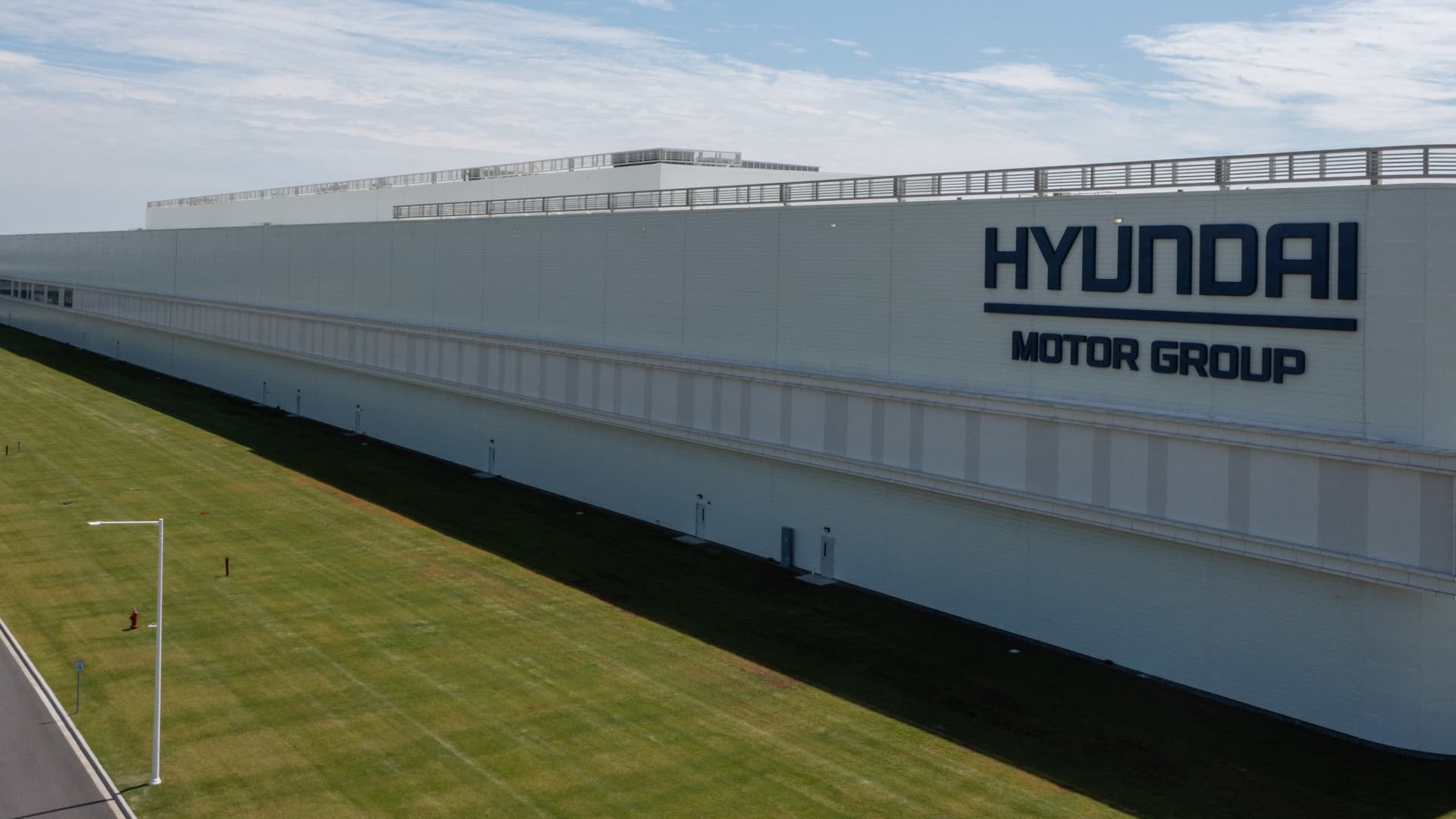
Core Insights - The majority of electric vehicle (EV) investments in the U.S. have historically favored Republican-led districts, particularly in the Southeast, raising questions about the future of these investments as the industry shifts focus away from EVs [1][2]. Investment Overview - Automakers and battery manufacturers have invested over $200 billion in EV and battery manufacturing in the U.S. from 2000 to 2024, with 84% of battery investments and 62% of EV manufacturing investments directed towards Republican-led districts [2]. - These investments were projected to create over 200,000 jobs, with 77% of these jobs located in Republican districts [2]. Regional Focus - Nearly 40% of the total investment in EVs and batteries has been allocated to the Southeastern U.S., which has been a manufacturing hub for the automotive industry for over 50 years [3]. Impact of Federal Policies - The removal of federal incentives for EVs under the Inflation Reduction Act has led to a significant decline in sales, prompting companies to pivot towards other vehicle types to mitigate losses [4][6]. Hyundai's Strategic Moves - Hyundai Motor Group, previously a leading EV seller in the U.S., has seen a 50% drop in EV sales by the fourth quarter following the end of federal incentives [6]. - The company has made a historic $12.6 billion investment in the Hyundai Metaplant in Georgia, which is expected to create approximately 8,500 jobs by 2031 [7][8]. - Hyundai plans to increase production capacity at the Metaplant by investing an additional $2.7 billion, targeting an annual output of 500,000 vehicles, with a mix of 30% EVs and 70% hybrids and gas vehicles [10]. Industry Challenges - Analysts estimate that U.S. automakers may face at least $100 billion in write-downs on EV investments, indicating that these investments may not yield the anticipated profits [11]. - Major automakers like Ford and General Motors have already announced significant financial charges related to their EV businesses, with Ford reporting a $19.5 billion charge and GM a $7.6 billion charge [12]. Market Projections - EV sales forecasts have drastically decreased from initial projections of 50% of new car sales by 2030 to a current estimate of only 17% [14][15]. - Bosch, a major automotive supplier, has had to adjust its investment strategies in light of these changing projections, moving employees from its EV motors division to other departments [16].
Volvo (OTC:VLVLY) Maintains Positive Outlook with RBC Capital's "Outperform" Rating
Financial Modeling Prep· 2026-01-30 23:17
Group 1 - Volvo is recognized for its commitment to safety and innovation in the automotive industry, competing with major companies like Daimler and Scania [1] - RBC Capital maintains an "Outperform" rating for Volvo, indicating confidence in the company's future performance [5] - The stock price target for Volvo was raised to SEK 350 from SEK 340, reflecting optimism for growth [3][5] Group 2 - On January 30, 2026, Volvo's stock was priced at $36.42, aligning with positive sentiment and an upgrade to a Zacks Rank 2 (Buy) [2] - The recent upgrade suggests an upward trend in earnings estimates, which could drive the stock price higher [3][5] - Currently, Volvo's stock is trading at $36.51, with a market capitalization of approximately $74.9 billion [4]
Gentex(GNTX) - 2025 Q4 - Earnings Call Transcript
2026-01-30 15:32
Financial Data and Key Metrics Changes - For Q4 2025, consolidated net sales were $644.4 million, a 19% increase from $541.6 million in Q4 2024. Core Gentex revenue was $541 million, essentially flat year-over-year [5][10] - Consolidated gross margin improved to 34.8% from 32.5% in the previous year, with core Gentex gross margin at 35.5%, a 300 basis point increase [6][11] - Consolidated net income for Q4 was $93 million, compared to $87.7 million in Q4 2024, with earnings per diluted share at $0.43, up from $0.39 [9][12] Business Line Data and Key Metrics Changes - Gentex Automotive generated $527.6 million in net sales for Q4 2025, slightly down from $531.3 million in Q4 2024, despite a 3% decline in auto-dimming mirror shipments [14] - The "Other" category, including dimmable aircraft windows and medical products, saw Q4 net sales rise to $13.3 million from $10.3 million [15] - Vox contributed $103.4 million in net sales during Q4 2025, with a total of $267.2 million for the nine-month period since acquisition [16] Market Data and Key Metrics Changes - Sales into China totaled $34.5 million for Q4, down 33% year-over-year due to tariffs [6] - Revenue in primary markets grew approximately 3% despite a 2% decline in light vehicle production [5][10] Company Strategy and Development Direction - The company aims to maintain gross margins in the 35%-36% range, achieved through cost control and operational efficiencies [7][31] - Focus on innovation and product launches, including driver monitoring systems and dimmable visors, to drive growth [32] - The strategy includes leveraging core competencies to achieve above-market growth through existing and new technologies [32] Management's Comments on Operating Environment and Future Outlook - Management noted challenges in 2025 due to tariffs, production declines, and cost inflation, but expressed confidence in the team's ability to adapt [30][31] - Expectations for 2026 revenue are between $2.6 billion and $2.7 billion, with a gross margin forecast of 34%-35% [28] - The company anticipates continued headwinds from tariffs and commodity pricing, particularly precious metals [49] Other Important Information - The company repurchased 3.8 million shares in Q4 at an average price of $23.43, totaling $319 million for the year [16] - Cash and cash equivalents decreased to $145.6 million from $233.3 million at year-end 2024, primarily due to acquisitions and share repurchases [17] Q&A Session Summary Question: Can you discuss the revenue guidance range and risks? - Management acknowledged the uneven revenue growth in 2025 and noted potential stability in North America and Western Europe, while expressing concerns about the China market [36] Question: What were the drivers behind the better-than-expected gross margins? - Positive factors included product mix and operational efficiencies, while tariff impacts were significant in Q4 [40] Question: What is the outlook for the China market? - Management expects continued headwinds in exports to China due to high tariffs, but sees potential for recovery if tariffs normalize [89] Question: How is the integration of Vox progressing? - The integration is on track, with expectations of achieving $40 million in positive cash flow from Vox by 2026 [62] Question: What are the expectations for free cash flow and buybacks? - The company aims to maintain strong cash flow levels, with buybacks being a primary use of generated cash [84]

Gentex(GNTX) - 2025 Q4 - Earnings Call Transcript
2026-01-30 15:32
Financial Data and Key Metrics Changes - For Q4 2025, consolidated net sales were $644.4 million, a 19% increase from $541.6 million in Q4 2024. Core Gentex revenue was $541 million, essentially flat year-over-year despite a 2% decline in light vehicle production [5][11] - Consolidated gross margin improved to 34.8% from 32.5% in the previous year, with core Gentex gross margin at 35.5%, a 300 basis point increase [6][10] - Consolidated net income for Q4 2025 was $93 million, compared to $87.7 million in Q4 2024, with earnings per diluted share rising to $0.43 from $0.39 [10][11] - For the full year 2025, consolidated net sales reached $2.53 billion, a 10% increase from $2.31 billion in 2024, while core Gentex sales declined by 2% to $2.27 billion [11][12] Business Line Data and Key Metrics Changes - Gentex Automotive generated $527.6 million in net sales for Q4 2025, down from $531.3 million in Q4 2024, with auto-dimming mirror shipments declining by 3% [15] - The "Other" category, including dimmable aircraft windows and medical products, saw Q4 net sales rise to $13.3 million from $10.3 million year-over-year [16] - Vox contributed $103.4 million in net sales during Q4 2025, with a total of $267.2 million for the nine-month period post-acquisition [17] Market Data and Key Metrics Changes - Sales into China totaled $34.5 million for Q4 2025, down 33% from the previous year due to tariffs [6] - Revenue in primary markets grew approximately 3% despite a 2% decline in light vehicle production, indicating a five-point outperformance relative to the underlying market [5] Company Strategy and Development Direction - The company aims to maintain gross margins in the 35%-36% range, achieved through cost control and operational efficiencies despite external headwinds [8][32] - Focus on innovation is emphasized as a key driver for growth, with ongoing product launches including driver monitoring systems and next-generation Full Display Mirrors [33] - The integration of Vox is progressing well, with expected annual positive cash flow improvements of approximately $40 million [31][63] Management's Comments on Operating Environment and Future Outlook - Management noted that 2025 was marked by challenges such as tariff volatility and production declines in primary markets, yet the team delivered strong results [31][32] - For 2026, consolidated revenue is expected to be between $2.6 billion and $2.7 billion, with gross margins anticipated between 34% and 35% [29][30] - The company is preparing for a stable production environment in North America and Europe, while remaining cautious about the ongoing challenges in the China market [38][52] Other Important Information - The company repurchased 3.8 million shares in Q4 2025 at an average price of $23.43, totaling $319 million for the year [17] - Cash and cash equivalents decreased to $145.6 million from $233.3 million at year-end 2024, primarily due to acquisitions and share repurchases [18] Q&A Session Summary Question: Can you discuss the revenue guidance range and the risks involved? - Management acknowledged the uneven revenue growth in 2025 and highlighted potential stability in North America and Western Europe, while expressing concerns about the China market [36][37] Question: What factors contributed to the better-than-expected margins in Q4? - Positive product mix and operational efficiencies were noted, although tariff impacts were significant in the second half of the year [40][41] Question: What is the outlook for the China market? - Continued headwinds are expected due to high tariffs, with a potential rebound if tariff rates normalize [90] Question: How is the integration of Vox progressing? - The integration is on track, with expected annual growth of about 5% for Vox in 2026, and the core Gentex business is projected to grow by 2-3% [69][70] Question: What are the expectations for gross margins in 2026? - Management indicated that while there are opportunities for tariff recoveries, challenges remain with commodity pricing and tariffs impacting margins [46][50]
Gentex(GNTX) - 2025 Q4 - Earnings Call Transcript
2026-01-30 15:30
Financial Data and Key Metrics Changes - For Q4 2025, consolidated net sales were $644.4 million, a 19% increase from $541.6 million in Q4 2024. Core Gentex revenue was $541 million, essentially flat year-over-year [4][10] - Consolidated gross margin improved to 34.8% from 32.5% in Q4 2024, with core Gentex gross margin at 35.5%, a 300 basis point increase [5][11] - Consolidated net income for Q4 2025 was $93 million, compared to $87.7 million in Q4 2024, with earnings per diluted share at $0.43, up from $0.39 [9][10] Business Line Data and Key Metrics Changes - Gentex Automotive generated $527.6 million in net sales for Q4 2025, down from $531.3 million in Q4 2024, despite a 3% decline in auto-dimming mirror shipments [14] - The "Other" category, including dimmable aircraft windows and medical products, saw Q4 net sales rise to $13.3 million from $10.3 million in the prior year [14] - Vox contributed $103.4 million in net sales during Q4 2025, with a total of $267.2 million for the nine-month period from April to December 2025 [15] Market Data and Key Metrics Changes - Sales into China totaled $34.5 million for Q4 2025, down 33% from the previous year due to tariffs [5] - Revenue in primary markets grew approximately 3% despite a 2% decline in light vehicle production [4] Company Strategy and Development Direction - The company aims to maintain gross margins in the 35%-36% range, achieved through cost control and operational efficiencies [6][32] - Focus on innovation and product launches, including driver monitoring systems and dimmable visors, to drive growth [34] - The strategy includes leveraging core competencies to achieve above-market growth through existing and new technologies [34] Management's Comments on Operating Environment and Future Outlook - Management noted that 2025 faced challenges from tariffs, production declines, and cost inflation, yet the team delivered impressive results [31][32] - Expectations for 2026 include consolidated revenue guidance of $2.6 billion to $2.7 billion, with gross margins anticipated between 34% and 35% [30] - The company is optimistic about recovering tariff impacts through negotiations with customers [82] Other Important Information - Cash and cash equivalents decreased to $145.6 million from $233.3 million at year-end 2024, primarily due to acquisitions and share repurchases [16] - The company repurchased 3.8 million shares in Q4 at an average price of $23.43, totaling $319 million for the year [15] Q&A Session Summary Question: Can you discuss the revenue guidance range and the risks involved? - Management acknowledged the uneven performance in 2025 and noted potential stability in North America and Western Europe, while expressing concerns about the China market [38] Question: What were the drivers behind the better-than-expected gross margins? - Positive factors included product mix and operational efficiencies, while tariff impacts were significant headwinds [41] Question: What is the outlook for the China market? - Continued headwinds are expected due to high tariffs, but a drop in tariffs could improve competitiveness [91] Question: How is the integration of Vox progressing? - The integration is on track, with expected annual synergies of approximately $40 million [63] Question: What are the expectations for free cash flow and buybacks? - The company aims to maintain strong cash flow, with buybacks being a primary use of generated cash [85]
CNBC's Inside India newsletter: EU edges out U.S. in getting India to slash auto tariffs, but can European carmakers win big?
CNBC· 2026-01-29 08:07
Core Insights - India and the European Union have finalized a significant free trade agreement that will gradually reduce import duties on European cars from 70%-110% to 10%, applicable to a quota of 250,000 vehicles priced above €15,000 ($17,952) per year [2][23]. Industry Impact - The deal provides European automobile manufacturers with access to India's third-largest car market, which is projected to reach 6 million units by 2030, driven by a young population with increasing disposable incomes [5]. - Despite the tariff reductions, the majority of cars sold in India are priced below ₹2 million ($21,756), indicating that the market for European luxury cars may remain limited due to additional local taxes [6][8]. - The Indian auto market is currently dominated by local manufacturers such as Maruti Suzuki, Hyundai, Tata, and Mahindra, which have established a strong presence over the past two decades [7]. Competitive Landscape - The European luxury brands, including Mercedes-Benz, BMW, JLR, Audi, and Volvo, sold 49,000 cars in India in the financial year ending March 2025, compared to total passenger car sales of 4.3 million [8]. - Indian and Korean manufacturers are rapidly expanding their market presence through capacity growth and frequent product launches, putting pressure on European brands [9]. - The free trade agreement may prompt European companies to reassess their business strategies in India, potentially leading to the introduction of new products and deeper localization [10][11]. Market Reactions - Following the announcement of the trade deal, shares of major Indian auto companies, including Mahindra & Mahindra, Hyundai Motor India, Maruti Suzuki, and Tata Motors, fell between 1.5% and 4% [14]. - Industry leaders view the trade deal positively, as it allows Indian manufacturers duty-free access to European markets while still protecting the majority of local sales volumes [15]. Consumer Preferences - The evolving consumer preferences in India may lead to increased competition in the premium SUV segment, which is priced above ₹2.3 million, as European brands can now offer competitive pricing [13]. - There is a growing demand for cars with better amenities, and consumers hope that European manufacturers will introduce their latest models in India at reasonable prices following the trade deal [16].