
Wistron

Search documents
电子元器件与设备:企业日要点-AI 需求增长势头持续-Electronic Components & Equipment_ Key Takeaways from Corporate Day - AI Demand Strength Continues to Build
2025-12-01 01:29
Summary of Key Takeaways from Taiwan Corporate Day – AI Demand Strength Continues to Build Industry Overview - **Industry**: Taiwan Electronic Components & Equipment - **Event**: Taiwan Corporate Day held on November 24-25, 2025 - **Focus**: AI-server demand outlook, supply chain bottlenecks, margin trajectory, capacity expansion plans, and competitive dynamics Core Insights - **Positive Outlook for 2026**: Most companies expressed a constructive outlook for 2026, driven by GB300 ramp, ASIC servers, and AMD-based server solutions, while considering datacenter readiness [1][1] - **Impact of Memory Supply**: Memory supply tightness and pricing volatility are expected to persist, but the impact on servers is anticipated to be milder compared to PCs and smartphones [1][1] - **Earnings Momentum**: Companies expect dollar-profit growth to counterbalance margin-rate dilution, contributing to earnings momentum [1][1] - **US Capacity Expansion**: Efforts for capacity expansion in the US are progressing, with AI-driven secular tailwinds expected to be key catalysts for the sector [1][1] Company-Specific Highlights Hon Hai - **AI Server Growth**: Management is confident in strong AI server growth through Q4 2025 and 2026, with expected high double-digit growth (30%+ quarter-over-quarter) in AI server rack shipments as GB300 ramps [2][2] - **Market Share Target**: Hon Hai aims for a market share of approximately 40% in the AI server segment, with expectations of strengthening leadership as CSPs consolidate volumes [2][2] - **Improved Output**: Output has improved since Q3 2025 due to expanded testing capacity, with industry-wide AI rack shipments projected to reach 50-60k in 2026, with potential upside to 100k [2][2] Quanta - **AI Server Revenue**: AI servers are expected to exceed 80% of total server revenues in 2026, with triple-digit growth anticipated from new customer acquisitions [5][5] - **Capacity Doubling**: Management expects AI capacity to double by the end of 2026, supported by a solid demand outlook extending beyond 2027 [5][5] - **Customer-Driven Strategy**: Quanta remains customer-driven and platform-neutral, well-positioned as AI racks become more complex [5][5] Wistron - **Solid Q4 2025 Results**: Wistron anticipates strong results in Q4 2025 as AI systems ramp up, with growth driven by AI components and diversified AI system customers [6][6] - **Component Shipments**: AI component shipments to Nvidia are expected to increase sequentially from Q1 2026, with demand tracking ahead of GB300 [6][6] - **Margin Improvement**: Margins are expected to improve due to better yields and stable foreign exchange rates [6][6] Acer - **Memory Shortage Management**: Acer is managing a global memory shortage with inventory cover through Q1 2026, passing higher input costs to end prices [7][7] - **PC Demand**: PC demand remains steady, but growth in 2026 may moderate due to ongoing memory and CPU constraints [7][7] Additional Insights - **Nvidia's Standardization Efforts**: Nvidia's initiative to standardize L10 of AI-server manufacturing remains a focal point, although the timeline is currently undefined [1][1] - **General Market Sentiment**: Overall management commentary across companies was positive, indicating a strong belief in the growth potential driven by AI technologies [1][1]
供应链转移:对台湾 ODM、印度电子制造服务及东盟科技业的影响-Supply Chain Relocation_ Implications for Taiwan ODMs, India EMS and ASEAN Tech
2025-12-01 01:29
Summary of Key Points from the Conference Call Industry Overview - **Industry Focus**: The report discusses the implications of supply chain relocation for Taiwan ODMs (Original Design Manufacturers), India EMS (Electronics Manufacturing Services), and the ASEAN tech sector, particularly in the context of tariff concerns and the "Made-in-US" policy [1][2]. Core Insights and Arguments - **Production Relocation Trends**: There has been an accelerating trend in production relocation from China to other regions, particularly Taiwan, India, and ASEAN countries, driven by tariff uncertainties and the need for diversification [1][2]. - **Taiwan ODMs' Production Shift**: Taiwan ODMs have reduced their production mix in China from over 80% to approximately 60-65% to meet US market demand, indicating a significant shift in production strategy [2]. - **AI Demand and Server Capacity Expansion**: Server OEMs/ODMs are expanding capacity aggressively to meet strong AI demand, with a notable shift of server production to Thailand and Taiwan [6]. - **India's Growing Role**: India is becoming an attractive location for supply chain relocation due to low labor costs and favorable government policies, including the Electronics Component Manufacturing Scheme (ECMS) and the India Semiconductor Mission (ISM 1.0) [1][8]. - **Emerging Opportunities in ASEAN**: ASEAN is emerging as a key destination for WFE (Wafer Fabrication Equipment) shifts and optical ramps, with companies like Lam Research and Applied Materials leading the charge [9]. Important but Overlooked Content - **Cost Disadvantages in India**: India currently faces a cost disadvantage of 10-14% compared to Asian peers in assembly and 14-18% in component manufacturing, primarily due to tariffs and logistics costs [11]. - **Government Incentives**: The Indian government is providing significant subsidies (4-5% of annual sales) to encourage domestic manufacturing, which has already attracted companies like Micron and 3D Glass Solutions to set up facilities in India [10][11]. - **Stock Implications**: In the Taiwan ODM space, companies with diversified production footprints and higher exposure to servers are preferred, with a ranking of Wiwynn > Hon Hai > Quanta > Wistron > Inventec > Pegatron > Compal [6][1]. Conclusion - The ongoing supply chain relocation is reshaping the landscape for Taiwan ODMs, India EMS, and ASEAN tech companies, driven by tariff concerns and the need for diversification. The strategic shifts in production locations are expected to have significant implications for market dynamics and investment opportunities in the coming years.
大中华区科技硬件-AI 科技硬件将持续发展-Greater China Technology Hardware AI Tech Hardware Here to Stay
2025-11-27 02:17
Summary of Greater China Technology Hardware: AI Tech Conference Call Industry Overview - The conference focused on the Greater China Technology Hardware sector, particularly in AI technology hardware, indicating a positive outlook for the industry as a whole [1][4] Key Insights - **Opportunities in AI GPU and ASIC Server Design**: There are significant opportunities in upgrading designs for AI GPU and ASIC servers, with major projects like GB300, Vera Rubin platform, and Kyber architecture showing promise [8] - **AMD Helios Server Rack Project**: The AMD Helios server rack project is gaining traction, indicating a shift towards more advanced server solutions [8] - **Enhanced Computing Power**: AI ASIC servers are expected to enhance computing power and increase rack density, which is crucial for data centers [8] - **Power Solution Upgrades**: The industry is moving towards an 800V HVDC power architecture, with liquid cooling adoption on the rise, which will improve efficiency [8] - **PCB/Substrate Capacity Expansion**: There is a wave of capacity expansion in PCB/substrate to support ongoing design upgrades, which is essential for meeting increased demand [8] - **Data Network Improvements**: Upgrades in data and power interconnects are expected to enhance data network transmission speed and capacity [8] - **Consumer Electronics Demand**: The demand for consumer electronics is being impacted by rising memory costs, with Android smartphones being more vulnerable compared to iPhones [8] - **Upcoming Foldable iPhone Models**: Anticipation for upcoming foldable iPhone models in the second half of 2026 is noted, which may influence market dynamics [8] Stock Recommendations - **Key Stock Ideas**: - AI Server Hardware: Wistron, FII, Wiwynn, Delta Electronics, AVC, BizLink, King Slide, Accton, Chenbro, Gold Circuits, Innolight, FIT, and Fositek are highlighted as potential investment opportunities [8] - Edge AI: Companies like Xiaomi and Luxshare are also recommended for investment in the edge AI segment [8] Valuation Comparison - A detailed valuation comparison of various companies within the Greater China Technology Hardware sector was provided, including metrics such as closing price, price target, market cap, EPS, P/E ratio, P/B ratio, and EV/EBITDA [10] - Notable companies included: - **Lite-On Tech**: Closing price of 154.50 with a price target of 150.00 [10] - **Delta Electronics**: Closing price of 910.00 with a price target of 1288.00 [10] - **Foxconn Tech**: Closing price of 63.10 with a price target of 54.00 [10] - **Luxshare**: Closing price of 55.70 with a price target of 77.00 [10] Additional Considerations - The report emphasizes the potential conflicts of interest due to Morgan Stanley's business relationships with covered companies, urging investors to consider this when making investment decisions [4][5] This summary encapsulates the key points discussed in the conference call, providing insights into the current state and future outlook of the Greater China Technology Hardware sector, particularly in AI technology hardware.

EXCLUSIVE: Nvidia CEO Huang on Blackwell Sales, Vera Rubin and China (full interview)
Youtube· 2025-11-21 12:02
Core Insights - The company is experiencing unprecedented demand for its Blackwell GPUs, with sales described as "off the charts" and a forecast of $500 billion for growth potential [1][2][3] - The upcoming Vera Rubin architecture is on track for delivery in Q3 of next year, with significant engineering efforts underway to ensure a smooth rollout [5][6][8] Supply Chain and Production - The company boasts the largest supply chain globally, with strong partnerships with TSMC and major memory providers like SK Hynix, Micron, and Samsung [3] - The transition from Blackwell to Vera Rubin is expected to be seamless due to well-planned supply chain logistics [7][8] Market Dynamics - The company has zero sales forecast for the Chinese market currently, emphasizing the importance of re-engaging with China for future growth [10][13] - The Chinese market is estimated to be worth around $50 billion, highlighting its significance for both the U.S. and Chinese economies [12] Regulatory Environment - The U.S. Commerce Department has allowed the export of up to 35,000 Blackwell chips to specific Middle Eastern countries, with strict controls to prevent technology transfer to China [14][15] Energy and Infrastructure - The company is growing at a rate of 60% annually, which presents challenges in energy sourcing and infrastructure development [16][17] - A large network of partnerships with cloud service providers enables the company to find diverse energy solutions globally [18] AI Demand and Partnerships - There is exponential growth in compute demand for AI applications, with significant partnerships with companies like Anthropic and OpenAI [25] - The company is focused on disciplined investment and build-out strategies to meet the increasing demand for AI computing power [22][24]


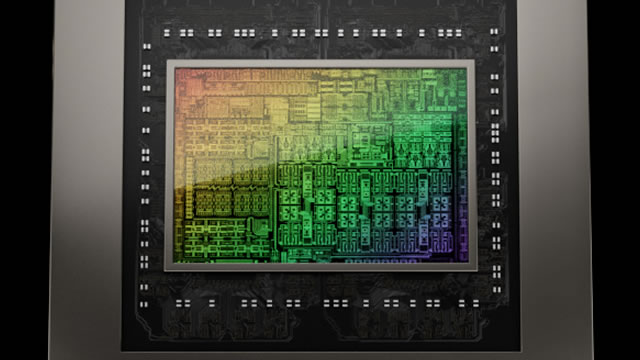
Nvidia CEO Huang Says Blackwell Sales Are 'Off the Charts'
Youtube· 2025-11-20 18:42
Jensen, it's been an astonishingly busy day for you in Washington, D. C. , so I'm grateful for your time.You're sold out of Blackwell. That's what you said. But also that $500 billion forecast, which is Blackwell Rubin has room to grow.How do those fit together. I said sales are off the charts for Blackwell. And Nvidia GPUs in the cloud are sold out.We got plenty of black walls to sell you. We have lots of black walls coming. We're making a lot of black wells. And we have a bunch of Vera Rubin is coming.And ...
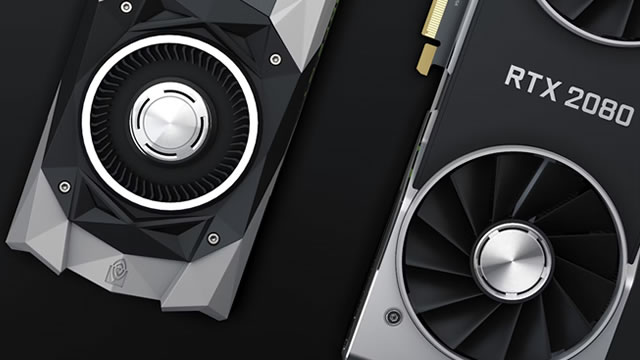
Nvidia CEO Huang on Blackwell Sales, Vera Rubin and China
Youtube· 2025-11-20 00:42
Core Insights - The company is experiencing unprecedented demand for its Blackwell GPUs, with sales described as "off the charts" and a forecast of $500 billion for growth potential [1][2][3] - The supply chain is robust, with strong partnerships with major manufacturers like TSMC and memory partners such as SK Hynix, Micron, and Samsung, ensuring a well-planned supply chain for upcoming products [3][4][5] Product Development - The Vera Rubin chip development is progressing well, with around 20,000 engineers working on bringing it from silicon to systems, indicating a strong commitment to innovation and product readiness [5][6] - The company is on track to deliver Vera Rubin by Q3 of next year, maintaining an annual product release cycle, which is expected to be a significant success [6][8] Market Dynamics - The Chinese market is currently forecasted to contribute zero revenue due to regulatory challenges, but the company remains committed to re-engaging with this important market in the future [10][12][13] - The U.S. Commerce Department has allowed the export of Blackwell chips to specific markets, indicating a cautious but strategic approach to international sales [14][15] Energy and Infrastructure - The company is growing at a rate of 60% annually, which presents challenges in energy sourcing and infrastructure development, necessitating collaboration with energy providers to ensure readiness for market deployment [16][17] - The extensive network of partnerships across various cloud service providers positions the company advantageously to meet diverse energy needs globally [18] AI and Market Demand - There is exponential growth in compute demand driven by AI applications, with significant partnerships with companies like Anthropic, indicating a strong market presence and future growth potential [25][22][23] - The company is focused on disciplined investment and build-out strategies to support the rapid scaling of AI technologies, ensuring alignment with market demand and financing capabilities [21][22]
CHINA PAIN: Trump tariffs spark major economic downturn
Youtube· 2025-11-10 13:45
Economic Impact - China's global exports have declined by over 1% year-over-year, marking the first such decline since March of the previous year [1] - Total imports for China in October were just over 215 billion, while exports were at 35 billion, indicating a significant trade imbalance [1] - Shipments to the US fell more than 25% year-over-year, prompting Beijing to consider increasing domestic spending to stabilize growth [1] Export Dependency - Exports are crucial for the Chinese economy, as the country produces more than it can consume domestically [2] - The reliance on exports, particularly to the US, is a significant leverage point for the US in trade negotiations [3] Domestic Demand Challenges - China has struggled to boost domestic purchasing and demand, which is essential for economic stability [4] Military Developments - China has added a more advanced aircraft carrier to its naval fleet, featuring new technology for greater strike capabilities [10] - This military expansion is seen as a move to project force, raising concerns among neighboring countries [13] Semiconductor Industry - The US has prohibited Nvidia from selling its latest Blackwell chip to China, which is a setback for Chinese companies reliant on this technology [14] - The dependency of China on American chips is highlighted, as they are crucial for AI development [16] - Manufacturing of advanced AI chips is now taking place in Arizona, reflecting a shift towards domestic production in the US [19]
How Nvidia and Taiwan’s Big Six Reshaped Global Computing
Medium· 2025-11-10 02:31
Core Insights - Nvidia's collaboration with Taiwan's Big Six AI server manufacturers is crucial for transforming advanced AI chips into complete server solutions [2][3] - The Big Six, including Foxconn, Quanta, and Wistron, have adapted from traditional manufacturing to meet the complex demands of AI servers, which require significant power and cooling [3][4] - By 2025, Taiwan's Big Six are projected to produce over 90% of the world's AI servers, generating more than $100 billion in annual revenue [6] Group 1: Nvidia's Strategy - Nvidia recognized that advanced silicon alone was insufficient; it needed partnerships to create scalable AI server solutions [2] - The company ensured its GPUs were integrated into systems designed for high-density compute environments through direct partnerships with the Big Six [3] Group 2: Challenges and Innovations - AI servers present unique challenges, including high power consumption (30-50 kilowatts per rack) and the need for rapid product iterations [4] - The Big Six developed innovative solutions such as liquid cooling and ultra-efficient power supplies to address these challenges [4][5] Group 3: Market Dynamics - Foxconn has invested over $1.4 billion in AI server capacity, with its AI server revenue surpassing consumer electronics for the first time [5] - Quanta has tripled its production since 2020 to meet the demands of cloud giants, while Wiwynn and Gigabyte focus on modular systems for global data centers [5][6] Group 4: Future Outlook - Nvidia's Blackwell architecture and GB200 systems set new standards for thermal and electrical engineering, requiring ecosystem-wide innovations [7] - The Big Six's ability to rapidly adapt and scale production positions them as key players in the AI infrastructure market [8]

大中华区科技硬件 2026 年:人工智能科技硬件之年-Investor Presentation-Greater China Technology Hardware 2026 The Year for AI Tech Hardware
2025-11-03 03:32
Summary of Greater China Technology Hardware Conference Call Industry Overview - The conference focuses on the Greater China Technology Hardware sector, particularly emphasizing advancements in AI technology hardware for 2026 [5][7]. Key Insights and Arguments - **AI GPU and ASIC Server Opportunities**: There are significant opportunities in AI GPU and ASIC server/rack design upgrades, with major design upgrades anticipated for the GB300, Vera Rubin platform, and Kyber architecture [5][7]. - **AMD Helios Server Rack**: The AMD Helios server rack project is gaining traction, indicating a positive trend in server hardware demand [5][7]. - **Enhanced Computing Power**: AI ASIC servers are expected to enhance computing power and increase rack density, which is crucial for data centers [5][7]. - **Power Solution Upgrades**: A shift towards 800V HVDC power architecture is noted, with growing adoption of liquid cooling solutions [5][7]. - **PCB/Substrate Capacity Expansion**: There is a wave of capacity expansion in PCB/substrate to support ongoing design upgrades, which is essential for meeting future demand [5][7]. - **Data Network Improvements**: Upgrades in data and power interconnects are expected to increase data network transmission speed and capacity [5][7]. - **Consumer Electronics Demand**: Demand for consumer electronics remains lukewarm, with anticipation for upcoming foldable iPhone models in the second half of 2026 [5][7]. - **AI Smartphone and PC Developments**: The potential for AI smartphones and AI PCs is on the horizon, indicating a shift in consumer technology [5][7]. - **Supply Chain Reorientation**: The status of supply chain reorientation and its potential impact on the industry is under consideration [5][7]. Stock Recommendations - Key stock ideas include companies involved in AI server hardware such as Wistron, Hon Hai/FII, Delta Electronics, and others [5][7]. - For Edge AI, companies like Xiaomi, Lenovo, and Luxshare are highlighted as potential investment opportunities [5][7]. Valuation Comparisons - A detailed valuation comparison of various companies within the sector is provided, including metrics such as closing price, price target, market cap, EPS estimates, P/E ratios, and trading volumes [7]. - Notable companies include: - **Lite-On Tech**: Closing price of 179.50 with a price target of 150.00 and a market cap of 13.528 billion [7]. - **Delta Electronics**: Closing price of 995.00 with a price target of 1288.0 and a market cap of 84.075 billion [7]. - **Hon Hai**: Closing price of 257.50 with a price target of 250.0 and a market cap of 116.970 billion [7]. - **Foxconn Tech**: Closing price of 71.50 with a price target of 54.00 and a market cap of 3.290 billion [7]. Additional Important Points - The report emphasizes the importance of considering Morgan Stanley Research as one of several factors in investment decision-making due to potential conflicts of interest [2][3]. - Analysts involved in the report are not registered with FINRA, which may affect their communication and trading practices [3]. This summary encapsulates the key points from the conference call, providing insights into the Greater China Technology Hardware sector and potential investment opportunities.
全球冷却行业:引入 2027 年预期;因人工智能服务器销量增长上调全球服务器冷却总可寻址市场(TAM)-Global Cooling_ 2027E introduced; Global Server cooling TAM raised on higher AI server volumes
2025-10-31 01:53
Summary of Global Server Cooling Market Conference Call Industry Overview - The conference call discusses the **Global Server Cooling** market, particularly focusing on the **AI server** segment and the adoption of **liquid cooling** technologies. Key Points and Arguments 1. **Market Forecasts**: - The **Global Server Cooling Total Addressable Market (TAM)** is projected to grow significantly, with estimates for 2025 and 2026 raised to **US$7.9 billion** and **US$14.0 billion**, respectively, reflecting a **9%** and **16%** increase from previous estimates [1][2][16]. - The TAM for AI training servers is expected to increase from **US$1.5 billion** to **US$12.4 billion** from 2024 to 2027, representing a **101% CAGR** [1]. 2. **Liquid Cooling Penetration**: - Liquid cooling penetration rates for AI training servers are forecasted to reach **15%** in 2024, escalating to **80%** by 2027. For AI inferencing servers, penetration is expected to rise from **1%** to **20%** over the same period [1][2][17]. - The ongoing increase in liquid cooling adoption is attributed to the rising computing power of GPUs and ASICs, denser server designs, and the need for improved power efficiency in data centers [1]. 3. **Growth Drivers**: - The growth in the cooling TAM is driven by the increasing volume of high-power AI servers that require advanced cooling solutions, particularly liquid cooling, which offers higher cooling efficiency compared to air cooling [1][2][16]. - Innovations in cooling technologies, such as double-sided cold plates and microfluidics solutions, are enhancing heat exchange efficiency and thermal performance, further supporting the growth of the liquid cooling market [22]. 4. **Market Dynamics**: - The report indicates a strong year-over-year growth forecast for the server cooling market, with **111%** growth expected in 2025 and **77%** in 2026 [8][23]. - The cooling solutions market is evolving with new designs and technologies to meet the increasing thermal demands of AI servers [22]. 5. **Competitive Landscape**: - Key players in the liquid cooling market include companies like **Wiwynn**, **Lenovo**, **Dell**, and **HP**, with varying ratings and market caps provided [28]. - The report highlights the importance of customization and rapid response capabilities for cooling suppliers to adapt to new technologies and market demands [22]. Additional Important Content - The report includes detailed tables summarizing the projected TAM for various server types, including AI training, general, and HPC servers, along with their respective liquid cooling penetration rates [2][8][23]. - It emphasizes the need for cooling suppliers to enhance their product offerings and capabilities to keep pace with technological advancements in the server industry [22]. This summary encapsulates the critical insights from the conference call regarding the Global Server Cooling market, focusing on growth forecasts, market dynamics, and competitive landscape.