Twitter

Search documents
X @Forbes
Forbes· 2025-09-20 05:30
An alum of Google, Facebook and Twitter, Edwin Chen built his data labeling company, Surge, in the background of the AI revolution. Now the youngest member of the Forbes 400 is ready to step out of the shadows and make his voice heard.https://t.co/byIZITVTtI https://t.co/MRPJE1Gs6A ...
X @Elon Musk
Elon Musk· 2025-09-19 17:01
🤔Kamala Harris (@KamalaHarris):Look let's be honest, @realDonaldTrump's Twitter account should be suspended. ...
X @Forbes
Forbes· 2025-09-18 22:37
An alum of Google, Facebook and Twitter, Edwin Chen built his data labeling company, Surge, in the background of the AI revolution. Now the youngest member of the Forbes 400 is ready to step out of the shadows and make his voice heard.https://t.co/YUwjKLx17V https://t.co/210UVPhXF8 ...
X @Forbes
Forbes· 2025-09-18 18:32
An alum of Google, Facebook and Twitter, Edwin Chen built his data labeling company, Surge, in the background of the AI revolution. Now the youngest member of the Forbes 400 is ready to step out of the shadows and make his voice heard.https://t.co/YUwjKLx17V https://t.co/vYsdXAHVhX ...
X @Tesla Owners Silicon Valley
Tesla Owners Silicon Valley· 2025-09-18 02:12
BREAKING: Google will now feature X (Twitter) posts directly in its Discover feed. https://t.co/iZJlo06DFb ...
X @TechCrunch
TechCrunch· 2025-09-17 19:55
On Wednesday, former Twitter head of product Kayvon Beykpour announced the launch of Macroscope, an AI system aimed at developers and product leaders that summarizes updates to a codebase and catches bugs, among other things. https://t.co/tw8oXRgJKI ...
X @Forbes
Forbes· 2025-09-17 19:00
An alum of Google, Facebook and Twitter, Edwin Chen built his data labeling company, Surge, in the background of the AI revolution. Now he's ready to step out of the shadows and make his voice heard. https://t.co/49dh9ygdqs (Photo: Guerin Blask For Forbes) https://t.co/eBlrG3yyLE ...
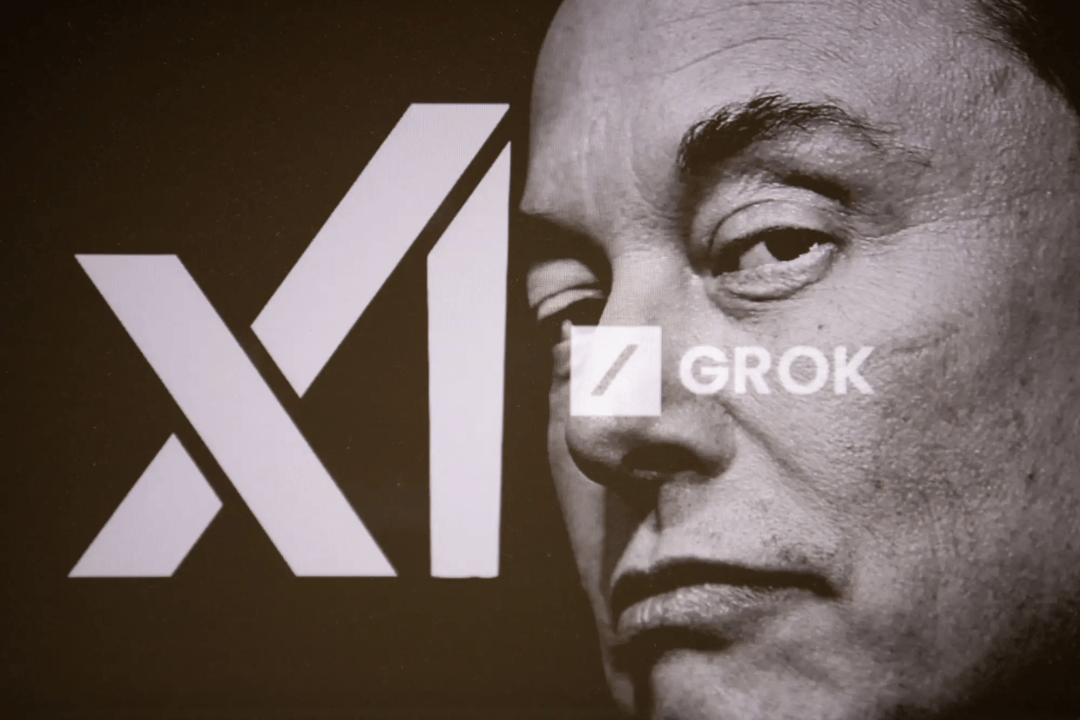
马斯克周末血裁xAI 500人
Sou Hu Cai Jing· 2025-09-16 06:27
Core Insights - xAI has implemented a sudden internal assessment leading to a significant layoff of its data annotation team, with a reported attrition rate of 33% and over 500 employees terminated [1][11]. Group 1: Layoff Details - The data annotation team, crucial for the development of Grok, has seen its size decrease from 1500 to just over 1000 employees, indicating a nearly one-third reduction [11]. - The layoffs were preceded by a series of one-on-one discussions with employees, creating a sense of panic within the company [5][7]. - The company announced a strategic shift towards hiring specialized data annotators, planning to expand their numbers tenfold, while reducing the focus on general data annotators [11][12]. Group 2: Strategic Shift - This shift from general to specialized data annotation reflects a belief that quality is more important than quantity, aiming to enhance Grok's capabilities in specific fields [12][14]. - The decision may limit the diversity of data available for training, which is essential for the growth of AI systems [12][14]. - The move is seen as a significant gamble on vertical industry AI applications, potentially positioning Grok advantageously if successful [14][15]. Group 3: Management Philosophy - Elon Musk's management style is characterized by a preference for small, high-performing teams, often leading to drastic layoffs to maintain efficiency and performance [22][24]. - This approach has been consistent across Musk's ventures, including Tesla and Twitter, where he has previously enacted similar layoffs to streamline operations [20][24]. - The emphasis on high performance and low tolerance for underachievement is a hallmark of Musk's leadership, which may drive the remaining employees to maximize their potential [22][25].

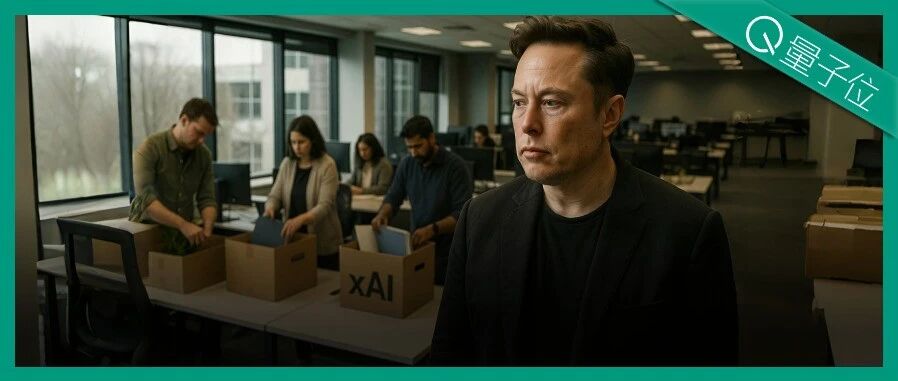
马斯克周末血裁xAI 500人
量子位· 2025-09-16 05:58
Core Insights - xAI has implemented a drastic layoff strategy, resulting in a 33% attrition rate within its data annotation team, with over 500 employees terminated [2][18]. - The company is shifting its focus from general data annotation to specialized roles, aiming to expand the number of professional data annotators by tenfold, indicating a strategic pivot towards vertical AI applications [19][21]. Group 1: Layoff and Testing Strategy - xAI conducted an internal test with a high elimination rate, leading to significant layoffs in the data annotation team, which was previously the largest team within the company [2][3]. - The layoffs were preceded by one-on-one discussions with employees, creating a sense of panic within the organization [11][12]. - The termination emails indicated a strategic shift to prioritize specialized data annotation roles over general positions, reflecting a change in the company's operational focus [17][18]. Group 2: Shift in Focus to Specialized AI - The decision to reduce the number of general data annotators in favor of specialized roles suggests a belief that quality is more important than quantity in AI training [21][22]. - This shift aims to enhance the capabilities and credibility of Grok in specific fields, although it may limit the diversity of data available for training [22][25]. - The move aligns with a broader trend where vertical models in industries like finance and healthcare are becoming more prominent compared to general models [25][27]. Group 3: Elon Musk's Management Style - Elon Musk's history of aggressive layoffs and restructuring is evident in his management approach, which emphasizes high performance and efficiency [30][35]. - Musk prefers small, highly skilled teams over larger ones, believing they are more creative and efficient [36][37]. - The culture of high expectations and low tolerance for underperformance is a hallmark of Musk's leadership, as seen in previous companies like Tesla and Twitter [40][42].
如何在五分钟打动投资人?硅谷传奇投资人20年识人心得
创业邦· 2025-09-16 03:30
Core Insights - The article emphasizes the importance of recognizing extraordinary entrepreneurs and the unique potential of startups in leveraging disruptive technologies like AI [5][9][27] - It discusses the evolutionary dynamics of Silicon Valley's ecosystem compared to China's more distributed innovation landscape, highlighting the competitive advantages of both [6][14] - The article posits that the next wave of trillion-dollar companies is likely to emerge from Silicon Valley due to its adaptive ecosystem and historical accumulation of knowledge [6][12][30] Group 1: Evolutionary Dynamics - The application of Darwinism in the context of Silicon Valley illustrates how natural selection, planned and unplanned variations, and inheritance drive innovation [9][11] - Silicon Valley's history of rapid adaptation and competition fosters a unique environment where startups can thrive and evolve [12][16] - The article suggests that the current AI wave represents a critical phase of radical variation, with significant changes expected every six months between 2025 and 2030 [9][27] Group 2: Investment Philosophy - The investment philosophy of focusing on "people" rather than just ideas is central to the success of venture capital firms like Benchmark [7][39] - The article highlights the importance of building long-term relationships with entrepreneurs, emphasizing that true value comes from deep, supportive partnerships over time [39][41] - It argues that early-stage investments allow for greater flexibility and adaptability, enabling startups to pivot and innovate effectively [50][51] Group 3: Competitive Landscape - The competitive landscape in China is characterized by multiple teams pursuing different strategies within the same company, which fosters innovation and pressure [15][16] - The article notes that while established companies have dominated the market in recent years, the emergence of new business models, particularly in AI, could lead to the rise of several new trillion-dollar companies [26][30] - The potential for creative destruction in the tech industry suggests that even successful companies will eventually be surpassed by new entrants [20][30]