
Joby Aviation

Search documents
低空行业周报(9月第1周):当前位置具备性价比,静待催化反弹-20250907
Huafu Securities· 2025-09-07 08:05
Investment Rating - The industry rating is "Outperform the Market," indicating that the overall return of the industry is expected to exceed the market benchmark index by more than 5% in the next 6 months [51]. Core Insights - The low-altitude economy index fell by 7.72% during the week of September 1 to September 5, ranking 324 out of 338, underperforming the broader market, which saw a decline of 1.18% [2][14]. - The low-altitude sector is currently viewed as having high cost-effectiveness, with potential for a rebound due to ongoing catalysts and developments in the second half of the year [4][30]. - The report highlights that the low-altitude sector has been lagging behind other technology themes, and a single industry catalyst could trigger a rebound [30]. - Infrastructure construction and the application of drones in logistics are identified as key focus areas for the low-altitude economy this year, with significant potential for growth [5][30]. Summary by Sections Market Review - The low-altitude economy index experienced a significant decline, influenced by adjustments in the broader market and military industry indices [4][29]. - The top five gainers in the A-share and Hong Kong stock markets included companies like Xirui and Wolong Electric Drive, while the biggest losers included Aerospace Nanhua and Zhong UAV [3][16]. Industry Dynamics - Recent developments include the establishment of a low-altitude economic work leadership group by the Civil Aviation Administration, indicating a focus on policy support and practical implementations [30][35]. - Various local governments are actively working on practical measures such as airspace planning and low-altitude flight management, which are expected to foster industry growth [30][35]. Investment Recommendations - Suggested focus areas for investment include infrastructure companies like Suzhou Planning and Lais Information, as well as drone manufacturers such as Jifeng Technology and Henghe Precision [6][32]. - The report emphasizes the importance of monitoring the low-altitude sector for potential investment opportunities as the industry progresses [31][32].
Has Joby Aviation's Stock Already Peaked?
The Motley Fool· 2025-09-05 13:15
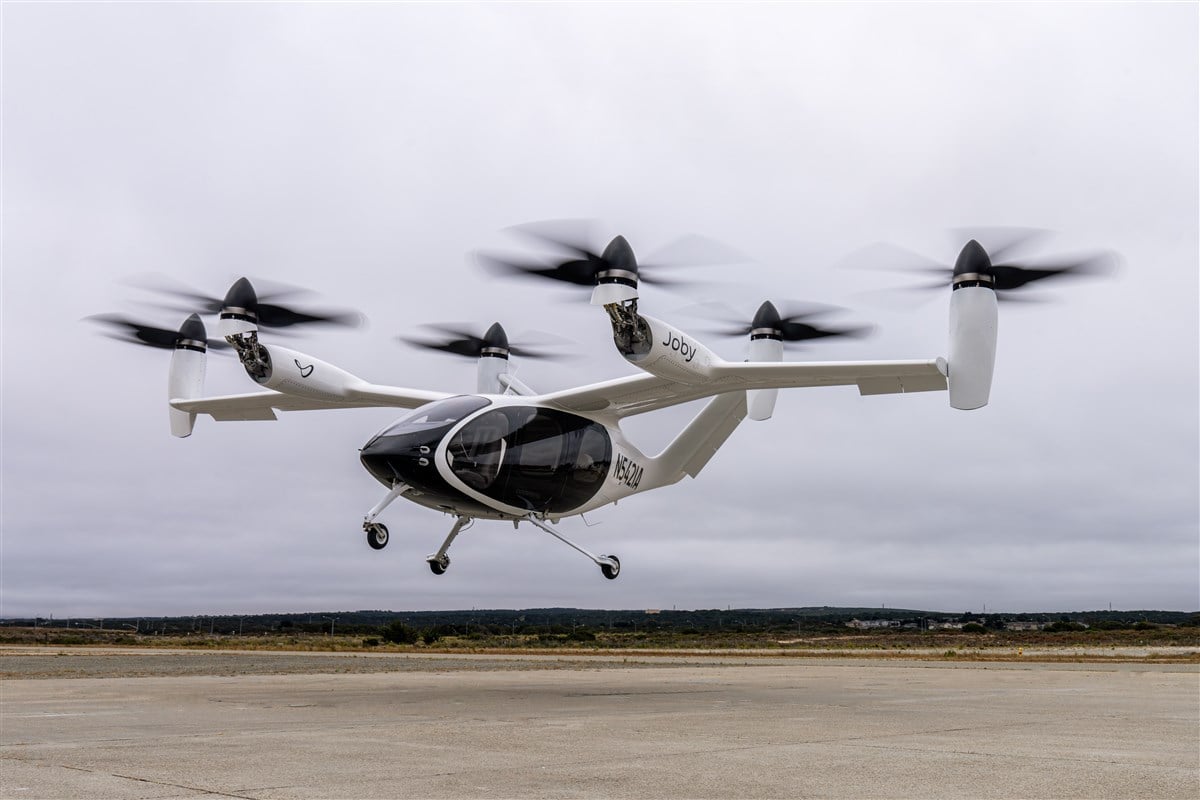
Core Viewpoint - Investors are reconsidering their positions in Joby Aviation as its stock price has dropped over 20% in the past month, despite a significant increase of over 160% in the last year due to expectations of future growth in the eVTOL market [1][2][3]. Company Overview - Joby Aviation is a prominent player in the electric vertical take-off and landing (eVTOL) aircraft market, aiming to start commercial operations by next year [2]. - The company recently completed its first piloted air taxi flight, marking a significant milestone in its journey towards commercialization [8]. Financial Performance - Joby has generated limited revenue and is incurring substantial losses, raising concerns about its business model's profitability [3][7]. - Despite the recent stock decline, Joby's stock is still up over 60% for the year, indicating speculative investor behavior [5]. Market Sentiment - Analysts express skepticism about the eVTOL market's infrastructure and practicality, questioning whether Joby's aircraft can effectively alleviate urban traffic [6]. - The consensus analyst price target for Joby is $10.50, suggesting a potential downside risk of over 20% from current trading levels [9][10]. Valuation Concerns - Joby's market capitalization is around $11 billion, which requires strong confidence in both the eVTOL market's future growth and Joby's role within it for the stock to be considered a good buy [11]. - There are indications that Joby's stock may have already priced in too much growth, leading to potential corrections in the near future [10][12].



JOBY's Premium Valuation: Should You Buy, Sell or Hold the Stock Now?
ZACKS· 2025-09-04 17:31
Core Insights - Joby Aviation (JOBY) is currently viewed as relatively overvalued, trading at a price-to-book value of 12.35X, which is higher than the Zacks Transportation - Airline industry and peer Archer Aviation (ACHR) [1][9]. Group 1: Company Developments - Joby recently demonstrated its autonomous flight technology during a military exercise, logging over 7,000 miles and more than 40 flight hours, showcasing its capabilities for the U.S. government's airlift requirements [5][6]. - The company aims to commence passenger operations in Dubai next year and has acquired Blade Air Mobility's urban air mobility passenger business, which will enhance its market access in key regions like New York and Southern Europe [7][8]. - Joby has expanded its production site in Marina, CA, which will double its aircraft production capacity to 24 aircraft per year, aiding its commercialization efforts [11]. Group 2: Market Performance - Joby shares have increased by over 72% in the past 90 days, outperforming both its industry and rival Archer Aviation [12]. - Despite the positive market performance, the company is unlikely to achieve profitability soon, as commercial operations have not yet started, and it has a negative return on equity [15]. Group 3: Future Outlook and Challenges - The company faces significant challenges in achieving commercialization, including regulatory approvals, infrastructure development, and consumer adoption, with no current demand for urban air mobility [16]. - Public acceptance of eVTOLs may encounter hurdles related to safety, noise, and affordability, which could constrain Joby's growth potential [17]. - The current stock price reflects considerable optimism about the eVTOL market, but uncertainties regarding commercialization and lack of significant revenues suggest that investing now may lead to overpaying [19].

Joby's 38% Stock Plunge Is Ugly—But The Pentagon Might Be Interested
Benzinga· 2025-09-04 16:52
Core Viewpoint - Joby Aviation has demonstrated its Superpilot autonomous flight technology during a military exercise, which could significantly impact its future trajectory despite a recent decline in stock price [1][5][6]. Autonomous Flight - Joby completed over 7,000 miles and 40 flight hours of autonomous operations during the Resolute Force Pacific exercise [2]. - The missions were primarily controlled remotely, with a safety pilot on board to monitor performance [3]. - The Superpilot system was integrated into a Cessna Caravan 208, successfully executing various missions including cargo deliveries and ISR profiles [3][4]. Defense Applications - The Pentagon has requested $9.4 billion in its fiscal 2026 budget for autonomous and hybrid aircraft technologies, positioning Joby favorably for potential Department of Defense contracts [5]. - Joby's performance during the exercise is seen as a strong indicator of its capability to meet the U.S. government's operational demands [6]. - A partnership with L3Harris Technologies was announced to develop a hybrid VTOL aircraft for military operations, enhancing Joby's defense-related offerings [7]. Looking Ahead - Alignment with the Pentagon may provide Joby with essential funding to navigate financial challenges while pursuing commercial air taxi operations [8]. - Despite a 38% decline in stock price over the past month, Joby shares have increased by over 160% in the past year [8].

Strata Critical Medical (BLDE) 2025 Conference Transcript
2025-09-04 16:30
Summary of Strata Critical Medical (BLDE) Conference Call Company Overview - **Company Name**: Strata Critical Medical (formerly Blade Urban Air Mobility) [3] - **Industry**: Medical logistics, specifically organ transportation [4][5] Key Transaction Details - **Divestiture**: Agreement with Joby Aviation to sell the passenger business for up to $125 million, receiving approximately $80 million in stock upfront [3][4] - **Future Collaboration**: Long-term arrangement with Joby to use their electric aircraft for medical purposes, expected to be quieter and lower cost [4] Business Focus and Growth - **Core Business**: Focus on medical logistics, specifically transporting human organs for transplant, which grew nearly 20% in the last quarter [4][6] - **Market Dynamics**: New regulations and technology are increasing the number of viable organ transplants, with a mid to high single-digit growth in organ transplants expected [8][10] - **Operational Model**: Utilizes an asset-light network, with two-thirds of flights on aircraft not owned by the company, allowing for flexibility and cost savings [5][6] Market Opportunities - **Regulatory Changes**: Shift in government policy prioritizing organ matching based on need rather than geographic convenience, benefiting logistics providers [6][10] - **Technological Advancements**: Introduction of perfusion technology allows for the use of previously unsuitable organs, enhancing transplant viability [8][10] - **Expansion Plans**: Building a ground network and expanding service offerings, including administrative and clinical support for organ matching [11][12] Financial Outlook - **Profitability**: The divestiture is expected to be profit neutral, with anticipated corporate savings of $7 million starting Q4 [14][15] - **Growth Projections**: Mid-teens growth expected for the remainder of the year, with potential for acceleration due to increased complexity in organ logistics [36][40] - **Margin Improvement**: Targeting a segment adjusted EBITDA margin increase from 13% to the high teens through operational efficiencies and cost structure optimization [48][51] Competitive Landscape - **Market Share**: Holds approximately 30% market share in air logistics, with significant opportunities in ancillary services [31][40] - **Fragmented Industry**: Competes against numerous small operators, allowing Strata to leverage its national network for flexibility and efficiency [31][33] Strategic Partnerships - **Collaboration with Organox**: Aims to pre-position perfusion devices at aviation hubs, enhancing service offerings and customer satisfaction [41][42] Key Takeaways for Investors 1. **Growing Market**: Attractive growth potential in the organ transportation sector with evolving regulations and technology [52] 2. **Unique Positioning**: Ability to build new capabilities that customers currently source from competitors [52] 3. **Capital Allocation**: Strong potential for strategic acquisitions and investments in the logistics space [53]

Joby's Pullback Sets Stage For Rebound
Seeking Alpha· 2025-09-04 10:42
Core Insights - Joby Aviation is transitioning from conceptual discussions to execution in urban air mobility, achieving 70% certification progress and securing military deals, alongside the acquisition of Blade to enhance commercialization efforts [1] Company Overview - Joby Aviation has established first-mover advantages in the urban air mobility sector, positioning itself as a leader in this emerging market [1] Certification and Progress - The company has reached 70% progress in its certification process, indicating significant advancements towards operational readiness [1] Strategic Partnerships - Joby has secured military contracts, which may provide a stable revenue stream and enhance its credibility in the aerospace sector [1] Acquisition Strategy - The acquisition of Blade is aimed at accelerating commercialization efforts, potentially expanding Joby's market reach and operational capabilities [1] Competitive Positioning - Joby Aviation benefits from a strong technology moat and first-mover advantage, which are critical for driving exponential growth in a competitive landscape [1] Financial Health - The company is focused on sustainable revenue growth and maintaining an efficient cash flow, which are essential for long-term viability [1]
Joby Aviation's Pullback: A Gift for Investors Who See the Future
MarketBeat· 2025-09-02 17:07
Core Viewpoint - Joby Aviation has experienced a stock price pullback of over 20% after a significant rally, but this decline is seen as a healthy consolidation rather than a sign of weakness, especially following the completion of its acquisition of Blade Air Mobility's passenger business [1][2][10]. Group 1: Stock Performance and Market Sentiment - Joby Aviation's stock surged from under $9 in early June to above $20 in August, followed by a pullback attributed to automated insider selling and profit-taking by retail investors [1]. - The recent decline in stock price is interpreted as long-term investors taking profits rather than a new wave of bearish sentiment, as evidenced by a nearly 13% decrease in short interest [4][5]. Group 2: Acquisition of Blade Air Mobility - The acquisition of Blade Air Mobility's passenger business, completed on August 29, significantly strengthens Joby's business fundamentals, providing immediate scale and operational capabilities [7][9]. - Blade's passenger segment generated approximately $25.7 million in revenue with a positive Passenger Adjusted EBITDA of around $2.4 million and a 30.5% Flight Margin, indicating strong profitability compared to the airline sector's average of 3% to 4% [8]. Group 3: Strategic Advantages and Future Opportunities - The acquisition addresses key commercialization challenges ahead of schedule, providing a de-risked commercial plan and access to Blade's loyal customer base of over 50,000 annual passengers [9][13]. - Joby Aviation is set to demonstrate its capabilities in Japan with partner ANA Holdings at EXPO 2025, starting October 1, which is expected to shift market attention back to the company's growth potential [11][12].
汽车低空行业周报(8月第4周):低位静待催化-20250831
Huafu Securities· 2025-08-31 07:21
Investment Rating - The industry rating is "Outperform the Market" indicating that the overall return of the industry is expected to exceed the market benchmark index by more than 5% in the next 6 to 12 months [64]. Core Insights - The low-altitude sector is currently in a position to rebound, supported by ongoing catalysts since the second half of the year and new directions in the Sino-US competition [4][33]. - The low-altitude economy index increased by 1.03% this week, outperforming the Shanghai Composite Index, which rose by 0.84% [3][16]. - The sector is awaiting significant catalysts, as it has been relatively stagnant since the beginning of the year, with the broader market reaching new highs [4][32]. - The establishment of a leadership group by the Civil Aviation Administration of China for general aviation and low-altitude economy indicates promising future policies [4][33]. - Infrastructure development and the application of drones in various sectors are key focuses for the low-altitude economy this year [5][33]. Summary by Sections Market Review and Weekly Insights - The low-altitude economy index rose by 1.03%, ranking 138 out of 330 sectors, indicating a better performance than the overall market [3][16]. - The top five gainers in the A-share and Hong Kong stock markets included Aerospace Hongtu (up 45.29%) and Changyuan Donggu (up 19.30%) [3][19]. - The sector is currently lacking major catalysts, with some companies experiencing significant stock price corrections due to average mid-term report performances [4][32]. Industry Dynamics - Recent developments include the opening of low-altitude flight demonstration projects in Guangzhou and the publication of an agricultural drone industry white paper [39][40]. - The government is actively promoting low-altitude economic projects, including the establishment of testing bases and the issuance of special bonds for infrastructure [40][41]. Investment Recommendations - Suggested focus areas include infrastructure companies such as Suzhou Planning and Lais Information, as well as drone-related companies like Henghe Precision and Tengya Precision [6][35]. - The report emphasizes the importance of infrastructure as a prerequisite for the low-altitude economy's emergence as a new industry [5][33].



Joby's Sky Limo Vs. Archer's Flying Taxi - Pick Your Future
Benzinga· 2025-08-26 15:45
Core Viewpoint - The competition between Joby Aviation and Archer Aviation represents two distinct business models in the emerging flying car industry, with Joby focusing on premium intercity travel and Archer targeting urban commuting [1][6]. Joby Aviation - Joby aims to position itself as the "sky limo" for premium travelers, with a range of approximately 150 miles and a top speed of 200 mph, designed for intercity travel and airport shuttling [2][3]. - The partnership with Delta Air Lines is crucial for Joby, as it seeks to integrate into an existing travel ecosystem and attract premium travelers who prioritize time savings [3][6]. - Joby's strategy emphasizes a high-end experience, akin to business class in the sky, appealing to customers willing to pay for convenience [2][3]. Archer Aviation - Archer's Midnight aircraft is designed for urban environments, featuring a shorter range of about 60 miles and a top speed of 150 mph, optimized for high-frequency, short-distance trips [4][5]. - The business model focuses on quick monetization through repeatable rides in busy metropolitan areas, positioning Archer as a practical urban utility rather than a luxury service [5][6]. - Archer's approach may allow for faster scaling compared to Joby's less frequent, more exclusive routes, potentially leading to quicker profitability [5][6]. Investment Considerations - Investors face a choice between two different visions of the future of flight: Joby's intercity luxury model versus Archer's urban utility model, with uncertainty regarding which will be more profitable or widely adopted [6].


低空行业周报(8月第3周):低位静待催化,关注基建+无人机-20250824
Huafu Securities· 2025-08-24 13:31
Investment Rating - The industry rating is "Outperform the Market" indicating that the overall return of the industry is expected to exceed the market benchmark index by more than 5% in the next 6 to 12 months [53]. Core Insights - The low-altitude economy index increased by 3.97% during the week of August 18-22, outperforming the overall market, which saw the Shanghai Composite Index rise by 3.49% [15][27]. - The report highlights that the low-altitude sector is currently in a position of waiting for catalysts, with infrastructure development and drone applications being key focus areas for future growth [5][30]. - The establishment of a leadership group by the Civil Aviation Administration of China for general aviation and low-altitude economy is expected to bring favorable policies in the second half of the year [29][30]. Summary by Sections Market Review - The low-altitude economy index ranked 147 out of 330 sectors, indicating a relatively strong performance compared to the overall market [15][27]. - The top five gainers in the A-share and Hong Kong stock markets included Aerospace Hongtu (+16.89%) and Changyuan Donggu (+15.33%), while the biggest losers included Lais Information (-6.97%) and Xicai Testing (-5.71%) [3][18]. Industry Dynamics - The report notes significant growth in the manufacturing of intelligent unmanned aerial vehicles, with an 80.8% increase in production for July [33]. - Various local governments are actively working on practical measures such as airspace division and low-altitude flight management, which are expected to support the industry's development [35][36]. Investment Strategy - The report suggests focusing on infrastructure companies such as Suzhou Planning and Lais Information, as well as drone-related companies like Guoan Da and Henghe Precision [32][31]. - The low-altitude industry is seen as having the potential for rebound, especially with the ongoing developments in infrastructure and drone applications [30][29].