Siemens Healthineers

Search documents
Siemens Healthineers (OTCPK:SEMH.F) FY Conference Transcript
2026-01-14 00:02
Siemens Healthineers FY Conference Summary Company Overview - Siemens Healthineers is a market leader in imaging and precision therapy, with 90% of academic medical centers as clients [2][3] - The company operates in 70 countries with an installed base of approximately 700,000 systems and 3 billion patient touchpoints annually [3] - R&D investment exceeds EUR 2 billion, with 13,000 employees dedicated to innovation [3] Market Position and Performance - Siemens Healthineers holds a 38% market share in imaging, an increase of 7 percentage points since its IPO [4] - Varian's market share has grown by 10 percentage points to over 60% since the acquisition [4] - The company has an order backlog of EUR 6 billion from large value partnerships [3] Strategic Focus - The company aims to address non-communicable diseases (NCDs) such as cancer and cardiovascular diseases through early detection and personalized treatment [5][6] - Key pillars include patient imaging, precision therapy, and healthcare AI to enhance treatment personalization [6] Imaging and Technology Innovations - Strong presence in MRI with over 50% market share in the U.S. [6] - Photon Counting CT technology is a flagship innovation, expected to revolutionize cardiac disease management [8][27] - The distribution business of radiopharmaceuticals (PETNET) is projected to reach EUR 1 billion [8] Financial Performance and Outlook - The company expects revenue growth of 5%-6% for the fiscal year, with adjusted EPS between EUR 2.20 and EUR 2.40 [19][20] - Anticipated headwinds include foreign exchange impacts and tariffs, totaling EUR 0.30 per share [20] - Long-term growth targets include 6%-9% annual growth in core imaging and precision therapy segments starting in 2027 [22] Capital Allocation and Shareholder Value - Siemens Healthineers has a stable and growing dividend policy, with a commitment to deleverage from 2.8 times to 2.5 times net debt over EBITDA in the next 24 months [18] - The company aims for a cash conversion rate of 0.8-0.9 annually, with a focus on maintaining strong free cash flow [17] Challenges and Market Dynamics - The company faces challenges in the Chinese market, with expectations of flat growth in the near term [24][25] - Increased competition and local government support for domestic players are noted concerns [25] - The diagnostics segment is being restructured for operational independence, with no immediate plans for divestiture [27] Conclusion - Siemens Healthineers is well-positioned for future growth through its strong market presence, innovative technologies, and strategic focus on addressing critical healthcare needs. The company is committed to enhancing shareholder value while navigating market challenges and optimizing its operational structure.
Siemens Healthineers (OTCPK:SEMH.F) FY Earnings Call Presentation
2026-01-13 23:00
Siemens Healthineers AG J.P. Morgan Healthcare Conference, January 13, 2026 Unrestricted © Siemens Healthineers, 2026 Unrestricted © Siemens Healthineers, 2025 This webcast has been provided solely for use at this meeting. By attending the meeting or accessing this webcast, you agree to be bound by the following limitations. This webcast is provided in conjunction with an oral presentation and should not be taken out of context. This webcast serves for information purposes only and the information contained ...
Soluna and Siemens Collaborate to Solve GPU Power Swings in Behind-the-Meter AI
Businesswire· 2026-01-08 12:30
Core Insights - Soluna Holdings, Inc. has signed a Memorandum of Understanding with Siemens to develop a pilot project aimed at managing power demand for AI and high-performance computing using renewable energy [1][5] - The 2 MW pilot will be deployed at Soluna's Project Grace site in Texas, integrating Siemens' electrical infrastructure and controls to create a repeatable model for future AI deployments at renewable generation sites [2][3] Company Overview - Soluna Holdings focuses on developing green data centers for intensive computing applications, including Bitcoin mining and AI, by utilizing surplus renewable energy [9] - The company aims to transform renewable energy into global computing resources, strategically co-locating data centers with wind, solar, or hydroelectric power plants [9] Project Details - The pilot project will document performance under fast load steps and variable compute demand, addressing challenges posed by GPU-driven workloads on power stability [2][3] - The facility will utilize Siemens' SICAM SCADA platform for monitoring and control, ensuring scalability, grid stability, and energy efficiency [4] Strategic Goals - The partnership aims to optimize existing infrastructure to support the growing demand for AI technology while leveraging clean energy at competitive costs [4][5] - Soluna and Siemens expect to validate a scalable blueprint for behind-the-meter renewable compute, enhancing grid stability, energy efficiency, and reducing carbon impact [5]



Social Media Influence in the Exam Room: National Survey About Medical Testing Reveals Changing Patient Expectations
Globenewswire· 2026-01-07 12:30
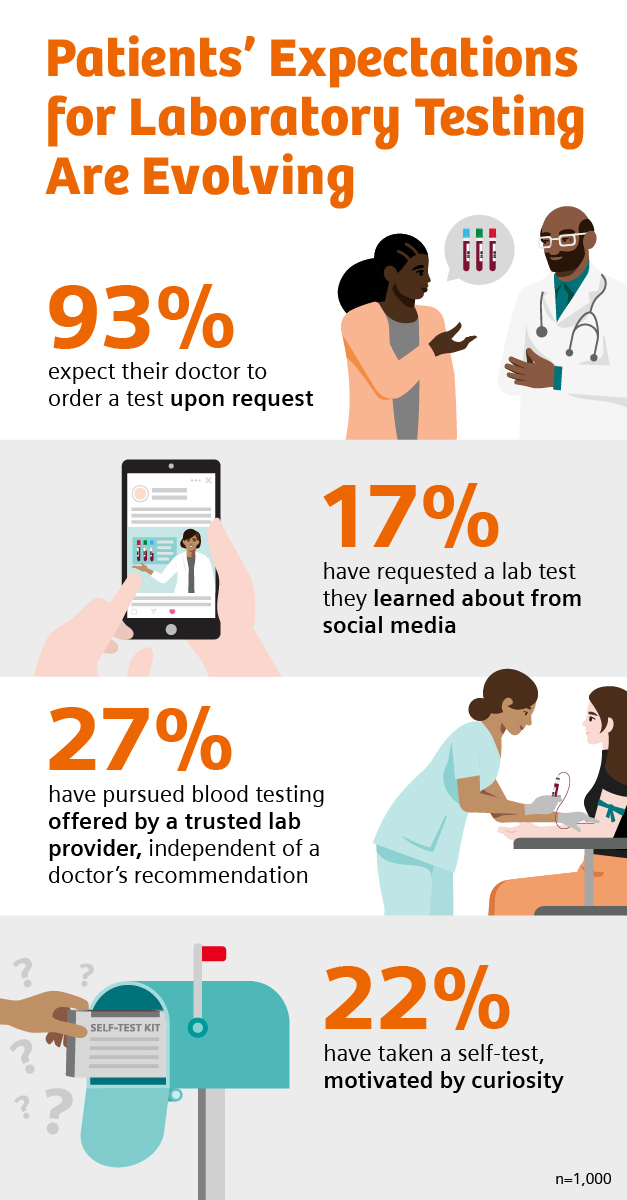
Core Insights - A national survey indicates a significant shift in U.S. patients' expectations towards greater control over diagnostic testing, moving away from traditional evidence-based medicine [1][8] Patient Expectations - 93% of patients expect their doctor to order a lab test upon request, with 37% having requested tests based on personal research and 17% influenced by social media [2][12][13] - High interest in predictive health insights is noted, with 89% of respondents expressing interest in lab tests that can predict health risks [3] Testing Behavior - 27% of patients pursued blood testing independently of a doctor's recommendation, driven by curiosity [3][12] - Nearly half (49%) of those who engaged in self-prescribed testing do not share results with healthcare providers, indicating a trend towards privacy in health information [5] Trust in Healthcare Providers - While 95% of patients trust their providers to order appropriate tests, only 87% trust their guidance against requested tests, highlighting a changing dynamic in patient-provider relationships [4] Financial Aspects - A significant portion of patients face financial barriers, with 52% of those with unpaid medical bills indicating that their debt includes unpaid lab testing fees [6] - Patients are more likely to delay imaging (22%) than bloodwork (5%) when cost is a concern [7] Impact of Reimbursement Cuts - Upcoming payment cuts of up to 15% for around 800 laboratory tests threaten to widen the gap between patient expectations and what testing providers can deliver [8] - The RESULTS Act is gaining support as a potential solution to stabilize payments for laboratory tests and maintain access to quality services [8] Industry Perspective - Siemens Healthineers emphasizes the need for sustained investment in laboratory services to advance personalized care and fulfill the demand for predictive health insights [9]
Elastography Imaging Market Size to Reach USD 5.88 Billion by 2032, Driven by Rising Demand for Non-Invasive Diagnostics - SNS Insider
Globenewswire· 2025-12-20 12:00
Market Overview - The Elastography Imaging Market was valued at USD 3.27 billion in 2024 and is projected to reach USD 5.88 billion by 2032, growing at a CAGR of 7.66% from 2025 to 2032 [1][8]. Growth Drivers - Increasing demand for non-invasive diagnostic procedures, especially for liver fibrosis, oncology, and musculoskeletal disorders, is significantly contributing to market growth [2]. - The U.S. Elastography Imaging Market was valued at USD 1.04 billion in 2024 and is projected to reach USD 1.84 billion by 2032, with a CAGR of 7.47% from 2025 to 2032, driven by strong healthcare infrastructure and high adoption of advanced imaging technologies [4]. Market Segmentation By Modality - Ultrasound holds a dominant market share of 70.52% in 2024, being cheaper and more portable than other imaging tools. MRI is the fastest-growing segment with a CAGR of 8.03% due to its high diagnostic accuracy [9]. By Application - The General Imaging segment dominated the market with a share of 34.80% in 2024, with breast elastography expected to witness the fastest growth during the forecast period [10]. By End-User - Hospitals represent the largest and fastest-growing segment, holding 41.30% of the market share and a CAGR of 8.05% due to established facilities and large patient quotas [11]. Regional Insights - North America accounted for 38.52% of the overall revenue share in 2024, primarily due to a developed healthcare system and high prevalence of chronic diseases [14]. - The Asia Pacific region is projected to grow at the fastest CAGR of 8.10% during the forecast period, driven by a large patient population and high prevalence of chronic diseases [15]. Recent Developments - In early 2024, Resoundant expanded MR Elastography clinical collaborations with academic hospitals in the U.S. and Europe [19]. - In March 2025, Siemens announced enhanced AI-assisted elastography analysis integrated into its ACUSON Sequoia system, improving real-time liver fibrosis staging [19].

介入放射学导航系统行业分析报告:产业链、行业政策、发展趋势及进入壁垒
QYResearch· 2025-12-19 04:53
Core Viewpoint - Interventional radiology navigation systems enhance the precision and safety of minimally invasive procedures by integrating medical imaging, sensing technology, spatial positioning algorithms, and surgical path planning, transitioning from experience-driven to data-driven operations [2][5]. Working Principle - The system operates through three main technical modules: image acquisition, coordinate matching, and real-time tracking. It creates a 3D model of the lesion and surrounding tissues using CT, MRI, or ultrasound images, matches the patient's anatomy with the model, and tracks instruments in real-time to provide accurate navigation [4]. Application Areas - Interventional radiology navigation systems are widely used in tumor ablation, biopsy, vascular interventions, and complex anatomical region treatments. They improve accuracy in procedures like liver tumor ablation and vascular interventions by providing real-time corrections and reducing reliance on contrast agents [5]. Development Prospects - The future of interventional radiology navigation systems is geared towards higher precision, intelligence, and automation, driven by advancements in AI, robotics, and multimodal imaging. These technologies aim to enhance clinical success rates and optimize treatment pathways [6]. Important Parameters - Key parameters include spatial positioning accuracy (0.5–1.0mm for high-end systems), tracking stability, navigation modes (electromagnetic, optical), and image processing capabilities, which are crucial for effective navigation [7][8]. Market Size - The interventional radiology navigation system market is projected to reach USD 479 million in 2024 and USD 507 million in 2025, with a compound annual growth rate (CAGR) of 6.3% over the next six years [10]. Industry Chain and Trends - The industry chain shows a clear upstream and downstream collaboration, with upstream relying on precision sensors and imaging devices, while downstream includes medical institutions that adopt these systems to enhance procedural accuracy and reduce complications [14]. The industry is experiencing a trend towards digitalization, intelligence, and automation, with increasing demand for high-precision navigation [16]. Entry Barriers - High entry barriers exist due to the technical complexity of navigation systems, stringent certification requirements, and the strong market presence of established brands. New entrants must invest significantly in training and support to compete effectively [17].
Siemens' new PAVE360 Automotive drives next-generation vehicle development with real-world validation
Prnewswire· 2025-12-18 14:00
System-level digital twins for SDVs using existing technologies can be complex and time consuming to create and validate. To solve this bottleneck, PAVE360 Automotive delivers a fully integrated, system-level digital twin that can be deployed on day one – reducing the time, effort and cost required to build such environments from scratch. PAVE360 Automotive using Arm Following prior collaboration with Arm which resulted in accelerated virtual environments for its Arm Cortex- A720AE in 2024 and Arm Zena Comp ...

GE HealthCare's Strategic Moves and Market Position
Financial Modeling Prep· 2025-12-11 22:04
Core Viewpoint - GE HealthCare is positioned for growth in the healthcare technology sector, with a new price target set by Jefferies indicating a potential increase in stock value [1][6] Company Overview - GE HealthCare specializes in medical imaging, monitoring, biomanufacturing, and cell and gene therapy technologies, competing with major players like Siemens Healthineers and Philips Healthcare [1] - The company's current stock price is $85.55, reflecting a slight increase of 1.28% [2] - Over the past year, the stock has experienced significant volatility, with a high of $94.80 and a low of $57.65, and a market capitalization of approximately $39.08 billion [2][6] Strategic Partnerships - GE HealthCare has expanded its collaboration with Imaging Biometrics Ltd, enhancing its neuroimaging capabilities with advanced tools like FTB Express maps and QSMetric [3][5] - The FTB Express tool integrates with existing workflows, providing faster access to critical data for clinicians [4] - This partnership underscores GE HealthCare's commitment to innovation and improving patient outcomes, potentially strengthening its market position [5]


Stratasys completes US rollout of 3D-printed imaging support material
Yahoo Finance· 2025-12-01 16:33
Core Insights - Stratasys has fully commercialized its 3D printed RadioMatrix technology in the US, enabling clinicians to create patient-specific models with customizable visibility on X-ray imaging [1][2] - The technology aims to enhance imaging education and training by providing controlled environments for research and surgical planning [2][3] Group 1: Technology and Applications - RadioMatrix is the first 3D printed material that allows control over radiopacity, facilitating the production of ultra-realistic models for radiologists and device manufacturers [1][3] - The collaboration between Stratasys and Siemens Healthineers demonstrated that RadioMatrix phantoms can closely replicate human tissue in CT imaging, with deviations as low as single Hounsfield units in critical areas [3][4] - The use of 3D anatomic models as surgical guides has been shown to reduce surgical time by an average of 62 minutes and save costs of $3,720 per case [6] Group 2: Market Growth and Collaborations - The medical 3D printing market is projected to grow at a compound annual growth rate (CAGR) of 21%, reaching a valuation of $4 billion by 2026, up from $2 billion in 2022 [5] - Stratasys is collaborating with CollPlant Biotechnologies to develop 3D-printed breast implants and with FluidForm Bio to advance 3D printing of human cardiac tissue [7]

AI, Media Rights, and Chip Policy Dominate Wednesday’s Financial News
Stock Market News· 2025-11-19 21:08
Group 1: AI Developments - Yann LeCun, a leading figure in AI and head of Meta's AI research lab, plans to leave Meta by year-end to start his own AI startup, with Meta intending to partner with this new venture [3][9] - The White House is working to block a proposed bill that would limit exports of crucial AI chips, indicating a strategic effort to maintain the flow of these critical technologies [5][9] - Nvidia is reporting its Q3 2025 earnings, which is highly anticipated due to its dominant position in the AI chip market [6][9] Group 2: Media and Broadcasting - Major League Baseball has secured new three-year media rights agreements with ESPN, NBC, and Netflix, covering the 2026-2028 seasons, highlighting the shift towards a mix of traditional television and streaming platforms [4][9] Group 3: Semiconductor Innovations - IBM and the University of Dayton have announced a joint research collaboration focused on developing next-generation semiconductor technologies [7][9]