Sony Group

Search documents
Sony Group Raises Guidance Amid Smaller Projected Tariff Hit
WSJ· 2025-11-11 04:01
Core Insights - The Japanese electronics and entertainment company has raised its full-year earnings forecasts due to strong performance in its music and image-sensor businesses [1] - The company also projected a smaller impact from tariffs than previously anticipated [1] Group 1: Earnings Forecast - The company increased its full-year earnings forecasts, indicating positive growth expectations [1] - The strength of the music business contributed significantly to this upward revision [1] - The image-sensor business also played a crucial role in enhancing earnings projections [1] Group 2: Tariff Impact - The company expects a smaller tariff hit than earlier projections, which may positively influence its financial performance [1]



Sony raises profit forecast after earnings beat, boosted by Music and Imaging divisions
CNBC· 2025-11-11 03:42
Core Insights - Sony Group reported a second-quarter operating profit increase of 10% year-over-year, exceeding expectations, and announced a share buyback of up to 100 billion Japanese yen ($648 million) [1][2] - The company raised its fiscal year operating profit forecast by 100 billion yen (8%) and its annual revenue outlook by 300 billion yen (3%) [1] Financial Performance - Revenue for the second quarter reached 3.108 trillion Japanese yen, surpassing the expected 2.985 trillion yen [4] - Operating profit was reported at 429 billion yen, exceeding the expected 398.44 billion yen [4] Segment Performance - The game and network services division, which includes the PlayStation brand, generated sales of 1.113 trillion yen, a 3.9% increase year-over-year [2] - The music business, Sony's second-largest segment, saw sales growth of over 20% compared to the same period last year [3] - Revenue from the Imaging & Sensing Solutions segment grew by 14.75% [3]
The Era When Tech Had Personality (2000s Nostalgia)
Medium· 2025-11-10 20:52
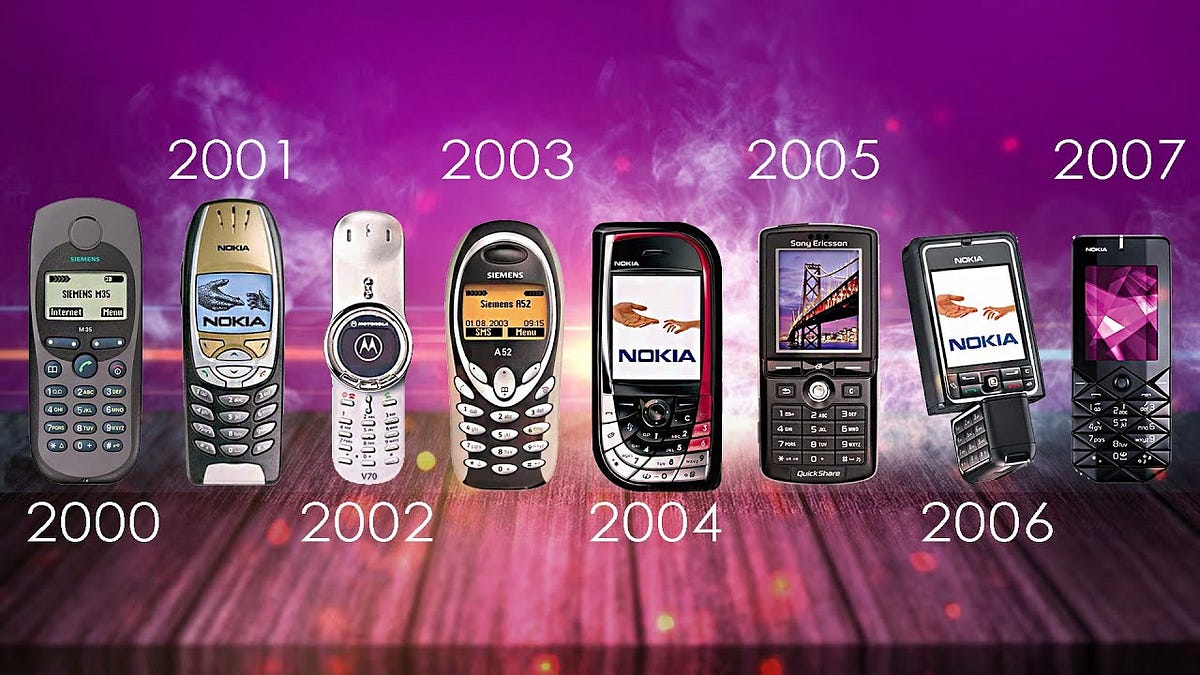
Core Insights - The article reflects on the evolution of technology design from the vibrant, personality-driven gadgets of the early 2000s to the sterile, uniform devices of today, highlighting a loss of individuality and creativity in tech design [1][10][25] Group 1: The Golden Age of Tech Design - In the early 2000s, gadgets were characterized by unique designs that expressed personal identity, with brands like Nokia, Sony Ericsson, and Motorola leading the way [2][3][4] - Nokia's models, such as the 7610 and 3310, were iconic for their distinctive shapes and colors, representing toughness and creativity [2][7] - Sony Ericsson's Walkman phones and Motorola's Razr V3 exemplified how technology could blend lifestyle and fashion, making devices feel alive and personal [3][4] Group 2: The Shift to Uniformity - Around 2015, tech design began to converge into a uniform aesthetic, primarily influenced by Apple's minimalist approach with the iPhone 6 [10][11] - Major manufacturers, including Samsung and Huawei, adopted similar design principles, leading to a lack of differentiation in the market [12][13] - By 2017, the smartphone market had become visually stagnant, with new models offering only incremental changes rather than true innovation [13][21] Group 3: The Impact of Standardization - The standardization of design led to a decline in creativity and experimentation, as companies focused on maintaining a "correct" design language [19][25] - The excitement of new gadget announcements diminished, with consumers becoming indifferent to annual releases that felt repetitive [22][24] - The industry shifted from originality to marketing strategies that relied on scarcity and limited editions, rather than genuine innovation [24][25] Group 4: The Emotional Cost of Uniformity - The article argues that the loss of design diversity has flattened emotional connections to technology, turning gadgets into mere status symbols [17][25] - The once vibrant and curious tech landscape has been replaced by a focus on sterile efficiency, leading to a lack of excitement and discovery [17][25] - The article suggests that the industry must reclaim creativity and individuality to restore the thrill of innovation [26]



50 First Dates, Severance, and AI: The World’s Smartest Amnesiacs
Medium· 2025-11-10 20:02
50 First Dates, Severance, and AI: The World’s Smartest AmnesiacsLino Valdovinos6 min read·Just nowJust now--Press enter or click to view image in full size50 First Dates, Severance, and AI: The World’s Smartest AmnesiacsBefore I tell you what they have in common, let me check who I’m talking to.You watched the rise of ChatGPT and friends. Every week someone posts a chart about how models went from high school level to PhD level. Your timeline says this is the end of work. Maybe your company had a meeting a ...

Apple M5 vs M4 Pro: Real-World Performance Test Results
Medium· 2025-11-10 19:15
Core Insights - The M5 MacBook Pro introduces significant improvements in storage capacity and SSD performance compared to the M4 Pro, with Apple claiming up to 2× faster SSD performance [2][4] - The M4 Pro remains superior in raw performance, particularly for demanding tasks, while the M5 focuses on efficiency and AI capabilities [5][56] Performance Comparison - The M5's read speeds are comparable to the M4 Pro, but the M4 Pro's SSD is approximately 15.7% faster in write speeds [3][4] - In synthetic benchmarks, the M5 scores 4,198 in single-core performance, about 5.8% faster than the M4 Pro's 3,966, while the M4 Pro excels in multi-core tasks with a score of 22,605, roughly 26% higher than the M5's 17,938 [12][13] - The M5's GPU features a dedicated Neural Accelerator in each core, resulting in over 4× the GPU speed compared to the M4, but the M4 Pro still outperforms the M5 in graphics-heavy tasks [18][20] AI and Creative Workflows - The M5 shows a significant leap in AI performance, with the GPU quantized score at 23,391, a 53% boost over the M4 Pro's 15,259 [25] - For video editing, the M4 Pro consistently outperforms the M5, completing tasks like rendering and exporting faster due to its higher core count and memory bandwidth [49][50] Battery Life and Efficiency - The M5 is built on a more advanced 3nm process, offering better power efficiency, but the M4 Pro's larger battery allows it to last longer in real-world tests, achieving 20 hours and 35 minutes compared to the M5's 18 hours [51][53][54] Target Audience - The M5 is designed for everyday users and creative professionals seeking efficiency and AI features, while the M4 Pro targets professional creators requiring maximum performance for intensive workloads [56][60]

Bangladeshi workers protest in Malaysia over unpaid wages and mistreatment claims
MINT· 2025-11-10 11:37
Core Points - Bangladeshi workers in Malaysia are protesting for unpaid wages and fair treatment, highlighting systemic abuse in the labor market [1][2][3] - The Migrant Welfare Network is advocating for immediate action from authorities and international buyers to address these issues [3] - Complaints have been filed against Malaysian companies Mediceram and Kawaguchi Manufacturing for labor exploitation and neglect [3][4] Group 1: Worker Conditions - Many factories in Malaysia depend on migrant workers from Bangladesh, Myanmar, and Nepal due to local workers avoiding low-wage, poor-condition jobs [3] - Reports indicate that Bangladeshi workers have faced significant wage withholding, with some not receiving payment for up to eight months [5][6] - The Malaysian Labor Court ruled that Mediceram should pay workers 1,000 ringgit per month, but payments were not consistently made [6][7] Group 2: Company Accountability - Complaints against Kawaguchi involve withholding wages and mistreatment, leading to diplomatic tensions between Bangladesh and Malaysia [5][7] - The Australian company Ansell, a major customer of Mediceram, is implicated in a complaint regarding forced labor practices [3][4] - The situation has prompted calls for stricter oversight of recruitment agencies and middlemen involved in the employment of migrant workers [7]

Japanese investors turn to Europe as deep tech boom lures capital abroad
CNBC· 2025-11-10 11:22
Core Insights - A significant influx of Japanese capital is being directed towards European tech startups, particularly in the deep tech sector, as Japanese investors seek a more mature entrepreneurial environment [1][9] - Since the EU-Japan Economic Partnership Agreement in 2019, Japanese investors have participated in over 33 billion euros ($38 billion) in European financing rounds, a stark increase from 5.3 billion euros in the five years prior [2][3] Investment Trends - Japanese venture capital firms, including NordicNinja, are increasingly backing European startups, with a focus on deep tech and artificial intelligence, which accounted for 70% of their deals in 2024 [9][10] - The top-funded companies with Japanese participation include Wayve, Quantinuum, and Multiverse Computing, which raised significant amounts in recent funding rounds [10] Market Dynamics - There are more VC-backed startups in Europe than in Japan, with a ratio of over two times per capita and 4.3 times more unicorns [5] - Japanese firms are leveraging their extensive manufacturing and industrial expertise to fill gaps in Europe’s scaling capabilities, particularly in sectors like energy and critical minerals [12][14] Cultural and Operational Considerations - Language barriers and cultural differences pose challenges for collaboration between Japanese and European firms, affecting decision-making processes and partnership dynamics [16][17][18] - Japanese investors tend to have a slower decision-making pace due to thorough research and preparation, contrasting with the more rapid approaches seen in other regions [18][21] Future Outlook - Expectations indicate that Japanese investors will participate in rounds worth 3 billion euros in 2025, a decrease from previous years, amidst shifting investment interests towards the Middle East [23][24] - Political motivations in Japan are driving a strategic push for greater collaboration with Europe, aiming to enhance the geopolitical positioning of Japanese corporates [25]


Panasonic India now seen more as Indian company with Japanese roots: Manish Sharma
MINT· 2025-11-09 09:17
Core Insights - Panasonic India is evolving from a consumer-centric company to a technology and manufacturing powerhouse, emphasizing a solutions-oriented approach [2][4][14] - The company operates with two main growth engines: a consumer business and a B2B industrial solutions portfolio, with the latter currently driving faster growth [2][3] - The smart factory solutions business is projected to grow significantly, potentially reaching ₹1,000-2,000 crore in the coming years due to the expansion of surface mount technology (SMT) machines [3] Company Transformation - The leadership transition marks a significant cultural shift within Panasonic India, moving from a hierarchical structure to a more decentralized, entrepreneurial organization [4][5] - The outgoing Chairman highlighted the importance of empowering employees and fostering a sense of ownership, which has been a key aspect of the company's transformation [5][11] - Panasonic India is increasingly perceived as a company that operates for the Indian market while maintaining its Japanese roots [14] Leadership and Future Outlook - The outgoing Chairman, who has been with the company since 2008 and served as Chairman for the last two years, is handing over leadership to Tadashi Chiba [6][10] - The Chairman's tenure is noted for significant contributions to both business growth and cultural transformation within the organization [15] - Future plans for the outgoing Chairman include announcing a new venture that is expected to have a larger impact than previous roles [9]

From Courtroom to Creative Lab: How Universal Music and Udio Rewrote the Rules of AI Music
Medium· 2025-11-08 13:16
Core Insights - Udio faced a lawsuit from the Recording Industry Association of America, representing major labels, alleging copyright infringement with potential damages reaching $250 million [1][2] - Sixteen months later, UMG and Udio announced a partnership to create a licensed AI music platform, marking a significant shift in the relationship between AI companies and the music industry [4][5] Group 1 - The lawsuit claimed copyright infringement on a large scale, with 1,670 songs listed, leading to potential liabilities of up to $150,000 per infringed work [1] - Udio had previously raised $10 million in seed funding, highlighting the financial strain the lawsuit could impose [2] - The settlement and partnership represent a new framework for AI companies to engage with copyrighted music, indicating a potential shift in industry standards [5] Group 2 - The collaboration aims to launch a licensed AI music platform in 2026, showcasing a proactive approach to integrating AI in the music industry [4] - This case raises important questions about the future interactions between AI technology and copyright laws in the music sector [5]

Best 5 Cameras for Every Budget
Medium· 2025-11-08 05:23
Core Insights - The article presents a selection of five cameras suitable for various budgets and skill levels, emphasizing their performance, price, and reliability [1][3]. Group 1: Camera Recommendations - **Canon EOS R50**: An entry-level mirrorless camera ideal for beginners and travel vloggers, featuring 4K video, fast autofocus, and excellent low-light performance [4]. - **Sony ZV-E10**: Tailored for content creators, this camera offers 4K video, face-tracking autofocus, and a built-in directional mic, making it perfect for vloggers and social media creators [5][6]. - **Nikon Z5**: A full-frame camera that provides high-quality performance at a lower price, suitable for intermediate photographers and hobbyists [6]. - **Fujifilm X-S20**: Known for its professional-grade quality and film simulation modes, this camera is ideal for hybrid shooters who need both photo and video capabilities [7]. - **Panasonic Lumix G100**: An affordable all-rounder for beginners and casual photographers, offering solid 4K video and portability [8]. Group 2: Final Thoughts - The article concludes that the Canon EOS R50 and Panasonic G100 are great choices for beginners, while the Nikon Z5 and Fujifilm X-S20 offer professional performance at good value [10].