Tesla

Search documents
Here's Why Tesla Is Discontinuing the Model S and Model X
The Motley Fool· 2026-02-21 06:38
Core Viewpoint - Tesla's decision to discontinue the Model S and Model X is part of a strategic evolution towards a focus on autonomy rather than a retreat from the electric vehicle market [1][2]. Group 1: Production Decisions - The Model S and Model X are higher-cost models that do not significantly contribute to Tesla's sales, with only 4,000 units delivered in the last quarter, representing just 1.2% of total deliveries [4]. - The market is shifting towards lower-cost models, as evidenced by the decline in Model S/X sales and the production of more affordable versions of the Model 3 and Model Y [5]. - Tesla is reallocating production space at its Fremont factory, previously used for the S and X, to manufacture its Optimus robot as part of a $20 billion capital spending commitment by 2026 [6]. Group 2: Market Trends and Future Direction - The automotive industry is moving towards an autonomous future, with Tesla making gradual progress towards achieving autonomous robotaxis, unlike competitors who have struggled in this area [8]. - The cost dynamics of electric vehicles favor heavy usage, particularly in taxi applications, which will be enhanced by the introduction of dedicated robotaxi vehicles like the Cybercab [9]. - Discontinuing the Model S and Model X aligns with current market conditions and the overall direction of the EV market, marking a natural evolution in Tesla's business strategy [12].


US stock market surging big today: What’s fueling Dow Jones, S&P 500 and Nasdaq gains right now? Amazon, Nvidia and Magnificent Seven stocks power rally
The Economic Times· 2026-02-20 19:27
Market Reaction - The US stock market surged following a Supreme Court ruling that invalidated President Trump's broad tariff policy, leading to a recovery from an early 200-point loss in the Dow Jones Industrial Average [3][20] - The Dow Jones climbed to 49,515.45, up 120.29 points (0.24%), while the S&P 500 rose 39.06 points to 6,900.95 (+0.57%), and the Nasdaq Composite surged 192.37 points to 22,875.10 (+0.85%) [3][20] Tariff Impact - The Supreme Court ruled that the International Emergency Economic Powers Act (IEEPA) does not authorize sweeping global tariffs, which undercut a key trade policy tool used by the Trump administration [5][20] - The ruling is expected to reduce cost pressures for companies reliant on imports from China and other Asian markets, leading to margin expansion for retail and e-commerce companies [6][20] Company Performance - Amazon, which sources a significant portion of its goods internationally, saw its stock rise approximately 2.6% to $210.27, while shares of Home Depot and Five Below also advanced [10][20] - Big-cap tech stocks, including Nvidia and Tesla, contributed significantly to the market rally, with Nvidia trading near $189.92, up about 1% [10][20] Economic Data - US GDP growth slowed to an annualized rate of 1.4% in the fourth quarter, below the expected 2.5%, indicating cooling economic momentum [12][20] - Core PCE inflation remained steady at 3%, above the Federal Reserve's target of 2%, suggesting persistent inflationary pressures despite the tariff ruling [14][20] Commodity Market Reaction - Commodity markets reacted with gold prices climbing to approximately $5,092 per contract, up nearly 1.9%, and silver surging almost 7% to around $82.97, indicating investor hedging behavior amid economic uncertainty [18][20]


Tesla loses bid to toss $243 million verdict in fatal Autopilot crash suit
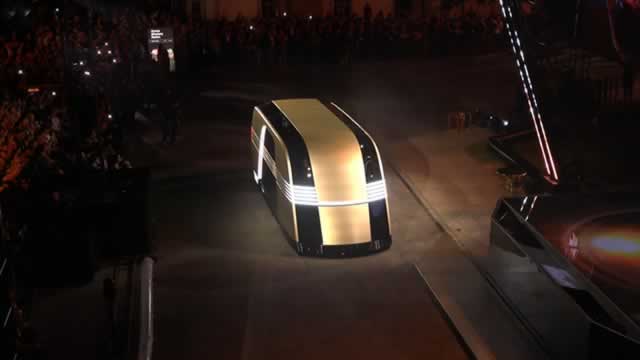
CNBC· 2026-02-20 17:46
Core Viewpoint - A federal judge in Miami upheld a $243 million verdict against Tesla, requiring the company to compensate the family of a victim from a 2019 Autopilot crash, marking a significant legal setback for the automaker [1][4]. Incident Details - The crash occurred in Key Largo, Florida, resulting in the death of 22-year-old Naibel Benavides and severe injuries to her boyfriend, Dillon Angulo. The Tesla Model S was being driven by George McGee, who was using the Enhanced Autopilot system at the time of the accident [2]. - McGee's vehicle accelerated through an intersection at over 60 miles per hour, colliding with a parked car and its owners, leading to the jury's determination that Tesla was partially responsible for the crash [3]. Legal Proceedings - Judge Beth Bloom stated that the evidence presented during the trial supported the jury's verdict, and there was no justification for a new trial or a change to the verdict [4]. - The plaintiffs' lead counsel expressed satisfaction with the ruling, emphasizing Tesla's liability due to the Autopilot's role and the company's misrepresentations [5]. Tesla's Market Position - This ruling represents a setback for Tesla as it attempts to compete in the emerging robotaxi market, where it lags behind competitors like Alphabet's Waymo and Baidu's Apollo Go [6]. - Elon Musk has projected that Tesla will establish a "widespread" network of driverless robotaxis in the U.S. by the end of 2026, although the company currently operates only a limited number of robotaxis in Austin, Texas [6]. Financial Implications - Tesla's legal team argued for a reduction in compensatory damages from $129 million to a maximum of $69 million, which would result in a $23 million payout. They also sought to limit punitive damages due to Florida's statutory cap [7].
Tesla loses bid to overturn $243M Autopilot verdict
TechCrunch· 2026-02-20 17:37
Core Viewpoint - A judge has upheld a $243 million jury verdict against Tesla, holding the company partially responsible for a fatal crash involving its Autopilot system [1][2]. Group 1: Legal Proceedings - The judge, Hon. Judge Beth Bloom, denied Tesla's request to overturn the jury verdict, stating that the arguments presented were similar to those previously considered and rejected during the trial [2]. - The jury had awarded the $243 million verdict in August, attributing two-thirds of the blame to the driver and one-third to Tesla, with punitive damages assessed only against Tesla [2]. Group 2: Tesla's Defense - Tesla's legal team argued that the driver was primarily at fault for the crash, which they claimed should absolve the company of responsibility [3].
Judge upholds $243M verdict against Tesla in Autopilot crash that killed woman
New York Post· 2026-02-20 16:49
Core Viewpoint - A federal judge upheld a $243 million jury verdict against Tesla related to a fatal crash involving its Autopilot system, indicating that the evidence supported the jury's decision and Tesla failed to present new arguments for overturning the verdict [1][4]. Group 1: Legal Outcome - The jury found Tesla 33% responsible for the crash that occurred on April 25, 2019, resulting in compensatory damages of $19.5 million awarded to the estate of the deceased and $23.1 million to the injured party, along with $200 million in punitive damages [5]. - This verdict marks the first federal jury decision regarding a fatal accident involving Tesla's Autopilot technology [5]. Group 2: Tesla's Position - Tesla contends that the driver, George McGee, should bear sole responsibility for the crash, asserting that the Model S was not defective and that the verdict was illogical [6][9]. - The company argues that automakers should not be held liable for damages caused by reckless drivers and claims that the punitive damages awarded should be zero, as it did not show "reckless disregard for human life" under Florida law [7]. Group 3: Future Actions - Tesla, led by Elon Musk, is expected to appeal the decision, although its legal team did not provide immediate comments on the matter [2][9].
Business celebrates win over Trump tariffs, but refunds will take time
Reuters· 2026-02-20 16:02
Core Viewpoint - The U.S. Supreme Court's ruling to overturn Trump's emergency tariffs could lead to refunds of approximately $175 billion in tariffs, significantly impacting businesses and consumers, although the refund process is expected to be slow [1]. Group 1: Impact on Businesses - Thousands of businesses are now considering pursuing refunds due to the Supreme Court ruling, which affects not only those that sued but also a broader range of companies [1]. - Affected companies, including luxury brands like LVMH and Moncler, saw positive stock reactions following the ruling [1]. - The corporate sector, particularly in consumer goods, automotive, manufacturing, and apparel, has been heavily impacted by tariffs that increased costs and disrupted supply chains [1]. Group 2: Refund Process and Legal Actions - The refund process is anticipated to be lengthy, with many companies potentially waiting months to years to recoup tariffs [1]. - Over 1,800 tariff-related lawsuits have been filed since April, a significant increase from fewer than two dozen in 2024, indicating a growing trend of legal challenges against tariffs [1]. - Companies may face challenges in gathering detailed import data necessary for calculating tariffs paid under various regimes [1]. Group 3: Consumer Impact - The Federal Reserve Bank of New York reported that 90% of the costs from Trump's tariffs are borne by American consumers and companies, countering the argument that foreign entities bear the burden [1]. - The effective U.S. tariff rate was reported at 11.7% as of November, significantly higher than the average of 2.7% between 2022 and 2024 [1]. Group 4: Future Tariff Landscape - Despite the ruling, tariffs are expected to continue under different legal frameworks, particularly in sectors deemed crucial for national security [1]. - The automotive sector will still face significant tariffs not related to the overturned emergency powers, such as the 25% tariffs on vehicles from Mexico and Canada [1]. - Some companies are opting to sell their rights to collect refunds to outside investors, receiving a small upfront payment while forfeiting the remainder [1].

Elon Musk's Tesla unveils cheaper Cybertruck at under $60K — but there's a catch
New York Post· 2026-02-20 15:59
Core Insights - Tesla has introduced a more affordable variant of the Cybertruck, priced at $59,990, while also reducing the price of its premium model, Cyberbeast, from $114,990 to $99,990, in an effort to boost sales amid declining demand for its pickup trucks [1][2][5]. Group 1: Product Pricing and Variants - The new dual-motor, all-wheel-drive Cybertruck model is now the most affordable option at $59,990 [2]. - The price of the Cyberbeast has been cut to $99,990, indicating a strategic shift to attract more buyers [5][9]. - The limited-time pricing for the new variant is effective for only 10 days, as stated by CEO Elon Musk [4]. Group 2: Sales and Market Challenges - Tesla is facing challenges with sales, attributed to multiple recalls and quality control issues that have deterred potential customers [1][9]. - The company has seen a decline in sales due to fewer new model introductions and increased competition from rivals [9]. - The broader electric vehicle market has slowed down since the end of federal tax credits, further impacting Tesla's sales [9]. Group 3: Strategic Shifts and Future Plans - CEO Elon Musk is shifting focus from electric vehicle manufacturing to other business lines, including robotics and self-driving technology [7][11]. - Price cuts are a key component of Tesla's strategy for 2026, aimed at attracting cost-conscious consumers [11]. - Analysts have raised concerns that a higher proportion of lower-priced vehicles could pressure profit margins unless offset by reduced manufacturing costs or increased revenue from software and services [12].
US judge upholds $243 million verdict against Tesla over fatal Autopilot crash
Reuters· 2026-02-20 14:36
US judge upholds $243 million verdict against Tesla over fatal Autopilot crash | ReutersSkip to main content[Exclusive news, data and analytics for financial market professionalsLearn more aboutRefinitiv]Tesla logo is seen in this illustration taken July 23, 2025. REUTERS/Dado Ruvic/Illustration/File Photo [Purchase Licensing Rights, opens new tab]- Companies[Tesla Inc]FollowFeb 20 (Reuters) - A federal judge rejected Tesla's [(TSLA.O), opens new tab] request to pay $243 million to victims of a 2019 fatal c ...
Tesla's ‘most affordable' Cybertruck is here. But Musk hints it won't stay cheap for long.
MarketWatch· 2026-02-20 14:11
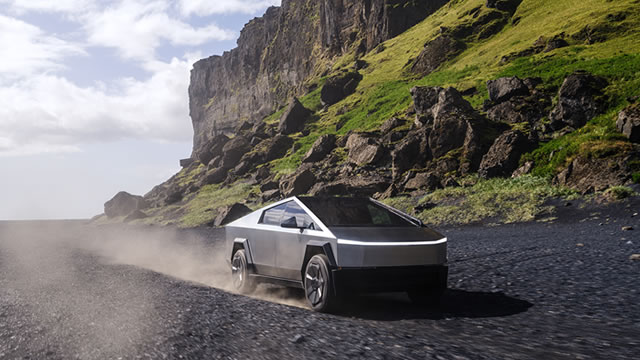
Core Viewpoint - Tesla has introduced its most affordable Cybertruck model priced at $59,990, which is $20,000 less than the next cheapest model, but CEO Elon Musk suggests that this pricing may not last long [1] Pricing Strategy - The new dual-motor all-wheel-drive Cybertruck model is priced at $59,990 [1] - The price of the most expensive trim, the Cyberbeast, has been reduced from $114,990 to $99,990 [1] - Tesla also offers a premium all-wheel-drive Cybertruck starting at $79,990 [1] Market Performance - The Cybertruck has not met the popularity expectations set by the company, with pricing being a contributing factor [1]
Beyond Tesla and Nvidia: 2 Overlooked Robotics Stocks Just Blew Out Earnings
247Wallst· 2026-02-20 13:44
Core Insights - Two overlooked robotics stocks, Cognex and Teradyne, reported strong earnings, drawing renewed analyst attention as they capitalize on the growing robotics and AI market [1][2] Group 1: Cognex - Cognex is a leader in industrial machine vision, enabling robots to perform tasks such as quality inspection and warehouse picking, with Q4 revenue of $252.34 million exceeding estimates of $238.9 million [1] - The company achieved an adjusted EBITDA margin of 22.7%, marking a 420 basis point increase year-over-year and the sixth consecutive quarter of margin expansion [1] - Cognex's full-year free cash flow surged 77% year-over-year to $236.77 million, allowing for $206 million in shareholder returns through buybacks and dividends, with a new $500 million share repurchase program authorized [1] Group 2: Teradyne - Teradyne, known for semiconductor test equipment, also has a growing robotics division, reporting Q4 revenue of $1.083 billion, surpassing estimates of $987.8 million by 10% [1] - The company’s Q4 EPS of $1.80 exceeded the consensus estimate of $1.38 by 30%, with revenue driven by AI-related demand in various sectors [1] - For Q1 2026, Teradyne guided revenue of $1.15 billion to $1.25 billion, representing 75% year-over-year growth at the midpoint, with non-GAAP EPS expected between $1.89 and $2.25 [1]