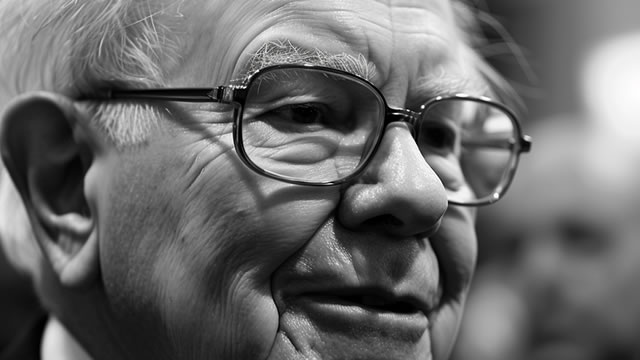
Berkshire Hathaway

Search documents
The legendary Warren Buffett steps back this week and Berkshire Hathaway enters a new era
Yahoo Finance· 2025-12-30 15:00
Core Insights - Greg Abel is set to take over Berkshire Hathaway from Warren Buffett, who is regarded as one of the greatest investors in history [1][2] - Buffett transformed Berkshire from a struggling textile mill into a massive conglomerate, with shares now exceeding $750,000 and his personal fortune in Berkshire stock valued at approximately $150 billion [2] - Berkshire has historically outperformed the S&P 500, acquiring various companies across different sectors, including insurance, manufacturing, retail, utilities, and railroads [3] Company Performance - In recent years, Berkshire has struggled to maintain its growth pace due to its size and challenges in finding significant new acquisitions [4] - The recent $9.7 billion acquisition of OxyChem is not expected to significantly impact Berkshire's profits [4] Leadership Transition - Abel has been managing Berkshire's non-insurance businesses since 2018, and Buffett will continue to serve as chairman, providing guidance and support [5] - Changes in management style are anticipated, with Abel likely adopting a more traditional leadership approach given the company's decentralized structure [5][6] - The company culture is expected to remain intact, as Abel was designated as Buffett's successor in 2021, with assurances from Charlie Munger that the company's values would be preserved [6] Operational Structure - Berkshire operates under a decentralized structure, allowing executives significant autonomy in decision-making, and there are no plans to alter this approach [6][7] - Buffett's strategy has been to reassure company founders that Berkshire will allow them to run their businesses independently as long as they achieve results [7]
Warren Buffett is retiring — here's what his favorite indicator reveals about the stock market
Yahoo Finance· 2025-12-30 14:20
One final check in with the investing GOAT's favorite stock market indicator before he rides off into the sunset. Berkshire Hathaway (BRK-B) CEO Warren Buffett, 95, will hand over the reigns to his hand-picked successor Greg Abel on Wednesday. The official passing of the torch caps a storied career for Buffett, which included buying a major US railroad (Burlington Northern), striking up a friendship with Microsoft (MSFT) co-founder Bill Gates, and offering up scores of pithy comments in annual shareholde ...
3 ETFs Warren Buffett Is Quietly Keeping in His Secret Portfolio
247Wallst· 2025-12-30 12:54
Core Insights - Warren Buffett's name is synonymous with Berkshire Hathaway, but he also holds a separate portfolio of ETFs managed by New England Asset Management [1][2][3] - Buffett is expected to retire soon, with Greg Abel set to take over, although Buffett will remain involved as chairman and controlling shareholder [2] - The upcoming Q4 2025 13F report will be the last one under Buffett's leadership as CEO [2] ETF Portfolio Overview - The ETFs in Buffett's secret portfolio include iShares Core MSCI EA (IEFA), Vanguard High Dividend Yield Index Fund ETF (VYM), and iShares Core MSCI International Developed Markets ETF (IDEV) [1][3] - The top two holdings in the portfolio are SPDR S&P 500 ETF Trust (SPY) and Vanguard S&P 500 ETF (VOO), which together account for a 16.13% exposure to the S&P 500 [4] iShares Core MSCI EA (IEFA) - IEFA provides exposure to developed-market stocks outside the U.S. and Canada, tracking the MSCI EAFE IMI Index [6] - It has outperformed both the S&P 500 and Nasdaq-100 year-to-date, with a gain of 27.8% and a dividend yield of 3.5% [8] - New England Asset Management allocates 6.37% of its portfolio to IEFA, valued at $48.7 million, with a 35.23% increase in holdings in Q3 [8] Vanguard High Dividend Yield Index Fund ETF (VYM) - VYM tracks the FTSE High Dividend Yield Index, focusing on U.S. stocks with above-average dividend yields [9] - It has increased by 13.74% over the past year, with a dividend yield of 2.41% and an expense ratio of 0.06% [10][11] - VYM constitutes 4.62% of NEAM's portfolio, valued at $35.37 million, with a 1.77% increase in holdings in Q3 [11] iShares Core MSCI International Developed Markets ETF (IDEV) - IDEV targets developed markets internationally, tracking an MSCI "World ex USA" index, including Canada [12] - It has gained 28.6% year-to-date, with a lower expense ratio of 0.04% and a dividend yield of 3.38% [12] - IDEV makes up 4.41% of NEAM's portfolio, valued at $33.72 million, with a 30.1% increase in holdings in Q3 [13]

A vicious cycle beats a virtuous one: How Warren Buffett’s Geico fell behind Progressive in the auto insurance race
Yahoo Finance· 2025-12-30 12:30
Warren Buffett’s failure to capitalize on the economy’s digital shift over the past two decades has hurt his otherwise enviable track record as an investor. His blind spot regarding tech didn’t stop at the stock market: It bled into how he ran Berkshire Hathaway’s operating companies as well. Across many of his wholly owned businesses, Buffett neglected technological upgrades, and Berkshire’s business value has suffered as a result. It’s important to understand this because the majority of Berkshire Hath ...
Warren Buffett’s blind spot: Did the digital economy leave him behind?
Yahoo Finance· 2025-12-30 12:30
Core Insights - Warren Buffett's investment performance has been significantly better in the first half of his career compared to the last eighteen years, with a million dollars invested in the S&P since 2007 yielding $6.6 million, while Berkshire Hathaway would have returned $5.3 million [1][2] - The evolution of Buffett's investment strategy can be divided into two distinct periods: Value 1.0, focused on undervalued companies, and Value 2.0, which emphasized strong, growing businesses [3][7][8] Investment Performance - A million dollars invested with Buffett from 1957 to 2007 would have grown to nearly $81 billion, while the same amount in the S&P would have reached $166 million [2] - In the last eighteen years, Buffett's performance has lagged behind the S&P, indicating a shift in investment dynamics [1][4] Value Investing Evolution - Value 1.0 involved investing in "cigar butt" companies, which were undervalued based on liquidation value, while Value 2.0 focused on businesses with strong earning potential and competitive advantages [7][8] - Buffett's partnership with Charlie Munger led to a shift from Value 1.0 to Value 2.0, emphasizing the importance of a company's ability to generate profits over time [8][9] Market Dynamics - The late 20th century saw stable competitive dynamics, allowing Buffett to invest confidently in dominant companies, but the rise of digital technology has disrupted these traditional models [12][19] - The advent of digital platforms has created new challenges for traditional businesses, as seen in the decline of mass media and the increasing irrelevance of brick-and-mortar banks [19][20] Technological Adaptation - Buffett has been slow to adapt to the digital age, missing opportunities in major tech companies like Amazon and Alphabet, which have outperformed traditional investments [25][30] - The shift towards asset-light business models in technology has changed the landscape, making it essential for investors to recalibrate their strategies [33][35] Future of Value Investing - The investment landscape has evolved, necessitating a new approach to value investing that incorporates the growth potential of technology companies [34][39] - Successful value investors are now adapting their strategies to include tech investments, recognizing the importance of innovation and reinvestment in driving future growth [39]



Markets face turbulence in 2026, Victoria Greene of G Squared Private Wealth
Youtube· 2025-12-30 12:18
Company Insights - Rio Tinto is highlighted as a significant player in the metals market, particularly in copper, iron ore, aluminum, and lithium, with a recent acquisition of Argentinian mines [5][8] - The company is viewed as a long-term hold, with a strong asset base and a focus on essential metals needed for technological advancements and infrastructure upgrades in the US [6][9] - Rio Tinto's stock has increased by 38% year-to-date, which is considered mild for a metals and mining stock, and it offers a solid dividend yield of 3.86% with a price-to-earnings ratio of about 12 [9][10] Industry Trends - The metals market is expected to experience increased volatility, particularly in 2026, which is historically a challenging year in the presidential cycle [3][4] - There is a growing demand for metals, especially copper, as countries seek to secure their metal supplies for various technological and infrastructural needs [10][11] - The focus is shifting towards higher quality and value investments in portfolios, indicating a more cautious approach in the current market environment [4][5] Leadership Changes - Berkshire Hathaway is under new leadership with Greg Ael succeeding Warren Buffett, and there is a belief that his approach and the company's substantial cash reserves (over $300 billion) present a buying opportunity despite the loss of the "Buffett premium" [12][13] - Ael's younger perspective and ability to make acquisitions without disrupting the foundation built by Buffett are seen as positive factors for the company's future [13]
Is Berkshire Hathaway Stock a Millionaire Maker?
The Motley Fool· 2025-12-29 23:45
Core Viewpoint - A significant leadership transition is occurring at Berkshire Hathaway as Warren Buffett prepares to hand over the CEO position to Greg Abel in early 2026, raising questions about the company's future direction and investment potential [1]. Group 1: Company Overview - Berkshire Hathaway is a highly diversified conglomerate with interests in various sectors, including insurance, transportation, utilities, energy, retail, and manufacturing [2]. - The company operates similarly to a mutual fund, with Buffett taking a hands-off management approach, focusing on investing the company's cash rather than day-to-day operations [4]. Group 2: Leadership Transition - Greg Abel, who has worked under Buffett for decades, is expected to maintain the existing successful business model without making drastic changes [6]. - Buffett will continue to serve as chairman of the board, providing oversight and guidance to Abel [6]. Group 3: Financial Position - As of the end of the third quarter, Berkshire Hathaway held over $380 billion in cash and short-term investments, providing both a safety net and opportunities for investment [7]. Group 4: Potential Changes Under New Leadership - Abel may adopt a more active management role compared to Buffett, which could enhance operational performance across Berkshire Hathaway's diverse businesses [9]. - The company has 189 operating businesses, and there is potential for improvement in performance, especially given Abel's managerial background [10]. Group 5: Long-term Outlook - If Abel retains Buffett's investment strategy while also improving operational efficiencies, Berkshire Hathaway could continue to be a strong investment opportunity [12]. - The realization of value from operational improvements may take time, and it could be a while before the market fully appreciates Abel's impact [13].
Warren Buffett is sitting on $400 billion: here's why that should worry investors
Invezz· 2025-12-29 20:31
Core Insights - Berkshire Hathaway, led by Warren Buffett, is currently holding approximately $400 billion in cash and Treasury equivalents, marking the largest idle cash reserve in corporate history [1] Group 1 - The substantial cash reserve is not merely a result of prudence but indicates a strategic positioning by the company [1]

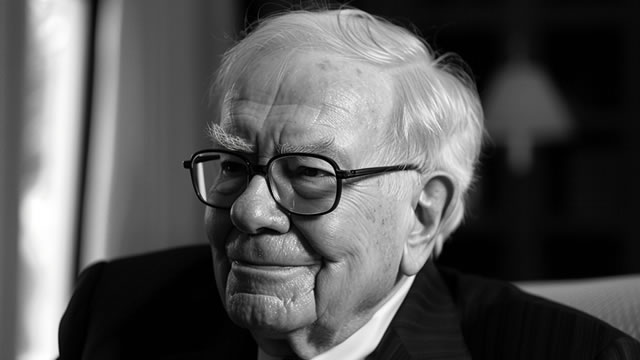
Wednesday Is Warren Buffett’s Last Day. Is Berkshire Hathaway a Buy Without Him?
Yahoo Finance· 2025-12-29 17:03
Core Insights - Warren Buffett's retirement marks the end of a significant era for Berkshire Hathaway, with Greg Abel set to take over as CEO on January 1 [2][3] - Buffett achieved over 5 million percent returns, averaging about 20% annually, significantly outperforming the S&P 500 [3] - The transition raises questions about Berkshire's attractiveness as an investment without Buffett's leadership [3] Buffett's Investment Philosophy - Buffett's value-driven investment style has been pivotal to Berkshire's success, focusing on acquiring high-quality businesses at reasonable prices and holding them long-term [4] - His legacy includes iconic investments in companies like Coca-Cola and American Express, showcasing a patient and principled approach to investing [5] - Buffett emphasized intrinsic value, economic moats, and disciplined capital allocation, fostering a decentralized culture within the company [5] Leadership Transition - Greg Abel, with extensive experience at Berkshire since 2000, is expected to maintain the company's value-oriented strategy, focusing on acquiring undervalued assets and prioritizing strong cash flows [6] - Abel has successfully grown Berkshire Hathaway Energy into a significant player in utilities and renewables, aligning with Buffett's long-term mindset and capital discipline [6] - Berkshire Hathaway currently holds $380 billion in cash, providing Abel with a strong foundation as he takes over [7] Market Position - Berkshire Hathaway trades at 1.5 times its book value, reflecting some uncertainty regarding the transition and concerns about losing the "Buffett premium" [7]
Wednesday Is Warren Buffett's Last Day. Is Berkshire Hathaway a Buy Without Him?
247Wallst· 2025-12-29 17:03
Core Insights - Warren Buffett's remarkable 60-year leadership at Berkshire Hathaway is concluding on Wednesday [1] Group 1 - Buffett has been a pivotal figure in shaping Berkshire Hathaway's investment strategies and corporate culture [1] - Under Buffett's guidance, Berkshire Hathaway has transformed into a diversified conglomerate with significant holdings in various industries [1] - The end of Buffett's tenure raises questions about the future direction of the company and its investment philosophy [1]