Berkshire Hathaway

Search documents
Warren Buffett's departure is putting a 'succession discount' on Berkshire Hathaway stock, a strategist says
Business Insider· 2025-12-29 15:47
Core Viewpoint - Berkshire Hathaway is undergoing a significant leadership transition with Warren Buffett set to retire at the end of 2025, which presents a potential investment opportunity as the stock is perceived to be undervalued during this period of change [1][2]. Group 1: Leadership Transition - Warren Buffett, aged 95, will step down after nearly 60 years, with Greg Abel taking over as CEO and remaining as chairman [2]. - The transition is referred to as a "succession discount," indicating that the stock may be trading below its potential due to uncertainty surrounding Abel's performance [2]. Group 2: Financial Performance - Berkshire Hathaway's stock price has increased nearly 11% this year, reflecting positive market sentiment despite the upcoming leadership change [2]. - The company has achieved a record cash pile of over $350 billion, or $382 billion when excluding payables for Treasury purchases, indicating strong liquidity [3]. - Operating income for the third quarter rose by 34% year-on-year to $13.5 billion, showcasing robust financial health [3]. Group 3: Future Investment Strategy - Under Greg Abel's leadership, Berkshire Hathaway may focus on investments in the energy and defense sectors, which are seen as having significant growth potential [4]. - The company has a history of identifying and capitalizing on market trends, positioning itself well for future opportunities [4]. Group 4: Leadership Endorsement - Warren Buffett has expressed strong confidence in Greg Abel, describing him as a "great manager" and emphasizing his capabilities in managing investments [5].


Why Alphabet Just Paid $4.75 Billion for Intersect -- and What It Means for the Future of Artificial Intelligence (AI)
Yahoo Finance· 2025-12-29 15:20
Core Insights - Alphabet has recently made significant moves, including a $4 billion investment from Berkshire Hathaway and the acquisition of Intersect for $4.75 billion, which has led to a surge in its stock price to all-time highs [1][2]. Group 1: Acquisition Details - Alphabet announced a definitive agreement to acquire Intersect, a company specializing in data center and energy infrastructure solutions, for $4.75 billion [2]. - The acquisition aligns with Alphabet's strategy to enhance its capabilities in artificial intelligence (AI) and energy management, which are critical for the future of its operations [2][8]. Group 2: Importance of Intersect - Intersect develops utility-scale renewable energy solutions for data centers, utilizing various power generation sources like wind, solar, and battery, which allows for efficient energy management [5][6]. - The rising costs of energy are a significant concern for AI developers, and Intersect's expertise in energy management can help Alphabet mitigate these costs as AI workloads increase [6][7]. Group 3: Strategic Implications - By acquiring Intersect, Alphabet aims to gain control over its future energy costs, improving efficiency in accessing data center capacity compared to relying on external utility providers [8]. - This move is consistent with Alphabet's vertically integrated business model across its various sectors, including search, cloud, advertising, and consumer electronics [9].

Americans have more cash in stocks than ever, a ‘red flag’ for equities. Where to shift your money instead for 2026
Yahoo Finance· 2025-12-29 14:03
Market Sentiment - Legendary investor Jim Rogers has sold all his U.S. stocks, indicating a bearish outlook, while Warren Buffett's Berkshire Hathaway has been selling large quantities of stock each quarter since 2024, raising concerns among investors [1][2][6] - A Bank of America survey reveals that 91% of fund managers believe U.S. stocks are overvalued, the highest level since 2001, suggesting a potential downshift in returns over the next decade [2][4] Stock Ownership Trends - Record levels of stock ownership in the U.S. coincide with increased risk of a market downturn, with 45% of Americans' household financial assets now in stocks, an all-time high [3][4] - Stock ownership has surpassed levels seen in the late 1990s, prior to the dot-com bust, raising alarm among economists [4][5] Market Performance Indicators - The "Buffett Indicator," which compares stock market performance to GDP, indicates that the market was at 230% of GDP in September 2025, suggesting potential overvaluation [6] - The S&P 500 has returned over 230% in the past decade, while the Nasdaq Composite has surged about 430% as of December 2025, reflecting a strong but potentially unsustainable market trend [3] Alternative Investment Strategies - Gold has gained 60% year over year and reached a record high of over $4,500 per ounce, with experts recommending it as a hedge against market downturns [10][9] - Real estate is highlighted as a productive asset class that can generate passive income even during market downturns, with platforms allowing investments in rental properties with minimal capital [12][14]
Warren Buffett gifts us these 5 investing gems, as Berkshire's new CEO takes the reins
MarketWatch· 2025-12-29 13:42
Core Insights - The letter to Berkshire Hathaway shareholders from 1994 highlights the fundamental principles behind Warren Buffett's investment success, emphasizing the importance of long-term thinking and value investing [1] Group 1 - The letter outlines three key principles that contribute to Buffett's investment strategy, which include understanding the business, focusing on intrinsic value, and maintaining a long-term perspective [1] - It emphasizes the significance of patience and discipline in investing, suggesting that successful investors must be willing to wait for the right opportunities [1] - The communication reflects Buffett's belief in the power of compounding returns over time, which is a critical factor in wealth accumulation [1]
After Buffett: Greg Abel's Berkshire test, says R360's Barbara Goodstein
Youtube· 2025-12-29 12:14
Core Viewpoint - Berkshire Hathaway has experienced significant growth, gaining approximately 6,000,000% since Warren Buffett took over, compared to the S&P's 46,000% increase [1] Investment Attractiveness - The attractiveness of Berkshire Hathaway remains strong despite concerns about Warren Buffett's eventual succession, as the company is still respected for its investment strategies [2] - There is a perceived "succession discount" in the stock price, as investors await the performance of Greg Abel, who is expected to take over [3] Cash Reserves and Investment Opportunities - Berkshire Hathaway currently holds a cash pile of $382 billion, which presents opportunities for future investments [4] - Potential areas for investment include railroads and energy, with a focus on achieving returns above the risk-free rate of approximately 4% [5][6] Sector Focus - Energy and defense sectors are highlighted as having significant upside potential in the coming years [7] - The company is also expected to explore international markets, building on previous successful investments in Japan [14] Future Moves and Strategic Planning - Greg Abel's ability to make significant investments will be closely monitored, with expectations that he will make strategic moves in the near future [10][12] - The performance benchmarks for Abel include achieving returns that exceed the nominal 4-5% that could be earned by holding cash [16]

Warren Buffett's $381 Billion Warning to Wall Street, His Last as Berkshire Hathaway CEO, is Ringing Out Loud and Clear. History Offers a Strikingly Precise Picture of What May Happen in 2026.
The Motley Fool· 2025-12-29 09:10
Core Message - Warren Buffett's recent investment moves signal a warning to Wall Street, reflecting a cautious outlook as he prepares to step down as CEO of Berkshire Hathaway, with a record cash level of $381 billion indicating limited stock purchases [1][8]. Group 1: Buffett's Leadership Transition - Buffett will continue as chairman of Berkshire Hathaway but will hand over investment decisions to Greg Abel starting January 1 [2]. - Investors are closely monitoring Buffett's final moves as CEO due to his historical success and influence in the market [5]. Group 2: Investment Strategy and Market Conditions - Buffett has been a net seller of stocks for the past 12 quarters, indicating a lack of attractive investment opportunities in the current market [8]. - The S&P 500 Shiller CAPE ratio suggests that stocks are at record levels, which aligns with Buffett's reluctance to buy overvalued stocks [9]. - Historical data shows that peaks in the Shiller CAPE ratio have often preceded declines in the S&P 500, suggesting potential market downturns in 2026 [10]. Group 3: Implications for Investors - Investors should focus on stock valuations rather than popularity, as Buffett's recent moves highlight the importance of buying stocks at reasonable prices [12]. - While historical trends indicate potential declines, the S&P 500 may still finish positively in the long term, as it has rebounded after past declines [13][14].
Dave Collum's 2025 Year In Review: From Precious Metals To Propaganda's Golden Age
ZeroHedge· 2025-12-28 19:00
Core Insights - The 2024 Year in Review highlights the rise of propaganda, the impact of AI, and the emergence of asset bubbles, particularly in precious metals, while questioning the nature of truth in a rapidly changing technocratic world [3][16]. Group 1: Propaganda and Truth - The current era is characterized as a "Golden Age of Propaganda," where narratives are controlled by elites through mass media and social platforms, leading to a distortion of facts and a loss of shared truths [16][14]. - The author expresses frustration over the erosion of reliable sources of information, suggesting that the overwhelming noise in media makes it difficult to discern fact from fiction [15][20]. Group 2: Precious Metals Market - The report emphasizes a significant interest in precious metals, particularly gold, silver, and platinum, with gold's long-term performance being compared favorably against major stock indices [60][64]. - Gold has shown a remarkable return of over 1309.5% since 2000, outperforming the S&P 500 and NASDAQ over the same period [66]. - The current geopolitical climate, including the actions of the BRIC nations, is pushing countries to reconsider their gold reserves, with the U.S. now holding only 20% of global gold reserves compared to over 50% in the past [70][84]. Group 3: Investment Implications - The report suggests that the demand for gold and silver is being driven by geopolitical tensions and a potential shift in reserve currency dynamics, which could lead to significant price increases [84][89]. - The author notes that the physical gold market is under pressure due to a high paper-to-physical ratio, indicating potential supply shortages that could lead to price spikes [82][100]. - Platinum is highlighted as a rare metal with increasing industrial demand, particularly in the automotive sector, which could lead to supply constraints and rising prices [106][111].


If You'd Invested $500 in Berkshire Hathaway Class B Shares 10 Years Ago, Here's How Much You'd Have Today
The Motley Fool· 2025-12-28 17:05
Core Viewpoint - Warren Buffett, regarded as one of the greatest investors, is set to step down as CEO of Berkshire Hathaway, prompting reflections on his legacy and the company's future [1][2]. Company Performance - Over the past decade, a $500 investment in Berkshire Class B shares has grown to $1,868, yielding a total return of 274%, which slightly outperforms the broader S&P 500 Index [9]. - Berkshire Hathaway's market capitalization stands at $1.1 trillion, with a current stock price of $498.30, reflecting a recent change of -0.61% [5]. Company Structure and Strategy - Berkshire Hathaway has evolved significantly, now managing an equities portfolio exceeding $300 billion, which complicates the ability to swiftly adjust positions [7]. - Despite its size, Berkshire has consistently outperformed the S&P 500 Index over the past decade, indicating effective management and investment strategies [7]. Market Context - The current market is heavily influenced by high-performing artificial intelligence stocks, positioning Berkshire's stock as a relatively safer investment through various business cycles [9].
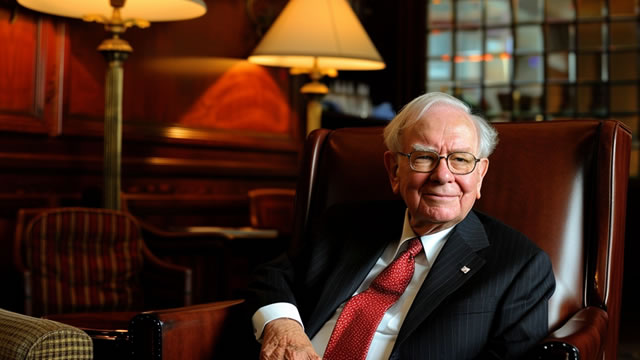
Warren Buffett Once Got Permission From the SEC to Hide His Trades for a Year to Buy 1 Stock: Decades Later, Is It Still a Buy?
Yahoo Finance· 2025-12-28 16:45
Core Insights - Warren Buffett's investment strategy in Coca-Cola has been a significant contributor to Berkshire Hathaway's returns, showcasing the impact of long-term investment decisions [6][8] - The investment in Coca-Cola, initiated in the late 1980s, has yielded substantial dividends, with Berkshire receiving $816 million annually, reflecting a strong return on investment [5][7] Investment History - In the late 1980s, Buffett sought permission from the SEC to keep his trades confidential, believing that his reputation could influence market movements [1][2] - Buffett invested $600 million in Coca-Cola when its stock price fell to $38 per share due to a pricing war with Pepsi, eventually acquiring 400 million shares at an average cost of $3.25 per share [3][4] Financial Performance - Coca-Cola's share price has increased by over 2,000% since Buffett's initial investment, and the annual dividend income from this position has grown from $702 million in 2022 to $816 million [5][7] - Buffett highlighted Coca-Cola as part of the "secret sauce" behind Berkshire's impressive returns of 3,787,464% since 1965, emphasizing the importance of dividend growth [6][8]

EXCLUSIVE: Warren Buffett Is 'The Ultimate Investor' – Market Expert Jay Woods Says Berkshire CEO 'The Stuff Of Legends'
Benzinga· 2025-12-28 14:31
Core Viewpoint - Warren Buffett is set to step down as CEO of Berkshire Hathaway at the end of 2025, marking the end of an era for the company and the investment community [1][3]. Group 1: Buffett's Investment Philosophy - Buffett is recognized as the ultimate investor, known for his long-term approach and focus on quality investments rather than day-to-day operations [2][3]. - His trading philosophy has rewarded investors significantly, emphasizing the importance of buying quality at a cheap price [2][3]. Group 2: Impact of Buffett's Departure - The departure of Buffett signifies a major transition for Berkshire Hathaway, with expectations that the company's investment philosophy will remain largely unchanged [6]. - There is curiosity about the new team's investment strategy, especially as Berkshire has shown a more "risk on" approach with recent investments in companies like UnitedHealth Group and Alphabet Inc [7]. Group 3: Recent Investments by Berkshire Hathaway - Berkshire Hathaway has continued to invest in quality companies, with notable recent investments in UnitedHealth Group and Alphabet Inc, indicating a shift towards more technology names [7]. - The ongoing investment in Occidental Petroleum raises questions about Berkshire's commitment to the energy sector and its long-term strategy [8].