
Cargill

Search documents
X @Bloomberg
Bloomberg· 2025-10-21 16:05
Cargill’s profit surged 86% in the first quarter as the largest private company in the US benefited from President Donald Trump’s tax bill and better performance in all its business segments https://t.co/0Gngf6hfrk ...
X @Bloomberg
Bloomberg· 2025-09-30 17:40
Brazil’s antitrust regulator ruled in favor of major soybean traders, saying companies including Cargill and Bunge Global are allowed to continue a pact that boycotts crops from recently deforested land in the Amazon https://t.co/Wke0U61YgI ...
行业聚焦:全球黄糊精和白糊精市场头部企业份额调研(附Top10 厂商名单)
QYResearch· 2025-09-24 09:41
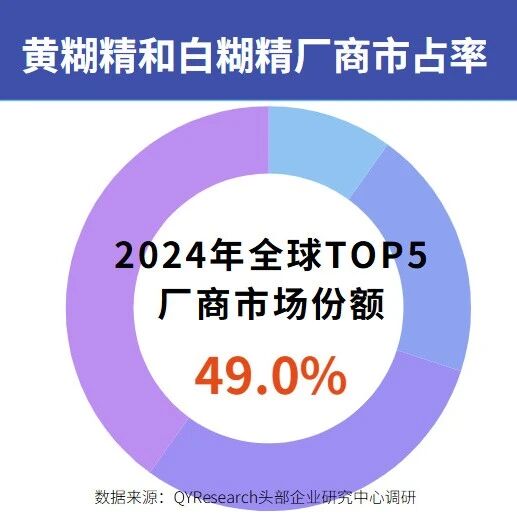
Core Insights - The article discusses the applications and market potential of yellow dextrin and white dextrin in various industries, particularly textiles and adhesives, highlighting their properties and expected market growth [1][13]. Market Overview - The global market for yellow dextrin and white dextrin is projected to reach USD 180 million by 2030, with a compound annual growth rate (CAGR) of 5.6% in the coming years [1]. Product Applications - Yellow dextrin is primarily used in adhesive industries, accounting for approximately 54.8% of the demand, while it also serves in textile and casting applications [11][13]. - White dextrin is utilized in the textile industry for yarn or fabric sizing, enhancing adhesion and reducing sizing costs [1]. Key Players - Major manufacturers in the global yellow dextrin and white dextrin market include Avebe, Tate & Lyle, Lyckeby Amylex, Emsland Group, and Cargill, with the top five companies holding about 49.0% of the market share in 2024 [5][19]. Product Segmentation - Yellow dextrin is the leading product type, representing around 67.1% of the market share [9]. Market Drivers - The widespread application of yellow dextrin and white dextrin in adhesive, textile, casting, food, and pharmaceutical industries is a significant driver for market growth [13]. - The maturity of production processes for these products also supports market stability [17]. Challenges - The global economy faces risks of entering a low-growth phase, which could impact the market dynamics for yellow dextrin and white dextrin [18].

行业聚焦:全球牛代乳品市场头部企业份额调研(附Top10 厂商名单)
QYResearch· 2025-09-16 03:55
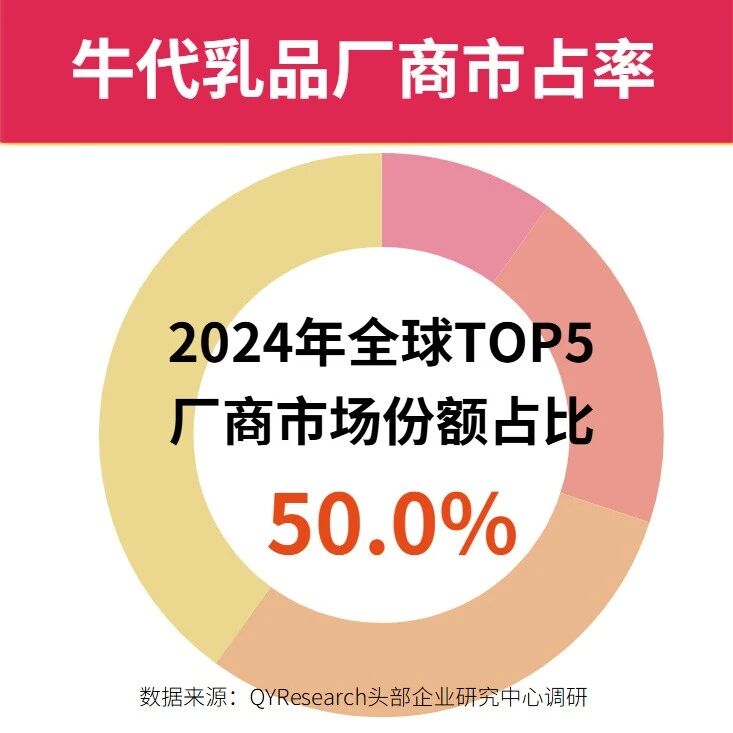
Core Viewpoint - The global calf milk replacer (CMR) market is projected to reach USD 5.54 billion by 2031, with a compound annual growth rate (CAGR) of 6.4% in the coming years [1]. Market Overview - CMR is designed specifically for calves and serves as an artificial milk substitute, primarily composed of whey powder, milk protein, plant protein, lactose, fats, minerals, vitamins, and enzymes [1]. - The market is segmented into milk-based and plant-based replacers [1]. Market Size and Growth - According to QYResearch, the global CMR market is expected to grow significantly, with a forecasted market size of USD 5.54 billion by 2031 [1]. Key Players - Major global CMR manufacturers include Nutreco, Land O' Lakes, Cargill, VanDrie, ADM, Lactalis, Alltech, CHS, Actus Nutrition, and Kalmbach Feeds [6]. - The top five manufacturers are estimated to hold approximately 50% of the market share in 2024 [6]. Market Drivers - The growth in global population and increased demand for meat and dairy products are driving the scale of livestock farming, which in turn raises the nutritional management requirements for calves [9]. - Advances in biotechnology, fermentation technology, and microencapsulation are diversifying and enhancing the functionality of CMR products [9]. - The adoption of digital management tools and smart feeding devices is integrating CMR with IoT and data analytics, enabling precise nutrition delivery and real-time health monitoring [9]. - Emphasis on animal welfare and health management in modern farming practices is increasing the demand for high-quality CMR with functional formulations [9]. Market Challenges - The prices of key raw materials for CMR, such as whey powder and plant proteins, are subject to fluctuations due to various factors including global dairy market conditions and climate change [10]. - The industry faces strict regulations regarding product safety and quality, which can impact market entry and compliance costs [14]. - Increased competition in the CMR market, particularly in the mid-to-low-end segments, is intensifying market dynamics [14].
From Rejection to Reinvention: A Journey of Growth | Girish Aivalli | TEDxMDIGurgaon
TEDx Talks· 2025-09-10 15:52
Career Trajectory & Industry Shifts - The individual started in FMCG sales with Dabber from 1996 to 2000 [1] - The individual transitioned from FMCG to agri-commodity trading with Olam in 2000, working in Africa and Indonesia [10][11] - The individual shifted to banking with Yes Bank, focusing on food and agri strategic advisory and research [17][18] - The individual became MD designate and CEO of Archer Daniels Midland (ADM) at age 40, but left after a year [19][20] - The individual worked with a family office company associated with Yes Bank, starting companies in rural solar, refrigerated logistics, and cattle feed [22][23][24] - The individual assisted an AgriTech startup called Intel Labs, helping them raise money [26] - The individual joined South Asia Act Hub for innovation for approximately 4 years [28] - The individual is currently with Impact Investors Council [29] Personal Achievements & Reflections - The individual has authored multiple books, including "Yes Sir," "Mahek," "Courage to Continue," "Charanar," and spy novels [30][31][32][34] - The individual created a YouTube series called "Tatakata" reviewing books on the Tata group [37]

X @Bloomberg
Bloomberg· 2025-09-05 16:36
Production Halt - Cargill has stopped cocoa grinding in Ivory Coast [1] Quality Concerns - Poor-quality cocoa beans are the cause of the halt [1] - Unusually high levels of waste material in beans are impacting yields [1] - The waste material poses a risk of damaging machinery [1]
全球及中国环氧大豆油行业研究及十五五规划分析报告
QYResearch· 2025-08-14 09:00
Core Viewpoint - The epoxy soybean oil (ESBO) market is projected to grow steadily, driven by increasing demand for environmentally friendly plasticizers and regulatory support for non-toxic alternatives to traditional phthalate plasticizers [2][11]. Market Overview - The global epoxy soybean oil market size was $738.42 million in 2020 and is expected to reach $827.15 million by 2024, with a compound annual growth rate (CAGR) of 2.88% from 2020 to 2024 [2]. - By 2031, the market is anticipated to grow to $1,189.78 million, with a CAGR of 5.33% from 2025 to 2031 [4]. Regional Insights - The Asia-Pacific region holds the largest market share, accounting for 53% of global sales in 2024, followed by Europe at 20% [5]. - The industrial grade of epoxy soybean oil is significant, with a projected sales share of 76.47% in 2024, and plasticizer applications are expected to represent 67.25% of sales [5]. Industry Characteristics - The industry is characterized by its bio-based and environmentally friendly properties, as ESBO is derived from renewable soybean oil and is biodegradable [8]. - There is a clear trend towards replacing traditional phthalate plasticizers due to global regulatory restrictions [9]. Application Areas - ESBO is widely used in various sectors, primarily in the PVC industry, including construction materials, packaging, medical devices, food packaging, automotive interiors, and coatings [10]. Favorable Factors - Supportive policies and environmental regulations encourage the use of non-toxic, biodegradable alternatives [11]. - Stable demand growth in downstream industries such as PVC products, flooring, and packaging is driven by urbanization in developing countries [11]. - Technological advancements are reducing manufacturing costs and improving product quality [11]. Challenges - Fluctuations in raw material prices, particularly soybean oil, pose uncertainties for profitability [12]. - The industry faces intense price competition due to high standardization and limited product differentiation [12]. - High certification barriers for food-grade products complicate entry into high-end markets [12]. Entry Barriers - Technical barriers exist, particularly for food-grade or high-purity products requiring advanced processing capabilities [13]. - Regulatory barriers include the need for compliance with international certifications, which can be costly and time-consuming [13]. - Capital investment barriers are significant for small and medium enterprises, especially for projects requiring extensive production and quality control systems [13]. Competitive Landscape - Major global players in the epoxy soybean oil market include companies like Cargill, BASF, and others, with the top three companies holding a market share of 27% in 2024 [5][15].

X @Bloomberg
Bloomberg· 2025-08-13 17:10
Cargill paid a record dividend to the billionaire families who control the world’s biggest agricultural commodities trader after profits surged 44% in its most recent financial year https://t.co/YkQ6qgV0Pw ...
X @Bloomberg
Bloomberg· 2025-08-12 16:48
Cargill revenue declined to the lowest in four years as the largest private company in the US continues to restructure in the face of declining crop prices and a shrinking American cattle herd https://t.co/fBGZx8sCxO ...
X @Bloomberg
Bloomberg· 2025-08-01 03:34
Business Restructuring - Cargill agreed to sell its Malaysian animal feed producer [1] Industry Dynamics - The buyer is a local poultry farmer, indicating consolidation within the Malaysian poultry industry [1]