生物基材料

Search documents
全球首个!“葡萄糖-葡萄糖二酸-FDCA路线”万吨级FDCA旗舰工厂奠基开工
合成生物学与绿色生物制造· 2026-03-31 09:52
Core Viewpoint - The article highlights the groundbreaking establishment of a flagship plant by Saierke, which is the world's first large-scale FDCA factory utilizing glucose as a raw material, marking a significant milestone in the bio-based materials industry [4][22]. Investment and Project Details - The total investment for the project is 1.22 billion yuan, covering an area of 100 acres, and it employs Saierke's proprietary non-food glucose technology for low-cost, high-quality, and large-scale FDCA production [5][8]. - The factory is designed to process 20,000 tons of glucose annually, producing 10,000 tons of FDCA and 100 tons of glucaric acid (GA), with an expected annual sales revenue of approximately 900 million yuan and a tax contribution of about 54 million yuan [8]. Technological Advancements - Saierke has adopted a non-food glucose technology route, ensuring that the raw materials do not compete with food resources, thus safeguarding national food security [13]. - The company has developed a complete technological pathway from glucose to glucaric acid to FDCA, breaking the monopoly of Western technologies and patents [14]. - The innovative process allows for high efficiency in raw material conversion and enables a transition from laboratory-scale to industrial-scale production [16]. Market Potential and Product Applications - Glucaric acid and FDCA are recognized as high-value bio-based platform compounds with significant market potential, applicable in various sectors such as water treatment, surface treatment, and high-performance polymer materials [21]. - FDCA, as a green alternative to petroleum-based PTA, is crucial for producing high-performance polymers, with downstream products like PEF polyester offering ten times the oxygen barrier properties of traditional PET and reducing carbon emissions by 70-80% [21]. Future Outlook - Saierke's founder, Dr. Guo Neng, emphasized that the groundbreaking ceremony marks a new starting point for the company in the bio-based materials sector, with plans to deepen technological research and promote collaborative development across the industry [22].


全球首个!“葡萄糖-FDCA路线”万吨级旗舰工厂奠基
DT新材料· 2026-03-30 16:04
Core Viewpoint - The article highlights the groundbreaking establishment of a flagship plant by Saierke for the production of bio-based materials, specifically focusing on the glucose-derived compounds, which marks a significant step towards sustainable industrialization in the bio-based sector [2][4][22]. Group 1: Project Overview - The project, with a total investment of 1.22 billion yuan, is set on a 100-acre site and aims to utilize Saierke's proprietary non-food glucose technology for low-cost, high-quality, and large-scale production of FDCA [5][8]. - The plant is designed to process 20,000 tons of glucose annually, producing 10,000 tons of FDCA and 100 tons of glucaric acid (GA), with an expected annual sales revenue of approximately 900 million yuan and a tax contribution of about 54 million yuan [8][11]. Group 2: Technological Advancements - Saierke is the first company to adopt a non-food technology route from its inception, ensuring food security by using non-food biomass sources like straw and corn husks for glucose production [13][14]. - The company has developed a highly efficient catalytic system that significantly enhances raw material conversion efficiency, enabling a continuous production process that overcomes traditional batch production limitations [16]. - Cost advantages are notable, with FDCA production costs reduced by over 50% compared to traditional methods at a scale of 500,000 tons per year, ensuring competitive pricing and quality [17]. Group 3: Market Potential - Glucaric acid and FDCA are recognized as high-value bio-based platform compounds with vast market potential, with glucaric acid having a market size in the hundreds of billions and FDCA being crucial for producing high-performance polymers [21]. - FDCA, as a green alternative to petroleum-based PTA, is expected to significantly reduce carbon emissions by 70-80% and is fully recyclable, making it suitable for various applications including packaging and textiles [21]. Group 4: Future Directions - Saierke's founder, Dr. Guo Neng, emphasized that the groundbreaking ceremony marks a new beginning for the company in the bio-based materials sector, with plans to deepen technological research and promote collaborative development across the industry [22].
万凯新材,5000吨生物基聚酯PEF项目备案
DT新材料· 2026-03-29 16:05
Core Viewpoint - The article emphasizes the strategic investment by Wankai New Materials in the development of bio-based polyester PEF, highlighting its potential as a next-generation material that aligns with global carbon neutrality trends and addresses the increasing demand for sustainable packaging solutions [5][9][12]. Group 1: Project Overview - Wankai New Materials has officially filed for a pilot project to produce 5,000 tons of bio-based polyester PEF, with a total investment of 59.945 million yuan, expected to commence construction in March 2026 and be completed by September 2027 [5]. - PEF is recognized for its superior gas barrier properties compared to traditional petroleum-based PET, making it suitable for sensitive beverage packaging [7][8]. Group 2: Market and Policy Context - The approval of PEF for food contact materials by the National Health Commission marks a significant step towards its commercial viability, allowing it to be used in food packaging and catering products [11]. - The Chinese government's 14th Five-Year Plan includes bio-based materials as a key area for development, indicating strong policy support for the industry [13]. Group 3: Industry Implications - Wankai's investment in PEF technology positions the company to capitalize on the growing demand for sustainable materials, driven by major global brands committing to carbon neutrality by 2030-2050 [14]. - The establishment of a closed-loop recycling system through partnerships, such as with Carbios for enzymatic recycling of PET, enhances Wankai's competitive edge in the bio-based materials market [12]. Group 4: Future Outlook - The year 2026 is pivotal as it aligns with national goals for reducing carbon emissions per unit of GDP, positioning bio-based materials like PEF as essential for achieving these targets [13]. - The increasing urgency for brands to green their supply chains transforms the demand for sustainable materials from an option to a necessity, with PEF emerging as a preferred choice for high-performance packaging [14].
1.5万吨生物基PDO项目备案!全球布局企业有哪些
DT新材料· 2026-03-26 16:03
Core Insights - The article emphasizes the importance of sustainable materials and green fuels, focusing on biobased and recycled chemicals, materials, and green fuels to tell China's sustainable story [2] Group 1: Project Developments - Shanxi Changqing Biotechnology Co., Ltd. has invested CNY 203 million in a biobased PDO project with an annual production capacity of 15,000 tons, which has recently passed the filing process [5] - The project is a continuation of a successful collaboration between Changqing Biotechnology and Qinghua Zhixing, which previously established a 20,000-ton sugar-based PDO project in 2022 [6] - The new PDO project will utilize existing lysine production facilities, marking a shift towards high-value biobased materials in traditional biomanufacturing [6] Group 2: Market Potential of PDO - 1,3-Propanediol (PDO) is a crucial chemical raw material with applications in cosmetics, food additives, and pharmaceuticals, primarily used as a polymer monomer for producing PTT (polytrimethylene terephthalate), which has a potential market exceeding 5 million tons and a potential value over CNY 100 billion [8] - The current mainstream market price for 1,3-PDO in China ranges from CNY 15,000 to CNY 22,000 per ton, with a target to reduce the price below CNY 15,000 to expand market demand for PTT [26] Group 3: Competitive Landscape - Major players in the biobased PDO market include DuPont and Dow, with Covation LLC being the largest global producer with a capacity of 77,000 tons per year [12][13] - Qinghua Zhixing is noted for its unique dual-pathway PDO fermentation technology, achieving industrial-scale production [17] - Other notable companies include Huaheng Biotechnology, which has established a 50,000-ton PDO production base, and Hengcarbon Technology, which has developed a revolutionary PDO production method with a capacity of 15,000 tons [23][24] Group 4: Industry Trends and Events - The article highlights the upcoming Bio-based 2026 conference in Shanghai, which will focus on the biobased industry, featuring discussions on PDO and PTT, and showcasing various companies in the sector [31][36] - The demand for sustainable materials is shifting from optional to essential for brands, providing a clear demand anchor for the PDO industry chain [27]

恒鑫生活扩产PLA、PHA可降解制品项目,万华化学加码生物基材料布局
Huaan Securities· 2026-03-25 07:50
Investment Rating - The industry investment rating is "Overweight" [2] Core Insights - The life sciences sector is experiencing a surge in foundational research, driven by a global biotechnology revolution that offers innovative solutions to major challenges such as health, climate change, energy security, and food security. The National Development and Reform Commission has issued the "14th Five-Year Plan for the Development of the Bioeconomy," indicating a trillion-yuan market opportunity in the bioeconomy [2][3] - The synthetic biology index, which includes 60 listed companies involved in synthetic biology and related technologies, has shown a slight decline of 0.49% to 1183.00, outperforming the Shanghai Composite Index by 2.89 percentage points and underperforming the ChiNext Index by 1.76 percentage points during the week of March 16-20, 2026 [2][14] Market Dynamics - The synthetic biology sector's stock performance aligns with expectations, with a 0.49% decline, ranking fourth among sectors [14] - The top five performing companies in the synthetic biology sector during the week included Lianhua Health (+9%), Shandong Heda (+6%), and others, while the bottom five performers included Zhejiang Medicine (-14%) and others [15][18] Company Developments - Hengxin Life announced a 501 million yuan investment to expand its production of PLA and PHA biodegradable products, addressing capacity shortages due to increased downstream demand [20] - Wanhua Chemical reported a revenue of 203.2 billion yuan for 2025, marking a year-on-year increase of 11.62%, while continuing to deepen its focus on bio-based materials [21] - Beyond Meat became the first company in the plant-based meat sector to receive Clean Label certification for over 20 products, enhancing consumer trust and aligning with industry trends towards transparency and safety [22] Financing Trends - The synthetic biology sector is witnessing accelerated financing, with companies like Nanjing Niubang Biotechnology completing significant funding rounds to expand their technological platforms and production capacity [25][26] R&D Directions - He Yuan Bio is advancing its third-generation technology for plant-based recombinant proteins, significantly increasing protein expression levels [28] - Huaheng Bio is focusing on synthetic biology research, integrating AI into its operations to enhance production efficiency and product offerings [28]

生物制造、生物基材料,生物能源,写进“十五五”规划!
合成生物学与绿色生物制造· 2026-03-23 02:34AI Processing
主办单位 :浙江省全省生物基高分子材料重点实验室、宁波德泰中研信息科技有限公司(DT新材料) 协办单位 :生物基纤维材料全国重点实验室、先进造纸与纸基材料全国重点实验室、中国生物工程学会生物基材料专委会 支持单位 :中国出口商品包装研究所、中国合成橡胶工业协会热塑性弹性体分会(TPE分会)、中国化工学会橡塑绿色制造专业委员会、工程和生态塑料国家工 程研究中心、生物质产业碳中和技术创新联盟、生物基尼龙纺织产业联盟 专场冠名 :苏尔寿化工、利夫生物... ... 时间地点 :5月20-22日;中国 · 上海富悦大酒店 【SynBioCon】 获悉,3月12日,十四届全国人大四次会议表决通过了《 中华人民共和国国民经济和社会发展第十五个五年规划纲要 》,共分为18 篇,其中多处提及新能源、新能源汽车、机器人、 生物制造 、高端装备、航空航天、量子科技、氢能和核聚变能、脑机接口、具身智能等新兴和未来 产业。 来源:中国人民政府网 值得一提的是,《纲要》明确提及多个细分新材料品类,包括: 生物基材料 , 生物制造、生物能源 ,这是生物基材料首次写进国家五年规划纲要 : 第二篇 建设现代化产业体系 巩固壮大实体经济根基 ...

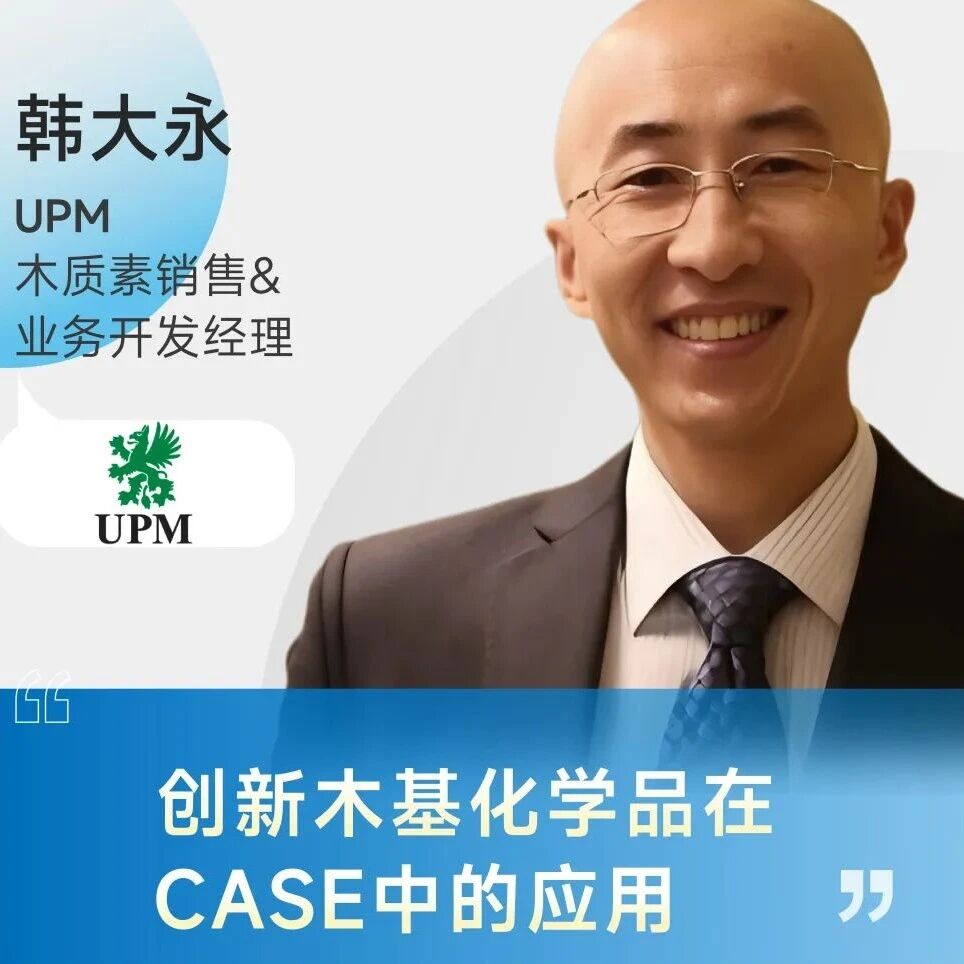
持续创新:UPM 推动高性能生物基材料规模化发展 | Bio-based 2026嘉宾
合成生物学与绿色生物制造· 2026-03-22 10:08
Core Viewpoint - The article discusses the urgent need for the CASE (Coatings, Adhesives, Sealants, Elastomers) industry to transition towards sustainable, bio-based materials due to increasing environmental regulations and the depletion of fossil resources [3]. Industry Pain Points - The CASE industry heavily relies on petroleum-based raw materials, leading to high carbon emissions and vulnerability to fossil resource fluctuations. This creates a pressing demand for high-performance, low-cost, and fully renewable bio-based alternatives [3]. - Lignin, the second most abundant natural polymer, holds significant potential as a substitute for fossil-based aromatic compounds, but its complex molecular structure and variability pose challenges for large-scale application [3]. UPM's Green Initiatives - UPM, a leading forest industry company, is addressing these challenges through its second-generation biomass refining plant in Leuna, Germany, which aims to convert sustainably sourced wood into bio-based chemicals. The plant has a total capacity of approximately 220,000 tons [5]. - Key products from this facility include bio-based ethylene glycol (UPM BioPura™), propylene glycol, and lignin-based renewable functional fillers (UPM BioMotion™), all sourced from 100% sustainably managed forests [5]. Innovations in Wood-Based Chemicals - UPM's innovations include high-reactivity lignin that can partially or fully replace traditional phenol in phenolic resins, enhancing mechanical strength and reducing toxicity [10]. - The unique hydrophobic and film-forming properties of lignin are being explored for barrier coatings in paper-based packaging, improving water and oxygen resistance while promoting biodegradability [10]. Upcoming Events - UPM's manager, Han Dayong, will present at the Bio-based 2026 conference in Shanghai, discussing the latest advancements in wood-based chemicals and their applications in the CASE industry [9][12].
化工新材料龙头,总经理辞职!
DT新材料· 2026-03-20 16:05
Core Viewpoint - The article discusses the recent leadership change at Xinxiang Chemical Fiber and highlights the company's strong performance and innovative developments in sustainable fiber materials, positioning it as a leader in the biomass cellulose fiber industry in China [3][5][12]. Company Overview - Xinxiang Chemical Fiber, established in 1960 and listed in 1999, is a leading enterprise in textile raw materials production in China, with a wide range of products including the "Egrets" brand of regenerated cellulose filament and spandex [4]. Financial Performance - In Q3 2025, Xinxiang Chemical Fiber reported revenue of 2.002 billion yuan and a net profit of 70.475 million yuan, marking a year-on-year growth of 47.44%. As of March 20, the company's market capitalization stood at 11.5 billion yuan [5]. Innovative Developments - The company has successfully launched several innovative products in 2025, including: - Shucel Fiber, developed in collaboration with the Chinese Academy of Sciences, which features zero emissions during production [7]. - Ruisel Fiber, which utilizes a proprietary DT composite solvent technology to recycle over 20 million tons of waste textiles generated annually in China [8]. - Jungrass Fiber, made from Jungrass, addresses sustainability issues in the regenerated cellulose industry and has applications in underwear, bedding, and medical dressings [9]. Investment and Expansion Plans - On March 2, 2026, the company announced a capital increase of 300 million yuan to its two wholly-owned subsidiaries in Xinjiang for the construction of a 30,000-ton biomass cellulose fiber project [10]. - During the National People's Congress in 2026, the chairman revealed plans for a 100,000-ton Jungrass Fiber project to commence in Tumu Shuke City, Xinjiang [11]. Policy and Industry Support - The national government supports sustainable fiber development, as indicated by the "14th Five-Year Plan" which outlines the direction for the biomass materials industry [12]. - Significant research initiatives are underway, focusing on high-performance fibers, bio-based and recycled fibers, and smart fibers [12]. Market Trends and Challenges - The article notes that the biomass materials industry is transitioning from concept to large-scale application, with several companies making strides in bio-based nylon, PLA, and PTT materials [13]. - Despite a solid foundation for development, challenges remain, including immature production technologies, high product prices, and an incomplete product standard system [13].

生物基产业解读②:奔驰/宝马/小米押注! 合成生物材料进入供应链了?
合成生物学与绿色生物制造· 2026-03-18 05:46
Core Viewpoint - The automotive industry is undergoing a transformation towards lower carbon and more sustainable practices, driven by regulatory pressures and consumer demand for environmentally friendly materials [6][7]. Group 1: Opportunities for Bio-based and Synthetic Biological Materials - The application of bio-based materials in the automotive sector is shifting from niche experimentation to mainstream adoption, with natural plant fibers and microbial synthetic plastics being integrated into various components [6]. - Regulatory frameworks, such as the EU's new ELV and REACH regulations, are imposing high environmental standards, mandating that 25% of plastics used in new cars must come from recycled materials, and that the use of bio-based materials in car interiors must reach at least 35% by 2025 [7]. - Consumer awareness is rising, with 85% of car buyers considering interior environmental friendliness in their purchasing decisions and willing to pay a 5%-10% premium for bio-based materials [7]. - The cost of bio-based materials is decreasing due to innovations in large-scale production and raw material sourcing, with some materials now costing less than 1.1 times that of traditional petroleum-based materials [7]. Group 2: Leading Companies in Bio-based Material Adoption - Mercedes-Benz has introduced animal-free interiors using AMSilk spider silk-based materials and plant proteins in concept car door handles [8]. - BMW is investing in natural fiber-reinforced materials from Bcomp and exploring the use of coffee grounds in automotive parts, with recent models utilizing hemp fiber composites [8]. - Xiaomi's YU7 model features "Misu Leather," derived from corn stalks, and bio-based biodegradable interior materials [8]. - Volkswagen has used AMSilk's Biosteel fibers in the door handles of its VISION EQXX concept car, which are biodegradable and recyclable [8]. - Volvo's EX30 incorporates BCOMP's AmpliTex™ natural fiber composite technology, and the company has invested in Bcomp's Series B financing [9]. - Hyundai collaborates with UNCAGED Innovations to use high-performance bio-based leather, enhancing touch and durability [9]. - Ford has integrated bio-based materials into various components, including seat cushions and dashboards [10]. - Chery is developing bio-based interior products in collaboration with Fengyuan Bio, including bio-based polyurethane adhesives [11]. Group 3: Accelerating Low-Carbon Transition - Chinese automotive parts manufacturers are increasingly entering the global supply chain of luxury brands, adapting to stringent EU environmental regulations to avoid high carbon tariffs [14]. - The upcoming Bio-based Conference in Shanghai will focus on the development and application of bio-based materials in automotive contexts, inviting collaboration among various stakeholders [15].

DT新叶奖竞选㊹ | 肆芃科技:Yogtic高性能生物基聚酯
合成生物学与绿色生物制造· 2026-03-17 02:27
Core Viewpoint - The article highlights the launch of the 2026 DT New Leaf Award, focusing on innovative companies in the bio-based materials sector, particularly Shanghai Sipeng Technology Co., Ltd., which is competing for the "Innovative Materials Award" with its Yogtic high-performance bio-based polyester [2][3]. Group 1: Company Overview - Shanghai Sipeng Technology Co., Ltd. was established in 2022 and is the only company globally that has achieved the direct synthesis of polylactic acid (PLA) from carbon dioxide in a single step within cells [3]. - The company has developed a technology that addresses the issues of competition for food and land in the production of bio-based materials, significantly reducing manufacturing costs and aiming to tackle plastic pollution, non-food-based bio-manufacturing, and carbon neutrality [3]. - Since its inception, the company has secured several rounds of financing totaling nearly 100 million yuan, including angel round and Pre-A round funding [3]. Group 2: Product Development - The company has launched multiple bio-based products, including biobased butanediol "biowatol" in collaboration with Angel Yeast, and the Yogtic series of bio-based materials, which have been adopted by well-known brands such as Shanghai Hero Group and Platinum in Japan [4]. - The Yogtic high-performance bio-based polyester addresses the limitations of traditional bio-based polyesters, such as brittleness and insufficient heat resistance, by enhancing flexibility and impact resistance through innovative modification techniques [6]. - The Yogtic products have achieved a light transmittance of ≥92% and a tensile elongation of ≥100%, making them suitable for high-end stationery, toys, cosmetics packaging, and fresh-keeping films [6][7]. Group 3: Market Position and Performance - The Yogtic bio-based polyester has transitioned from the laboratory phase to stable mass production, achieving a good product yield rate of over 95% and entering the supply chains of renowned brands [7]. - The performance of Sipeng's bio-based products is comparable to or exceeds that of traditional petroleum-based materials, with some grades replacing imported polycarbonate (PC) [7]. - The company has implemented a "smart factory" concept to enhance energy efficiency and reduce production costs through iterative carbon source strategies [7].