SAP

Search documents
AI时代绝非“人类一败涂地”! 最火岗位已然浮出水平 股市聚焦两大主线
智通财经网· 2026-02-26 13:04
Core Insights - The "Anthropic storm" has significantly impacted software stocks and is spreading to traditional industries like wealth management and real estate, driven by the pessimistic market sentiment that "AI disrupts everything" [1][2] - The S&P 500 software and services index has dropped approximately 15% since late January, erasing nearly $1 trillion in market value due to fears surrounding AI's impact on subscription-based revenue models [2][3] - Despite the turmoil, certain job roles, particularly Forward Deployed Engineers (FDE), are experiencing a surge in demand, with a projected growth of 42 times from 2023 to 2025 [5][6] Software Industry Impact - The release of Anthropic's AI tools has led to significant stock declines for major software companies, including Microsoft and SAP, which have not recovered from the losses since early February [2][3] - The introduction of AI-driven tools like the legal plugin for Claude Cowork has caused substantial market value losses for companies like Thomson Reuters and RELX, highlighting the threat to traditional software revenue models [3][4] - The market is witnessing a structural debate on whether AI enhances or compresses enterprise software, with fears that AI workflows could undermine subscription-based revenue models [4][5] Job Market Dynamics - The demand for FDE roles is rising sharply, with companies like OpenAI and Anthropic actively recruiting to bridge the gap between AI technology and its practical application in business [5][6] - FDEs are multi-skilled engineers who work directly with clients to implement AI solutions, and their roles are critical in ensuring AI models operate effectively within existing business frameworks [6][7] - The compensation for FDE positions is highly competitive, with salaries reaching up to $400,000, reflecting the scarcity of talent capable of integrating AI into enterprise systems [7][8] Market Revaluation - The stock market is undergoing a revaluation of winners and losers in the AI era, with traditional software companies facing significant pressure due to their reliance on outdated revenue models [15][16] - The focus is shifting from "who has the model" to "who can effectively deploy and manage AI models in enterprises," indicating a potential shift in investment themes [16][17] - The two main areas of opportunity in the AI landscape are AI deployment and governance infrastructure, as well as the AI data center power and cooling supply chain, which are expected to see increased demand as AI applications scale [16][17]


SAP(SAP) - 2025 Q4 - Annual Report
2026-02-26 12:01
Revenue Growth - The company reported significant growth in cloud revenue, which is the largest revenue stream, followed by software support revenue [29]. - In 2025, SAP's total revenue reached €36,800 million, reflecting a 7.5% increase from €34,176 million in 2024 [64]. - Cloud revenue for 2025 was €21,023 million, up from €17,141 million in 2024, indicating a growth of 22.0% [64]. Profitability Measures - Operating profit (non-IFRS) and free cash flow are primary measures used to assess profitability, with free cash flow providing insight into liquidity needs [31]. - Operating profit for 2025 reached €10,419 million, a significant increase from €8,153 million in 2024, reflecting a growth of 27.8% [67]. - Profit before tax from continuing operations (non-IFRS) for 2025 was €10,307 million, compared to €7,792 million in 2024, representing a growth of 32.4% [70]. - The operating margin improved to 28.3% in 2025, up from 23.9% in 2024, showcasing enhanced operational efficiency [67]. - Earnings per share from continuing operations for 2025 was €6.14, consistent with the previous year, indicating stable profitability per share [67]. Cash Flow and Expenses - Free cash flow for 2025 was reported at €8,239 million, up from €4,222 million in 2024, indicating a year-over-year increase of 95.5% [68]. - Net cash flows from operating activities for continuing operations increased to €9,156 million in 2025, compared to €5,207 million in 2024, marking a rise of 75.5% [68]. - Total operating expenses decreased to €26,382 million in 2025 from €29,511 million in 2024, a reduction of 7.2% [69]. - Non-IFRS operating expenses for 2025 were €26,382 million, a decrease from €27,143 million in 2024, representing a reduction of 2.8% [65]. Customer and Employee Metrics - The Cloud Customer Satisfaction (Cloud CSAT) score was reported at 75% in 2025, reflecting customer satisfaction with cloud solutions [37]. - The Employee Engagement Index measures employee satisfaction and commitment, with results expressed as a percentage of favorable responses from engagement surveys [38]. - The Business Health Culture Index (BHCI) assesses the working environment and employee engagement, with a focus on health and long-term employability [39]. Environmental and Tax Considerations - The company plans to revise its methodology for calculating Scope 3 greenhouse gas emissions in 2026, which is expected to significantly decrease reported emissions [43]. - The effective tax rate (non-IFRS) is presented for informational purposes, with no outlook provided for the IFRS effective tax rate due to uncertainties [58]. - The effective tax rate for 2025 was 30.5%, slightly lower than 32.3% in 2024, reflecting improved tax efficiency [67]. Financial Reporting and Methodology - Non-IFRS financial measures are disclosed to provide additional insights into financial performance, complementing IFRS measures [49]. - Constant currency measures are used to provide insight into sales development, with adjustments made to account for foreign currency effects [59]. - SAP's management uses non-IFRS measures for internal planning and performance reviews, emphasizing their importance in decision-making [56]. - Non-IFRS measures are widely used in the software industry, facilitating comparisons with competitors' performance metrics [61]. - The company plans to exclude expenses related to the Teradata litigation from non-IFRS operating profit starting in 2025, enhancing clarity on operational performance [53]. Research and Development - Research and development expenses were €6,628 million in 2025, slightly higher than €6,508 million in 2024, emphasizing continued investment in innovation [69].

Snowflake(SNOW) - 2026 Q4 - Earnings Call Transcript
2026-02-25 23:00
Financial Data and Key Metrics Changes - Product revenue in Q4 grew 30% year-over-year to reach $1.23 billion [6] - Remaining performance obligations totaled $9.77 billion, with year-over-year growth accelerating to 42% [6] - Net revenue retention was at a healthy 125% [6] - Fiscal 2026 non-GAAP operating margin reached 10.5%, expanding more than 400 basis points year-over-year [6][7] - Stock-based compensation declined from 41% of revenue in fiscal 2025 to 34% in fiscal 2026, expected to further decrease to 27% in fiscal 2027 [7] Business Line Data and Key Metrics Changes - The company added 2,332 net new customers this year, bringing the total to over 13,300 [7] - 740 net new customers were added in Q4, up 40% year-over-year [18] - 733 customers are now spending more than $1 million on a trailing-twelve-month basis, growing 27% year-over-year [18] - A record number of customers crossed $10 million in trailing-twelve-month spend, totaling 56 customers, growing 56% year-over-year [18] Market Data and Key Metrics Changes - The company signed the largest deal in its history, greater than $400 million in total contract value, and signed 7 nine-figure contracts in Q4 [17] - The total number of accounts using AI increased to over 9,100, with Snowflake Intelligence scaling to over 2,500 accounts, almost doubling quarter-over-quarter [8][9] Company Strategy and Development Direction - The company is positioned at the center of the enterprise AI revolution, focusing on delivering a data foundation for enterprises across clouds and data types [4] - The acquisition of Observe is expected to unlock new expansion opportunities within the customer base and extend the company's value proposition in the $50 billion IT operations market [12][19] - The company aims to drive both growth and operating margin expansion while investing in key growth drivers [20] Management's Comments on Operating Environment and Future Outlook - Management expressed confidence in the durability of the 27% growth forecast for fiscal year 2027, driven by stable growth in the core business and contributions from AI workloads [25][27] - The company anticipates continued strength in its core business and further growth in AI workloads, with a non-GAAP product gross margin of 75% expected for FY 2027 [22] - Management highlighted the transformative impact of AI on operations and customer workflows, emphasizing the importance of Snowflake Intelligence and Cortex Code [14][15] Other Important Information - The company launched over 430 product capabilities this year, underscoring its product velocity [11] - The partnership with OpenAI and Google Cloud is expected to enhance the company's offerings by integrating advanced AI models into its platform [13] Q&A Session Summary Question: Durability of 27% growth forecast for FY 2027 - Management indicated that the guidance is based on observed customer behavior and stable growth in the core business, with contributions from AI workloads and the Observe acquisition [27][28] Question: Momentum with areas outside the core business - Management noted that products like Snowflake Intelligence are major growth drivers, with significant customer adoption and transformative capabilities [28] Question: Details on the $400 million deal - The deal was with an existing customer and reflects the trust in Snowflake's product roadmap and AI strategy [35][36] Question: Changes in sales strategy under new leadership - Management highlighted the excitement within the sales team regarding new products and the positive influence of the new sales leadership [41] Question: Observability market and acquisition rationale - Management emphasized the importance of observability in AI and the efficiency gains offered by the Observe acquisition, which was built on Snowflake [49] Question: Managing customer consumption and pricing predictability - Management discussed the importance of predictable pricing models and plans to introduce features like per-user caps to mitigate consumption risks [54] Question: Platform usage and predictability compared to last year - Management expressed confidence in their ability to model business consumption and highlighted improvements in predictability [71][73]

SAP SE (SAP) Presents at Goldman Sachs European Technology Conference 2026 Transcript
Seeking Alpha· 2026-02-25 12:11
Core Insights - The discussion highlights significant advancements in AI, particularly in the application layer, over the past 12 months [1] - The company has seen an increase in inquiries from the investor community regarding AI developments and applications [2] Company Developments - In 2024, the company introduced around 10 generative AI use cases into production, marking a notable step in its AI strategy [2] - The company announced the launch of Joule and AI Core, which serve as a generative AI hub for building applications [2]

SAP (NYSE:SAP) 2026 Conference Transcript
2026-02-25 10:52
Summary of Conference Call on SAP's AI Developments Company and Industry Overview - **Company**: SAP - **Industry**: Software and Artificial Intelligence (AI) Key Points and Arguments AI Advancements - In the past year, SAP has significantly increased its generative AI features from 10 to approximately 130, showcasing rapid development in AI applications [4][3] - Joule, SAP's AI platform, has expanded to include around 1,400 skills, enabling users to perform various tasks through AI [5] - The introduction of 30 productive agents and the AI Agent Hub has enhanced the functionality of SAP's AI offerings [5][6] - SAP has developed a massive knowledge graph linking 452,000 tables and 7.3 million fields, which supports AI functionalities [6][7] Foundation Models - SAP has transitioned from experimental models to productive use of its Relational Pre-trained Transformer (RPT-1), which replaces numerous narrow machine learning models with a single, more accurate model [8][9] - RPT-1 has been recognized with a Spotlight Award at the NeurIPS conference, indicating its significance in the AI landscape [9] Future Trends and Innovations - The company anticipates further acceleration in AI developments, with a focus on foundation models beyond large language models, including robotics and world models [10] - SAP is actively working on agentic governance to manage the lifecycle of AI agents, ensuring they are effectively integrated into business processes [11] Disruption in SaaS and Software Development - SAP acknowledges that AI will disrupt traditional user interfaces and software development processes, moving towards intent-driven systems where users can interact with software through natural language [14][16] - The company is implementing live coding practices to enhance developer productivity and facilitate quicker software updates [18][19] Commercial Model Changes - SAP's AI commercial model is based on consumption, where customers subscribe to AI units tied to business outcomes, moving away from traditional seat-based licensing [23][24] - Approximately 40-50% of SAP's revenue is now derived from metrics other than seat-based subscriptions, indicating a shift in their business model [24] Competitive Landscape - SAP is positioned to navigate the evolving AI landscape by leveraging its extensive data and customer trust, which are seen as defensive moats against competition [25][26] - The company is cautious about the rise of horizontal software competitors but believes its deep industry solutions provide a competitive edge [32][33] Customer Engagement and Adoption - Joule's adoption has seen a ninefold increase in customer engagement, indicating strong market interest in SAP's AI solutions [49][54] - The company is focused on AI-assisted cloud migration, which is expected to enhance customer efficiency and reduce transformation costs [57][63] Ecosystem and Partnerships - SAP is actively collaborating with hyperscalers and AI model providers, treating them as partners rather than competitors [37][38] - The company is monitoring the startup landscape for potential partnerships but remains cautious about high valuations and the readiness of these startups to meet enterprise needs [40][41] Conclusion - SAP is strategically positioning itself to be a leader in the AI-driven software market by enhancing its product offerings, adapting its commercial model, and leveraging its extensive data and customer relationships to navigate the competitive landscape [26][34][72]
Saputo USA Recalls Great Value Cottage Cheese Because of Possible Health Risk
Globenewswire· 2026-02-25 00:07
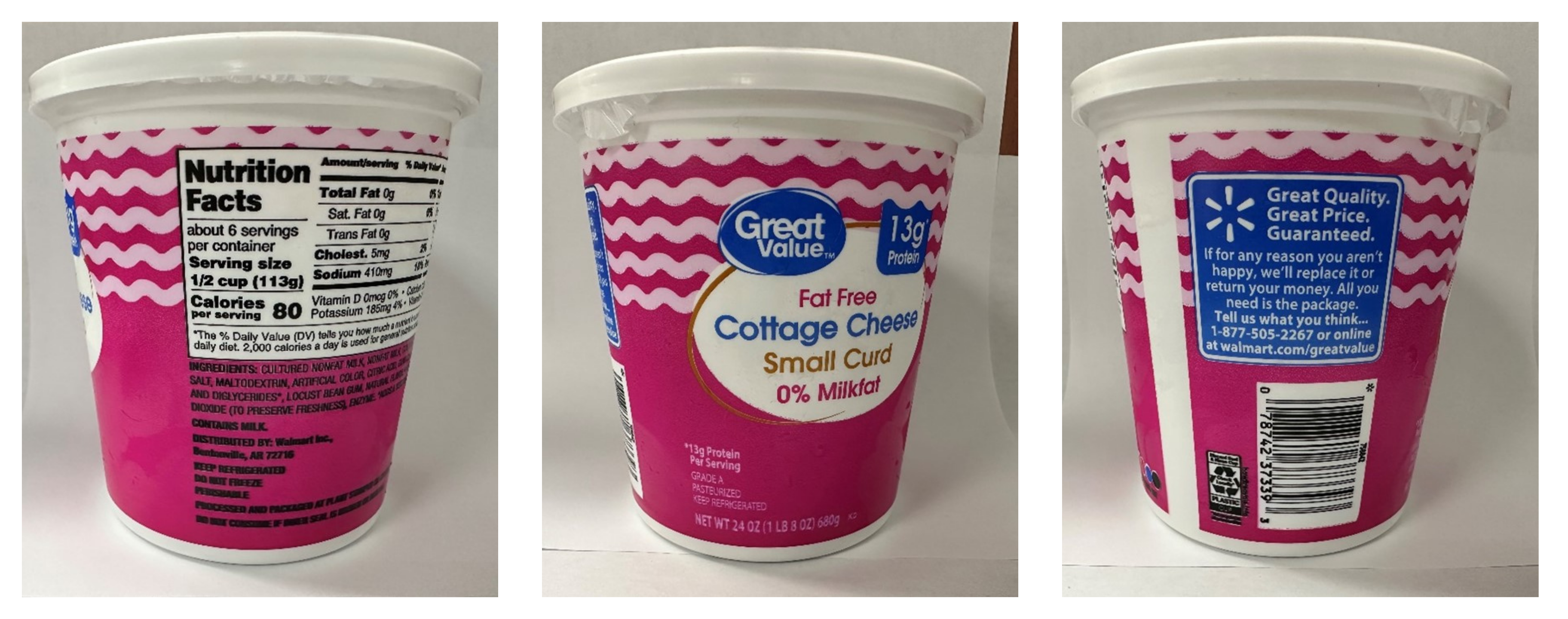
Core Viewpoint - Saputo Cheese USA Inc. is voluntarily recalling select cottage cheese products due to potential under-pasteurization of liquid dairy ingredients, posing health risks, particularly to vulnerable populations [1][4]. Group 1: Recall Details - The recall was initiated after issues were discovered during pasteurizer troubleshooting with the California Department of Food and Agriculture [2]. - Affected products include various cottage cheese items sold under the Great Value label, distributed to Walmart stores across multiple states between February 17 and February 20, 2026 [3]. - Specific products recalled include: - Great Value Fat Free Small Curd Cottage Cheese (24 oz.) - UPC: 078742373393, Best By: APR-01-26 - Great Value Lowfat Small Curd Cottage Cheese (24 oz.) - UPC: 078742116730, Best By: APR-01-26 - Great Value Small Curd Cottage Cheese (16 oz.) - UPC: 078742372358, Best By: APR-02-26 - Great Value Small Curd Cottage Cheese (24 oz.) - UPC: 078742372365, Best By: APR-02-26 - Great Value Small Curd Cottage Cheese (3 lb.) - UPC: 078742147970, Best By: APR-01-26 [3][4]. Group 2: Company Information - Saputo USA is part of Saputo Inc., one of the top 10 dairy processors globally, producing a wide range of cheeses and dairy products [6]. - The company is a significant player in the mozzarella, string cheese, and cultured dairy products markets, emphasizing its extensive portfolio and market presence [7].
Health In Tech Appoints Former SAP and IBM Executive Sri Rajagopalan as Chief Technology Officer to Advance AI-driven Enterprise-Grade Platform Growth
Prnewswire· 2026-02-24 21:30
Core Insights - Health In Tech has appointed Sri Rajagopalan as Chief Technology Officer to enhance its AI-driven enterprise-grade platform growth [1] - Rajagopalan has been serving as Interim CTO since November 2025, where he has made significant advancements in technology leadership and AI transformation strategy [1] - The company aims to strengthen its technology foundation to support larger carrier and broker partners and execute multiple strategic initiatives [1] Company Overview - Health In Tech, Inc. is an AI-enabled InsurTech platform that focuses on improving processes in the healthcare industry through vertical integration, process simplification, and automation [2] - The company aims to streamline the underwriting, sales, and service processes for insurance companies, licensed brokers, and third-party administrators [2] Leadership Experience - Sri Rajagopalan brings over two decades of enterprise-scale technology leadership, with experience at SAP and IBM in enterprise architecture and large-scale platform engineering [1] - His previous roles in the healthcare technology sector include Senior Vice President positions at Net Health and Zelis, and Vice President at Greenway Health, where he modernized core platforms and scaled high-performance systems [1] Strategic Focus - As CTO, Rajagopalan will oversee product engineering and enterprise platform operations, focusing on advancing the company's technology architecture and AI development roadmap [1] - The company plans to enhance performance, security, interoperability, and scalability of its cloud-native platforms to support long-term growth [1]

SAP: Panic Selloff Creates Buying Opportunity, But There Are Alternatives
Seeking Alpha· 2026-02-20 09:54
Core Viewpoint - SAP, a leading software company for large businesses, has been affected by the recent selloff in software stocks driven by AI concerns [1] Group 1: Company Overview - SAP is recognized as the company behind the software that supports the majority of large businesses globally [1] Group 2: Market Context - The company was not immune to the widespread panic selling in the software sector related to artificial intelligence [1]

多重利空压顶,美股三大指数集体下跌
财联社· 2026-02-20 00:19
Market Overview - On February 19, U.S. stock markets opened lower and closed down, with all three major indices declining [1][2] - The Dow Jones Industrial Average fell by 0.54% to 49,395.16 points, the S&P 500 decreased by 0.28% to 6,861.89 points, and the Nasdaq Composite dropped by 0.31% to 22,682.73 points [2][3] Asset Management Sector - Blue Owl Capital announced the sale of $1.4 billion in loan assets from three private debt funds, raising concerns among investors about potential losses in the private loan sector [4] - Following this news, several asset management companies experienced significant stock declines: Blue Owl Capital down 5.93%, Blackstone down 5.37%, Apollo Global Management down 5.21%, Ares Management down 3.08%, and Brookfield down 2.68% [4] Software Industry - The software sector also showed weakness, with notable declines in stocks such as Cadence Design Systems down 2.76%, SAP down 2.41%, Intuit down 2.06%, and ServiceNow down 1.33% [4] - Concerns about artificial intelligence potentially disrupting the software industry were highlighted, with Mistral AI's CEO stating that over 50% of enterprise software could be replaced by this technology [4] Energy Sector - Energy stocks mostly rose amid ongoing tensions between the U.S. and Iran, with ConocoPhillips up 0.97% and Chevron up 0.49% [5] Retail Sector - Walmart's stock fell by 1.38% after the company provided a fiscal year profit guidance that fell short of market expectations, overshadowing its better-than-expected fourth-quarter results [5] Technology Stocks - Major tech stocks had mixed performances: Nvidia down 0.04%, Apple down 1.43%, Alphabet down 0.13%, Microsoft down 0.29%, Amazon up 0.03%, Meta up 0.24%, and Tesla up 0.12% [6][7] Chinese Stocks - The LiFeng Chinese stock index fell by 0.54%, and the Nasdaq Golden Dragon China Index decreased by 0.35% [8] - Popular Chinese stocks mostly declined, with Bawang Tea down 2.5%, Trip.com down 2.28%, Alibaba down 0.96%, and Pinduoduo down 0.94% [8] Company News - Amazon surpassed Walmart to become the highest-grossing company globally, reporting $717 billion in sales for the fiscal year ending December, compared to Walmart's $713.2 billion [9] - AMD announced it will support a $300 million loan to Crusoe, backed by chip products [10] - Hims & Hers Health is acquiring Australian digital health company Eucalyptus for up to $1.15 billion, which boosted its stock by approximately 7% in pre-market trading [11] - Yorkville America Equities LLC announced plans to acquire the Point Bridge America First ETF, focusing on investments aligned with former President Trump's "America First" ideology [12] - BE Semiconductor Industries reported fourth-quarter revenue of €166.4 million, exceeding analyst expectations, and projected a revenue growth of 5%-15% for the first quarter [13]


SAP: An Intriguing Way To Play The Software Sell-Off
Seeking Alpha· 2026-02-19 21:44
Industry Overview - Software stocks have been underperforming for several months, raising concerns about the impact of artificial intelligence on traditional software-as-a-service business models [1] - The introduction of AI technology is significantly altering the landscape of code writing, which may disrupt established software companies [1] Company Insights - Even well-established companies in the software sector have experienced substantial declines in stock performance due to these market shifts [1]