
AI工厂

Search documents
亮点前瞻|国泰海通“远望又新峰”2026春季策略会
国泰海通证券研究· 2026-03-12 14:03
Core Viewpoint - The article emphasizes China's economic resilience and progress in 2025, highlighting the successful navigation of challenges and the acceleration of industrial transformation, which opens up significant investment opportunities for both domestic and international investors [2]. Group 1: Economic Overview - China's economy has faced profound adjustments in international trade and domestic supply-demand challenges, yet it has managed to maintain growth through strategic policies and institutional advantages [2]. - The "14th Five-Year Plan" has concluded successfully, marking a new level of economic, technological, and comprehensive national strength, while advancing towards Chinese-style modernization [2]. Group 2: Investment Opportunities - The transition into the "15th Five-Year Plan" is characterized by innovation-driven high-quality development, with traditional industries moving towards high-end, intelligent, and green transformations [2]. - Emerging industrial clusters are gaining momentum, and future industries are being strategically positioned, creating unprecedented opportunities for investors [2]. - Domestic demand continues to strengthen as the main driver of economic growth, enhancing the quality and expansion of goods and services consumption [2]. Group 3: Upcoming Events - The article invites participation in the 2026 Spring Strategy Conference from March 24 to 26, 2026, in Shenzhen, where insights and strategies for future investments will be shared [2]. - The conference will feature discussions on various topics, including AI applications, international perspectives, and investment methodologies, with participation from industry experts and company executives [5].



会议议程|国泰海通“远望又新峰”2026春季策略会
国泰海通证券研究· 2026-03-05 07:29
Core Viewpoint - The article discusses the upcoming Guotai Haitong Spring Strategy Conference 2026, focusing on macroeconomic outlooks, policy insights, and investment opportunities across various sectors, particularly in AI, real estate, and global economic shifts [1][2]. Group 1: Macroeconomic and Policy Outlook - The conference will feature speeches on China's macroeconomic and policy outlook, as well as the U.S. economic and monetary policy perspectives [2]. - Keynote speakers include prominent figures from academia and finance, providing insights into the current economic landscape and future trends [2][11]. Group 2: AI and Technology Trends - The conference will explore the rapid development of AI applications and their implications for various industries, including marketing, storage, and computing [4][6]. - Discussions will include the impact of AI on CPU demand and the evolution of AI-driven business models [5][6]. Group 3: Real Estate and Investment Strategies - A session will focus on the outlook for real estate prices in 2026, addressing market trends and investment opportunities [7][10]. - The conference will also cover strategies for investing in high-dividend and technology transformation sectors [10][22]. Group 4: Global Economic Changes - The event will address the reshaping of international order and its effects on asset pricing, highlighting the need for adaptive investment strategies [5][8]. - Topics will include geopolitical dynamics and their influence on China's policy choices and economic strategies [15][19]. Group 5: Sector-Specific Insights - Various sessions will delve into specific sectors such as renewable energy, consumer goods, and healthcare, discussing growth prospects and investment strategies [25][27]. - The conference will also feature insights into the evolving landscape of commercial aerospace and the implications for investment [22][39].

0226调研日报
2026-03-01 17:23
Summary of Key Points from Conference Call Records Industry and Company Overview - **Tin Industry**: Global tin supply is expected to experience a slight contraction due to tightening policies in Southeast Asian tin-producing countries and limited potential in emerging regions, which may not fully offset the decline in traditional production areas [1] - **Indium Resources**: The company possesses rich indium resource reserves, with the largest primary indium production base globally, holding 4,821 tons of indium metal reserves as of December 31, 2024 [3] - **TV Panel Industry**: The TV panel prices are projected to continue rising in March 2026, driven by strong demand from sports events and seasonal repairs, with manufacturers maintaining a "production as needed" strategy [4] - **Aviation Industry**: The company is actively involved in supporting domestic large aircraft projects, indicating a clear basis for profit improvement and growth potential [8] Core Insights and Arguments - **Tin Supply Dynamics**: The tin supply issue is primarily driven by resource and policy factors, with a forecasted slight reduction in global tin production [1] - **Indium Market Impact**: The anticipated rise in indium market prices is expected to positively influence the company's performance, given its significant production of indium [3] - **TV Panel Price Trends**: The overall TV panel prices are expected to maintain an upward trend, with a high production rate anticipated in March 2026 [4][6] - **AMOLED Production**: The company’s 8.6-generation AMOLED production line is set to enter mass production in the second half of 2026, enhancing its competitiveness in the display industry [5] Additional Important Information - **Processing Fees**: Although tin smelting processing fees have seen a slight increase since 2026, they remain at a relatively low level compared to current tin metal prices and industry average recovery rates [2] - **Depreciation and Capital Expenditure**: The company expects depreciation and capital expenditures to reach their peak in 2025, with a significant decline anticipated starting in 2027 [6] - **AI Factory Implementation**: The company has established multiple AI factories, enhancing production efficiency across various operational areas [7] - **Aircraft Component Development**: The company is deeply involved in the development of tooling and components for domestic aircraft, with ongoing testing and delivery of prototypes [9]



联想智库首次发布年度趋势,聚焦企业AI提出十大判断
Sou Hu Cai Jing· 2026-02-14 17:53
Core Insights - The core viewpoint of the article is that by 2026, artificial intelligence (AI) technology will transition from "concept validation" to "deep integration into industries," with companies facing challenges in aligning AI with business strategies and organizational structures to achieve value creation rather than just efficiency improvement [1][3]. Group 1: AI Trends - The trends are based on observations from over a hundred experts in the AI field and indicate a fundamental upgrade in how companies apply AI, leading to ten major trends encompassing organizational development, business models, AI governance, and infrastructure [3]. - The ten trends include: 1. Transition from "+AI" to "AI+" with the emergence of AI-native companies [7]. 2. Shift from token-based payment for large models to payment based on the results of intelligent agents [8]. 3. "Model-computing efficiency" becoming the primary criterion for selecting and applying large models [8]. 4. "AI-Ready" becoming the new standard for enterprise knowledge governance [9]. 5. AI governance evolving from passive response to proactive construction [11]. 6. Explosion in enterprise reasoning demand, accelerating the deployment of AI factories [12]. 7. Integration of software and hardware to drive a revolution in computing efficiency [13]. 8. Collaboration between computing and energy to reduce the total cost of AI ownership [14]. 9. "Robot as a Service" (RaaS) marking the first step in the physical AI rollout [15]. 10. Domestic innovation and open-source driving new momentum for AI in Chinese enterprises [16]. Group 2: Lenovo's AI Strategy - Lenovo's AI factory, launched at the end of last year, provides a standardized full-stack AI solution, transforming complex and isolated AI development tasks into a modern "AI production line" [4]. - Lenovo's foresight in AI began in 2017, and by 2023, it proposed a hybrid AI strategy focusing on both personal and enterprise AI, achieving significant business growth driven by AI [3][4].

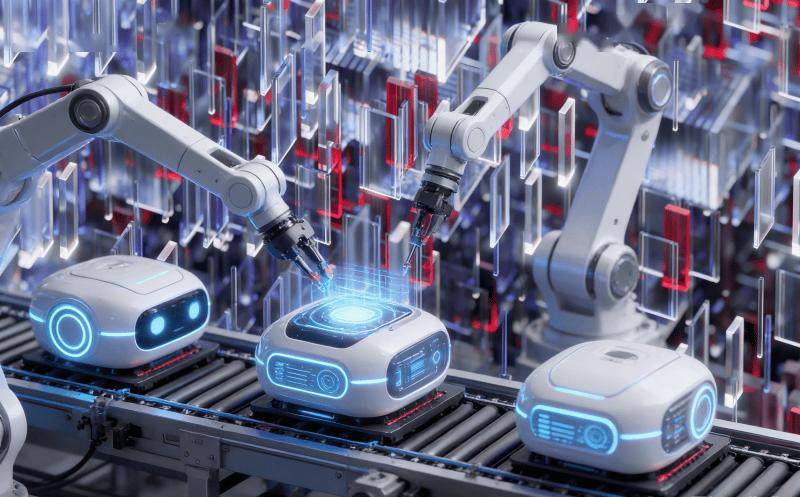
联想智库发布2026企业AI十大趋势,揭示AI产业发展方向
Sou Hu Cai Jing· 2026-02-14 07:46
Core Insights - The core viewpoint of the article is that by 2026, artificial intelligence (AI) technology will transition from "concept validation" to "deep integration into industries," with companies facing challenges in aligning AI with business strategies and organizational structures to achieve value creation rather than just efficiency improvement [2][3]. Group 1: Key Trends in AI - The report identifies ten major trends in enterprise AI, including the shift from "+AI" to "AI+" leading to the emergence of AI-native companies [3][4]. - The payment model for AI services is evolving from token-based payments for large models to result-based payments for intelligent agents, emphasizing business value over technology costs [7]. - The criterion for selecting and applying large models is shifting to "model-computing efficiency," which considers both model performance and computing costs [8][9]. Group 2: Knowledge and Governance - The standard for knowledge governance is transitioning to "AI-Ready," where knowledge is structured and can be effectively utilized by AI systems [10]. - AI governance is moving from a reactive to a proactive approach, focusing on building trust and resilience through comprehensive governance frameworks [11]. Group 3: Infrastructure and Demand - There will be a significant increase in demand for reasoning power as AI applications move from proof of concept to large-scale deployment, marking 2026 as a pivotal year for enterprise computing power procurement [12]. - The integration of software and hardware is driving a revolution in computing efficiency, with a focus on end-to-end optimization [13]. Group 4: Cost and Sustainability - The evolution of AI infrastructure is shifting towards a unified approach that integrates computing and energy, emphasizing cost and carbon efficiency [14]. - The concept of "Robot as a Service" (RaaS) is facilitating the scaling of physical AI capabilities in industries like logistics [15]. Group 5: Innovation in China - The development path of AI in Chinese enterprises is characterized by a dual drive of "domestic innovation" and "open-source accessibility," leading to a unique paradigm for AI growth [16].
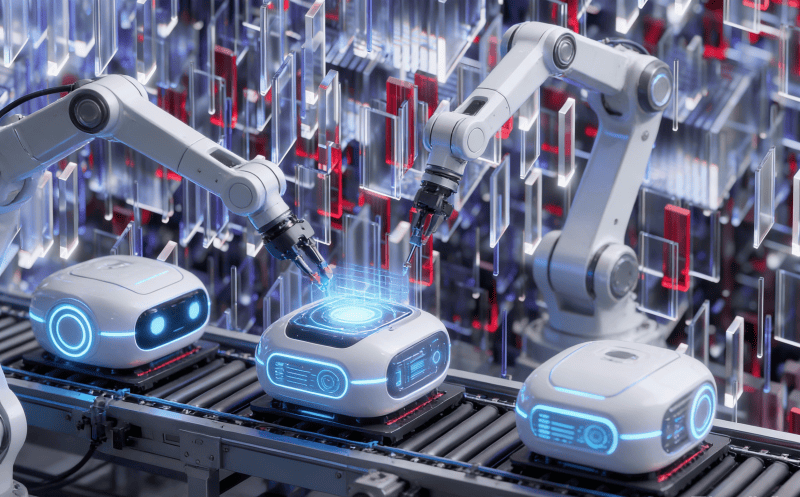
湖北大数据集团AI工厂投产运营,打造“数智湖北”发展新引擎
Sou Hu Wang· 2026-02-13 04:26
Core Insights - The AI factory in Wuhan, built by Hubei Big Data Group, aims to lower the barriers for AI application development through standardized production methods, supporting digital transformation across various industries [1][2] Group 1: Challenges in AI Development - AI application development has faced three main challenges: difficulty in obtaining computing power, high compliance costs for data, and long algorithm development cycles [3] - Traditional development models are project-based and decentralized, leading to inconsistent quality and high costs, with development cycles often taking months and investments reaching hundreds of thousands of yuan [3][5] Group 2: AI Factory Structure - The AI factory integrates three core elements of AI development: computing power, data, and algorithms, providing a full-stack AI service [5] - The facility spans 1,700 square meters and includes a computing operation center, data operation center, model operation center, and scenario operation center, each serving distinct functions [6][7] - The factory has established 75 standardized key processes and over 180 automated tools to cover all aspects of AI service delivery, ensuring timely and compliant product delivery [10] Group 3: Initial Applications - During its initial phase, the AI factory has launched several AI applications in the healthcare sector, including the "Chu Doctor" AI cloud companion, which is operational in 15 top-tier hospitals, enhancing patient experience and health management [14] - Other applications include electronic medical record quality control and medical imaging analysis, which improve the quality and efficiency of medical services [14] Group 4: Future Focus - The AI factory plans to focus on key sectors such as government, healthcare, manufacturing, agriculture, finance, education, logistics, and urban development, aiming to create a matrix of AI models and intelligent agents [16] - The integration of large models and intelligent agents will drive the deep coupling of digital technology with the real economy, providing tailored AI solutions for various industries [16]
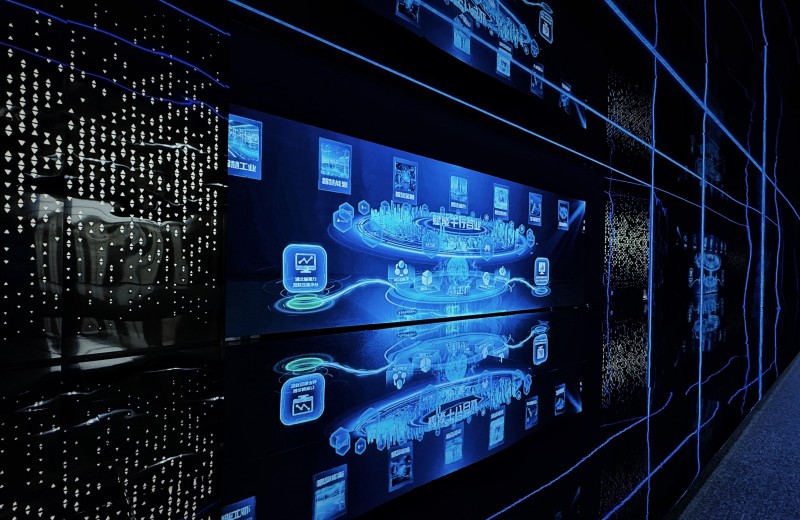
临平从“融”出发 启“十五五”新程
Hang Zhou Ri Bao· 2026-02-11 05:01
Core Viewpoint - The report emphasizes "integration" as a key theme for the development of Linping District, aiming to establish itself as a hub for deep integration with Shanghai and a model for industry-city integration by 2025 [3][4]. Economic Goals - By 2025, Linping aims to achieve a regional GDP of 121.63 billion yuan, representing a growth of 5.1%. The district also targets a total fiscal revenue of 25.42 billion yuan and a general public budget revenue of 14.63 billion yuan, showcasing the benefits of integration [3]. Infrastructure Development - Significant transportation projects, including the Shanghai-Hangzhou high-speed railway and the fourth phase of Hangzhou Metro, are set to enhance Linping's status as a transportation hub during the 14th Five-Year Plan period [4]. Industry-City Integration - Linping plans to advance its "industry-city integration demonstration zone" by 2026, with a focus on developing three new industry vertical models and targeting an AI industry revenue of 11 billion yuan. The district aims to establish one national-level intelligent factory and one provincial-level future factory pilot enterprise [4][5]. Talent and Human Resources - A new initiative will be launched in 2026 to support the integration of education, science, and talent, including an innovative "AI+OPC" entrepreneurship support model aimed at energizing the local workforce [5]. Rural Development - Linping will deepen urban-rural integration by extending quality public services and promoting rural industry revitalization. Plans include the construction of 19 school projects and various healthcare facilities, as well as initiatives to attract young talent back to rural areas [5].

黄仁勋酒后一番暴论
投资界· 2026-02-07 07:31
Core Viewpoint - The conversation between NVIDIA CEO Jensen Huang and Cisco CEO Chuck Robbins emphasizes a fundamental reset in business logic driven by AI advancements, highlighting the need for companies to adapt to a rapidly evolving technological landscape [4][6][16]. Group 1: AI and Business Transformation - Huang argues that the first step for companies moving towards AI should not focus on ROI but rather on fostering an environment where innovation can flourish, allowing for a "let a thousand flowers bloom" approach [6][23][25]. - He emphasizes that traditional metrics like ROI are inadequate in the early stages of AI deployment, suggesting that companies should prioritize exploration and experimentation over strict control [6][23][25]. - Huang describes the concept of an "AI factory," which represents a shift from merely creating tools to generating digital labor, fundamentally transforming how businesses operate [9][10][35]. Group 2: The Nature of AI and Innovation - Huang highlights the transition from explicit programming to implicit programming, where users can communicate their intentions to AI, which will then generate solutions, thus lowering the barrier to entry for technological innovation [16][19][37]. - He asserts that the value of knowledge in industries is shifting, with domain experts who understand customer needs becoming more valuable than traditional programmers [16][37]. - The conversation underscores the importance of allowing teams to experiment with various AI tools without immediate expectations of success, fostering a culture of innovation [6][23][25]. Group 3: Market Opportunities and Future Directions - Huang points out that the global IT industry, valued at approximately $1 trillion, is dwarfed by the total global economy of $100 trillion, indicating a vast potential market for AI applications [10][35]. - He believes that every industry has the opportunity to transform into a technology-driven company by integrating AI, suggesting that companies like Disney and Mercedes aspire to become more like Netflix and Tesla, respectively [10][35]. - The discussion also touches on the need for companies to rethink their core challenges using AI logic, which involves assuming unlimited speed and zero gravity in problem-solving [11][27][28].


黄仁勋酒后暴论:编程只是打字,已经不值钱了
虎嗅APP· 2026-02-05 10:17
Core Viewpoint - Huang Renxun, CEO of Nvidia, expressed that programming is merely typing and has lost its value, emphasizing the need for innovation and adaptation in the face of rapid technological evolution [4][6][20]. Group 1: AI and Innovation - Huang advocates for a management approach that encourages experimentation and exploration within organizations, stating that innovation often occurs outside of strict control [6][7][40]. - He emphasizes the importance of allowing teams to experiment with various AI tools without the immediate pressure of ROI calculations, fostering a culture of "letting a thousand flowers bloom" [6][40]. - The concept of "AI factories" is introduced, where the focus shifts from merely creating tools to generating digital labor, fundamentally transforming industries [9][10][68]. Group 2: Market Potential - Huang highlighted the vast market potential for AI, noting that the global IT industry is approximately $1 trillion, while the total global economy is around $100 trillion, indicating a hundredfold opportunity for AI to penetrate and reshape the remaining sectors [10][11][68]. - He pointed out that every industry has the chance to transform into a technology-driven company, with examples like Disney aspiring to be like Netflix and Mercedes wanting to emulate Tesla [11][68]. Group 3: New Paradigms in Computing - Huang discussed the shift from explicit programming to implicit programming, where users can simply express their intentions and the AI will generate the necessary code, thus lowering the technical barrier [20][70]. - He described the transition from a "pre-recorded" era of software to a "generative" era, where applications will be contextually unique and dynamically generated based on user interactions [17][52]. Group 4: Data Sovereignty and Knowledge Ownership - Huang stressed the importance of data sovereignty and the need for companies to maintain control over their core intellectual property, which he believes lies in the questions posed during interactions with AI rather than the answers themselves [16][73]. - He argued that the most valuable intellectual property is the ability to ask the right questions, which reflects a company's strategic thinking and innovation potential [16][73]. Group 5: Future of Work and AI Integration - Huang predicted that future companies will have numerous AI assistants that learn from employee decisions and inquiries, ultimately becoming unique intellectual assets for the organization [16][73]. - He warned that companies must adapt quickly to AI technologies, as those who fail to do so risk being outpaced by competitors who embrace these advancements [68][73].
亚马逊云推出AI芯片与“前沿”智能体
Xin Lang Cai Jing· 2025-12-03 14:58
Core Insights - Amazon's stock price declined by 1% during early trading on Wednesday [1][2] - At the re:Invent 2025 conference, Amazon introduced Trainium3 UltraServers, new Nova models, and autonomous frontier agents [1][2] - Amazon partnered with Nvidia to offer on-premises AI factories [1][2]
