Amazon

Search documents
Amazon Deploys 15-Minute Delivery in Brazil Expansion
PYMNTS.com· 2026-03-03 22:58
Core Insights - Amazon is launching a 15-minute delivery service called Amazon Now in Brazil, prioritizing the country for its expansion efforts [1][3] - The service will initially be available in Sao Paulo and expand to seven other cities by March 9, with plans for further expansion [2][3] Service Details - Amazon Now will deliver groceries and essentials, free for Amazon Prime members and available for 5.49 reais (approximately $1.04) for non-members [3] - The service is in partnership with the delivery app Rappi, which Amazon previously invested $25 million in through a convertible note [7] Market Context - Brazil has been identified as a leader in digital engagement among consumers, with the highest number of days of digital activity compared to other countries [7] - Amazon has been expanding its delivery services globally, including 30-minute delivery options in other countries such as India, Mexico, and the UAE, and is testing similar services in the US and UK [8]


How likely is Iran to carry out a retaliatory cyberattack on the U.S.?
NBC News· 2026-03-03 21:20
The war in Iran is sparking cyber security concerns here in the US. In the past, Iran has launched several digital attacks in the US, including ransomware and data breaches. As of now, hackers linked to Iran have made threats on social media, but so far not any confirmed major cyber attacks.Joining us to talk more about this is NBC News reporter Kevin Collier. Uh Kevin, some Iranian hacker groups have promised, as we said on social media, they're saying, "We're going to retaliate." They said it on Telegram ...
SaaS-pocalypse Opportunities in MSFT, AMZN, PLTR, NOW & Others
Youtube· 2026-03-03 20:30
Core Insights - The software sector is experiencing a bounceback despite previous downturns, with some companies showing gains [1][6] - There are potential short-term trading opportunities due to historically low valuations, but long-term investments in enterprise software may be challenging [3] - The developer community is increasingly excited about advancements in coding agents, which could change the landscape of software development [4][5] Company and Industry Analysis - Major software companies like ServiceNow, Oracle, and Salesforce are under scrutiny as the market adapts to new AI technologies [5][15] - The IGV index, which tracks software companies, was down nearly 25% year-to-date but has seen substantial recoveries recently [6] - Companies with strong enterprise relationships and critical platforms may withstand disruptions from new technologies in the short term [7][8] - ServiceNow is highlighted as a well-positioned company due to its investments in AI and its control tower technology [12] - Microsoft, Amazon, and Alphabet are also noted for their growth potential in the cloud sector [12] - Concerns exist for companies like Adobe and Salesforce regarding their competitive positioning and investments in AI [15]

Stocks in Turmoil, but Attractive Setups Emerge (META, GOOGL, AMZN)
ZACKS· 2026-03-03 20:15
Market Overview - Markets are experiencing pressure due to escalating tensions in the Middle East, leading to a broad sell-off in equities across the US, Europe, and emerging markets as risk appetite diminishes [1] - Heightened uncertainty often presents compelling entry points for disciplined investors [1] Investment Opportunities - Opportunities in energy and gold remain intact due to geopolitical risks and structural supply dynamics [2] - Current volatility may provide a chance for investors to rebalance and redeploy capital into areas with overly depressed sentiment [2] Mega-Cap Technology - The most compelling opportunities are identified in mega-cap technology, particularly in Alphabet (GOOGL), Meta Platforms (META), and Amazon (AMZN), with the broader Magnificent Seven cohort appearing attractive [3] - The Magnificent Seven has traded sideways to lower for over six months, but US equity leadership is expected to reassert itself [3] Meta Platforms - Meta Platforms is characterized by extreme sentiment, often skewed negatively, yet the underlying business shows remarkable durability [6] - The company operates at wide margins, generates significant free cash flow, and is projected to grow earnings at approximately 21.7% annually over the next three to five years, with revenue expected to rise about 24% this year and 18.4% next year [8][9] - Currently trading at roughly 22x forward earnings, below its 10-year median multiple of 24.5x, indicating a favorable valuation relative to growth prospects [8][9] Amazon - Amazon is trading at approximately 26.8x forward earnings, the lowest in its history, despite steady revenue expansion and strengthening fundamentals [12] - The company is deeply embedded in growth themes such as cloud computing and AI infrastructure, with AWS seeing renewed growth due to enterprise AI adoption [13] - Earnings are projected to grow at roughly 17.2% annually over the next three to five years, with revenue expected to climb approximately 12% this year and next [14] Alphabet - Alphabet has reasserted itself as a leader within the Magnificent Seven, outperforming the broader market recently [16] - The company has transformed into an AI powerhouse, enhancing its core search business through AI integration, leading to projected top-line growth in the high teens for this year and next [18] - Consensus forecasts for earnings have improved, reflecting growing confidence in revenue durability and operating leverage [19][20] Conclusion - For Amazon, Alphabet, and Meta Platforms, underlying fundamentals remain strong with stable to rising earnings estimates and dominant positions in the AI ecosystem [24] - The current market pullback may present an opportunity for long-term investors, as durable growth and reset multiples are rarely available in market leaders of this scale [25]



Amazon's $8B Anthropic Bet Looks Even Better As Claude Dethrones ChatGPT On App Store - Amazon.com (NASDAQ:AMZN)
Benzinga· 2026-03-03 20:08
Core Insights - Anthropic's Claude has reached the top position on Apple's App Store, driven by backlash against OpenAI's partnership with the Pentagon, benefiting Amazon's investment in Anthropic [1] Group 1: Amazon's Investment and Valuation - Anthropic's valuation has surged to $380 billion following a $30 billion Series G funding round, making Amazon's $8 billion investment worth approximately $13.8 billion [2] - An IPO is anticipated this year, which is expected to further increase the value of Amazon's stake in Anthropic [2] Group 2: Revenue Projections - Bank of America analyst estimates that Anthropic's AI demand could contribute an additional $6 billion in revenue for AWS in 2026, potentially enhancing overall AWS growth by 4 percentage points [2] - Citizens analyst is more optimistic, projecting that Anthropic could generate $10 billion in AWS revenue for 2026 alone [3] Group 3: AI Model Performance and Market Expectations - Claude holds the top two positions on the AI model leaderboard, with Polymarket pricing the likelihood of maintaining this status at 39% by June, compared to Google at 35% and OpenAI at 12% [4] - Polymarket traders consider an IPO before June to be unlikely, pricing it at just 6% [4] Group 4: User Growth and Demand - Free user numbers on Claude have increased by over 60% since January, with daily sign-ups tripling since November, leading to server crashes due to high demand [5]

Bloomberg Invest: Finance Power Players | Open Interest 3/3/2026
Bloomberg Television· 2026-03-03 19:47
MATT: WELCOME TO BLOOMBERG OPEN INTEREST IN DOWNTOWN MANHATTAN. WE ARE GATHERED WITH THE MOST INFLUENTIAL VOICES ACROSS ASSET MANAGEMENT, BANKING AND PRIVATE CAPITAL. DANI BURGER JOINS ME IN A FEW MOMENTS.SHE'S CURRENTLY HOSTING A PANEL ON PRIVATE CREDIT. WE WILL BRING YOU A CONVERSATION WITH MARK ROWAN OF APOLLO. PLUS, WE WILL HEAR FROM THE CHIEF REVENUE LAWSUIT AND GOLDMAN SACHS GLOBAL COHEAD OF MARKET CREDIT.TAKE A LOOK AT WHAT'S GOING ON WITH S&P FUTURES. STOCKS ARE DOWN AS INVESTORS ALSO SELL BONDS. YO ...

Viant Technology (NasdaqGS:DSP) 2026 Conference Transcript
2026-03-03 19:32
Summary of Viant Technology Conference Call Company Overview - **Company**: Viant Technology (NasdaqGS:DSP) - **Date**: March 03, 2026 - **Focus**: Autonomous advertising solutions leveraging AI technology Key Points Industry and Product Development - Viant has developed the **ViantAI platform**, focusing on autonomous advertising solutions, which includes several products released over the past few years [4][6] - **AI Bidding**: Launched over two years ago, this product automates bidding for advertisers, allowing Viant to optimize bids below the advertiser's maximum while fulfilling targeting parameters. Currently, **85% of spend on the platform utilizes AI Bidding** [7][8] - **AI Planning**: Introduced in September 2024, this product simplifies the DSP interface, enabling advertisers to create ad plans quickly by inputting basic information. This aims to attract a broader range of advertisers, including those unfamiliar with complex DSPs [9][10] - **Analysis and Measurement**: Launched in June 2025, this product provides instant performance insights without the need for extensive reports [11] - **AI Decisioning**: Rolled out on January 1, 2026, this product dynamically adjusts campaigns based on real-time market signals to optimize outcomes [11] Competitive Landscape - Viant aims to differentiate itself from competitors like **The Trade Desk** and **Google DV360** by leveraging proprietary data and high-fidelity signals, particularly through its **Household ID** and **IRIS_ID** systems [14][15] - Viant's **Household ID** can tie bids to households **80% of the time on the open internet and 90% on CTV**, significantly outperforming competitors [17] - The company emphasizes that its AI capabilities are superior due to the quality of its proprietary data, which enhances audience targeting [19] Market Positioning - Viant targets mid-sized brands and niche advertisers, contrasting with larger brands that may blanket the market with ads. The company focuses on sophisticated brand advertising for clients like **Whataburger** and **Sonic Drive-In** [20][21] - The recent win of **Molson Coors** highlights Viant's ability to attract larger clients seeking more sophisticated advertising solutions, particularly as traditional linear advertising declines [30][31] Financial Outlook - Viant has a **$250 million pipeline of enterprise spend**, indicating strong potential for revenue growth [25][30] - The company expects **high incremental margins** from increased spending, as AI-related costs have already been integrated into its operational structure over the past few years [56] Challenges and Threats - **Amazon** is identified as a significant competitive threat due to its vast resources and unique content offerings. However, Viant argues that Amazon's DSP is biased towards its own platforms, limiting its effectiveness for advertisers seeking independent solutions [52][55] Conclusion - Viant Technology is positioning itself as a leader in the autonomous advertising space through innovative AI-driven products and a focus on high-quality data. The company is well-prepared to capture market share from both traditional and digital advertising channels, particularly among mid-sized brands and performance advertisers.

Amazon's OpenAI tie-up ‘positive proof' for AI growth, Goldman says
Proactiveinvestors NA· 2026-03-03 17:36
Core Insights - Proactive provides fast, accessible, informative, and actionable business and finance news content to a global investment audience [2] - The company specializes in medium and small-cap markets while also covering blue-chip companies, commodities, and broader investment stories [3] - Proactive's news team delivers insights across various sectors including biotech, pharma, mining, natural resources, battery metals, oil and gas, crypto, and emerging technologies [3] Technology Adoption - Proactive is recognized as a forward-looking technology adopter, utilizing decades of expertise and experience among its content creators [4] - The company employs automation and software tools, including generative AI, while ensuring that all content is edited and authored by humans [5]

Some Amazon services in Middle East go offline due to data centers drone strikes, company says
New York Post· 2026-03-03 17:29
Core Viewpoint - Amazon's data centers in the Middle East have been significantly impacted by drone strikes, leading to service outages and operational instability in the region [1][2][4]. Group 1: Impact on Amazon's Operations - Two data centers in the United Arab Emirates and a facility in Bahrain were damaged by drone strikes, causing Amazon Web Services (AWS) to take some services offline [1][4]. - The company is working to restore services but has warned that outages may be prolonged due to structural damage, disrupted power delivery, and additional water damage from fire suppression efforts [4][5]. - AWS has advised customers to back up their data as instability is expected to continue, resulting in "elevated error rates and degraded availability" for services like EC2, S3, and DynamoDB [5]. Group 2: Broader Regional Implications - The ongoing conflict in the Middle East, including US-Israeli air strikes on Iran, has led to heightened tensions and potential for further escalation, impacting regional stability [6]. - Amazon has warned customers of delivery delays in the Middle East, particularly in Israel, Saudi Arabia, Kuwait, Bahrain, and the UAE, due to the conflict [7]. - The closure of the Strait of Hormuz by Iran poses a risk to shipping routes, which could affect the availability of goods shipped from Eastern countries, including products sold on Amazon [8].
Banking, payments services disrupted after Amazon UAE data centers hit in drone strikes
CNBC· 2026-03-03 16:51
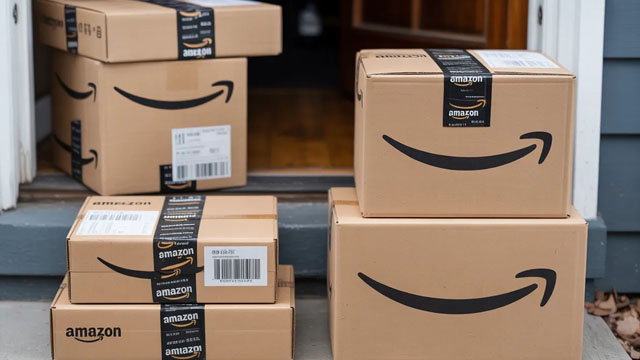
Group 1 - AWS data centers in the UAE and Bahrain were damaged by drone strikes, leading to service outages for various apps and digital services in the UAE [1][2] - Consumer apps such as Careem and payment companies like Alaan and Hubpay experienced outages due to issues with AWS infrastructure [2] - Banking providers including ADCB and Emirates NBD, along with enterprise software providers like Snowflake, reported service disruptions as a result of the AWS outages [2] Group 2 - The U.S. and Israel conducted joint military strikes on Iran, resulting in significant geopolitical tensions and attacks by Tehran across the region [3] - Critical infrastructure, including data centers and oil and gas production facilities, has been targeted amid the escalating conflict [3]