
Intel

Search documents
Intel Rides on Strong Gross Margin Expansion: Will it Sustain?
ZACKS· 2025-12-24 17:16
Core Insights - Intel Corporation (INTC) reported a non-GAAP gross profit of $5.45 billion in Q3 2025, significantly up from $2.39 billion a year ago, with an operating margin improvement to 40% from 18% [1][11] - The Client Computing Group saw revenues of $8.53 billion, an increase from $8.16 billion year-over-year, driven by a rebounding PC market and the adoption of Windows 11 [2][11] - Intel's cost of sales decreased to $8.43 billion from $11.28 billion, reflecting improved cost discipline and a streamlined portfolio [4][11] Client Computing Group Performance - The Client Computing Group is experiencing solid traction, with revenue growth attributed to the increasing demand for PCs and the introduction of AI PCs [2][3] - Major PC manufacturers, including HP, Dell, ASUS, Acer, and Samsung, are collaborating with Intel to develop next-generation AI PCs, contributing to growth in this segment [3] Cost Management and Efficiency - Intel has implemented significant cost discipline initiatives, resulting in a reduction of cost of sales, which positively impacts gross margins [4][11] Competitive Landscape - Intel faces competition from Advanced Micro Devices (AMD) and NVIDIA Corporation (NVDA), with AMD reporting a non-GAAP gross profit of $4.99 billion and NVIDIA reporting $41.9 billion, indicating strong competition in the semiconductor space [5][6] Stock Performance and Valuation - Intel's stock has increased by 78.2% over the past year, outperforming the industry growth of 28.5% [9] - The company's shares currently trade at a price/book ratio of 1.48, which is lower than the industry average of 32.65 [12] Earnings Estimates - Earnings estimates for 2025 have increased by 13.33% to 34 cents, while estimates for 2026 have declined by 9.38% to 58 cents over the past 58 days [13]


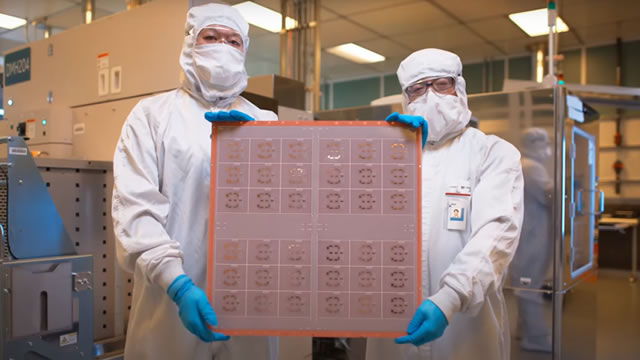
Latest Intel-Nvidia news does not change much, says Cantor Fitzgerald's C.J. Muse
Youtube· 2025-12-24 17:06
Core Viewpoint - The discussion highlights the challenges and potential setbacks faced by Intel in its transition to a foundry model, particularly in relation to its competitors like Nvidia and Apple, while also addressing the broader market conditions affecting the PC segment. Intel's Foundry Transition - Intel is expected to face a longer road ahead in its foundry business, with significant work needed on its 18A process technology and yields [4][7] - The shift from building chips for internal products to becoming a foundry represents a seismic change in Intel's business model [5] - The company has undergone major leadership changes to facilitate this transition, but progress will take time [6] Market Conditions and Challenges - The focus on Intel's foundry progress is primarily around the 14A process, which is aimed at foundry customers, while 18A was developed for internal products [7][8] - The upcoming Panther Lake product is anticipated to be announced at CES, but the competitive landscape against AMD remains challenging [10] - Rising memory costs are expected to increase PC prices, leading to potential demand destruction, which could negatively impact Intel's revenue from its Client Computing Group (CCG) [11][13] Competitive Landscape - AMD has been consistently gaining market share from Intel, adding pressure on Intel's performance in the PC market [10] - The overall market for PCs is projected to be tough in the coming months, which could hinder Intel's growth prospects [11][12]
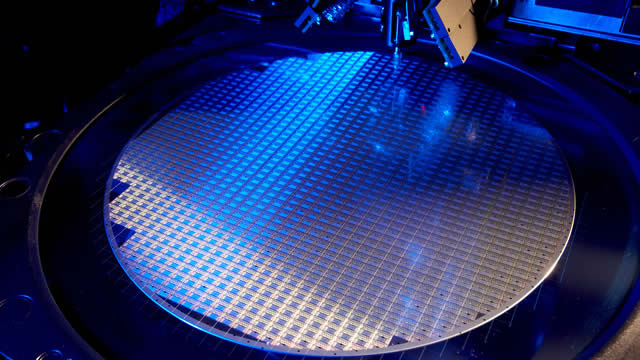
Uh-Oh! Did Nvidia Just Signal Problems with Intel's Comeback?
247Wallst· 2025-12-24 16:57
Intel ( NASDAQ: INTC ) has experienced a dramatic shift in fortunes over the past year. ...
Nvidia Stops Test Using Intel's Chip Production Process
Youtube· 2025-12-24 16:24
Tell us about what is driving Intel stock lower right now. So essentially, Nvidia halted a test run of Intel's 18, a manufacturing process, which we know essentially is a process that makes Chip making more efficient and faster here. So we do have this being really critical to Intel's turnaround story.So that's what's really alarming investors in this moment, because this is essentially a process that should help Intel compete with a global leader, TSMC. So investors are essentially concerned that this is s ...
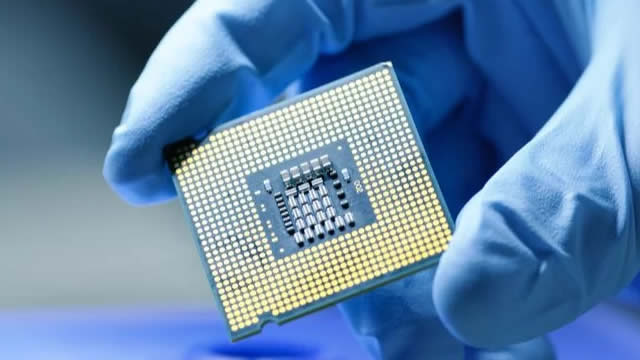
INTC Slides on NVDA Testing Halt
Youtube· 2025-12-24 16:03
Core Viewpoint - Intel's stock has seen a significant increase of approximately 78% in 2025 and over 35% since its partnership announcement with Nvidia in September, but is currently facing pressure due to Nvidia halting tests on Intel's chip manufacturing process [1][3][5]. Company Performance - Intel's stock performance has been strong this year, with a notable rise of 78%, although it experienced a slight decline of about 1.5% recently due to Nvidia's decision [1][5]. - The company has been gaining momentum through various deals, but its manufacturing unit is reportedly struggling with quality issues in producing in-house chips [3][4]. Partnership Developments - Nvidia and Broadcom had previously conducted manufacturing tests with Intel's 18A technology, but dissatisfaction from initial customer tests has led to reduced demand [4]. - Nvidia's abandonment of plans to utilize Intel's chip production process is a significant development, impacting Intel's stock performance [3][5]. Market Reactions - Despite the recent news, Intel's stock has shown resilience, bouncing back from lows, and is currently flat for the month [5][6]. - Analysts suggest that Nvidia's performance will be crucial for maintaining market momentum as the year ends [6].


Options Corner: Intel (INTC)
Youtube· 2025-12-24 14:14
Core Viewpoint - Intel is facing pressure following a report that Nvidia has halted testing of Intel's 18A chip production process, which Nvidia was considering for its own chip manufacturing [1] Group 1: Stock Performance - Intel's shares have increased over 35% since Nvidia's $5 billion investment announcement in September [1] - Year-to-date, Intel has shown strong outperformance, particularly in recent months, outperforming both the tech sector and semiconductor industry [2][3] Group 2: Technical Analysis - The stock is currently at a critical juncture, with significant long-term resistance and support levels identified between 15 to 20 [2] - Recent price movements indicate a potential breakout point, with key levels at 33 and 36 serving as notable support and resistance [5][6] - The 21, 5, and 63-day exponential moving averages are closely aligned with current prices, indicating a potential inflection point around 36 to 37 [6] Group 3: Trading Strategy - A cash-secured put strategy is suggested for investors looking to buy shares if the stock price falls, with a strike price of 34 and a potential profit of approximately $100 per put sold [10][12] - The break-even price for this strategy would be around $33, factoring in the premium collected from the put sale [12][13] - This strategy allows for profit if the stock remains above 34 over the next three and a half weeks, while also preparing for potential share acquisition if the price drops [14]
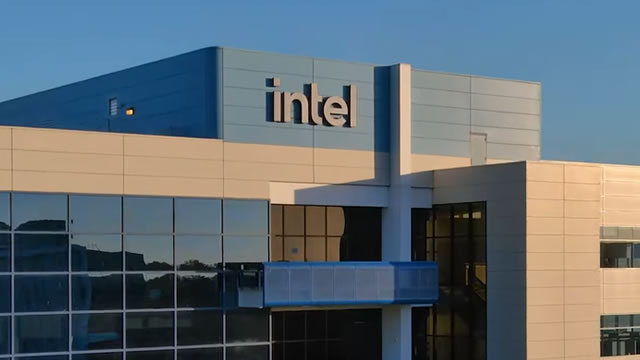
Intel shares slip on reports Nvidia halted 18A chip test
Proactiveinvestors NA· 2025-12-24 14:13
Company Overview - Proactive is a financial news publisher that provides fast, accessible, informative, and actionable business and finance news content to a global investment audience [2] - The company operates with a team of experienced and qualified news journalists across key finance and investing hubs including London, New York, Toronto, Vancouver, Sydney, and Perth [2] Market Focus - Proactive specializes in medium and small-cap markets while also covering blue-chip companies, commodities, and broader investment stories [3] - The content delivered by the team includes insights across various sectors such as biotech and pharma, mining and natural resources, battery metals, oil and gas, crypto, and emerging digital and EV technologies [3] Technology Adoption - Proactive is recognized for its forward-looking approach and enthusiastic adoption of technology to enhance workflows [4] - The company utilizes automation and software tools, including generative AI, while ensuring that all content is edited and authored by humans to maintain quality and best practices in content production [5]
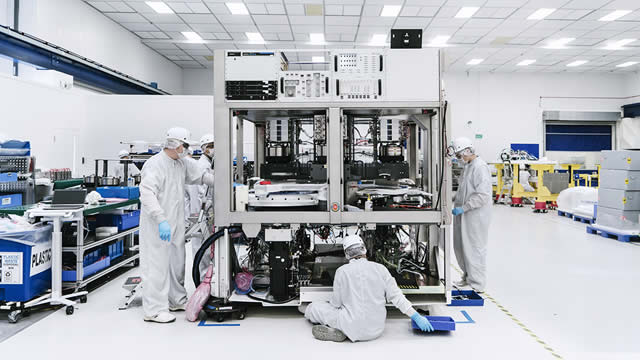
Intel Stock Drops. Blame Nvidia.
Barrons· 2025-12-24 12:18
Core Insights - Chip companies are currently testing Intel's new production process, referred to as 18A [1] Group 1 - The 18A process is a significant advancement in semiconductor manufacturing technology [1]

How a Silicon Valley dealmaker charmed Trump and gave Intel a lifeline
Reuters· 2025-12-24 11:05
Core Viewpoint - Intel CEO Lip-Bu Tan faced criticism from the President of the United States during a pivotal moment in Silicon Valley, highlighting the tensions between government and tech companies [1] Group 1 - The incident occurred early on a Thursday morning, indicating a significant and possibly urgent matter at hand for Intel and the tech industry [1]
半导体生产设备技术月报(2025 年 12 月)-Investor Presentation-Semiconductor Production Equipment Tech Monthly Dec 2025
2025-12-24 02:32
Summary of Semiconductor Production Equipment Industry Insights Industry Overview - The semiconductor production equipment industry in Japan is currently viewed as attractive, with a confirmed entry into a recovery phase for front-end equipment [8][10][21]. Key Companies and Upgrades - **Tokyo Electron (TEL)** and **Kokusai Electric** have been upgraded to an Overweight (OW) rating due to increasing inquiries for equipment from foundries and DRAM makers [8][10]. - Other companies highlighted include **Advantest**, **Disco**, **Ebara**, **SCREEN Holdings**, and **Ulvac**, which are also positioned favorably in the market [10][21]. Market Trends - There has been a significant increase in equipment inquiries from foundries and DRAM manufacturers since mid-November 2025, driven by additional investments in AI semiconductors and supply shortages in DRAM [8][10]. - Demand for back-end equipment remains strong, while front-end equipment, which had been weak, is showing signs of recovery [10][21]. Specific Developments - **Micron Technology** plans to invest approximately ¥1,500 billion to construct a new fab in Hiroshima for next-gen HBM chips, which is expected to benefit front-end equipment makers like Tokyo Electron, Ebara, SCREEN HD, and Kokusai Electric [22]. - The transition to 12-inch SiC wafers is anticipated to drive revenue growth for Disco's KABRA systems and Ulvac's deposition equipment, particularly as demand from Chinese EV makers recovers [12][21]. Technological Innovations - Advancements in 3D-DRAM technology, as confirmed by Kioxia Holdings, could lead to significant changes in the DRAM semiconductor production equipment market, benefiting companies like Tokyo Electron, Ebara, and Kokusai Electric [14]. - The collaboration between Advantest and Tokyo Seimitsu on die-level probers aims to improve yield rates in IC packages, indicating a shift towards more complex testing methods [30]. Government Support and External Factors - The Japanese government is providing substantial support to Rapidus, aiming to mass-produce advanced semiconductors, with investments expected to reach ¥1 trillion by the end of F3/27-28 [26]. - Potential US government approval for H200 exports to China could increase demand for Japanese semiconductor production equipment, particularly benefiting back-end equipment makers like Advantest and Disco [24]. Conclusion - The semiconductor production equipment industry in Japan is poised for growth, driven by increased demand for advanced technologies and government support. Key players are strategically positioned to capitalize on these trends, with significant investments and technological advancements expected to shape the market landscape in the coming years [8][10][21][22].