
Freddie Mac

Search documents
Bringing Mortgages Back To The Big Banks
Seeking Alpha· 2026-02-17 12:15
Group 1: Mortgage Industry Changes - The mortgage industry is experiencing potential changes as the outlook on origination and servicing risks shifts, with a focus on increasing competition and lowering costs for consumers [3] - Federal Reserve Vice Chair for Supervision Michelle Bowman highlighted a significant decline in bank participation in the mortgage market, with banks originating only 35% of mortgages and servicing about 45% of mortgage balances as of 2023, down from 60% and 95% respectively in 2008 [4] - Proposed regulatory changes may include removing the requirement to deduct mortgage servicing assets from regulatory capital while maintaining a 250% risk weight on those assets, and increasing risk sensitivity of capital requirements based on loan-to-value ratios [4] Group 2: Impact on Non-Bank Lenders - Non-bank lenders have seen a significant rise in market share post-2008 financial crisis, and may face pressure to defend their margins against renewed competition from banks [5] - Major banks like Wells Fargo, Bank of America, and JPMorgan Chase may be incentivized to reclaim their market share in the mortgage sector, particularly for loans sold to or guaranteed by government-sponsored agencies [5] Group 3: Market Trends and Developments - The mortgage market is a key topic as the housing market begins to thaw, indicating a potential shift in dynamics that could benefit consumers [3] - The ongoing changes in the mortgage industry reflect broader trends in financial regulation and market participation, emphasizing the need for traditional lenders to adapt to a changing landscape [4][5]


Mortgage and refinance interest rates today, February 16, 2026: Rates fall to new lows
Yahoo Finance· 2026-02-16 11:00
Core Insights - Current mortgage rates are experiencing a decline, with the average 30-year fixed mortgage rate at 5.85% and the 15-year fixed rate at 5.36%, which may encourage homebuyers and mortgage refinancers to apply for loans soon [1][16]. Current Mortgage Rates - The national average for various mortgage types includes: - 30-year fixed: 5.85% - 20-year fixed: 5.64% - 15-year fixed: 5.36% - 5/1 ARM: 5.81% - 7/1 ARM: 5.71% - 30-year VA: 5.36% - 15-year VA: 5.15% - 5/1 VA: 4.99% [6][16]. Mortgage Payment Calculations - For a $300,000 mortgage at a 30-year term with a 5.85% rate, the monthly payment would be approximately $1,770, resulting in $337,136 paid in interest over the loan's life [7]. - For the same mortgage amount at a 15-year term with a 5.36% rate, the monthly payment would increase to $2,429, with total interest paid being $137,224 [9]. Adjustable Mortgage Rates - Adjustable-rate mortgages (ARMs) typically start with lower rates than fixed rates but can increase after the initial fixed period. For instance, a 5/1 ARM maintains the same rate for the first five years before adjusting annually [10][11]. - Recent trends show that ARM rates can sometimes be similar to or higher than fixed rates, emphasizing the importance of comparing lenders and rates [12]. Factors Influencing Mortgage Rates - Lenders offer lower mortgage rates to borrowers with higher down payments, excellent credit scores, and low debt-to-income ratios. Strategies to secure lower rates include saving more, improving credit scores, or reducing debt [13]. - Borrowers can also consider buying down their interest rates through discount points at closing, which can lead to lower monthly payments [14][15]. Future Rate Predictions - Forecasts from the MBA suggest that the 30-year mortgage rate may remain around 6.1% through 2026, while Fannie Mae predicts a similar rate near 6% by the end of the year [18].
X @Cassandra Unchained
Cassandra Unchained· 2026-02-15 06:01
Fannie and FreddieI go through the situationhttps://t.co/oA7eO9yvm0 https://t.co/0YBv0DZsTP ...
How To Get a Mortgage With Just 3% Down in 2026
Yahoo Finance· 2026-02-14 14:00
Core Insights - Rising home prices have made traditional down payments a significant barrier to homeownership, with the median U.S. home price exceeding $400,000, necessitating an approximate $80,000 down payment for a 20% contribution [1] - Many buyers can qualify for conventional mortgages with as little as 3% down, making homeownership more accessible, as a 3% down payment on a $400,000 home amounts to $12,000 [2] Mortgage Options - A 3% down mortgage allows borrowers to finance up to 97% of a home's purchase price, differing from the traditional 80% limit, and is backed by Fannie Mae or Freddie Mac [3] - Borrowers typically need a solid credit profile, stable income, and sufficient cash reserves, although requirements can vary by lender [4] Specific Programs - The Conventional 97 program permits buyers to finance up to 97% of the purchase price, requiring at least one borrower to be a first-time homebuyer, defined as someone who has not owned a home in the past three years [6] - The HomeReady program also allows a 3% down payment without the first-time buyer requirement, but household income must generally be below 80% of the area median income, offering flexible income sourcing [8]
Mortgage and refinance interest rates today, February 14, 2026: 5.85% is the lowest rate we've seen in years
Yahoo Finance· 2026-02-14 11:00
Core Insights - Current mortgage rates are reported to be at their lowest in years, with Zillow indicating a 30-year fixed rate of 5.85% [1][17] - Mortgage rates vary significantly by source, with Zillow's rates typically lower than those from Freddie Mac due to different data collection methods [17] Mortgage Rates Overview - The current national average mortgage rates according to Zillow are as follows: - 30-year fixed: 5.85% - 20-year fixed: 5.64% - 15-year fixed: 5.36% - 5/1 ARM: 5.81% - 7/1 ARM: 5.71% - 30-year VA: 5.36% - 15-year VA: 5.15% - 5/1 VA: 4.99% [4] Refinance Rates - Today's mortgage refinance rates are generally higher than purchase rates, with the following national averages: - 30-year fixed: 5.97% - 20-year fixed: 5.67% - 15-year fixed: 5.39% - 5/1 ARM: 6.10% - 7/1 ARM: 5.89% - 30-year VA: 5.68% - 15-year VA: 5.21% - 5/1 VA: 4.95% [5] Market Conditions - The current housing market is considered favorable for buyers compared to previous years, with home prices stabilizing and mortgage rates dropping since last year [15] - Predictions indicate that the 30-year mortgage rate is expected to remain around 6% through the end of the year, with minimal decreases anticipated [18] Mortgage Types and Their Characteristics - A 30-year fixed mortgage offers lower and predictable monthly payments but comes with higher interest costs over the loan's life [7][9] - A 15-year fixed mortgage has higher monthly payments but lower interest rates, allowing borrowers to pay off their mortgage sooner and save on interest [10][11] - Adjustable-rate mortgages (ARMs) offer lower initial rates but come with the risk of rate increases after the introductory period [12][13]
U.S. household debt hits $18.8T as missed payments surge
Yahoo Finance· 2026-02-12 23:59
Core Insights - US household debt reached $18.8 trillion in Q4 2025, increasing by $191 billion from the previous quarter and $740 billion year-over-year, with a total increase of $4.6 trillion since the end of 2019 [2] Debt Composition - Mortgage balances are approximately $13.17 trillion, credit card balances are $1.3 trillion, auto loans are $1.7 trillion, and student loans also stand at $1.7 trillion [3] Delinquency Trends - The share of total household debt in some stage of delinquency rose to 4.8% in Q4 2025, up from 4.5% in the prior quarter, marking the highest level since 2017 [4] - The percentage of mortgages entering serious delinquency increased to 1.4% in Q4, up from 1.09% in the previous quarter, although overall mortgage performance remains stable [6] Regional Disparities - Delinquency rates are rising more rapidly in lower-income areas and regions with deteriorating labor or housing market conditions [8] - Seriously delinquent multifamily loans at Freddie Mac have reached 0.48%, the highest in over 21 years, while Fannie Mae's rate is at 0.75%, nearing levels seen during the 2008 financial crisis [8]
Mortgage rates edge lower, hover near 6%
Fox Business· 2026-02-12 21:06
Mortgage Rates and Housing Market Overview - Mortgage rates have slightly decreased, with the average rate on a 30-year fixed mortgage falling to 6.09% from 6.11% last week, compared to 6.87% a year ago [1][3] - The average rate on a 15-year fixed mortgage also decreased to 5.44% from 5.5% [3] - Economic growth, a strong labor market, and low mortgage rates have improved housing affordability, leading to increased purchase application activity compared to the previous year [3] Inventory and Home Sales Trends - Existing home sales in the U.S. dropped 8.4% in January to a seasonally adjusted annual rate of 3.91 million units, marking the lowest level since December 2023 [7] - Year-over-year, home sales decreased by 4.4%, indicating a decline in market activity [8] - Inventory growth has slowed for nine consecutive months, with total supply remaining about 17.2% below pre-pandemic levels [5] Market Influences and Future Outlook - Mortgage rates are influenced by various factors, including the Federal Reserve's interest rate decisions and the 10-year Treasury yield, which was around 4.1% [4] - While the current mortgage rates have stabilized, a more significant drop is necessary to attract new buyers and sellers to rejuvenate the housing market [5]
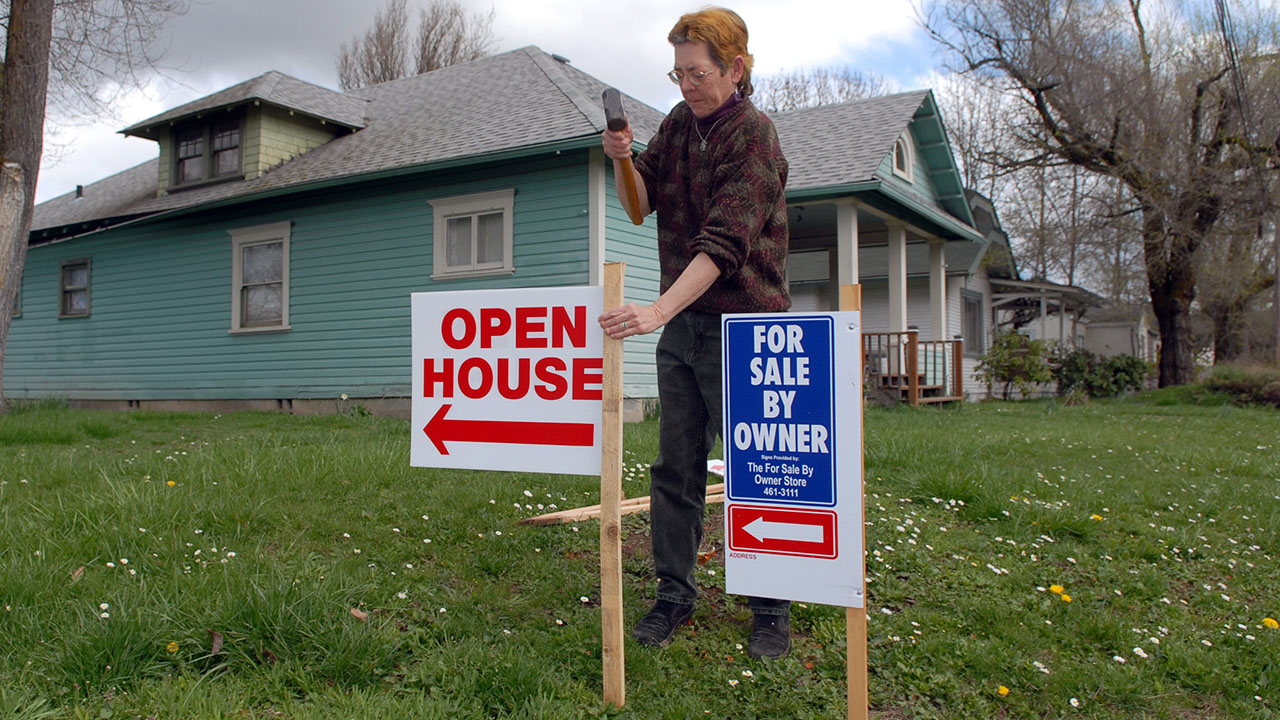
Average US long-term mortgage rate dips to where it was 3 week ago, just above 6%
Yahoo Finance· 2026-02-12 17:05
Mortgage Rates Overview - The average long-term U.S. mortgage rate is currently just above 6%, specifically at 6.09%, down from 6.11% last week and significantly lower than the 6.87% average from a year ago [1] - The 15-year fixed-rate mortgage average has also decreased to 5.44% from 5.5% last week, compared to 6.09% a year ago [2] Influencing Factors - Mortgage rates are affected by various factors including the Federal Reserve's interest rate policies and bond market investors' expectations regarding the economy and inflation [3] - The 10-year Treasury yield, which serves as a benchmark for pricing home loans, has decreased to 4.13% from 4.21% a week prior [3]
US existing home sales drop to more than two-year low in January
Yahoo Finance· 2026-02-12 15:10
Core Insights - U.S. existing home sales fell to the lowest level in over two years, with an 8.4% drop in January to a seasonally adjusted annual rate of 3.91 million units, below economists' expectations of 4.18 million units [1][2] Group 1: Sales Performance - Home sales decreased 4.4% year-over-year, reflecting a significant decline in market activity [2] - The decrease in sales is attributed to low inventory levels, despite improving affordability conditions due to wage gains and lower mortgage rates [3] Group 2: Inventory and Pricing - Existing home inventory fell by 0.8% to 1.22 million units, although it was up 3.4% compared to the previous year [5] - The median existing home price rose by 0.9% year-over-year to $396,800, marking the highest price for any January [5] - At the current sales pace, it would take 3.7 months to exhaust the existing home inventory, an increase from 3.5 months a year ago [5] Group 3: Buyer Demographics - First-time buyers represented 31% of sales, an increase from 28% a year ago, indicating a slight improvement in market participation [6] - All-cash sales accounted for 27% of transactions, down from 29% a year ago, while distressed sales made up 2% of transactions, down from 3% [6]
US homes sales fell sharply in January, even as mortgage rates continued to ease
Yahoo Finance· 2026-02-12 15:01
Core Insights - Sales of previously occupied U.S. homes fell sharply in January, with an 8.4% decline from December to a seasonally adjusted annual rate of 3.91 million units, marking the largest monthly drop in nearly four years [1][2] - Year-over-year, sales decreased by 4.4% compared to January of the previous year, falling short of the expected pace of 4.105 million units [2] - The U.S. housing market has been experiencing a sales slump since 2022, attributed to rising mortgage rates, high home prices, and a chronic shortage of homes [4] Sales Performance - Home sales slowed across all regions: Northeast, Midwest, South, and West [2] - Sales have remained close to a 4-million annual pace since 2023, significantly below the historical norm of 5.2 million annual sales [5] Home Prices - Despite the decline in sales, the national median sales price increased by 0.9% in January from a year earlier, reaching $396,800, marking 31 consecutive months of annual price increases [3] Mortgage Rates - The average rate on a 30-year mortgage briefly dropped to 6.06% in January, the lowest since September 2022, but has since risen slightly, remaining just above 6% [6] Affordability Challenges - Affordability continues to be a significant challenge for many potential homeowners, particularly first-time buyers lacking equity from previous homes [7] - Economic and job market uncertainties are also contributing to the hesitation among prospective buyers [7]