Starbucks

Search documents
Should You Buy Starbucks Stock With $1,000 Right Now and Hold for 5 Years?
The Motley Fool· 2025-05-03 09:47
Core Viewpoint - Starbucks is undergoing a significant turnaround under CEO Brian Niccol's "Back to Starbucks" plan, aiming to regain customer loyalty and improve financial performance, although challenges remain ahead [1]. Financial Performance - For the second quarter of 2025, Starbucks reported revenue of $8.8 billion, a 2.3% increase year-over-year, but this figure fell short of Wall Street expectations [2]. - The company experienced a same-store sales decline of 1%, marking the fifth consecutive year-over-year drop, with a 4% decrease in U.S. transactions, while China saw a 4% increase in transactions but was offset by a 4% decline in average ticket size [3]. - Earnings per share fell by 50% in Q2, primarily due to increased labor costs, as the company focuses on investing in its workforce to enhance customer experience [4][5]. Strategic Initiatives - Starbucks is investing in its workforce, which is considered its most valuable asset, to improve customer experience, although there are concerns about the sustainability of higher labor costs and the potential impact on operating margins [5]. - The company is leveraging its strong brand presence and competitive advantage to navigate financial challenges, with a new marketing campaign in the U.S. showing positive consumer resonance [6][7]. - Positive operational trends include a new sequencing algorithm that allows 75% of orders to be served in under four minutes, and a 40% year-over-year sales increase for matcha beverages after customer feedback led to the removal of sugar from the powder [8]. Investor Sentiment - While management remains optimistic about Starbucks' future, it is advised that investors exercise patience and wait for tangible financial improvements, particularly in same-store sales and operating margins, before considering investment [9][10]. - The current price-to-earnings ratio stands at 25.8, which is viewed as a high valuation for a company undergoing a challenging turnaround [11].


Should Investors Buy Starbucks Stock as It Looks to Turn the Corner?
The Motley Fool· 2025-05-03 08:45
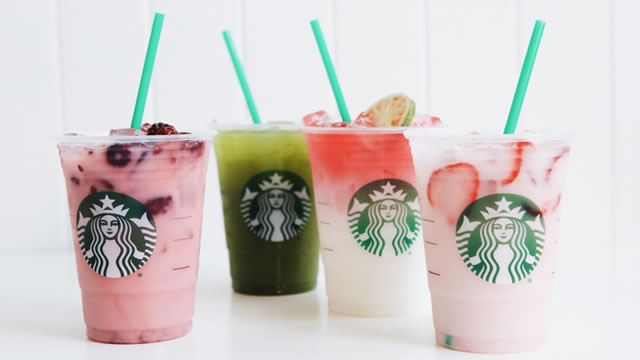
Core Viewpoint - Starbucks is facing challenges with its fiscal second-quarter earnings, which fell short of expectations, leading to a decline in share prices despite some progress in same-store sales improvement [1][4]. Financial Performance - Starbucks' adjusted earnings per share (EPS) dropped 40% year over year to $0.41, missing the analyst consensus of $0.49 [4]. - Overall revenue increased by 2% to $8.72 billion, falling short of the expected $8.82 billion [7]. Operational Changes - The new CEO, Brian Niccol, is prioritizing investment in human labor over equipment to enhance efficiency and customer experience, resulting in a 12% year-over-year increase in store operating expenses, which now account for 47.7% of revenue [2][3]. - The company's operating margin contracted by 450 basis points to 8.2%, attributed to the increased labor costs [3]. Sales Performance - Same-store sales decreased by 1%, marking an improvement compared to previous quarters, with global traffic down 2% but a 1% increase in average ticket [5]. - In North America, comparable-store sales fell by 1% with traffic down 4%, while international same-store sales rose by 2% with a 3% increase in traffic [6]. Strategic Focus - Starbucks is committed to menu innovation and product launches, such as the Cortado platform and summer berry refreshers, while managing tariffs through localization and sourcing strategies [8]. - The company aims to improve its brand image and customer retention through these strategic moves, despite the short-term pressure on profitability [10][12]. Valuation Insights - The stock has a forward price-to-earnings (P/E) ratio of approximately 27.5 based on fiscal 2025 estimates, indicating it is at one of the most attractive valuations since Niccol took over [11].
Starbucks is embracing a tough cost-cutting method that's led workers elsewhere to bring their own coffee to work
Business Insider· 2025-05-02 15:59
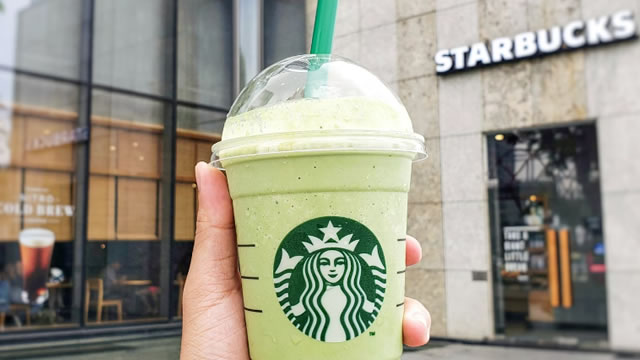
Core Viewpoint - Starbucks is implementing zero-based budgeting (ZBB) as part of its turnaround strategy to identify savings while increasing spending on its "Back to Starbucks" plan, which includes hiring more baristas [1][2]. Group 1: Zero-Based Budgeting Implementation - The zero-based budgeting method requires managers to justify all expenditures each year rather than basing them on previous spending [1]. - CEO Brian Niccol emphasized the importance of ZBB in exploring growth opportunities and identifying potential cost offsets during the company's earnings call [2]. - CFO Cathy Smith, who recently joined Starbucks, expressed her support for using ZBB to uncover stranded costs [2]. Group 2: Historical Context and Adoption - ZBB gained traction in the 1970s, notably advocated by former President Jimmy Carter, although it was not widely adopted by the federal government [3]. - Major brands, including AB InBev and Kraft Heinz, have successfully implemented ZBB to reduce costs and improve margins [3][4]. - The strategy has faced criticism for being overly stringent, potentially hindering employee productivity and innovation, as seen in the experiences of former Kraft Heinz employees [4][5]. Group 3: Other Companies Using ZBB - Companies like X (formerly Twitter) and General Motors have also adopted ZBB during critical transitions, such as after Elon Musk's acquisition and in response to pandemic-related disruptions, respectively [6].
Turnarounds In Progress: 2 Stocks Where Patient, Riskier Investors Could See Potential Significant Upside
Seeking Alpha· 2025-05-02 11:02
Core Viewpoint - The concept of blue chip stocks varies among investors, indicating a subjective nature in defining high-quality investments [1] Group 1 - The article emphasizes the importance of dividend investing in quality blue-chip stocks, Business Development Companies (BDCs), and Real Estate Investment Trusts (REITs) [2] - It highlights a buy-and-hold investment strategy focused on quality over quantity, aiming to supplement retirement income through dividends within the next 5-7 years [2] - The goal is to assist lower and middle-class workers in building investment portfolios comprised of high-quality, dividend-paying companies [2] Group 2 - The analyst has disclosed a beneficial long position in shares of Starbucks (SBUX) and PepsiCo (PEP), indicating a personal investment interest in these companies [3] - The article expresses personal opinions and does not involve compensation from any mentioned companies, ensuring an independent perspective [3] - Seeking Alpha clarifies that past performance does not guarantee future results and that the views expressed may not represent the platform as a whole [4]

Why Starbucks Stock Fell 18% in April
The Motley Fool· 2025-05-01 21:24
Core Viewpoint - Starbucks experienced a significant decline in stock price due to external factors such as tariffs and disappointing fiscal second-quarter earnings results [1][4][7] Group 1: Stock Performance - Starbucks shares fell 18% in April, contrasting with the overall stock market which saw a 90-day pause on some tariffs [4][2] - The stock's performance was notably weaker at the beginning of April and did not recover by the end of the month [4][5] Group 2: Financial Results - In the fiscal second quarter, Starbucks missed estimates on both revenue and earnings, with comparable sales down 1% and revenue declining 2% [7] - Adjusted operating margin decreased by 460 basis points to 8.2%, and adjusted earnings per share fell 40% to $0.41 [7] Group 3: Business Challenges - The company faces challenges due to discretionary spending trends, making it more vulnerable to economic slowdowns [5] - Tariffs may complicate operations, although the cost of importing coffee beans is manageable, comprising 10%-15% of product and distribution costs [6] Group 4: Management and Future Outlook - CEO Brian Niccol, with a strong background from Chipotle, is expected to lead a turnaround strategy, warranting investor patience [9] - Despite macroeconomic headwinds, Niccol's optimism about recovery is noted as a positive aspect for the company's future [9]

Starbucks Stock: Turnaround Strategy Opportunity for Investors
MarketBeat· 2025-05-01 11:32
Core Viewpoint - Starbucks' stock price declined following Q2 results and outlook, attributed to investment in the turnaround strategy led by Brian Niccol, focusing on atmosphere, throughput, and customer satisfaction [1][5][8] Financial Performance - Q2 results showed a 3% FX-neutral growth driven by an increase in store count, falling short of consensus estimates [5] - Globally, comparable store sales (comps) decreased by 1% due to a 2% year-over-year decline in transactions, offset by a 1% increase in ticket average [6] - North America experienced a 1.5% growth in comps, supported by a 3.1% increase in store count, while International business grew by 6.2% [6] Store Expansion - The store count increased by 6.1% year-over-year at the end of Q2, with plans for continued growth, targeting a 100% increase relative to Q2 totals [7] Margin Concerns - Operating margin contracted by 450 basis points to 8.2%, significantly impacting earnings, primarily due to the rollout of Green Apron operations, which involves hiring more staff and technological advancements [7] - Niccol expressed confidence that margins will recover as turnaround expenses decrease and increased traffic and higher check averages are realized [8] Analyst Sentiment - Analysts have downgraded Starbucks from Moderate Buy to Hold, with several price target reductions, leading to a consensus target decline [8][9] - Current stock price is $80.05, with a 12-month price forecast of $98.15, indicating a potential upside of 22.62% [8] Market Reaction - Following the Q2 results, Starbucks' stock price fell sharply but showed signs of support at critical levels, indicating potential for a rebound [9][10]
Why Starbucks Stock Is Sliding Today
The Motley Fool· 2025-04-30 15:40
Core Viewpoint - Starbucks reported disappointing fiscal second-quarter earnings, leading to a 7% decline in stock price, despite management's assertion of progress in its turnaround strategy [1][3]. Financial Performance - Comparable sales decreased by 1% in the quarter, with transactions down 2% and a 1% increase in average ticket [3]. - North America saw a 1% decline in comparable sales, while international markets experienced a 2% increase, with flat comps in China [3]. - Overall revenue rose by 2.3% to $8.76 billion, falling short of estimates of $8.83 billion [3]. - Adjusted operating margin fell by 460 basis points to 8.2%, and adjusted EPS was $0.41, down 40% year-over-year and below the consensus estimate of $0.48 [4]. Strategic Focus - The company is prioritizing labor investment over cold-brewing equipment expansion to enhance throughput and customer connection [4]. - CEO Brian Niccol expressed confidence in the "Back to Starbucks" plan as a viable strategy for business turnaround and future opportunities [5]. Market Sentiment - Despite negative comparable sales growth, there is a call for investor patience as Niccol has only been in charge for two full quarters [6]. - The stock sell-off is seen as understandable, but it may be premature to abandon the turnaround efforts [7].

Starbucks to hire thousands of baristas, scale back automation in bid to win back customers
New York Post· 2025-04-30 15:30
Starbucks will scale back its automation plans and hire thousands of baristas in a significant shift aimed at winning back customers, CEO Brian Niccol announced Tuesday, as the coffee chain grapples with falling sales and a challenging consumer environment.Niccol, who took the helm of Starbucks in September 2024, acknowledged that previous efforts to cut labor costs by leaning heavily on technology had fallen short.“Over the last couple of years, we’ve actually been removing labor from the stores,” he told ...
Weak Results, Bear Notes Weigh Heavy on 2 Stocks
Schaeffers Investment Research· 2025-04-30 13:28
Earnings Overview - Earnings reports are currently the focus, with Starbucks Corp and Snap Inc experiencing significant declines after their quarterly results failed to meet investor expectations [1] Starbucks Corp - Starbucks stock is down 10.1% following a fiscal second-quarter report that missed analysts' expectations, with revenue reported at $8.7 billion and U.S. same-store sales declining by 2% [2] - CEO Laxman Narasimhan expressed optimism about the company's turnaround despite the weak results [2] - Stifel reduced its price target for Starbucks from $103 to $92, with at least 10 other firms also revising their price targets downward; the average 12-month target price is now $93.98, indicating a 10.6% premium to the previous close [2] Snap Inc - Snap stock is down 15.2% in premarket trading after reporting slightly better-than-expected first-quarter revenue but withholding second-quarter guidance due to macroeconomic uncertainty [4] - The company cited emerging "headwinds" that prompted a more cautious outlook [4] - MoffettNathanson cut its price target for Snap from $8 to $1, with 11 other analysts also reducing their price objectives; the consensus 12-month target price is $10.05, suggesting a 31.7% premium to Tuesday's close [5]

Weak Results, Analyst Downgrades Slam 2 Stocks
Schaeffers Investment Research· 2025-04-30 13:28
Group 1: Starbucks Corp - Starbucks stock is down 10.1% after missing analysts' expectations for its fiscal second-quarter report, with revenue at $8.7 billion and U.S. same-store sales declining by 2% [2] - CEO Laxman Narasimhan expressed optimism about the company's turnaround despite the weak results [2] - Stifel and at least 10 other firms have cut their price targets for Starbucks, with the new average 12-month target price at $93.98, indicating a 10.6% premium to the last close [2] Group 2: Snap Inc - Snap stock is down 15.2% in premarket trading after posting slightly better-than-expected first-quarter revenue but withholding second-quarter guidance due to macroeconomic uncertainty [4] - MoffettNathanson reduced its price target for Snap from $8 to $1, with 11 other analysts also slashing their price objectives [5] - The consensus 12-month target price for Snap is $10.05, which still implies a 31.7% premium to Tuesday's close [5]