Vanguard

Search documents
This Is My No. 1 Recommended Vanguard ETF to Buy in 2026
Yahoo Finance· 2026-01-03 16:20
Market Sentiment - As of 2026, 37% of U.S. investors are optimistic about the stock market for the next six months, while 35% are pessimistic [1] Investment Strategy - Consistent investment is highlighted as an effective method for building long-term wealth, even amidst potential market downturns in 2026 [2] - The Vanguard Total Stock Market ETF (NYSEMKT: VTI) is recommended as a protective investment option for portfolios [5][9] ETF Overview - The Vanguard Total Stock Market ETF encompasses the entire U.S. stock market, containing 3,527 stocks across various market capitalizations and sectors, providing significant diversification [6] - This ETF aims to track the overall market performance, making it resilient during periods of volatility [7] Historical Performance - Since its inception in 2001, the Vanguard Total Stock Market ETF has navigated significant market events, achieving total returns exceeding 484% despite short-term volatility [8] - Historically, this ETF has delivered an average annual return of 9.25%, aligning with the market's average over the past 50 years [11]
4 Tips To Achieve the Most Popular Money Goals for 2026
Yahoo Finance· 2026-01-03 14:29
Core Insights - The article emphasizes the importance of structured financial systems over mere motivation in achieving financial goals [2][3] Group 1: Savings Strategy - Setting a specific savings target and ensuring funds are in the right account is crucial for effective savings [4] - Consumers should prioritize their savings strategy by determining how much they can realistically save after essential expenses and checking the yield on their savings accounts [5] - Traditional bank savings accounts often yield low returns (average of 0.40%), while high-yield savings accounts, like Vanguard's Cash Plus Account at 3.50%, can significantly increase earnings [6] Group 2: Debt Management - After establishing a savings system, addressing high-interest debt is the next critical step [7] - A recommended approach is to rank debts to determine the order in which they should be paid off, focusing on high-interest balances first [7]
Better ETF for Beginners: ITOT's Broad Market Exposure vs. VTV's Low-Risk Stability
The Motley Fool· 2026-01-03 13:46
Core Insights - The Vanguard Value ETF (VTV) focuses on large-cap value stocks, while the iShares Core S&P Total US Stock Market ETF (ITOT) aims to provide diversified access to the entire U.S. stock market, including both growth and value stocks [2][9] Cost & Size Comparison - VTV has an expense ratio of 0.04% and assets under management (AUM) of $215.5 billion, while ITOT has a slightly lower expense ratio of 0.03% and an AUM of $80.39 billion [3] - The 1-year return for VTV is 12.66%, compared to ITOT's 11.67%, and VTV offers a higher dividend yield of 2% versus ITOT's 1.09% [3] Performance & Risk Metrics - Over a 5-year period, VTV experienced a maximum drawdown of 53.7%, while ITOT had a lower maximum drawdown of 27.57% [4] - An investment of $1,000 would have grown to $1,606 in VTV and $1,707 in ITOT over the same 5-year period [4] Portfolio Composition - ITOT holds 2,498 stocks, with technology companies making up 34% of its assets, followed by financial services and consumer cyclicals [5] - VTV is concentrated in established value stocks, with significant weightings in financial services (22%), industrials (16%), and healthcare (15%) [7] Investment Implications - ITOT's broader exposure provides instant portfolio diversification and increased concentration in the technology sector, appealing to investors looking for long-term growth [9] - VTV's focus on established value stocks may offer a stronger hedge against market volatility and a higher dividend yield, attracting income-focused investors [10]


The Vanguard ETF That Warren Buffett's Comments Point to as a Top Pick Today
The Motley Fool· 2026-01-03 13:46
Core Viewpoint - Warren Buffett endorses the Vanguard S&P 500 ETF (VOO) as a suitable investment for most investors, emphasizing a long-term, low-cost, and diversified approach to investing [3][14]. Investment Philosophy - Buffett advocates for a long-term, fundamentals-based investment strategy, highlighting the importance of investing in quality companies with strong balance sheets, such as Apple, American Express, and Bank of America [2]. - He suggests that investors should keep their investment strategies simple, diversified, and inexpensive, with a strong recommendation for the S&P 500 as a primary investment vehicle [3][5]. Personal Investment Strategy - Buffett's personal investment advice includes allocating 10% of cash to short-term government bonds and 90% to a low-cost S&P 500 index fund, specifically recommending Vanguard's fund [7]. - He believes this strategy will yield superior long-term results compared to those achieved by high-fee managers [7]. Market Perspective - Buffett remains unfazed by market volatility, viewing downturns as opportunities to acquire quality assets at discounted prices [11][12]. - His approach emphasizes the importance of avoiding emotional decision-making and focusing on long-term value [12]. ETF Endorsement - The Vanguard S&P 500 ETF, launched in 2010, aligns with Buffett's investment philosophy of simplicity and low cost, making it a recommended choice for investors seeking to follow his principles [9][15]. - Buffett's endorsement of VOO serves as a strong validation for the ETF, particularly for inexperienced investors [14].

The Best 3 Tech ETFs to Buy Now to Capture the AI Wave
The Motley Fool· 2026-01-03 08:30
Core Insights - The artificial intelligence (AI) sector is experiencing significant growth, with AI-focused stocks performing well in recent years [1][2] - A majority of Americans (62%) express confidence in AI's long-term earnings potential, indicating optimism for future investments in this industry [2] - Investing in AI ETFs can provide a simpler and diversified approach to gaining exposure in the volatile AI sector [3] AI ETFs Overview - **iShares Future AI and Tech ETF**: This ETF includes 49 stocks involved in AI technology, offering targeted exposure but with increased risk due to its limited diversification. It has achieved a total return of approximately 30% over the past year, outperforming the S&P 500's 18% [4][6] - **Invesco Semiconductors ETF**: Focused on semiconductor companies, this ETF contains 30 stocks and has seen a total return of around 38% in the last year. Since its inception in 2005, it has delivered a remarkable 1,660% in total returns [7][8] - **Vanguard Information Technology ETF**: This ETF provides broader exposure to the tech sector with 322 stocks, including major AI players like Nvidia and AMD. It has earned just under 22% over the past year, slightly above the S&P 500's performance [9][11] Investment Considerations - The AI sector presents lucrative investment opportunities, and ETFs can help investors navigate the complexities of individual stock selection while managing risk [12] - Each ETF offers different levels of exposure and risk, making it essential for investors to align their choices with their financial goals and risk tolerance [12]

Vanguard vs. iShares: Is VNQ or ICF the Better U.S. REIT ETF to Buy?
Yahoo Finance· 2026-01-02 21:35
Core Insights - The article compares iShares Select U.S. REIT ETF (ICF) and Vanguard Real Estate ETF (VNQ), highlighting VNQ's lower cost, broader portfolio, and higher yield, while ICF has a more concentrated focus and has slightly outperformed VNQ in five-year growth [2][10]. Cost and Size Comparison - ICF has an expense ratio of 0.32% and assets under management (AUM) of $1.9 billion, while VNQ has a lower expense ratio of 0.13% and AUM of $65.4 billion [4]. - VNQ offers a higher dividend yield of 3.86% compared to ICF's 2.49% [5][12]. Performance Comparison - Over five years, a $1,000 investment in ICF grew to $1,261, while the same investment in VNQ grew to $1,254 [6]. - Since 2004, VNQ has delivered annualized total returns of 7.2%, compared to ICF's 6.9% [11]. Portfolio Composition - VNQ holds 158 positions with top holdings in Welltower Inc., Prologis Inc., and American Tower Corp., providing diversified sector exposure [7]. - ICF is more concentrated with only 30 holdings, where its top ten stocks account for nearly 60% of its portfolio, increasing single-stock risk [8][12]. Investor Implications - VNQ's lower expense ratio and higher dividend yield make it more appealing for income-focused investors [10]. - Both funds have similar volatility levels, but VNQ's better returns and diversification may offer more potential for long-term growth [11][12].
Some ETFs compete on price — but fees shouldn't always 'drive the investment decision,' analyst says
CNBC· 2026-01-02 19:17
Core Viewpoint - The article emphasizes the importance of considering factors beyond just expense ratios when selecting exchange-traded funds (ETFs), as costs can significantly impact long-term investment gains [2][4]. Group 1: ETF Market Overview - ETFs have become a popular alternative to traditional mutual funds, holding approximately $13.2 trillion in assets, a significant increase from $1 trillion at the end of 2010 [2]. - The average expense ratio for passively managed ETFs is 0.14%, while actively managed ETFs have an average expense ratio of 0.44% [3]. Group 2: Impact of Expense Ratios - Lower expense ratios can lead to higher long-term gains; for instance, a $100,000 investment over 20 years at a 4% annual growth rate with a 1% fee would grow to about $180,000, compared to approximately $220,000 with no fees [4]. Group 3: Considerations Beyond Fees - Investors should consider the implications of mixing ETFs from different providers, as structural differences can lead to unintended risk exposures [6][7]. - It is generally advisable for investors to stick with one ETF provider to avoid mismatches in investment exposure [8]. Group 4: Liquidity Factors - Liquidity is crucial; thinly traded ETFs may have wider bid-ask spreads, making it harder to sell quickly [9][10]. - Investors should assess the bid-ask spread and average daily trading volume to gauge liquidity [10]. Group 5: Performance of Actively Managed ETFs - There are instances where actively managed ETFs may outperform passively managed ones, justifying their higher expense ratios [11]. - For example, the Avantis emerging markets equity ETF, with a 0.33% expense ratio, has outperformed Vanguard's passively managed ETF, which has a 0.07% expense ratio, over the past year [12].

These Economists Nailed Their 2025 Forecast: Here's What They Say About 2026
Investopedia· 2026-01-02 17:00
Economic Outlook - The U.S. economy is expected to experience solid growth in 2026, with lower unemployment and slightly reduced inflation compared to 2025 [2][9] - Vanguard's forecast for 2026 includes a drop in the unemployment rate to 4.2% from 4.6% in November 2025, driven by increased investments in AI and other projects [7] Employment and Job Market - The job market is anticipated to rebound in 2026 after a sluggish performance in 2025, as businesses increase investments and economic growth drives demand for workers [7][9] Economic Growth - GDP growth is projected at 2.25% for 2026, supported by strong investment numbers and fiscal policy changes, particularly tax cuts from the "One Big, Beautiful Bill" [7][10] Inflation Trends - Inflation is expected to remain elevated due to the continued impact of tariffs, with consumer prices rising by 2.6% in 2026, slightly down from 2.8% in September 2025 [10][11]

Experts are bullish on the S&P 500 in 2026: why SPYM beats SPY & VOO ETFs
Invezz· 2026-01-02 16:13
Core Viewpoint - The S&P 500 Index is expected to continue its strong performance in 2026, with analysts predicting significant gains driven by various catalysts, including IPOs from major private companies and potential interest rate cuts by the Federal Reserve [1][4]. Group 1: Analyst Predictions - Oppenheimer has the most optimistic target for the S&P 500 Index at $8,100, while Deutsche Bank and Capital Economics predict it will reach $8,000 [2]. - Morgan Stanley and Wells Fargo forecast the index will rise to $7,800, with other firms like RBC Capital Markets and Goldman Sachs expecting it to exceed $7,500 [3]. Group 2: Catalysts for Growth - Major private companies such as OpenAI, Anthropic, and SpaceX are expected to launch IPOs, which may stimulate more listings and contribute to the index's growth [3]. - The Federal Reserve is anticipated to continue cutting interest rates, making equities more attractive compared to government bonds, which previously contributed to the index's rise [4]. - Strong corporate earnings are projected, with S&P 500 companies having recorded double-digit growth for four consecutive quarters [4]. Group 3: Economic Indicators - The US economy has returned to growth, with GDP expanding by 4.3% in the third quarter, which supports the outlook for high earnings [5]. - The ongoing AI boom, led by companies like Nvidia and Broadcom, is expected to further bolster market confidence and invalidate fears of an AI bubble burst [5]. Group 4: Investment Strategies - The State Street SPDR Portfolio S&P 500 ETF (SPYM) is highlighted as a better investment option compared to the more popular Vanguard S&P 500 Index ETF (VOO) and SPDR S&P 500 ETF (SPY) due to its lower expense ratio of 0.02% [6][8]. - VOO has seen significant inflows, totaling over $137 billion in the last 12 months, bringing its assets to over $839 billion, while SPY and IVV follow with $717 billion and $766 billion respectively [7].
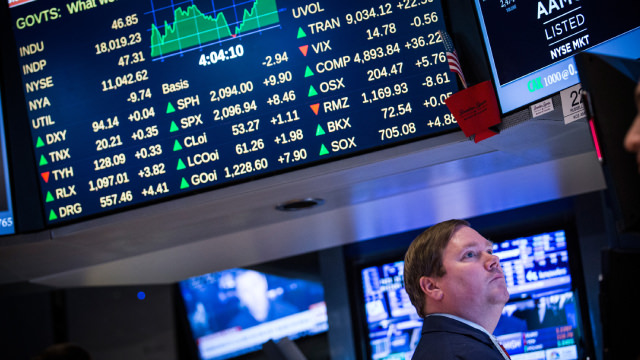
2 ETFs I'd Buy in Response to Goldman's 2026 Investment Forecast
247Wallst· 2026-01-02 15:05
Core Insights - Goldman Sachs forecasts a modest annual return of 6.5% for the S&P 500 over the next decade, prompting a consideration for a more active investment approach rather than a passive one [1] - Despite a long-term muted return outlook, Goldman Sachs anticipates 2026 to be a strong year for American stocks, projecting a target of 7,600 for the S&P 500, with potential for an 11% gain in the year [3] Investment Strategies - Investors are encouraged to explore opportunities outside the U.S. market and consider mid- and small-cap stocks for better returns [2] - The iShares Core S&P Small-Cap ETF is highlighted as a valuable option for gaining exposure to small-cap stocks, especially as the Fed lowers interest rates and M&A activity increases [5][6] - The Vanguard FTSE Developed Markets Index Fund ETF outperformed the S&P 500 with nearly 31% gains last year, suggesting international markets may offer attractive investment opportunities despite potential challenges in maintaining such performance [7][8] Valuation Considerations - The Vanguard FTSE Developed Markets Index Fund ETF has a trailing price-to-earnings (P/E) ratio of 17.1, which is appealing for value investors compared to the higher P/E ratios associated with the S&P 500 [9]