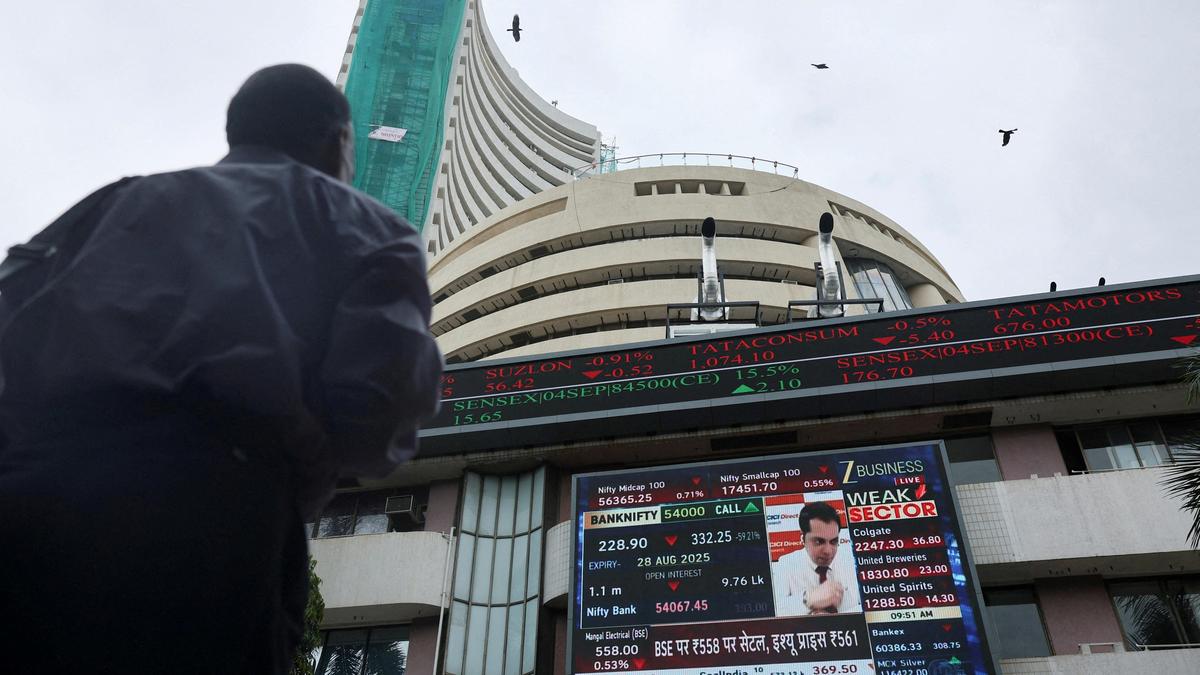
Axis Bank

Search documents
Will banks work on Tuesday? Public sector banking ops likely to be hit as unions strike for 5-day week
The Times Of India· 2026-01-26 13:34
Core Viewpoint - A nationwide strike by bank unions in India is set to disrupt operations at public sector banks, demanding the implementation of a five-day work week, which they claim was agreed upon in a previous settlement but has not been enacted by the government [5][8][9] Group 1: Impact on Banking Services - Branch-level services such as cash deposits, withdrawals, cheque clearances, and administrative work at public sector banks like State Bank of India (SBI), Punjab National Bank (PNB), and Bank of Baroda are expected to be significantly affected [3][8] - Major private sector banks, including HDFC Bank, ICICI Bank, and Axis Bank, are anticipated to remain largely unaffected as their employees are not part of the striking unions, and digital banking services will continue to function, although ATM cash availability may face localized issues [4][8] Group 2: Reasons for the Strike - The unions are advocating for all Saturdays to be declared holidays, a demand they assert was agreed upon during the 12th Bipartite Settlement with the Indian Banks' Association in March 2024, but has yet to be officially recognized by the government [5][9] - Union leaders emphasize that the strike is intended to enhance the efficiency and sustainability of the banking system rather than inconvenience customers, arguing that a balanced workforce is essential for financial stability [6][8] Group 3: Communication from Banks - Several public sector banks, including SBI, have communicated to stock exchanges about the potential impact of the strike, indicating that while they have made arrangements for normal operations, disruptions are likely [7][8]

Banking operations to be hit on Tuesday as unions go on strike seeking 5-day work week
The Economic Times· 2026-01-26 12:18
Core Viewpoint - The United Forum of Bank Unions (UFBU) has called for a nationwide strike on January 27 to demand the implementation of a five-day work week, following unsuccessful conciliation talks with the chief labour commissioner on January 23 [1][10]. Group 1: Strike Details - The strike will disrupt branch-level services for three consecutive days, as banks will be closed on January 25 and January 26 due to the weekend and Republic Day [1][10]. - The All India Bank Employees Association (AIBEA) stated that the lack of assurance on their demands has compelled them to proceed with the strike action [2][10]. - The All India Bank Officers' Confederation (AIBOC) mentioned that the decision to declare all Saturdays as holidays was agreed upon during the wage revision settlement in March 2024 [3][10]. Group 2: Union Demands and Rationale - The unions are advocating for the declaration of all Saturdays as holidays, a demand that was reportedly agreed upon but is pending government notification [9][11]. - The National Confederation of Bank Employees (NCBE) emphasized that the movement is aimed at creating a sustainable and efficient banking system, asserting that a rested banker serves the nation better [7][10]. Group 3: Impact on Banking Operations - Services such as cash deposits, withdrawals, cheque clearances, and administrative work at public sector banks (PSBs) are expected to be significantly affected [11]. - Major private sector banks like HDFC Bank, ICICI Bank, and Axis Bank are anticipated to remain largely unaffected as their employees are not part of the striking unions [11]. - Digital banking services, including UPI and internet banking, will continue to operate, although ATM cash availability may face localized issues due to logistical delays [11].

Bank holiday on January 26: Are banks open or closed tomorrow for Republic Day? Check RBI calendar
MINT· 2026-01-25 15:40
Group 1 - All banks in India, including major public and private lenders, will be closed on Monday, 26 January, due to Republic Day celebrations, as per the RBI bank holiday calendar [1][3] - Republic Day marks the 77th anniversary of the adoption of the Indian Constitution in 1950, celebrated with a grand ceremonial parade in New Delhi [2] - January has around 10 RBI-declared bank holidays, with most already passed, and the upcoming Republic Day creates a long weekend for banks, closing them for three consecutive days [3] Group 2 - The next official bank holiday will be on 18 February, but a potential nationwide strike by bank employees on 27 January could disrupt banking operations [4] - Public sector banks have already informed customers about possible disruptions in services if the strike occurs [5] - Digital banking services, including mobile apps and online banking, remain available during bank holidays for urgent transactions, and ATM services are operational 24/7 [6][7]
Bloodbath on D-Street! Investors lose over Rs 16 lakh crore this week as Nifty, Sensex crash; market down 5% from lifetime highs
The Times Of India· 2026-01-23 14:20
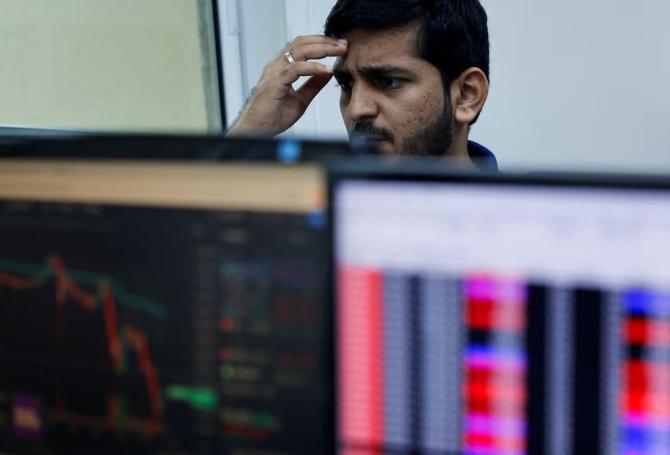
Market Performance - Indian stock markets experienced significant volatility, with Nifty closing near 25,050 and Sensex around 81,540 by the end of the week, marking a decline of 2.51% and 2.43% respectively [2][3] - The market capitalization of BSE-listed companies fell by Rs 6,95,963.98 crore to Rs 4,51,56,045.07 crore, equivalent to $4.93 trillion, with a total market value erosion of Rs 16,28,561.85 crore over the week [2][3] Key Drivers of Market Decline - Heavy selling pressure was noted, particularly in heavyweight stocks such as those from the Adani Group, which contributed to the overall market downturn [4][8] - Weak quarterly performances from major companies like ICICI Bank and HCL Technologies raised concerns about the earnings outlook, further dampening market sentiment [5][7] - The Indian rupee hit an all-time low against the US dollar, exacerbating macroeconomic worries related to inflation and trade deficits [5][9] Foreign Investment and Market Sentiment - Persistent foreign institutional investor (FII) outflows and a shift towards safe-haven assets have negatively impacted market sentiment [5][8] - The absence of strong domestic cues and the lack of major players in the artificial intelligence sector have been cited as reasons for the Indian market lagging behind global peers [5][6] Expert Insights - Analysts suggest that the market's direction in the coming week will be influenced by global macroeconomic signals and domestic fiscal expectations, with a focus on guidance from the Federal Reserve regarding interest rate cuts [9] - Stock-specific movements are expected to remain prominent as the Q3 earnings season continues, with cautious sentiment prevailing due to global developments and currency trends [9]
Sensex slips below 82K amid widespread sell-off
Rediff· 2026-01-23 12:23
Market Overview - Equity benchmark indices Sensex and Nifty ended nearly 1 percent lower, with the Sensex closing at 81,537.70 after a drop of 769.67 points, or 0.94 percent [4] - The Nifty settled at 25,048.65, down 241.25 points, or 0.95 percent [6] - The rupee depreciated to a record low against the US dollar, contributing to the market's decline [4] Market Sentiment - Investors are shifting towards safe-haven assets due to widespread sell-offs and foreign capital outflows, leading to a cautious market sentiment [4][12] - The upcoming Union Budget and the US Fed's interest rate decision are influencing investor positioning, with expectations remaining muted [14] Sector Performance - Realty and PSU bank stocks underperformed due to execution-related delays and profit booking [13] - The BSE smallcap gauge fell by 2.19 percent, while the midcap index decreased by 1.56 percent [9] Stock Performance - Major laggards included Adani Ports, IndiGo, Axis Bank, and Reliance Industries [8][9] - Gainers included Tech Mahindra, Hindustan Unilever, and Tata Consultancy Services [8][9] Foreign Investment Activity - Foreign institutional investors (FIIs) sold equities worth Rs 2,549.80 crore, while domestic institutional investors (DIIs) purchased stocks worth Rs 4,222.98 crore [10]
PSU banks counting on QR-based payments to breach a fintech fort
The Economic Times· 2026-01-21 18:56
Core Insights - Public sector banks (PSBs) are increasingly entering the QR-code led merchant payments space, aiming to compete with fintech companies like BharatPe, PhonePe, and Paytm [15] - This shift in strategy is driven by the revenue opportunities in the small merchant ecosystem and the dominance of UPI payments [2][15] - Banks are focusing on building direct relationships with merchants and enhancing their payment platforms with features like instant onboarding and on-demand settlement [10][15] Industry Trends - The Reserve Bank of India reports approximately 728 million QR codes deployed in the country, compared to only 11 million POS terminals, indicating a significant market potential [7] - Industry estimates suggest there are around 30 million soundbox terminals in India, further highlighting the growth opportunities in the small merchant payment sector [7] - Paytm has disclosed quarterly disbursals of around ₹4,500 crore for merchants, with a significant portion of transactions driven by UPI QR code-based payments [8][9] Competitive Landscape - Players like Worldline are collaborating with banks to provide technology stacks and backend settlements, enabling a comprehensive payment service for small merchants [5][15] - Banks are motivated by the low cost of deploying payment solutions and the potential for data and lending opportunities in this market [6][15] - The entry of banks into the small merchant payment business may lead to competition with fintechs, although industry insiders believe this conflict may not be immediate [12][15]
Sensex sinks below 82K; Nifty ended down 75 points
Rediff· 2026-01-21 11:50
Market Overview - Indian equity markets experienced losses for the third consecutive session due to heightened geopolitical tensions, weak global peers, and persistent foreign fund outflows [3][9] - The 30-share BSE Sensex closed at 81,909.63, down 270.84 points or 0.33 percent, while the NSE Nifty declined 75 points or 0.30 percent to 25,157.50 [4][5] Stock Performance - Major laggards included ICICI Bank, Trent, Bharat Electronics, Axis Bank, HDFC Bank, Larsen & Toubro, State Bank of India, and Maruti [6][7] - Gainers in the market were Eternal, UltraTech Cement, InterGlobe Aviation, and Reliance Industries [7][8] Investor Activity - Foreign institutional investors sold equities worth ₹2,938.33 crore, while domestic institutional investors purchased stocks worth ₹3,665.69 crore [8] Market Sentiment - Analysts noted that domestic markets were affected by global risk factors, leading to volatility, although some value buying helped recover early losses [10] - The weakening rupee and uncertainties regarding trade ties are expected to prolong market volatility [10]
Axis Bank CEO Chaudhry on Banking Consolidation, Rupee Performance
Yahoo Finance· 2026-01-19 14:34
Group 1 - The CEO of Axis Bank, Amitabh Chaudhry, anticipates a wave of consolidation in India's banking sector, emphasizing the need for 8 to 10 large banks to support economic development [1] - Chaudhry highlighted the underperformance of the Indian rupee, attributing it to capital rotation towards China and other markets due to perceptions of India's lag in AI development [1] - Despite concerns regarding the currency, there is optimism that upcoming fiscal and regulatory reforms will help stabilize the rupee [1]
Standard Chartered weighs future of credit card business in India – report
Yahoo Finance· 2026-01-19 12:16
Group 1 - Standard Chartered is evaluating options for its retail credit card operations in India as part of a broader business reshaping strategy in the region [1] - Initial discussions with stakeholders have begun, and a decision may be reached within this year, although plans could change or be postponed [1][2] - The bank is considering a potential sale of its credit card segment, which would signify a reduction in its retail presence in India [2] Group 2 - A Standard Chartered executive indicated a willingness to let go of certain credit card customers who do not engage with other banking products in India [2] - The bank maintains that credit cards are a key component of its wealth and retail banking strategy in India, which focuses on offering multiple products supported by international banking services [3] - Foreign banks, including Citigroup, have been reducing their retail activities in India, with Citigroup transferring its entire Indian consumer business to Axis Bank in 2023 [3][4] Group 3 - Deutsche Bank is also in negotiations to sell its retail and wealth management businesses in India, with binding offers submitted by Kotak Mahindra Bank and Federal Bank [4] - Standard Chartered has previously reduced its exposure to consumer lending in India, including the sale of its personal loan portfolio [4]
Stock markets decline in early trade dragged by blue-chips Reliance, ICICI Bank
The Hindu· 2026-01-19 04:54
Market Overview - Equity benchmark indices Sensex and Nifty declined in early trade, with Sensex down 320.69 points to 83,249.66 and Nifty down 124.60 points to 25,573.40, influenced by blue-chip stocks like Reliance Industries and ICICI Bank, along with foreign fund outflows and global tariff uncertainties [1] Company Performance - ICICI Bank's consolidated profit for the December quarter fell by 2.68% to ₹12,537.98 crore, impacted by a ₹1,283-crore provision for misclassified agricultural loans, with standalone profit also declining over 4% to ₹12,883 crore [2] - Reliance Industries reported a nearly flat net profit of ₹18,645 crore for the third quarter, as declines in gas production and retail business offset gains in other segments, leading to a drop of over 2% in its stock [3] Institutional Investment - Foreign institutional investors sold equities worth ₹4,346.13 crore, while domestic institutional investors purchased stocks worth ₹3,935.31 crore, indicating a mixed sentiment in the market [4] Global Market Influence - Asian markets showed mixed performance, with South Korea's Kospi and Shanghai's SSE Composite indices trading higher, while Japan's Nikkei 225 and Hong Kong's Hang Seng indices were lower. U.S. markets ended marginally lower, influenced by President Trump's announcement of increased tariffs on several European nations [5] Commodity Prices - Brent crude oil prices increased by 0.16% to $64.23 per barrel, reflecting ongoing fluctuations in global oil markets [6]