
Volkswagen

Search documents
Here's Why You Should Retain Mobileye Stock in Your Portfolio Now
ZACKS· 2025-05-12 14:05
Core Viewpoint - Mobileye Global Inc. is positioned to benefit from the increasing demand for advanced driver assistance systems (ADAS) and autonomous driving technologies, despite rising operating expenses [1] Group 1: Demand and Technology - The demand for ADAS and autonomous driving features is enhancing Mobileye's growth prospects, with innovative solutions like Supervision, Chauffeur, Drive, and EyeQ strengthening its portfolio [2] - The adoption of multi-camera setups is increasing due to stricter safety regulations and the push for hands-free highway driving in mass-market vehicles [2] Group 2: Financial Projections - Mobileye anticipates revenues in the range of $1.69-$1.81 billion for 2025, an increase from $1.65 billion in 2024, based on EyeQ unit sales of 32-34 million units [3] - For Q2 2025, the company expects revenues to rise approximately 7% year over year [3] Group 3: Strategic Partnerships - Strategic partnerships and design wins are crucial for Mobileye's growth, with collaborations with ZEEKR, Porsche, FAW, Mahindra, and Volkswagen enhancing its market position [4] - Volkswagen's deepened partnership with Mobileye aims to integrate advanced technologies for automated driving into series production vehicles [4] Group 4: Financial Health - Mobileye has a strong balance sheet with $1.51 billion in cash and cash equivalents and zero debt as of March 25, 2025, providing financial flexibility for growth opportunities [5] Group 5: Challenges - Mobileye expects a 3-7% decline in production volume from its top 10 customers in 2025, with competitive pressures in China affecting shipments of assisted driving technology [6] - Rising operating expenses, driven by increased employee compensation and military reserve investments, are expected to hinder income growth, with a projected 7% year-over-year increase in adjusted operating expenses for 2025 [7]



Should You Buy Rivian Stock While It Is Still Below $15?
The Motley Fool· 2025-05-11 15:00
Core Viewpoint - Rivian Automotive is one of the few remaining pure-play electric vehicle companies, facing challenges in a competitive market as demand for EVs slows down and deliveries decline significantly [1][3]. Group 1: Company Performance - Rivian's stock is currently trading below $15, down over 90% from its all-time highs at the IPO [2]. - Deliveries in the last quarter were only 8,640, a decrease from over 13,000 in the same quarter last year, indicating a significant drop in demand [3]. - The company achieved a gross margin of 17% in Q1, marking a record for Rivian, driven by increased revenue from software and services, which rose to $318 million from $88 million a year ago [4]. Group 2: Financial Position - Rivian has $7 billion in cash on its balance sheet and has secured billions in funding from partners like Volkswagen and the U.S. government, providing a financial cushion for future operations [5]. - The company generated $5 billion in annual revenue and has the potential to grow this figure significantly if it can scale production and improve delivery numbers [11]. Group 3: Future Plans - Rivian plans to release the R2 SUV in 2026, priced between $45,000 and $50,000, which is expected to attract a broader customer base [8]. - The company aims to leverage its strong brand and customer satisfaction to increase demand for its vehicles, particularly with the introduction of the R2 model [9]. Group 4: Market Challenges - Rivian faces intense competition from established automotive players, which are gaining market share in the U.S. [13]. - The company must demonstrate its ability to increase deliveries and achieve positive free cash flow to ensure long-term viability [14].

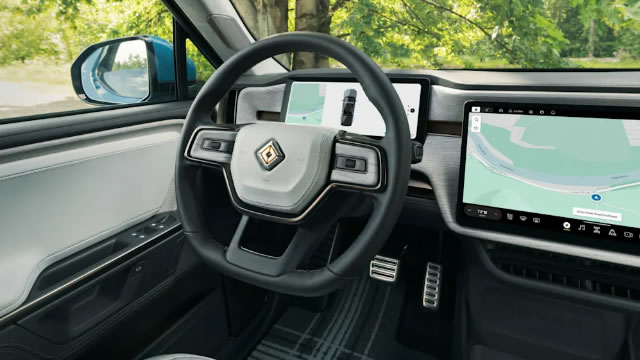
Rivian: Should You Buy the Stock Before Its Next Big Milestone?
The Motley Fool· 2025-05-11 12:30
Core Insights - Rivian Automotive achieved a significant milestone by reporting its second consecutive quarter of gross profit, unlocking an additional $1 billion in funding from Volkswagen as part of a potential $5.8 billion investment [1][2] Financial Performance - Rivian's gross margin for the first quarter was 16.6%, surpassing Tesla's 16.3%, marking a substantial improvement from a negative gross margin of 44% a year ago [3][4] - The company reported first-quarter revenue of $1.24 billion, a 3% increase, despite a decline in vehicle deliveries, with automobile revenue falling 17% to $922 million, while software revenue tripled from $88 million to $318 million [8] - Rivian reduced its net loss from $1.5 billion a year ago to $541 million and decreased free cash outflows to $526 million from $1.5 billion [9] Production and Future Plans - Rivian is preparing for the launch of its lower-priced R2 SUV, projected to be priced around $45,000, which is expected to have broader market appeal [6][7] - The company plans to shut down its factory for about a month to retool for the R2's launch in the first half of 2026, which could trigger Volkswagen's next $1 billion investment [7] - Rivian is increasing its production capacity with an expansion of its Illinois factory and plans to begin construction of a new factory in Georgia next year [13] Strategic Focus - The company is focusing on higher-margin software, recently launching a hands-free driving feature and aiming for more autonomous self-driving capabilities [5] - Rivian has adjusted its delivery forecast to between 40,000 and 46,000 units, down from a previous estimate of 46,000 to 51,000 units, while maintaining guidance for a modest gross profit and an adjusted loss of $1.7 billion to $1.9 billion [11][12]
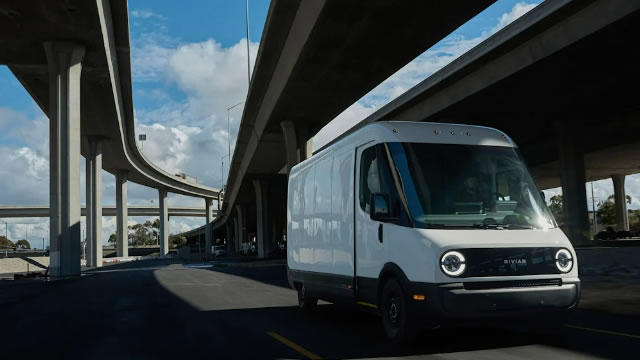
Rivian Stock Faces 'Murky Macro Backdrop,' Tariff Concerns: Analysts Cautious Ahead Of R2 Launch
Benzinga· 2025-05-07 19:02
Rivian Automotive RIVN analysts break down first-quarter financial results and examine how the company’s revised vehicle delivery guidance could impact the stock.The Rivian Analysts: Bank of America analyst John Murphy reiterated an Underperform rating on Rivian with a $10 price target.Wedbush analyst Dan Ives maintained an Outperform rating and lowered the price target from $20 to $18.Needham analyst Chris Pierce reiterated a Buy rating and lowered the price target from $17 to $16.Read Also: Rivian CEO RJ ...
Uber misses revenue expectations with trips up 18% over last year
CNBC· 2025-05-07 11:04
Core Insights - Uber's first-quarter results for 2025 exceeded earnings expectations but fell short of revenue growth forecasts, leading to a 5% decline in shares [1] Financial Performance - Revenue grew approximately 14% year-over-year, reaching $11.53 billion, compared to $10.13 billion in the same period of 2024 [1][6] - Net income was around $1.78 billion, or 83 cents per share, a significant improvement from a net loss of $654 million, or 32 cents per share, in Q1 2024 [2] Business Segments - The ride-hailing and food delivery segments saw increased bookings, with mobility gross bookings at $21.18 billion (up 13% year-over-year) and delivery gross bookings at $20.38 billion (up 15% year-over-year) [7] - Monthly active platform consumers grew to 170 million, a 14% increase from the previous year, with users booking approximately 3.04 billion trips, an 18% rise year-over-year [2] Future Outlook - The company anticipates gross bookings between $45.75 billion and $47.25 billion for the current quarter, with EBITDA projected between $2.02 billion and $2.12 billion [3] - CEO Dara Khosrowshahi highlighted autonomous vehicle technology as a significant opportunity for Uber, with an annual run-rate of 1.5 million autonomous vehicle trips [3][4] Partnerships and Innovations - Uber has partnered with Waymo for robotaxi services in Austin, Texas, which has exceeded expectations, with Waymo vehicles operating more efficiently than 99% of drivers in the area [4] - Additional partnerships include collaborations with Volkswagen, Avride, May Mobility, and Aurora for autonomous ride-hailing and freight services, as well as international partnerships with WeRide, Pony.AI, and Momenta [5]


为什么汽车制造商需要关注每辆车的劳动力成本
奥纬咨询· 2025-05-07 05:55
Investment Rating - The report does not explicitly provide an investment rating for the automotive industry but highlights significant disparities in labor costs and competitive pressures among different automaker archetypes [3][4]. Core Insights - The global automotive industry is facing challenges such as tariffs, aggressive competition from Chinese manufacturers, and a slowdown in battery electric vehicle sales, necessitating effective cost management and production strategies [3][4]. - Labor cost per vehicle is a critical metric for assessing automaker competitiveness and profitability, with labor typically accounting for 65% to 70% of total conversion costs [5][8]. - The analysis categorizes automakers into four archetypes based on labor cost per vehicle, revealing substantial differences in productivity and wage rates [8][10]. Summary by Sections Labor Cost Analysis - The report examines labor costs across over 250 vehicle assembly plants globally, emphasizing the importance of labor cost per vehicle in determining competitiveness [4][5]. - Labor cost per vehicle varies significantly among different automaker categories, with Euro premiums averaging $2,232, EV-only manufacturers at $1,660, mainstream model manufacturers at $880, and Chinese car manufacturers at $585 [10][11]. Automaker Archetypes - **Euro Premiums**: This group has the highest labor cost per vehicle, averaging $2,232, and includes brands like Mercedes-Benz and BMW. They face high production costs due to strong labor unions and complex manufacturing processes [11][13]. - **EV-Only Manufacturers**: This category includes startups like Tesla, with labor costs ranging from $1,502 to $13,291. They struggle with low production volumes and high costs due to the lack of organized labor contracts [14]. - **Mainstream Model Manufacturers**: Traditional automakers in this group have an average labor cost of $880, benefiting from diversified manufacturing networks and lower production costs [15][16]. - **Chinese Car Manufacturers**: With an average labor cost of $585, this group benefits from low wages and high efficiency, leading to the lowest overall conversion costs [17][18]. Global Labor Cost Disparities - The report highlights that China is no longer the lowest labor cost nation, with countries like Morocco and Romania emerging as low-cost production centers [19][20]. - Morocco has become a key production hub for French manufacturers, while Mexico serves as a strategic base for various global automakers [21][22]. Production Variables Influencing Labor Cost - Factors such as design complexity, consumer choices, energy costs, and supply chain restructuring significantly impact labor costs per vehicle [24][33]. - The report emphasizes the importance of engineered hours per vehicle as a metric for productivity, with Chinese manufacturers showing lower engineered hours compared to Euro premiums [27][28]. Recommended Strategies for Automakers - **Euro Premiums**: Need to restructure for better efficiency and margin optimization, targeting a labor cost per vehicle closer to $1,500 [36][37]. - **EV-Only Manufacturers**: Should focus on scaling operations and establishing efficient production systems to reduce labor costs [38][39]. - **Mainstream Model Manufacturers**: Must invest in technology to maintain competitiveness and optimize production processes [41][42]. - **Chinese Car Manufacturers**: Should enhance vehicle quality to build brand value and gain trust in international markets [43]. Conclusion - The report provides insights into labor cost dynamics in the automotive industry, highlighting the need for strategic adjustments in response to competitive pressures and market changes [44].
Uber and WeRide set their robotaxi sights on 15 more cities
TechCrunch· 2025-05-05 22:00
Core Insights - Uber and WeRide are expanding their commercial robotaxi partnership to 15 additional cities over the next five years, following the launch of their service in Abu Dhabi five months ago [1][3] - The expansion will include cities in Europe, and WeRide's robotaxi services will be accessible through the Uber app, similar to Uber's collaboration with Waymo [2][3] - The partnership aims to focus on cities outside of China and the United States, with plans to add Dubai to their existing operations in Abu Dhabi [3] Company Partnerships - Uber has established over 15 partnerships with various autonomous vehicle technology companies in the past two years, covering ride-hailing, delivery, and trucking sectors [4] - Recent partnerships include collaborations with May Mobility, Volkswagen, and Momenta, indicating a strategic push in the autonomous vehicle space [4] - The most notable partnership in the U.S. is with Waymo, which is currently operational in Austin and soon to be in Atlanta [5]

Ahead Of Uber Earnings, Analyst Raises Forecast
Benzinga· 2025-05-05 21:56
Core Viewpoint - BofA Securities analyst Justin Post maintains a Buy rating on Uber Technologies, Inc with a price target increase to $96 from $95, ahead of the quarterly earnings report on May 7 [1] Financial Estimates - For Q1, Post estimates Uber's bookings at $43.5 billion and revenue at $11.73 billion, exceeding Street estimates of $42.9 billion and $11.62 billion respectively [1] - The EBITDA estimate of $1.89 billion is also higher than the Street's estimate of $1.84 billion [2] - Projected Q2 bookings are $47.65 billion compared to the Street estimate of $45.79 billion, with revenue expected at $12.94 billion versus the Street estimate of $12.34 billion [7] Growth Projections - Mobility bookings growth is projected at 21% excluding foreign exchange, indicating a deceleration compared to BAC card data showing stable Online Transit spending [2] - Stable 18% growth is expected for Delivery, although Online Delivery growth has decelerated by 1 point compared to Q4 [4] - The Grocery & Retail segment is anticipated to contribute an additional 2 points to growth in Q1 due to new partnerships [4] New Verticals and Innovations - The contribution from New Verticals is viewed positively as Uber invests in new products like Uber Teen and autonomous vehicles [3] - The partnership with Volkswagen to deploy autonomous vehicles in multiple cities, starting in Los Angeles, is significant, with testing of the "ID. Buzz" planned for late 2025 [6] Autonomous Vehicle Developments - Early data from the Waymo launch on the Uber app in Austin suggests a successful ramp-up, with Uber focusing on tools to enhance autonomous vehicle adoption [5] - CEO Elon Musk's comments on Tesla's plans for fully autonomous paid rides in June may drive further Auto OEM AV development and partnerships with Uber [7] Market Performance - Uber's stock closed higher by 1.36% at $85.43 [8]

Uber vs. Lyft Earnings Preview: Robotaxi Ambitions in Focus
ZACKS· 2025-05-05 19:35
Core Insights - Uber and Lyft are set to report their first-quarter 2025 earnings, with Lyft generating nearly all its revenue from ridesharing and holding about 25% of the U.S. market, while Uber dominates with approximately 75% market share [1][9] Earnings Expectations - Analysts predict Lyft will report flat EPS with gross bookings growth between 10-14%, while Uber is expected to report earnings of $0.51 per share, recovering from a loss last quarter, with gross bookings growth between 17-21% [2] Market Reactions - The options market indicates an expected post-earnings move of ±7.8% for Uber and ±15.6% for Lyft, reflecting traders' anticipation of volatility [3] Competitive Landscape - Uber has shown significant price performance, with shares up 43% year-to-date, compared to Lyft's 0.5% gain, highlighting Uber's relative strength in the market [4] - Uber's diverse business model, including its successful Uber Eats delivery service, contrasts with Lyft's more singular focus on ridesharing [5] - Uber has established partnerships for autonomous ride-sharing with companies like Nvidia and Volkswagen, positioning itself strongly in the robotaxi sector [6] Robotaxi Developments - The growth of robotaxi services, exemplified by Waymo's 250,000 paid rides per week, raises questions about Uber and Lyft's adaptation to this trend [10][11] - Lyft has made some moves in the robotaxi space, including a partnership with Mobileye, but is perceived to be lagging behind Uber in this area [11] Profitability and Growth - Both companies have reached profitability in 2023 after years of losses, indicating a significant shift in their financial health [12] - Historically, Lyft and Uber have exceeded Wall Street expectations, with Lyft beating estimates for eight consecutive quarters and achieving an average surprise of 42.11% over the past four quarters [14] Technical Analysis - Uber's stock has shown strong relative price strength and is emerging from a bullish pattern, while Lyft's stock is approaching a pivotal technical zone, indicating potential for change depending on upcoming earnings [16][18] Conclusion - As Uber and Lyft prepare to release their earnings, key areas of focus will include future growth prospects, robotaxi strategies, and overall performance in the evolving ride-sharing industry, with Uber currently positioned as the market leader [20]

Why Uber Rallied Double-Digits in April
The Motley Fool· 2025-05-05 11:45
Core Insights - Uber Technologies' shares increased by 11.2% in April, significantly outperforming the S&P 500 index, which declined by 0.7% during the same period [1] - The company announced partnerships with autonomous driving firms, which contributed to its stock recovery after initial market volatility [1][6] Group 1: Autonomous Driving Partnerships - Uber aims to establish itself as a key partner for robotaxi companies, despite concerns about its role in the autonomous driving future [2] - In April, Uber partnered with Volkswagen to deploy autonomous Buzz ID minivans exclusively on the Uber app in Los Angeles by 2026 [3] - Waymo's operations in Austin, launched in March, have seen double the adoption rate compared to its San Francisco launch, benefiting from Uber's strong position in ride-hailing [4] Group 2: Economic Outlook - Despite fears of a recession due to tariff impacts, Uber's CEO stated that the company has not observed any signs of recession in its business [6] - The company may be more resilient in a recession, as lower labor costs could lead to reduced prices and increased demand [7] - Uber's adaptability to the evolving landscape of autonomous driving and its price elasticity are viewed as positive factors contributing to its stock performance in April [7]
