Axis Bank

Search documents
Sensex drops 245 points on persistent foreign fund outflows
Rediff· 2026-01-14 11:39
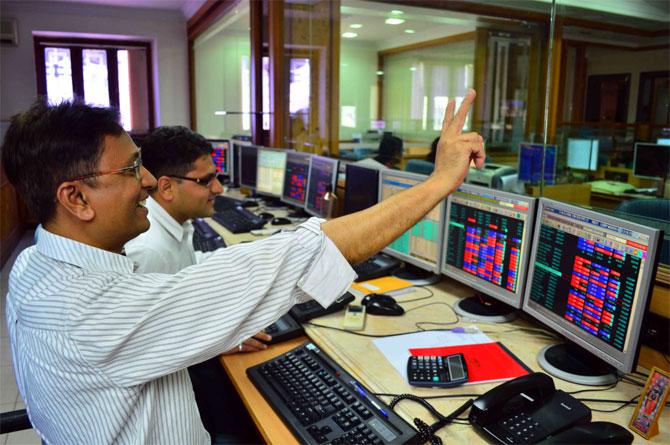
Market Performance - Equity benchmark indices Sensex and Nifty declined, with Sensex dropping 244.98 points (0.29%) to 83,382.71 and Nifty falling 66.70 points (0.26%) to 25,665.60, extending previous losses due to weakness in IT, consumption, and select banking stocks [1][4] - The BSE Sensex experienced a larger intraday drop of 442.49 points (0.52%) during the trading session [4] Sector Performance - Major laggards included Tata Consultancy Services, Asian Paints, Maruti, Sun Pharma, Hindustan Unilever, ICICI Bank, Kotak Mahindra Bank, Tech Mahindra, HDFC Bank, and Larsen & Toubro [4] - Conversely, Tata Steel, NTPC, Axis Bank, and UltraTech Cement were among the gainers [6] Investor Activity - Foreign institutional investors sold equities worth ₹1,499.81 crore, while domestic institutional investors purchased stocks worth ₹1,181.78 crore [6] Geopolitical and Economic Factors - Escalating geopolitical tensions and persistent foreign fund outflows contributed to market weakness, alongside fresh tariff-related uncertainties that unsettled investors [1][3] Global Market Context - In Asian markets, South Korea's Kospi, Japan's Nikkei 225, and Hong Kong's Hang Seng indices closed higher, while Shanghai's SSE Composite index ended lower [6] - Brent crude oil prices decreased by 0.99% to $64.82 per barrel [7]

Rs 1.95 trillion IPO boom delivers $417 million payday for Axis, Kotak, Citi and other bankers
The Economic Times· 2026-01-12 08:37
Core Insights - India's IPO market experienced a record boom in 2025, with companies raising approximately Rs 1.95 trillion, surpassing the previous year's record of Rs 1.73 trillion, driven by a growing base of retail investors, sustained institutional demand, and regulatory efforts to facilitate listings [3][6] - The total fee pool for investment banks reached $417 million, with average underwriting fees climbing to an all-time high of 1.86% of deal value, up from 1.67% the previous year, indicating a shift from India's previous low-fee reputation [6][4] - Major players in the IPO advisory space included Axis Bank, which earned $34.3 million, followed by Kotak Mahindra Bank at $32.7 million, and IIFL Capital Services at $30.2 million, reflecting significant growth in fee income [5][6] Fee Trends - The increase in deal flow has reversed years of fee compression caused by intense competition among banks, which previously led to aggressive fee discounting [4][6] - Analysts predict that fee rates may continue to rise if a larger share of standardized IPOs enters the market, potentially restoring pricing discipline [6] Market Position - Despite the record earnings, India remains relatively inexpensive for issuers, especially for large offerings, compared to global standards [5][6] - Citi, JM Financial, and JPMorgan were among the top global banks in underwriting fees, earning $27.1 million, $25.6 million, and $22.6 million respectively, highlighting the competitive landscape [5][6]

'Sixty is too young to retire': India Inc turns to retired CEOs, CXOs to steer through volatile times
The Economic Times· 2026-01-11 00:31
Core Insights - A significant trend is emerging in India where at least 90 senior professionals from banks and large corporate groups, including retired CEOs and CXOs, are transitioning into operational leadership roles, indicating the enduring value of their institutional knowledge and crisis management skills beyond retirement [1][17] Group 1: Transition of Senior Executives - Notable examples include Rajiv Anand, who moved from Axis Bank to IndusInd Bank as managing director, and Parag Rao, who took on a leadership role at Mahindra & Mahindra after retiring from HDFC Bank [2][17] - The prolonged exposure of these executives to complex business cycles allows them to contribute significantly in new leadership roles, even in a transformed business environment [4][17] Group 2: Value of Experience - Experienced leaders are better equipped to adapt to changing market conditions while maintaining core business fundamentals, which is crucial for ensuring continuity and sustainable growth [7][17] - The trend reflects a shift in corporate strategy, where companies are placing seasoned professionals in roles with direct operational responsibilities rather than limiting them to advisory positions [10][17] Group 3: Changing Perceptions of Age - Age is increasingly seen as a non-constraint for talent, with many professionals over sixty being viewed as capable and eager to remain engaged in leadership roles that require judgment and stability [11][17] - The psychological aspect of this trend highlights the desire for continued intellectual engagement and purpose among retired professionals, which benefits companies seeking experienced leadership during complex times [12][17] Group 4: New Opportunities for Retired Executives - There is a growing trend of retired executives joining private equity firms in operational roles, where they take on direct responsibilities for managing and building businesses [14][17] - Independent director roles are also in demand for industry veterans, providing them with prestige and financial compensation while keeping them actively engaged [14][17] Group 5: Demand for Experience - As corporate India faces rapid changes and uncertainties, the experience of retired and superannuated CEOs and CXOs is becoming a valuable asset that companies are increasingly seeking [15][17]
Bank stocks grow 8% in December quarter, 2x sensex gain
The Times Of India· 2026-01-09 00:47
. Data from S&P Global Market Intelligence show the combined market capitalisation of the top 20 listed banks rose to about Rs 55.7 lakh crore at end-Dec from an estimated Rs 51.5 lakh crore at end-Sept, implying a quarter-on-quarter increase of around 8.2%. This gain exceeded the roughly 4% rise in sensex over the same period, reflecting the banking sector's re-rating driven by improving demand and lending prospects. Seventeen of the top 20 banks posted increases in market capitalisation, with the median g ...
Lower deposit rates, liquidity to shore up bank profits in Q3
The Economic Times· 2026-01-08 00:53
Core Insights - Banking profitability is expected to remain stable in the third quarter due to falling deposit rates offsetting recent policy rate cuts and supporting net interest margins (NIMs) [10] - The Reserve Bank of India's (RBI) 100 basis points cash reserve ratio (CRR) cut is anticipated to ease liquidity and support bank margins, releasing ₹1.87 lakh crore of interest-free funds for the banking sector [10][3] - Credit growth for large lenders has exceeded the banking system's growth of 10% to 12%, indicating strong demand for loans [10] Banking Sector Performance - Analysts predict that profitability will improve due to sustained advances growth, higher fee income, and lower credit costs, despite a decline in the yield on advances (YOA) [10] - The loan-to-deposit ratios (LDRs) across the banking system reached an all-time high of 81%, highlighting a divergence between credit growth and deposit mobilization, which poses systemic risks [6][10] - Demand for loans is expected to be driven by fast-growing sectors such as MSMEs and mid-corporates, along with retail sectors like gold loans and vehicle finance [7][10] NIM Expectations - NIM outcomes are expected to vary among banks, with some like Axis Bank and Indian Bank likely to report declines, while others such as HDFC and Kotak Mahindra may see expansions [10][6] - The high LDR may force banks to either slow down loan growth or increase deposit rates, both of which could negatively impact banking profits [6][10]
Indian banks seen churning stronger Q3 profits after a weak first half. Brokers pick 10 stocks to buy
The Economic Times· 2026-01-07 05:17
Core Insights - The banking sector is experiencing robust loan growth, with RBI data indicating a nearly 12% year-on-year increase and a 4.5% quarter-on-quarter rise in banking system advances as of mid-December 2025 [1][21] - Key segments driving this growth include micro and small enterprises, services, and retail loans, with industrial credit also picking up significantly [2][21] - Despite steady loan growth, deposit growth is lagging, with system-level deposits increasing by 9.7% year-on-year, resulting in a credit-deposit ratio exceeding 81% [6][21] Loan Growth - Loan growth is expected to be around 11.6% year-on-year for the coverage universe in Q3, with banks like HDFC Bank, Axis Bank, and ICICI Bank anticipated to outperform the sector average [21] - Retail, MSME, and services loans are expected to lead the credit growth momentum, particularly among mid-sized and small finance banks [5][21] Deposit Trends - Deposit growth remains a pressure point for the sector, with banks increasingly relying on certificates of deposit and selective rate hikes to mobilize deposits [6][7] - Elara Capital notes that slower growth in low-cost deposits and higher credit-deposit ratios may limit the benefits of liability repricing in FY27 [7][21] Margin Stability - Net interest margins (NIMs) are projected to remain stable in Q3, aided by CRR cuts and deposit repricing, with most banks expected to see only marginal movements [9][10] - YES Securities anticipates a mild sequential decline in NIMs, clustering around a 5-basis-point drop, although loan spreads have improved due to sharper cuts in deposit rates [11][21] Fee Income and Operating Expenses - Fee income is expected to improve sequentially in Q3, driven by higher loan disbursements and stable business momentum, which should help offset weaker treasury income [12][21] - Operating expenses are likely to remain flat sequentially, as previous wage revisions and seasonal cost increases have been absorbed [12][21] Asset Quality - Asset quality is stabilizing, with a reduction in stress in unsecured lending, particularly in microfinance, and slippages expected to remain stable [13][21] - Provisions are expected to decline for several banks, reflecting better collections and lower incremental stress [14][21] Profitability Outlook - Q3 is anticipated to mark a turning point for earnings, with year-on-year profitability expected to improve for most banks, reversing the contraction seen in Q2 [15][21] - JM Financial estimates a net interest income growth of about 4.7% year-on-year, with large banks like HDFC Bank and ICICI Bank expected to deliver strong return ratios [16][21] Key Trends - Three clear themes for Q3 include sustained growth led by retail and MSME loans, stabilizing margins with repricing benefits, and improving asset quality reducing downside risks to earnings [18][21] - Investor focus is likely to remain on banks with strong balance sheets and diversified loan books as Q3 results are released [19][21]
Q3 credit growth signals economic pickup, still prefer larger banks like Axis, Kotak, ICICI, SBI: Sandip Sabharwal
The Economic Times· 2026-01-06 08:32
Economic Outlook - Double-digit loan growth across most large banks indicates rising economic activity after a prolonged phase of single-digit growth, suggesting an economic pickup [1][13] - System-wide gross NPAs have fallen to multi-year lows, strengthening the investment case for large banks [5][13] Banking Sector - Axis Bank and Kotak Mahindra Bank reported strong Q3 updates, while HDFC Bank showed stable but unspectacular growth; Axis is considered attractive from a valuation standpoint [2][13] - Preference remains with large banks over smaller lenders due to historical asset-quality risks associated with aggressive lending by smaller institutions [6][13] - Preferred banking holdings include ICICI Bank, Axis Bank, State Bank of India, and IDFC First Bank, which may benefit from lower interest rates [13] Consumption and Retail - Caution is advised on high-valuation retail stocks, with expectations for Trent being high, making sustained 20%+ growth difficult [7][13] - FMCG companies like Marico and Britannia have performed well during the consumption slowdown, while stocks such as Dabur and Godrej Consumer Products could emerge as strong performers in the next one to two years [8][13] FMCG Sector - ITC faces challenges due to a sharp excise duty hike on cigarettes, which could hurt volumes and presents risks from illicit cigarette inflows; its non-tobacco FMCG business has yet to achieve meaningful profitability [9][13] Power Sector - Preference is for transmission, transformer, and power equipment companies over pure financiers or generators due to long-term risks in solar project financing [10][11][13] Automotive Sector - Market leaders in the automotive sector continue to outperform, making turnaround bets less attractive; Mahindra & Mahindra is highlighted as a strong position [12][14] - Commercial vehicles are seen as having better prospects than passenger vehicles within Tata Motors [14] Staples Sector - A gradual recovery in staples is expected after two to three years of weak demand, with potential for double-digit returns if consumer demand picks up and inflation eases [12][14]
Indian lenders' loan growth picks up pace in December quarter
The Economic Times· 2026-01-05 07:09
Core Insights - Loan growth in India has rebounded strongly after a slowdown in mid-2025, driven by festive spending and government tax cuts [1][7] - The Nifty Bank index has increased by over 10% since October, outperforming the benchmark Nifty 50, which rose by 7% [5][7] Loan Growth Trends - Bank credit growth decelerated to 9.9% year-on-year in the quarter ending June, down from 11.1% in March, but rebounded to 11.5% in November [1][7] - HDFC Bank reported an 11.9% year-on-year increase in gross loans for the December quarter, surpassing previous quarters' growth rates [7] - Bank of Baroda experienced a 14.6% year-on-year rise in global advances as of the December quarter-end, up from 12.6% in June [7] - Smaller banks like CSB Bank and AU Small Finance Bank reported significant loan growth of 29% and 24% year-on-year, respectively [7] Credit Market Dynamics - Overall systemic credit growth improved to 11.4% year-on-year, recovering from a low of about 9% in May 2025 [2][7] - Secured gold loans and vehicle financing are identified as key growth drivers within retail credit [2][7] Deposit Growth Concerns - Despite rising loan growth, deposit growth has not kept pace, leading to a widening gap between loan and deposit growth [6][7] - The loan-to-deposit ratio (LDR) has reached an all-time high of 81.6%, indicating potential pressure on banks to either increase deposits or manage loan growth [6][7]

Stock markets decline in early trade dragged by IT firms
The Hindu· 2026-01-05 04:35
Market Performance - The equity benchmark indices Sensex and Nifty experienced declines in early trade on January 5, 2026, with Sensex dropping 125.96 points to 85,636.05 and Nifty dipping 30.95 points to 26,297.60 [1] - Major blue-chip IT stocks such as HCL Tech, Infosys, Tech Mahindra, HDFC Bank, Tata Consultancy Services, and NTPC were among the biggest laggards [1] - Conversely, Bharat Electronics, Tata Steel, Axis Bank, and Reliance Industries were noted as gainers during the same period [1] Institutional Investment - Foreign Institutional Investors (FIIs) purchased equities worth ₹289.80 crore on January 2, 2026, while Domestic Institutional Investors (DIIs) bought stocks worth ₹677.38 crore [2] Geopolitical Context - The year 2026 has commenced with significant geopolitical developments, particularly U.S. actions in Venezuela, which may have far-reaching implications for global geopolitics, as noted by V.K. Vijayakumar, chief investment strategist at Geojit Investments Ltd [2] Asian Market Trends - In Asian markets, South Korea's Kospi, Japan's Nikkei 225, and Shanghai's SSE Composite indices were trading significantly higher, while Hong Kong's Hang Seng index was marginally lower [3] - U.S. markets concluded mostly in positive territory on the preceding Friday [3] Oil Prices - Brent crude, the global oil benchmark, saw a slight decrease of 0.08% to $60.70 per barrel [3] Previous Market Performance - On the preceding Friday, January 2, 2026, the Sensex increased by 573.41 points, or 0.67%, closing at 85,762.01, while the Nifty rose by 182 points, or 0.70%, to settle at 26,328.55 [3]
Nifty hits record intra-day high; Sensex jumps 573 points
Rediff· 2026-01-02 11:14
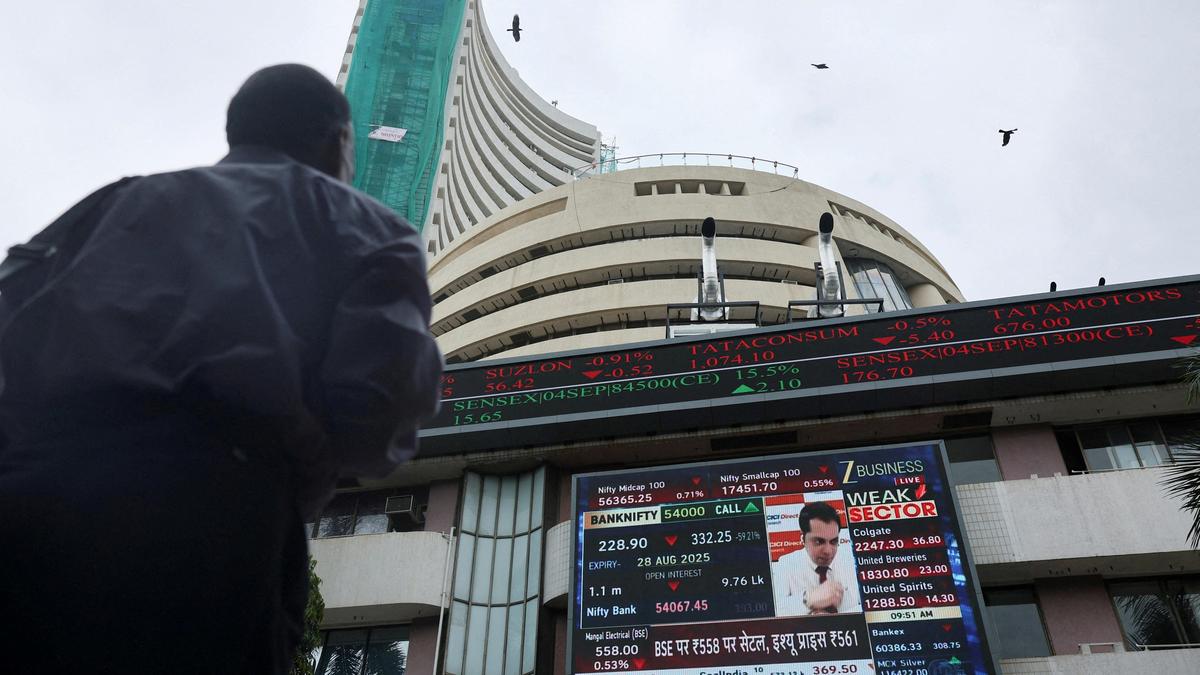
Market Performance - The Nifty equity benchmark index reached its all-time high before closing 182 points higher, while the BSE Sensex increased by 573 points, driven by strong buying in power, banking, and metal stocks [1][3] - The BSE Sensex climbed 573.41 points or 0.67% to settle at 85,762.01, with an intraday high of 85,812.27, marking a jump of 623.67 points or 0.73% [3][4] - The NSE Nifty rose by 182 points or 0.70% to 26,328.55, with a peak of 26,340 during the day, reflecting a surge of 193.45 points or 0.73% [4] Sector Performance - Major gainers among the 30-Sensex firms included NTPC, Trent, Bajaj Finance, Power Grid, Maruti, State Bank of India, ICICI Bank, and Bharat Electronics [4] - Conversely, laggards in the market included ITC, Kotak Mahindra Bank, Titan Company, Axis Bank, and Bharti Airtel [4] Investor Activity - Domestic Institutional Investors (DIIs) purchased stocks worth ₹1,525.89 crore, while Foreign Institutional Investors (FIIs) sold equities worth ₹3,268.60 crore [5] - The strong capital infusion by domestic institutional investors contributed to the positive trend in the domestic stock market [3] Global Market Influence - Asian markets showed a positive trend, with South Korea's Kospi index and Hong Kong's Hang Seng index ending significantly higher, while China's Shanghai index and Japan's Nikkei were closed for a holiday [5] - Brent crude oil prices decreased by 0.36% to $60.63 per barrel, which may influence market sentiment [5]