Reliance Industries

Search documents
Sensex jumps 944 points on value-buying in oil, auto, banking stocks
Rediff· 2026-02-02 11:26
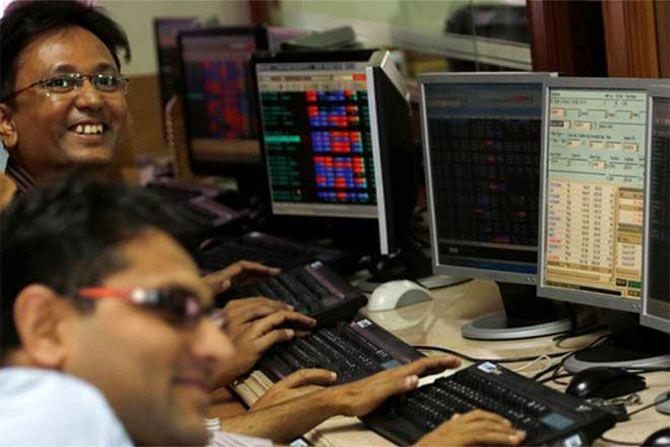
Market Performance - Stock markets rebounded with the BSE Sensex rising by 943.52 points or 1.17% to settle at 81,666.46 after a significant drop on Budget day [3][10] - The NSE Nifty increased by 262.95 points or 1.06% to end at 25,088.40, with a peak of 1,009.31 points during the day [4][5] Sector Performance - Blue-chip stocks in oil & gas, banking, and auto sectors saw value buying, contributing to the market recovery [3][11] - Power Grid surged by 7.61% and Adani Ports climbed by 4.76%, indicating strong performance among key players [4][7] Economic Indicators - A sharp decline in global crude oil prices, with Brent crude dropping 4.88% to USD 65.94 per barrel, provided relief to the markets [12][14] - The Union Budget for 2026-27, amounting to Rs 53.5 lakh crore, aims to boost manufacturing and support agriculture and tourism, reflecting a long-term growth strategy [8][9] Investor Activity - Foreign institutional investors sold equities worth Rs 588.34 crore on Sunday, indicating cautious sentiment in the market [5][12] - Despite the sell-off, the market showed signs of recovery as participants recalibrated positions following the Budget day decline [13]

India offers zero taxes through 2047 to lure global AI workloads
Yahoo Finance· 2026-02-01 16:30
Investment in AI Data Centers - Digital Connexion plans to invest $11 billion by 2030 to develop a 1-gigawatt AI-focused data center campus in Andhra Pradesh, highlighting significant interest from both domestic and global investors in AI infrastructure [1] - Google announced a $15 billion investment to build an AI hub and expand data-center infrastructure in India, following a previous $10 billion commitment in 2020 [2] - Microsoft plans to invest $17.5 billion by 2029 to expand its AI and cloud footprint in India [2] - Amazon will invest an additional $35 billion in India by 2030, raising its total planned commitment to approximately $75 billion [2] Strategic Importance of Data Centers - The U.S. cloud giants are racing to add data-center capacity globally, with India emerging as an attractive location due to its engineering talent and demand for cloud services [3] - India's finance minister proposed a tax holiday on revenues from cloud services sold outside India if run from local data centers, aiming to attract foreign investment [4][5] - The budget also includes a 15% cost-plus safe harbor for Indian data-center operators providing services to foreign entities [4] Challenges and Projections - Scaling up data center capacity in India faces challenges such as power shortages, high electricity costs, and water scarcity, which could impact construction and operating costs [6] - India's data-center power capacity is projected to exceed 2 gigawatts by 2026 and could expand to over 8 gigawatts by 2030, driven by capital investments exceeding $30 billion [8] Broader Economic Initiatives - The Indian government is increasing its focus on electronics and semiconductor manufacturing, launching a second phase of the India Semiconductor Mission to enhance domestic production capabilities [10] - The budget raised the outlay for the Electronics Components Manufacturing Scheme to ₹400 billion (around $4.36 billion) to attract global suppliers and reduce reliance on imports [11][12] - Measures to boost cross-border e-commerce include removing the ₹1 million (around $11,000) value cap per consignment on courier exports, benefiting small manufacturers and startups [15] Long-term Vision - The latest measures emphasize India's ambition to become a long-term hub for global technology infrastructure, focusing on cloud computing, electronics manufacturing, and critical minerals [16]



Investors lost Rs 9.40 lakh cr in Budget Sunday crash
Rediff· 2026-02-01 12:47
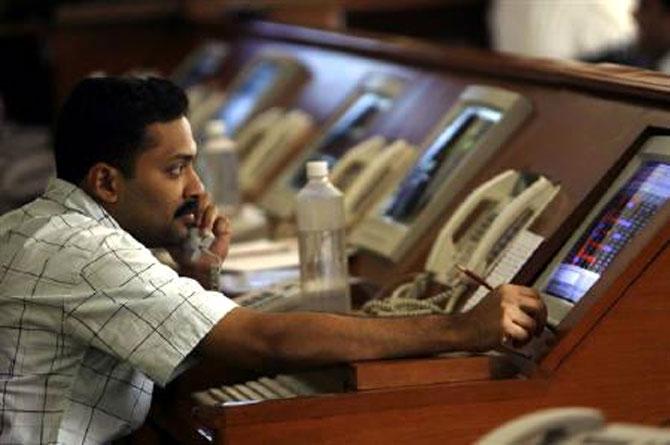
Core Viewpoint - The market capitalization of BSE-listed companies experienced a significant decline of Rs 9,40,581.75 crore, dropping to Rs 4,50,61,658.60 crore (USD 4.90 trillion) in a single day due to the proposed increase in Securities Transaction Tax (STT) on derivatives by Finance Minister Nirmala Sitharaman [1][5]. Market Reaction - The BSE Sensex fell by 2,370.36 points or 2.88 percent, closing below the 80,000-mark at 79,899.42 during afternoon trading [4]. - The benchmark index ended at 80,722.94, down 1,546.84 points or 1.88 percent, marking a notable decline similar to the drop on February 1, 2020 [5][7]. Impact of STT Increase - The STT on futures contracts is set to increase from 0.02 percent to 0.05 percent, while the STT on options premium and exercise will rise to 0.15 percent from 0.1 percent and 0.125 percent respectively [6][9]. - This increase in STT is viewed negatively by active traders and the derivatives ecosystem, as it raises transaction costs and may reduce speculative volumes, impacting liquidity in futures and options [6][8]. Investor Sentiment - The proposed tax changes aim to moderate excessive derivatives activity and boost revenue, but they could dampen retail participation during bullish market phases and affect short-term broking revenues [8]. - The overall market sentiment was negative, with 2,375 stocks declining, while only 1,759 advanced and 175 remained unchanged on the BSE [12]. Sector Performance - Among the major companies, State Bank of India and Adani Ports saw declines of 5.61 percent and 5.53 percent respectively, while Tata Consultancy Services, Infosys, Sun Pharma, and Titan were among the gainers [11][12]. - Various indices experienced significant drops, with BSE PSU Bank falling by 5.60 percent and the metal sector declining by 3.85 percent [12].
STT hike on Futures drags markets down; Sensex crashes 2,370 points
Rediff· 2026-02-01 11:22
Core Viewpoint - The Finance Minister's proposal to increase the Securities Transaction Tax (STT) on futures to 0.05% is expected to have a structurally negative impact on the capital market ecosystem, particularly affecting futures and options (F&O) driven businesses [1][11]. Market Reaction - The benchmark stock indices, Sensex and Nifty, experienced significant declines, with Sensex dropping by nearly 2% and settling at 80,722.94, down 1,546.84 points or 1.88% [2][3]. - The NSE Nifty fell by 495.20 points or 1.96%, closing at 24,825.45, with an intraday low of 24,571.75, a drop of 2.95% [3][7]. Impact on Trading and Liquidity - Higher transaction costs due to the increased STT are likely to reduce trading volumes, dampen short-term momentum, and lower profitability for active market participants [12][16]. - Foreign Institutional Investor (FII) participation in derivatives may decline as post-tax trading efficiency diminishes, which could negatively impact overall market liquidity [13][8]. Sector Performance - Among the 30 Sensex firms, State Bank of India and Adani Ports saw significant losses of 5.61% and 5.53%, respectively, with other companies like Bharat Electronics, ITC, Tata Steel, UltraTech Cement, and Reliance Industries also among the laggards [6][7]. - Conversely, Tata Consultancy Services, Infosys, Sun Pharma, and Titan were noted as gainers during this period [8][7]. Long-term Outlook - While the proposed STT increase is seen as a short-term dampener for capital market entities, some analysts suggest it may have positive implications in the long term [9]. - The budget also aims to support sectors affected by global trade tariffs and focuses on emerging areas such as data centers, semiconductors, and biopharma, which may provide some resilience to the market [10].

Rs 6 lakh crore wiped out! Sensex down 1,000 points, Nifty below 25,000; Why did the stock market crash after Budget?
The Economic Times· 2026-02-01 07:27
The BSE The market capitalisation of all listed companies on the BSE decreased by Rs 6 lakh crore to Rs 453.87 lakh crore.Under the Budget 2026 proposals, the STT on futures contracts will rise to 0.05% from 0.02%, while the tax on options premiums will increase to 0.15% from 0.10%. The levy on options exercised will also climb to 0.15% from 0.125%.The measures mark a meaningful increase in trading costs for derivatives investors and threaten to curb volumes in a segment that has expanded rapidly in recent ...

X @Bloomberg
Bloomberg· 2026-01-29 07:28
Reliance Industries will take around 150,000 barrels a day from February as it presses ahead with limited purchases from Moscow’s non-sanctioned producers https://t.co/73eFAh0PL4 ...
Sensex jumps 646 points in early trade on optimism over India-EU FTA
The Hindu· 2026-01-28 04:54
Market Performance - Equity benchmark indices Sensex and Nifty surged in early trade on January 28, 2026, with Sensex jumping 646.49 points to 82,503.97 and Nifty rising 196.7 points to 25,372.10, driven by optimism over the India-EU free trade agreement [1] - Major gainers included Axis Bank, Reliance Industries, NTPC, Bharat Electronics, ICICI Bank, and Bajaj Finance [1] Company Performance - Asian Paints experienced a nearly 6% drop after reporting a 4.83% decline in consolidated net profit to ₹1,073.92 crore for the December quarter of FY26, attributed to exceptional items related to the new labour code and impairment losses in a subsidiary [2] - Other laggards included Maruti, HCL Tech, Kotak Mahindra Bank, and State Bank of India [2] Trade Agreement Impact - India and the European Union finalized a landmark free trade agreement on January 27, 2026, aimed at creating a market of two billion people and enhancing trade and defense cooperation [3] - The agreement will reduce tariffs on 99% of Indian exports to the EU and on over 97% of EU exports to India, accounting for nearly a quarter of global GDP [4] Investment Trends - Foreign institutional investors sold equities worth ₹3,068.49 crore, while domestic institutional investors purchased stocks worth ₹8,999.71 crore, indicating a shift in market dynamics post-trade deal [4] - The Chief Investment Strategist at Geojit Investments noted that the India-EU trade deal is a significant long-term positive, with investors now focusing on the upcoming Union Budget [6]
能源的未来- 千瓦与百万英热单位:赋能 AI 的能源叙事-Investor Presentation Future of Energy-Kilowatts and mmbtus The Energy Story, Powering AI
2026-01-27 03:13
Summary of Investor Presentation: Future of Energy | Asia Pacific Industry Overview - The presentation focuses on the energy sector in the Asia Pacific region, particularly the role of natural gas in meeting rising power demand driven by AI and onshoring trends [1][4][5]. Key Insights - **Power Consumption Growth**: Power consumption is expected to grow at a compound annual growth rate (CAGR) of approximately 4.5% through 2030, which is 25% faster than the previous decade. Natural gas is projected to meet 15% of the incremental power demand, supporting renewables and nuclear energy [13][16]. - **Natural Gas Supply**: There is a significant glut of natural gas, which is beneficial as Asia is set to absorb a large share of the upcoming supply. This situation is expected to support affordability for policymakers [1][4]. - **AI Demand Impact**: The demand for power is being significantly influenced by the rise of AI technologies, which is driving up power consumption expectations [1][4][9]. Competitive Landscape - **Gas vs. Coal and Renewables**: Natural gas is becoming increasingly competitive with coal and renewables, particularly in the ASEAN region. The cost of gas-based electricity generation is nearing parity with coal, making it a viable option for peak loads [101][107]. - **Market Dynamics**: The presentation highlights that tight power markets globally are leading to higher prices and margins for generators, which is making natural gas a more attractive option [53][57]. Data Center Power Demand - **Growth Projections**: Asia's data center power demand is expected to grow at a CAGR of approximately 23% from 2023 to 2030, driven by increased AI inference demand and significant investments in the region [30][33]. - **Capacity Additions**: The region is projected to see nearly 60GW of data center capacity additions by 2030, indicating a substantial increase in power requirements [33][41]. Regional Insights - **Country-Specific Demand Growth**: - China and India are expected to drive significant portions of data center growth in Asia, with China leading due to its focus on chip self-sufficiency and commercialization [41]. - Other countries like Japan, Thailand, and Malaysia are also highlighted as key players in the gas market [22][23]. Economic Considerations - **Power Prices and Market Tightness**: The presentation notes that electricity markets are experiencing tightness, leading to higher power spreads and making natural gas more competitive [51][53]. - **Elasticity of Demand**: The elasticity of LNG consumption is expected to increase, with estimates suggesting that for every US$1/mmbtu decrease in LNG price, there could be an incremental demand increase of 3-3.5 million tons per annum [63][99]. Conclusion - The overall outlook for the energy sector in Asia Pacific is positive, with natural gas playing a crucial role in meeting rising power demands driven by technological advancements and changing market dynamics. The competitive landscape is shifting, favoring gas as a key energy source in the region [1][4][5][13][16].
Rupee's Record Low Puts These 3 India ETFs in the Spotlight
ZACKS· 2026-01-26 15:22
Core Insights - India's currency market is under significant pressure, with the rupee hitting an all-time low against the U.S. dollar just before Republic Day 2026, raising concerns about the equity market and ETFs holding Indian equities [1][3] - The MSCI India Index has underperformed, rising only 2.2% in U.S. dollar terms in 2025, compared to a 29.9% increase in MSCI Emerging Markets [2] - The rupee's depreciation presents a paradox for ETF investors, as it may attract foreign investment but also increases volatility and risk [4] Economic Context - The decline of the rupee is attributed to massive capital outflows, with nearly $18 billion withdrawn from Indian equities in 2025, and an additional $846 million in early 2026 as investors sought safer assets [7] - Geopolitical tensions, particularly related to U.S.-India trade negotiations and global market uncertainties, have negatively impacted investor sentiment [8] - India's trade deficit has widened to over $25 billion, driven by rising energy and electronics import costs, further pressuring the rupee [9] Market Outlook - Analysts maintain a cautious outlook for the rupee in 2026, warning of potential further declines if geopolitical tensions persist or if the Federal Reserve maintains high interest rates [10] - Despite currency struggles, the IMF has upgraded India's 2026 growth outlook to 6.4%, indicating strong underlying economic productivity [12] ETF Performance - The WisdomTree India Earnings Fund (EPI) has total assets of $2.58 billion and has risen 2.4% over the past year, with top holdings including Reliance Industries and HDFC Bank [14] - The Franklin FTSE India ETF (FLIN), with assets of $2.75 billion, has also gained 2.4% over the past year, focusing on large and mid-cap companies [15] - The First Trust India NIFTY 50 Equal Weight ETF (NFTY) has total assets of $160.9 million and has risen 3.5% over the past year, providing exposure to the largest Indian securities [16]



₹2.5 lakh crore! M-cap of 9 of India's 10 most valuable companies nosedive amid market bloodbath last week
MINT· 2026-01-25 07:08
Market Overview - The combined market valuation of nine of the top-10 most valued firms decreased by ₹2.51 lakh crore last week, with Reliance Industries experiencing the largest decline [1][2] - The BSE benchmark Sensex fell by 2,032.65 points or 2.43 percent during the same period [1] Company-Specific Valuations - Reliance Industries' market valuation dropped by ₹96,960.17 crore to ₹18,75,533.04 crore [3] - ICICI Bank's valuation decreased by ₹48,644.99 crore to ₹9,60,825.29 crore [3] - HDFC Bank's market cap fell by ₹22,923.02 crore to ₹14,09,611.89 crore [3] - Bharti Airtel's valuation diminished by ₹17,533.97 crore to ₹11,32,010.46 crore [3] - Tata Consultancy Services (TCS) saw a decline of ₹16,588.93 crore to ₹11,43,623.19 crore [3] - Larsen & Toubro's market cap decreased by ₹15,248.32 crore to ₹5,15,161.91 crore [3] - Bajaj Finance's valuation fell by ₹14,093.93 crore to ₹5,77,353.23 crore [4] - State Bank of India's market cap edged lower by ₹11,907.5 crore to ₹9,50,199.77 crore [4] - Infosys' valuation dived by ₹7,810.77 crore to ₹6,94,078.82 crore [4] - Hindustan Unilever's market cap increased by ₹12,311.86 crore to ₹5,66,733.16 crore [4] Market Sentiment - The market sell-off was attributed to weak global cues, persistent foreign institutional investor (FII) outflows, a depreciating rupee, and subdued corporate earnings [2][5] - Escalating geopolitical tensions and aggressive FII selling contributed to the market correction [5]