Samsung

Search documents
Boost Mobile Makes Next-Gen Performance Affordable with New moto g and moto g play -- 2026
Prnewswire· 2026-02-17 15:00
Core Insights - Boost Mobile has launched the new moto g — 2026 and moto g play — 2026, offering flagship-tier 5G speeds and advanced AI-powered camera systems at an affordable price point [1] Product Features - Both devices are powered by the MediaTek Dimensity 6300 processor and feature RAM Boost technology, allowing memory expansion up to 24GB for the moto g and 12GB for the moto g play, facilitating seamless multitasking [1] - The moto g — 2026 features a 6.7" HD+ LCD display with a 120Hz refresh rate, a 50MP main camera, a 32MP selfie camera, and 128GB of storage (expandable up to 1TB) [1] - The moto g play — 2026 also has a 6.7" HD+ LCD display with a 120Hz refresh rate, a 32MP main camera, an 8MP selfie camera, and 64GB of storage (expandable up to 1TB) [1] Pricing and Availability - The moto g — 2026 is available for existing customers at $79.99 when activating on a $50 or $60 per month plan, while new customers can get it for $59.99 in-store or $79.99 online [1] - The moto g play — 2026 is priced at $19.99 for existing customers activating on a $40 per month or higher plan, and $29.99 for new customers switching to Boost Mobile [1] Customer Incentives - Boost Mobile offers a 30-day money-back guarantee for new customers, allowing them to try the 5G service risk-free [1] - The company emphasizes no annual service contracts and the freedom to upgrade devices anytime without a trade-in [1]



Your next laptop could be a foldable phone | The Vergecast
The Verge· 2026-02-17 13:00
Welcome to the Vergecast, flagship podcast of phones that are also laptops and tablets and maybe kind of smartwatches. I'm your friend David Pierce and I just got a new game for the Nintendo Switch and this is a surprisingly big deal to me. So, I I'm sure I've talked about this before, but my like true sweet spot era of gaming growing up was the Nintendo 64, which means I logged, you know, a million hours on Golden Eye.I played a lot of Mario Party. I played a lot of Mario Golf, but the Nintendo 64 game for ...

US-Iran Nuclear Talks in Geneva; Trump Will Be 'Indirectly' Involved | Daybreak Europe 02/17/2026
Bloomberg Television· 2026-02-17 08:16
>> LIVE FROM DUBAI. THIS IS BLOOMBERG DAYBREAK EUROPE. I’M JOUMANNA BERCETCHE WITH YOUR TOP STORIES.U.S. FUTURES SLIDE AHEAD OF WALL STREET’S ROPING TODAY. JOBS DATA SHOWS MORE COOL IN THE U.K. LABOR MARKET. GENEVA TAKES CENTER STAGE AS THE U.S. AND IRAN HOLD TALKS TO END THEIR LONG RUNNING NUCLEAR DISPUTES.AND ANOTHER ROUND OF DISCUSSIONS BETWEEN RUSSIA AND UKRAINE. WE’LL HEAR FROM THE CFO TO HAVE WORLD’S LARGEST MINER LATER THIS HOUR. IF YOU’RE JUST TUNING IN, WE ARE COMING OFF WHAT HAS BEEN A THINNER TRA ...

Is Sandisk the New Nvidia?
The Motley Fool· 2026-02-16 20:17
Core Viewpoint - Sandisk is positioned to capitalize on the growing demand for AI memory storage, potentially mirroring Nvidia's success in the AI sector [2][9]. Company Evolution - Sandisk has transitioned from a focus on flash drives to becoming a key player in AI data centers, similar to Nvidia's evolution in the GPU market [4][5]. - The company’s enterprise solid-state drives (SSD) and NAND flash memory are becoming essential components in hyperscaler data center infrastructures [5]. Market Dynamics - The total addressable market (TAM) for high-bandwidth memory (HBM) was estimated at $35 billion last year, with expectations of reaching $100 billion by 2028, growing at a compound annual growth rate of 40% [8]. - Sandisk's revenue of $9 billion indicates significant growth potential relative to the expanding AI memory market [9]. Competitive Landscape - The memory storage market is fragmented, with major players including Micron Technology, Samsung, and SK Hynix, positioning Sandisk to leverage its growth potential [7]. - Sandisk is seen as a "pick-and-shovel" opportunity in the AI infrastructure space, benefiting from the overall increase in capital expenditures by major tech companies [11][13]. Future Outlook - As AI workloads increase, the demand for memory storage solutions is expected to rise sharply, making Sandisk a compelling investment for growth [12][13]. - The company is anticipated to grow alongside its chip counterparts in the AI infrastructure era, suggesting a strong investment case [13].


Prediction: Micron's Stock Could Reach $1,200 by the End of 2026
The Motley Fool· 2026-02-16 19:05
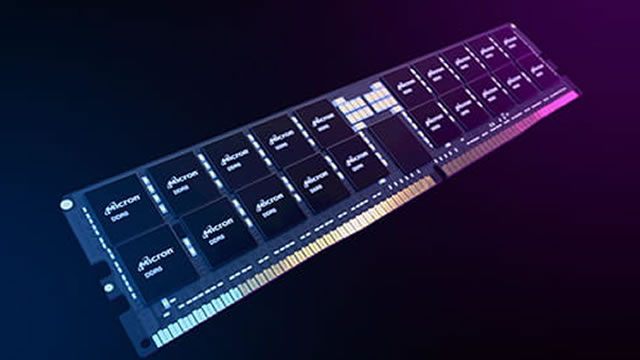
Core Viewpoint - Micron Technology is positioned to benefit significantly from the ongoing AI boom, particularly in the memory sector, with potential for its share price to exceed $1,200 by August 2026 [1][3]. Industry Overview - The demand for memory, specifically RAM and DRAM, is critical for AI applications, and a shortage is expected to persist until 2028, leading to a projected 50% price increase for RAM by the end of Q1 2026 [2]. - Micron is one of only three major memory producers globally, alongside Samsung and SK Hynix, and is the sole major American producer of RAM and DRAM [6]. Company Performance - Micron's Q1 fiscal 2026 results showed revenue of $13.6 billion, a 57% year-over-year increase, with DRAM accounting for 79% of that revenue [7][8]. - The company achieved a gross margin of 45.3%, an operating margin of 31.8%, and a net margin of 28%, significantly exceeding earnings expectations by 20% [8]. - The projected earnings per share (EPS) for Q2 of fiscal 2026 is $8.49, nearly double the Q1 EPS of $4.78 [8]. Valuation Metrics - Micron's trailing-12-month price-to-earnings (P/E) ratio is 39.31, which is relatively low compared to other tech hardware companies like Nvidia [9]. - Based on the current P/E ratio and projected EPS for fiscal 2026, potential share prices could range from $1,190.30 to $1,424, indicating a possible 183% gain from current levels [10].

4 No-Brainer Semiconductor Stocks to Buy Right Now
Yahoo Finance· 2026-02-16 17:56
Core Insights - The artificial intelligence (AI) infrastructure market is experiencing significant growth, with five companies projected to spend a total of $700 billion on AI data centers in the current year, and spending expected to reach $1.4 trillion by 2030 according to Cathie Wood [1] Group 1: Key Companies in AI Infrastructure - Nvidia holds an estimated 90% market share of graphics processing units (GPUs), which are essential for AI workloads, positioning it as the dominant player in the AI infrastructure market [2] - Broadcom is emerging as a major competitor to Nvidia by developing custom AI application-specific integrated circuits (ASICs), which are more energy-efficient and cost-effective, and has partnered with Alphabet to create Tensor Processing Units (TPUs) [3][4] - Micron is one of the leading DRAM manufacturers, benefiting from the increasing demand for high-bandwidth memory (HBM) necessary for AI chips, leading to significant revenue growth and a favorable supply-demand dynamic in the DRAM market [5][6] - Taiwan Semiconductor Manufacturing Co. (TSMC) has a virtual monopoly on the manufacturing of advanced logic chips, including GPUs and AI ASICs, positioning it to benefit from the rising AI infrastructure spending [7]


Getmobil and Samsung Announce a Turkey-Based Strategic Partnership in Refurbished Electronics
Globenewswire· 2026-02-16 15:18
Core Insights - Getmobil, in collaboration with Samsung, aims to establish a new standard in the refurbished electronics market through a doorstep buyback and trade-in model developed in Turkey [2][6] Company Overview - Getmobil is a Turkey-based technology company focused on creating an end-to-end business model in the refurbished and second-hand electronics market, emphasizing user experience, trust, and standardization [3][5] - The company operates in compliance with Turkish regulations, providing consumers access to refurbished devices with a 12-month warranty through a licensed refurbishment center [14] Business Model and Strategy - The model developed by Getmobil includes device valuation, doorstep pickup, refurbishment, and resale, all managed through a single digital infrastructure, enhancing transparency and accessibility for consumers [7][11] - Getmobil's long-term vision is to adapt its successful Turkish model to regional markets, particularly in the MENA region, targeting countries like Egypt, Saudi Arabia, and the UAE [10][12] Market Positioning - Getmobil positions refurbished electronics as a sustainable economic sector rather than a temporary solution, indicating a commitment to long-term growth in this market [8][13] - The collaboration with Samsung is a key component of Getmobil's growth strategy, showcasing the potential for the Turkish business model to resonate in international markets [12] Technological Infrastructure - Getmobil is developing a comprehensive technology ecosystem that includes not only buy-sell transactions but also rental, repair, insurance, and refurbishment services, all managed within a traceable and scalable framework [11][14]

Musk, Cook Warn of Memory Chip Crisis as Demand From AI Grows
Bloomberg Television· 2026-02-16 10:19
Some of the biggest names in tech, including Elon Musk and Tim Cook, are warning about a global chip chip crisis in the making. They say a shortage of memory chips is beginning to hammer profits, derail corporate plans and inflate price tags on everything from laptops to cars. And the crunch is only about to get worse.With us now is Neil Kaplan. Bloomberg senior strategist. Neal, thanks so much for joining us.How is the huge increase in memory demand actually showing up in corporate outlook but also company ...
Is This AI Infrastructure Stock a Real Millionaire Maker or Just Hype?
The Motley Fool· 2026-02-16 03:30
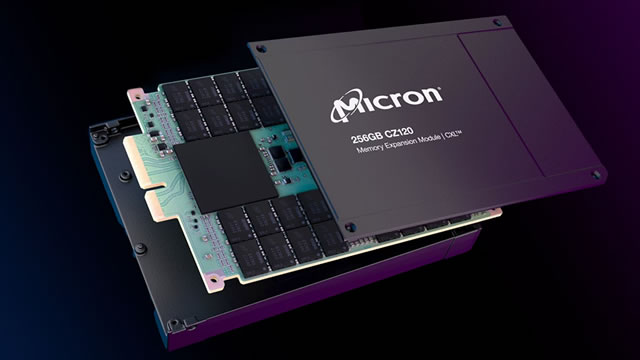
Core Viewpoint - The article discusses the potential of Micron Technology as a key player in the AI hardware market, highlighting its growth opportunities amidst the increasing demand for memory hardware driven by AI applications [1][2][11]. Industry Overview - Hardware and infrastructure companies have been significant beneficiaries of the AI boom, with a focus on memory hardware being crucial for AI applications [1][2]. - The demand for memory hardware, particularly dynamic random access memory (DRAM), is expected to rise sharply, leading to a projected 50% increase in RAM prices in Q1 2026 [6]. Company Analysis - Micron Technology is one of the three major players in the memory hardware market, alongside Samsung and SK Hynix, and has shifted its focus from consumer PC markets to AI-driven memory solutions [6][7]. - The company recently initiated the construction of a $100 billion semiconductor factory in New York, which will be the largest in the U.S. and aims to employ over 9,000 people [8]. Financial Performance - Micron reported a 57% year-over-year revenue increase for Q1 of fiscal 2026, reaching $13.6 billion, with DRAM accounting for 79% of this revenue [9]. - The company boasts a gross margin of 56.8%, an operating margin of 32.5%, and a net margin of 28.15%, indicating strong profitability [10]. - Micron's forward price-to-earnings (P/E) ratio stands at 10.57, which, when adjusted for growth (PEG ratio of 1.12), presents an attractive investment opportunity compared to Samsung's PEG ratio of 3.31 [10][11].
Will Micron Be the Next Nvidia -- or the Next Intel?
The Motley Fool· 2026-02-15 08:54
Core Viewpoint - Micron Technology is currently experiencing a cyclical upturn that may last longer than previous cycles, raising questions about its future position in the semiconductor industry compared to Nvidia and Intel [1][2]. Group 1: Company Performance - Micron's revenue increased approximately 57% year-over-year in the first quarter of fiscal 2026, ending November 27, 2025, with adjusted earnings soaring 169% year-over-year to $5.5 billion [5]. - The company has sold out its high-bandwidth memory (HBM) supply for all of 2026, indicating strong demand similar to Nvidia's challenges in meeting GPU demand [4]. Group 2: Market Position and Competition - Micron's market capitalization stands at $463 billion, with a current share price of $411.48, reflecting a significant increase in value over the past year, where its stock price has more than quadrupled [7]. - The competitive landscape includes significant threats from Samsung and SK Hynix, which have substantial market shares in memory chips, raising concerns about Micron's ability to maintain its position [7][8]. Group 3: Future Outlook - There are concerns about Micron's cyclical nature, with fears that a memory supply-demand imbalance could lead to a rapid decline in share price, as evidenced by its forward earnings trading at only 11.8 times [9]. - Despite cyclical concerns, there is speculation that the demand for AI applications will sustain the need for Micron's HBM longer than previous memory chip cycles, potentially positioning Micron more like Nvidia than Intel in the future [12].