
Walmart

Search documents
BJ’s Wholesale makes bold move to lure more shoppers
Yahoo Finance· 2026-03-08 18:47
Core Insights - BJ's Wholesale is experiencing cautious consumer behavior amid heightened competition from rivals like Costco and Walmart's Sam's Club, prompting the company to implement a bold strategy to attract more customers [1][3] Sales Performance - In Q4 2025, BJ's comparable club sales (excluding gas) increased by 2.6% year over year, while operating income decreased by 0.2% [1][7] - BJ's sales performance lagged behind competitors, with Costco's U.S. comparable sales rising by 5.9% and Sam's Club's by 4% during the same period [2] Consumer Behavior - BJ's CEO noted that the company navigated a dynamic environment characterized by cautious, value-seeking consumers, tariff-related uncertainties, and broader macroeconomic volatility throughout 2025 [3] - The company emphasized that value remains foundational to its service, resonating across all income levels as consumers become more selective with their spending [4] Category Performance - Sales in grocery, perishables, consumer electronics, and apparel increased during Q4 due to promotional deals, while home and seasonal categories saw declines, attributed to tariffs and inventory cuts [5] - Economic pressures, including higher prices from tariffs, have led to low consumer sentiment, with many Americans cutting back on spending in key areas [5][8] Future Outlook - Consumers are expected to remain value-conscious and selective well into 2026, which will continue to shape the competitive landscape for retailers and brands [6]
Here's Everything Investors Need to Know About Walmart's New CEO, John Furner
The Motley Fool· 2026-03-08 11:25
Leadership Transition - Doug McMillon stepped down as CEO of Walmart in January 2023, with John Furner taking over the role [1] - Furner has been with Walmart since 1993, progressing through various leadership roles, including CEO of Walmart U.S. since 2019 [3] Leadership Style and Problem Solving - Furner is known for seeking the smartest and most applicable solutions to problems, emphasizing collaboration and trust in his leadership team [4] - He has made changes in the executive team to bring in trusted leaders to address challenges [4] Technology and Innovation - Furner is committed to enhancing the shopping experience through technology, continuing initiatives like digital on-shelf price labels and improving Scan-and-Go technology [5] - The integration of artificial intelligence (AI) is a significant focus, with initiatives like ChatGPT's Instant Checkout and a partnership with Google for an AI-powered shopping experience [7][8] - AI is being utilized not only for consumer-facing solutions but also for inventory tracking and employee scheduling, with a focus on empowering employees rather than replacing them [8] Future Outlook - At 51 years old, Furner is expected to lead Walmart for many years, providing predictability for shareholders [9] - Walmart's stock remains an attractive investment under Furner's leadership, similar to the period under McMillon [9]


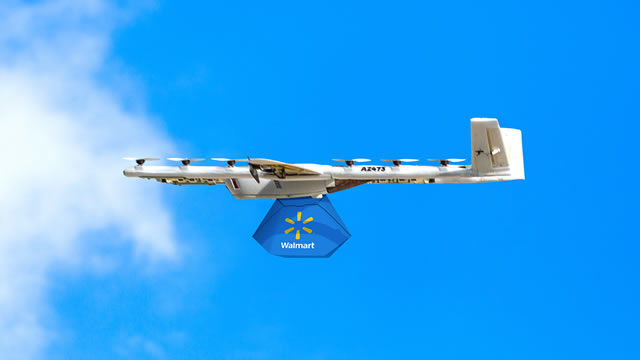
Forget Amazon, If Oil Hits $100, Walmart Is the Only Retailer Built to Thrive the Squeeze
247Wallst· 2026-03-07 15:29
Core Viewpoint - The article argues that if oil prices reach $100 per barrel, Walmart is better positioned than Amazon to thrive due to its established infrastructure and grocery-focused business model, which is less sensitive to energy price fluctuations [1]. Group 1: Amazon's Challenges - Amazon plans to invest $200 billion in capital expenditures in 2026, which is seen as a risky bet rather than a growth strategy, especially with rising energy costs [1]. - The company's free cash flow fell by 65.95% year-over-year in FY2025, indicating that its capital expenditures are consuming cash faster than it can generate [1]. - Amazon's energy costs are embedded in its capital expenditures, making it vulnerable to oil price increases, which could significantly raise the costs of its data centers and infrastructure [1]. Group 2: Walmart's Advantages - Walmart's capital expenditures for FY26 are projected at $26.64 billion, approximately 3.5% of net sales, indicating a disciplined approach compared to Amazon's massive spending [1]. - The company has an established infrastructure, with store-fulfilled delivery reaching 95% of U.S. households in under three hours, allowing it to manage energy costs effectively without needing new construction [1]. - Walmart's grocery-anchored model is resilient in recessionary environments, as consumers continue to purchase groceries even when discretionary spending declines [1]. Group 3: Financial Performance - Walmart's free cash flow grew by 17.88% year-over-year to $14.92 billion in FY26, and the company has authorized a $30 billion share repurchase program, indicating strong financial health [1]. - The company reported consistent U.S. comp sales of approximately 4.5% to 4.6% every quarter of FY26, demonstrating stable performance across all income tiers [1]. - In contrast, Amazon's stock has declined by 7.63% year-to-date, while Walmart's stock has increased by 11.12%, suggesting a widening gap in performance as oil prices rise [1].

3 Risks That Could Erode Walmart's Long-Term Competitive Advantage
The Motley Fool· 2026-03-07 12:35
Core Insights - Walmart's dominance as the world's largest retailer is attributed to decades of operational discipline, cost control, and a robust infrastructure that is hard to replicate [1] - The critical question for investors is whether Walmart can deepen its competitive advantages or if they will gradually lose relevance [2] Group 1: Profit Mix Stagnation - Walmart's historical advantage lies in cost leadership, allowing it to operate on thin margins while generating over $31 billion in operating income for fiscal year 2026 [4] - Management is taking steps to enhance earnings quality through recurring membership revenue, growing advertising revenue, and expanding e-commerce sales, which have higher margins than traditional retail [5] - If revenue grows at 3% to 5% but operating margins do not improve, Walmart's competitive advantage remains defensive, limiting shareholder returns [6] Group 2: Profit Pool Migration Toward Digital Ecosystems - Walmart excels in essentials like groceries, which drive frequent store visits and steady demand [8] - Higher-margin segments are increasingly found within digital ecosystems that combine commerce, advertising, subscriptions, and data monetization, as seen with Amazon [9] - Walmart has developed its advertising platform and improved digital integration, but its model is still primarily retail-focused, risking slower earnings growth compared to revenue growth [10] Group 3: Rising Capital Intensity Without Higher Returns - Maintaining leadership requires constant reinvestment in automation, AI, supply chain modernization, and store upgrades [12] - A company generating over $700 billion in annual revenue must invest significantly to maintain its position, and if these investments do not yield productivity improvements, capital intensity will rise while returns stagnate [13] - For long-term shareholders, a widening moat should reflect in improved return on invested capital or margin resilience; stagnant returns indicate a stagnant competitive advantage [14] Group 4: Implications for Investors - Walmart is unlikely to lose its position abruptly due to its infrastructure and cost leadership, but growth may be incremental with modest revenue increases and stable operating margins [15] - Key signals for investors to monitor include operating margin progression, advertising scale relative to total revenue, and capital efficiency over time [16]
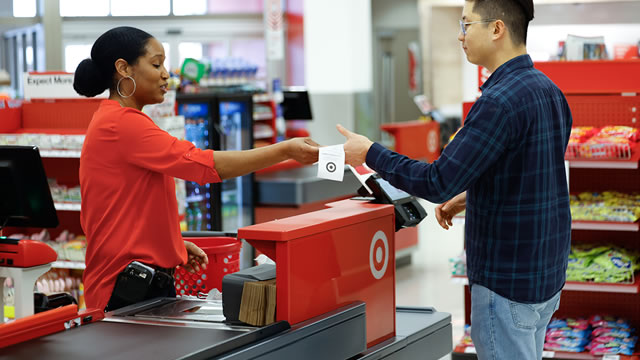
Target Stock Surged After Announcing Earnings, but Is It Really Turning a Corner?
The Motley Fool· 2026-03-07 09:15
Core Viewpoint - Target's stock surged 7% following its fourth-quarter earnings announcement, marking the first report under new CEO Michael Fiddelke, who introduced a strategic growth plan [1][2]. Current Performance - Target has faced numerous challenges since the pandemic, including high inventory levels, less appealing merchandise, and controversial political stances, leading to a 2% decline in net sales and a 9.7% drop in net income to $3.7 billion for fiscal 2025 [4]. - The stock is currently trading at a nearly 55% discount from its all-time high and has a price-to-earnings (P/E) ratio of 15, which is significantly lower than Walmart's P/E of 47 [5]. Future Outlook - Management forecasts a 2% growth in net sales for fiscal 2026, indicating a potential turnaround. To support this, Target plans to invest $1 billion in store updates, personnel training, and technology improvements, increasing total capital investment to $5 billion [6]. - The company aims to enhance its product offerings in key areas such as home, beauty, women's style, and health and wellness, which could help restore its reputation for affordable style [8]. Execution Challenges - While the turnaround plan is promising, successful execution is crucial. CEO Fiddelke must demonstrate progress in meeting these goals in the coming quarters to instill investor confidence [9][10]. - If the company meets its targets, the current P/E ratio could be seen as undervalued, potentially leading to significant stock price growth [11].

ChatGPT's Retail Retreat Hands Walmart An AI Advantage: Analyst
Benzinga· 2026-03-06 18:37
Core Insights - Walmart Inc. could benefit from OpenAI's decision to scale back direct purchases within ChatGPT, redirecting shoppers to retailer apps, which may enhance Walmart's digital ecosystem and drive traffic to its commerce channels [1][3] Group 1: AI Integration and Retail Strategy - OpenAI's shift to redirect purchases to retailer apps is expected to bolster Walmart's position in the evolving AI-driven online shopping landscape [1][3] - Walmart's AI platform, Sparky, provides a competitive edge over rivals with less robust infrastructure [4] - The change mitigates concerns regarding potential revenue loss from Walmart's advertising business, which generated approximately $6.4 billion and grew nearly 50% last year [4] Group 2: Competitive Landscape - Target Corporation is also positioned to benefit from the developments in AI commerce, having previously integrated its app with ChatGPT [5] - Both Walmart and Target are heavily investing in AI across their operations, maintaining leadership in AI adoption within the retail sector [5] Group 3: Macro Economic Factors - Rising gasoline prices, which have increased about 9% to roughly $3.25 per gallon, could influence consumer spending, potentially benefiting value-focused retailers like Walmart [6] - Tax refunds are highlighted as a significant factor affecting consumer spending patterns [6] Group 4: Stock Performance - Walmart shares were reported to be up 0.59% at $124.04 at the time of publication [7]

These Dividend-Paying Stocks Have Been a 'Nice Place to Hide' This Year
Investopedia· 2026-03-06 17:00
Core Insights - Rising geopolitical tensions and concerns about AI-driven disruptions have led investors to seek safer stocks, particularly dividend-paying stocks, which are perceived as more stable investments [1][2] - The dividend aristocrats, a group of S&P 500 companies that have consistently raised dividends for at least 25 years, have outperformed the broader market in 2026, achieving a total return of approximately 7% compared to the S&P 500's flat performance [1][2] - Analysts at Wolfe Research have identified dividend aristocrats as a preferred strategy during market turmoil, noting their historical outperformance during economic downturns [2] Investment Implications - Dividend aristocrats are viewed as attractive investments during volatile market conditions due to their perceived quality and reliability [1][2] - The group includes well-known companies such as Walmart, McDonald's, and Clorox, all of which have significantly outperformed the S&P 500 recently [1][2] - The dividend aristocrats have a reputation for helping investors navigate periods of heightened market volatility, making them a favorable option for risk-averse investors [2]
Had You Invested $1,000 in Costco or Walmart 10 Years Ago, Here's What You'd Have Today
247Wallst· 2026-03-06 14:15
Core Insights - Costco has significantly outperformed Walmart over the past decade, returning +747.33% compared to Walmart's +553.75% [2] - Recently, Walmart has shown stronger performance with a +229.71% return over the past year, while Costco only returned +2.37% [2] Company Performance - Costco's membership-driven model has led to a high membership renewal rate of 89.7%, contributing to consistent revenue growth [4] - Walmart has transformed into an omnichannel platform, with e-commerce sales accounting for 23% of total net sales and a global advertising business worth $6.40 billion [5] Financial Metrics - Costco's P/E ratio stands at 54x, while Walmart's is at 47x, indicating a premium valuation for Costco [2] - Both companies have delivered strong long-term performance, with Costco's total return on a $1,000 investment over 10 years reaching $8,473.30, while Walmart's reached $6,537.50 [8] Recent Developments - Costco has paid special dividends of $15.00 in 2024, $10.00 in 2020, and $7.00 in 2017, enhancing total returns for shareholders [9] - Walmart has raised its dividend to $0.99 per share for FY2027, reflecting its ongoing transformation and growth [5] Future Outlook - Costco's growth potential remains strong due to sticky membership, rising fee income, and opportunities for international expansion [10] - Walmart's ongoing transformation presents both opportunities and risks, as it navigates a complex operational landscape [11]


Prediction: AI Robotics Will Be a $375 Billion Industry. This Stock Is Positioned to Win in 2026.
The Motley Fool· 2026-03-06 03:00
Core Insights - The industrial automation sector is experiencing significant growth, driven by advancements in artificial intelligence (AI), with an anticipated annual growth rate of 17% through 2035, potentially reaching a market value of over $375 billion [2] Company Overview - Symbotic specializes in AI-powered robotics for warehouses, primarily serving high-volume consumer goods operations, with Walmart as its largest customer [3][4] - The company generated over $2.2 billion in revenue last fiscal year, reflecting a year-over-year growth of 26% [11] Market Potential - Despite Walmart being a major customer, Symbotic has opportunities in various sectors beyond retail, including manufacturing, logistics, farming, and waste management [5][6] - The retail sector, where Walmart operates, accounts for less than one-tenth of the total U.S. GDP, indicating substantial growth potential for Symbotic in other industries [5] Competitive Landscape - Symbotic is not the only player in the AI robotics space; other companies like Agility, 1X, Apptronik, and Boston Dynamics are also developing humanoid robots [8] - Competitors such as Teradyne and UiPath are focusing on practical automation solutions, but Symbotic's proven technology gives it a competitive edge [10][11] Financial Outlook - Projected revenue growth for Symbotic is around 24% for the current year and 28% for the next year, which may lead the company to profitability [11] - The stock has shown no net progress since August of the previous year, but there is potential for sustained growth as profits increase [13]


Dow Jones sheds almost 800 points, oil prices climb as conflict continues in Middle East
Yahoo Finance· 2026-03-05 21:15
Company Restructuring and Performance - Morgan Stanley plans to eliminate 2,500 positions globally, representing approximately 3% of its workforce, as part of a strategic reshaping of its operations [5] - Oracle Corp is also set to cut thousands of jobs to manage financial strain from its expansion in artificial intelligence data centers [6] - Burlington Stores Inc. reported stronger-than-expected fourth-quarter revenue and profit, lifting its shares despite a softer comparable-sales outlook for the year [1] - Victoria's Secret & Co. exceeded fourth-quarter earnings estimates and provided a stronger-than-expected outlook as its turnaround strategy gains traction [1] - BJ's Wholesale Club delivered fourth-quarter earnings and comparable sales that topped expectations, but its weaker full-year guidance negatively impacted its stock [2] - Kroger Co. posted fourth-quarter earnings that beat Wall Street forecasts with GAAP EPS of $1.35, although revenue was slightly below estimates [2] - Palladyne AI shares surged after reporting fourth-quarter revenue of $1.66 million, up 118% year over year, exceeding analyst expectations [2] Market Trends and Economic Indicators - The Dow Jones fell 1.6% or 785 points, while the S&P 500 and Nasdaq also experienced declines amid ongoing geopolitical tensions in the Middle East [5] - Initial jobless claims in the U.S. held steady at 213,000, slightly below economists' forecast of 215,000, while continuing claims rose to 1.86 million [9][10] - Broadcom Inc. shares rose 4.5% following robust quarterly results, reporting a 29% increase in first-quarter revenue to $19.3 billion, and projecting $10.7 billion in AI chip sales for the next quarter [11][18] - China has cut its GDP growth target for 2026 to 4.5-5%, down from the previous goal of "around 5%" [19] - Crude oil prices have risen almost 3% to $76.90 a barrel, while metals, particularly copper, are generally softer [19]