
Stitch Fix

Search documents
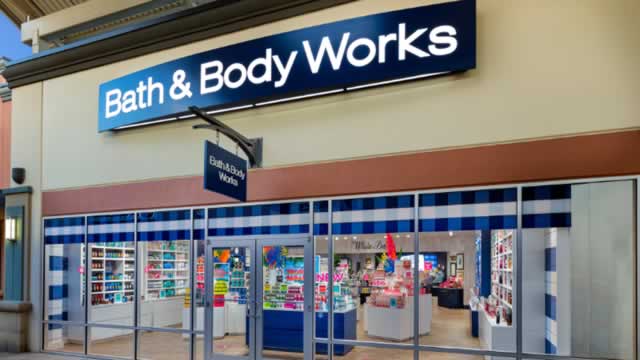
What Drove Bath & Body Works' Q1 Margins Despite Tariff Pressures?
ZACKS· 2025-06-18 14:01
Core Insights - Bath & Body Works (BBWI) reported a strong start to fiscal 2025, with gross profit reaching $646 million, a 6.6% year-over-year increase, and a gross margin of 45.4%, improving by 160 basis points compared to the previous year [1][11]. Financial Performance - The improvement in gross margin was primarily driven by a 100-basis-point rise in merchandise margin, attributed to low single-digit increases in mix-adjusted average unit retail (AUR), reflecting a stronger product mix and value engineering enhancements [2][11]. - Operating income for the first quarter reached $209 million, an 11.8% increase from the prior year, with the operating margin expanding by 120 basis points to 14.7% [5][11]. Operational Changes - The company strategically exited a third-party fulfillment center to streamline operations and reduce costs, expecting continued financial and customer service benefits [4]. - A re-evaluation of store assets' useful life led to reduced depreciation expenses, contributing to margin improvement [4]. Cost Management - Bath & Body Works faced external cost pressures from tariffs, with approximately 10% of its global spend exposed to China. However, the company effectively mitigated these impacts through an agile, predominantly U.S.-based supply chain and proactive cost management strategies [8]. - For the second quarter of fiscal 2025, the company anticipates a gross margin of approximately 41%, flat compared to the prior year, factoring in ongoing tariff impacts and licensing expenses from collaborations [9]. Valuation - BBWI is trading at a forward 12-month price-to-sales ratio of 0.76, significantly lower than the industry average of 1.64 and the sector average of 1.58, indicating a favorable valuation position [12].


Is Cost Optimization the Key to Under Armour's Gross Margin Strength?
ZACKS· 2025-06-17 16:15
Core Insights - Under Armour, Inc. (UAA) reported a gross margin of 46.7% for Q4 fiscal 2025, a year-over-year increase of 170 basis points, driven by lower product and freight costs, reduced discounting, and improved royalty terms [1][2][3] Financial Performance - For fiscal 2025, the gross margin was 47.9%, up 180 basis points from the previous year, attributed to reduced supply-chain costs and strategic discount reductions [3] - The company anticipates a gross margin expansion of 40-60 basis points in Q1 fiscal 2026, supported by favorable product mix and continued supply-chain efficiencies [5] Strategic Initiatives - Under Armour is focusing on "higher quality revenue" and regaining pricing power by reducing reliance on markdowns, which is central to its brand elevation strategy [4] - The ongoing restructuring program has led to $89 million in transformation charges but yielded $35 million in savings for fiscal 2025, with expectations of reaching a $75 million annualized cost-saving run-rate by the end of fiscal 2026 [7][9] Cost Management - Selling, general and administrative (SG&A) expenses are projected to decline by 40% from the prior-year quarter, reflecting disciplined spending and enhanced productivity [8][9] - The combination of restructuring-driven savings and tighter cost control positions Under Armour to support gross margin gains and improve overall profitability [9] Market Performance - UAA shares gained 0.8% in the past month, outperforming the Zacks Textile – Apparel industry's decline of 16.5% and the broader Consumer Discretionary sector's performance [10]

Coach Powers Tapestry's Momentum: Find Out What's Driving it
ZACKS· 2025-06-17 15:51
Core Insights - Tapestry, Inc.'s Coach brand reported strong performance in Q3 of fiscal 2025, with net sales reaching $1.29 billion, marking a 13% year-over-year increase on a reported basis and 15% growth on a constant-currency basis, reinforcing its leadership in the accessible luxury segment [1][9] Financial Performance - Coach achieved a record gross margin of 79% in Q3, driven by operational efficiency and premium pricing power, with Average Unit Retail (AUR) growing in the mid-teens and now approximately 70% higher than in 2019 [2][9] - The leather goods segment experienced strong double-digit growth, particularly from the Tabby and New York collections, with key products selling out quickly [3][9] Strategic Initiatives - The "One Coach" strategy, which aligns product and pricing across outlet and full-price channels, has enhanced consumer engagement and margin expansion [3] - Tapestry has upgraded its fiscal 2025 revenue guidance to $6.95 billion, indicating a 4% growth from the previous year, surpassing earlier expectations of 3% growth [4] Regional Performance - Sales growth expectations include 3-4% in North America, around 30% in Europe, low-single digits in Greater China, and high-single digits in other parts of Asia, with an anticipated operating margin expansion of 100 basis points year-over-year [5] Earnings Forecast - Earnings per share are projected to be $5.00, reflecting high-teens percentage growth from the previous year, exceeding earlier estimates of $4.85-$4.90 [5] - The Zacks Consensus Estimate for the current fiscal year's earnings has increased to $5.05 per share, indicating year-over-year growth of 17.7% [12] Stock Performance - Tapestry's shares have increased by 27.1% over the past six months, outperforming the broader Retail-Apparel and Shoes industry, which declined by 16.8% [6] - The stock is currently trading above its 50 and 200-day simple moving averages, indicating positive market sentiment and investor confidence [10]


What's Driving the Record Gross Margin at Urban Outfitters This Year?
ZACKS· 2025-06-16 17:26
Core Insights - Urban Outfitters Inc. (URBN) reported a strong start to fiscal 2026, with gross profit rising 19.8% year over year to a record $489.1 million, resulting in a gross margin of 36.8%, an expansion of 278 basis points from the prior year [1][9] - The company achieved a core margin increase of 204 basis points, driven by lower markdowns in the Retail segment and reduced delivery costs [2] - Operating income surged 72% to $128.2 million, with the operating margin increasing 340 basis points to 9.6% of sales, supported by strong full-price selling and disciplined inventory management [3] Financial Performance - Management expects the second-quarter gross margin to improve by 50-100 basis points year over year, with confidence in achieving a 10% operating margin goal for fiscal 2026 [4] - URBN's shares have rallied 38.4% in the past three months, outperforming the broader Retail-Wholesale sector and the S&P 500 index [6] - The stock is currently trading 10.3% below its 52-week high of $75.80, with technical indicators showing strong performance [9][10] Valuation and Estimates - URBN is trading at a forward 12-month price-to-sales ratio of 0.99, below the industry average of 1.65, indicating potential for investors [13] - The Zacks Consensus Estimate for earnings has been revised upward, with current fiscal year estimates at $4.96 per share, reflecting year-over-year growth of 22.2% [15] - Sales estimates for the current and next fiscal years are pegged at $6.02 billion and $6.42 billion, implying year-over-year growth of 8.5% and 6.6%, respectively [17]


Stitch Fix: Continuing To Lose Customers In Increasingly Competitive Market
Seeking Alpha· 2025-06-12 07:44
Group 1 - The article reflects on the author's positive experiences with the now-defunct online grocery service Webvan, highlighting the convenience of home delivery [1] - The author emphasizes a belief in the efficiency of financial markets, suggesting that most stocks accurately reflect their current value [1] - The best investment opportunities are identified as those in stocks that are less followed by average investors or those that do not accurately represent existing market opportunities [1]


Stitch Fix(SFIX) - 2025 Q3 - Quarterly Report
2025-06-11 20:13
Part I [Financial Statements (Unaudited)](index=4&type=section&id=Item%201.%20Financial%20Statements%20(Unaudited)) The unaudited condensed consolidated financial statements for Q3 FY25 show a slight revenue increase and a significantly narrowed net loss, with the UK business classified as discontinued operations Condensed Consolidated Balance Sheet Highlights (in thousands) | Account | May 3, 2025 | August 3, 2024 | | :--- | :--- | :--- | | Cash and cash equivalents | $108,915 | $162,862 | | Inventory, net | $114,410 | $97,903 | | Total current assets | $373,276 | $366,710 | | Total assets | $484,748 | $486,864 | | Total current liabilities | $206,820 | $203,551 | | Total liabilities | $284,357 | $299,842 | | Total stockholders' equity | $200,391 | $187,022 | Condensed Consolidated Statements of Operations Highlights (in thousands) | Metric | For the Three Months Ended May 3, 2025 | For the Three Months Ended April 27, 2024 | For the Nine Months Ended May 3, 2025 | For the Nine Months Ended April 27, 2024 | | :--- | :--- | :--- | :--- | :--- | | Revenue, net | $325,016 | $322,731 | $955,944 | $1,017,918 | | Gross profit | $143,558 | $146,978 | $427,224 | $449,561 | | Operating loss | $(9,708) | $(24,840) | $(27,699) | $(91,539) | | Net loss from continuing operations | $(7,381) | $(22,017) | $(20,267) | $(83,144) | | Basic and Diluted Loss per share | $(0.06) | $(0.18) | $(0.16) | $(0.70) | - For the nine months ended May 3, 2025, net cash provided by operating activities from continuing operations was **$18.6 million**, a slight decrease from **$20.0 million** in the prior-year period. Net cash used in investing activities was **$59.7 million**, and net cash used in financing activities was **$12.4 million**[21](index=21&type=chunk) - The company ceased operations of its UK business during the first quarter of fiscal 2024, and the results of the UK business are presented as a discontinued operation for all periods[27](index=27&type=chunk)[78](index=78&type=chunk) [Management's Discussion and Analysis of Financial Condition and Results of Operations (MD&A)](index=20&type=section&id=Item%202.%20Management's%20Discussion%20and%20Analysis%20of%20Financial%20Condition%20and%20Results%20of%20Operations) Management discusses Q3 and nine-month fiscal 2025 results, highlighting Q3 revenue growth, improved net loss, and sufficient liquidity [Financial Overview & Key Metrics](index=20&type=section&id=Financial%20Overview%20%26%20Key%20Metrics) Q3 FY25 financial performance shows revenue growth, active client decline, and improved net loss and Adjusted EBITDA Key Operating Metrics | Metric | May 3, 2025 | April 27, 2024 | % Change | | :--- | :--- | :--- | :--- | | Active clients (in thousands) | 2,353 | 2,633 | (10.6)% | | Net Revenue per Active Client | $542 | $525 | 3.2% | Adjusted EBITDA Reconciliation (in thousands) | Metric | For the Three Months Ended May 3, 2025 | For the Three Months Ended April 27, 2024 | | :--- | :--- | :--- | | Net loss from continuing operations | $(7,381) | $(22,017) | | Adjusted EBITDA | $11,013 | $6,681 | - Free cash flow for the nine months ended May 3, 2025 was **$6.5 million**, compared to **$9.7 million** in the prior-year period[96](index=96&type=chunk) [Results of Operations](index=24&type=section&id=Results%20of%20Operations) Q3 FY25 revenue increased, gross margin decreased, and SG&A expenses significantly declined from restructuring efforts - Q3 FY25 revenue increased by **$2.3 million (0.7%)** compared to the prior year, primarily due to an improvement in net revenue per active client from higher average order values, which was partially offset by a decrease in active clients[114](index=114&type=chunk) - Q3 FY25 gross margin decreased by **130 basis points** to **44.2%**, primarily driven by lower product margins. For the nine-month period, gross margin increased by **50 basis points** due to higher average order values and transportation leverage[115](index=115&type=chunk) - SG&A expenses for Q3 FY25 decreased by **$18.6 million (10.8%)** YoY, driven by lower compensation and benefits, depreciation, and facilities costs from restructuring actions. This was partially offset by higher advertising spend[116](index=116&type=chunk) [Liquidity and Capital Resources](index=26&type=section&id=Liquidity%20and%20Capital%20Resources) The company maintains sufficient liquidity through cash, investments, and a credit facility, with no share repurchases in the nine-month period - As of May 3, 2025, the company had **$108.9 million** of cash and cash equivalents and **$133.2 million** of investments[120](index=120&type=chunk) - The company has a **$50.0 million** revolving credit facility maturing in December 2026, with **$31.3 million** of excess availability as of May 3, 2025[121](index=121&type=chunk) - No shares were repurchased during the nine months ended May 3, 2025. **$120.0 million** remained available under the share repurchase program authorization[125](index=125&type=chunk)[74](index=74&type=chunk) [Quantitative and Qualitative Disclosures About Market Risk](index=28&type=section&id=Item%203.%20Quantitative%20and%20Qualitative%20Disclosures%20About%20Market%20Risk) No material changes in market risk were reported compared to the 2024 Annual Report on Form 10-K - During the three months ended May 3, 2025, there were no material changes in market risk from the information presented in the 2024 Annual Report on Form 10-K[135](index=135&type=chunk) [Controls and Procedures](index=28&type=section&id=Item%204.%20Controls%20and%20Procedures) Management concluded disclosure controls were effective as of May 3, 2025, with no material changes to internal control - Based on their evaluation, the Chief Executive Officer and Chief Financial Officer concluded that the company's disclosure controls and procedures were effective as of May 3, 2025[137](index=137&type=chunk) - There were no changes in the company's internal control over financial reporting during the quarter that have materially affected, or are reasonably likely to materially affect, internal control over financial reporting[138](index=138&type=chunk) Part II [Legal Proceedings](index=28&type=section&id=Item%201.%20Legal%20Proceedings) Ongoing legal matters include a pending securities class action and two related derivative actions concerning the Freestyle offering - A securities class action lawsuit alleges violations of the Securities Exchange Act for allegedly making materially false and misleading statements regarding the Freestyle offering between June 2020 and June 2022. A motion to dismiss the second amended complaint is pending before the court[49](index=49&type=chunk) - Two derivative actions based on the same factual allegations as the securities class action have been filed. One is stayed pending the resolution of the motion to dismiss in the securities case, and the other has not progressed past the initial filing[50](index=50&type=chunk) [Risk Factors](index=29&type=section&id=Item%201A.%20Risk%20Factors) This section outlines business, industry, and legal risks, including client retention, competition, macroeconomic pressures, and cybersecurity [Business Risks](index=31&type=section&id=Business%20Risks) Key business risks include client retention, inventory management, stylist performance, and potential fraud losses - The company's number of active clients has decreased due to an inability to attract new clients and retain existing ones, which has negatively affected revenue and is expected to continue[153](index=153&type=chunk) - Effective inventory management is crucial; inaccurate demand prediction has previously led to higher inventory levels and increased reserves, and a smaller fulfillment network increases assortment risk[166](index=166&type=chunk)[167](index=167&type=chunk) - The business depends on a strong brand and the effective management of its stylist workforce, which was recently transitioned to a part-time only model[186](index=186&type=chunk)[188](index=188&type=chunk) [Industry, Market, and Economic Risks](index=38&type=section&id=Industry%2C%20Market%2C%20and%20Economic%20Risks) The company faces risks from retail apparel competition, macroeconomic conditions, and operational disruptions at fulfillment centers - The business is subject to macroeconomic conditions impacting consumer discretionary spending, such as inflation, recessionary concerns, and general economic uncertainty[194](index=194&type=chunk) - The retail apparel industry is highly competitive, with rivals potentially having greater resources, infrastructure, and brand recognition[196](index=196&type=chunk)[197](index=197&type=chunk) - Operations are vulnerable to disruptions at fulfillment centers and in the supply chain from natural disasters, public health crises (like the COVID-19 pandemic), or political crises[199](index=199&type=chunk)[200](index=200&type=chunk) [Cybersecurity, Legal, and Regulatory Risks](index=39&type=section&id=Cybersecurity%2C%20Legal%2C%20and%20Regulatory%20Risks) Risks include data security breaches, evolving privacy laws, litigation, and changes in U.S. tax or tariff policies - Compromises of data security, either at the company or its third-party providers, could lead to unexpected expenses, litigation, and material harm to its reputation and operating results[202](index=202&type=chunk)[203](index=203&type=chunk) - Compliance with evolving privacy laws (e.g., CCPA, GDPR) is complex and costly, with non-compliance carrying risks of significant fines, penalties, and litigation[211](index=211&type=chunk)[212](index=212&type=chunk) - Changes in U.S. tax or tariff policy, particularly regarding goods produced in China, could adversely affect the business by increasing merchandise costs and creating uncertainty[223](index=223&type=chunk) [Risks Relating to Ownership of Our Class A Common Stock](index=44&type=section&id=Risks%20Relating%20to%20Ownership%20of%20Our%20Class%20A%20Common%20Stock) Stockholder risks include price volatility, potential dilution, concentrated voting power, no dividend intent, and anti-takeover provisions - The dual-class stock structure, where Class B common stock has ten votes per share, concentrates considerable voting control with certain directors, executive officers, and their affiliates[234](index=234&type=chunk) - The company does not currently intend to pay dividends, so any return on investment will depend on the appreciation of the stock's value[235](index=235&type=chunk) - The company's certificate of incorporation includes provisions that could discourage or delay a change of control, such as a classified board, no stockholder action by written consent, and super-majority voting requirements[236](index=236&type=chunk)[238](index=238&type=chunk) [Other Information (Items 2, 3, 4, 5, 6)](index=50&type=section&id=Item%205.%20Other%20Information) This section covers minor reporting items, including no unregistered sales or defaults, and discloses a Rule 10b5-1 trading plan - Anthony Bacos, Chief Product and Technology Officer, adopted a Rule 10b5-1 trading plan on March 13, 2025, for the potential sale of up to **360,000 shares** of Class A common stock, expiring March 31, 2026[254](index=254&type=chunk) - The company reports no unregistered sales of equity securities or defaults upon senior securities for the period[251](index=251&type=chunk)[252](index=252&type=chunk)
Stitch Fix: Margins Under Pressure From Gross Margin Cycle, Valuation Unrealistic
Seeking Alpha· 2025-06-11 18:42
Group 1 - Stitch Fix, Inc. (NASDAQ: SFIX) reported 3Q25 results that align with the improvements observed over the past two quarters [1] Group 2 - The focus of Quipus Capital is on long-only investment strategies, evaluating companies from an operational and buy-and-hold perspective, rather than market-driven dynamics [2] - Quipus Capital emphasizes understanding the long-term earnings power of companies and the competitive dynamics of their respective industries [2] - The majority of Quipus Capital's calls are holds, reflecting a cautious approach in a bullish market [2] Group 3 - The article does not provide any specific financial metrics or performance indicators for Stitch Fix, Inc. in the 3Q25 results [1]

SFIX Q3 Loss Narrower Than Expected, FY25 Outlook Raised, Stock Up 8%
ZACKS· 2025-06-11 15:16
Core Insights - Stitch Fix, Inc. (SFIX) reported third-quarter fiscal 2025 results with both top and bottom lines exceeding Zacks Consensus Estimates, leading to a 7.5% increase in shares during after-market trading [1][9] Financial Performance - The company recorded an adjusted loss of $0.06 per share, which was better than the expected loss of $0.12 and improved from a loss of $0.15 in the same quarter last year [3][9] - Net revenues reached $325 million, surpassing the Zacks Consensus Estimate of $315 million, and reflecting a year-over-year increase of 0.7% due to a rise in net active clients [3][9] - Active clients totaled 2,353,000, representing a year-over-year decline of 10.6%, while average net revenues per active client increased by 3.2% to $542 [4] Margins and Expenses - Gross profit decreased by 2.3% to $143.6 million, with a gross margin decline of 130 basis points to 44.2%, primarily due to lower product margins as the company invested in client experience [5] - Selling, general and administrative expenses (SG&A) fell by 10.8% to $153.3 million, with SG&A as a percentage of net revenues decreasing to 47.2% [6] - Adjusted EBITDA improved to $11 million from $6.7 million in the previous year, with an adjusted EBITDA margin of 3.4%, reflecting effective cost management [7] Cash and Equity Position - At the end of the fiscal third quarter, the company had cash and cash equivalents of $108.9 million, short-term investments of $125.3 million, and no debt, with net inventory at $114.4 million and shareholders' equity of $200.4 million [8] Future Guidance - For the fourth quarter of fiscal 2025, SFIX anticipates net revenues between $298 million and $303 million, indicating a year-over-year decline of 5.2-6.7% [13] - The full-year revenue outlook was raised to $1.25-$1.26 billion, with adjusted EBITDA projected between $43 million and $47 million [14] Stock Performance - SFIX shares have increased by 19.8% over the past three months, outperforming the industry growth of 11% [15]

Stitch Fix: AI-Powered Personalization Will Overcome Any Macro Challenges
PYMNTS.com· 2025-06-11 00:53
Core Insights - Personalization is a key strategy for Stitch Fix to retain and potentially gain market share despite external challenges such as tariffs or a slowdown in consumer spending [1][2] - The company has not yet experienced any impact from tariffs and does not anticipate any in the current quarter, but is prepared to mitigate any potential effects [2] - Stitch Fix's value proposition, which includes personalized styling and convenience, remains strong even in challenging macroeconomic conditions [2][3] Financial Performance - For the quarter ending May 3, Stitch Fix reported a year-over-year revenue growth of 0.7% [3] - The company is entering a growth phase in its transformation strategy, focusing on a client-centric and personalized shopping experience [4] Business Strategy - Stitch Fix's personalized shopping experience combines human stylists with an app that learns customer preferences through a style quiz, creating a "multilayered style persona" [5] - The company emphasizes the uniqueness of each client's experience, leveraging expert stylists and advanced AI algorithms based on extensive data [6]

Stitch Fix(SFIX) - 2025 Q3 - Earnings Call Transcript
2025-06-10 22:02
Financial Data and Key Metrics Changes - Q3 revenue reached $325 million, reflecting a 0.7% year-over-year increase and a 4.1% quarter-over-quarter increase [20] - Adjusted EBITDA for Q3 was $11 million, representing a margin of approximately 3.4%, up 130 basis points year-over-year but down 170 basis points quarter-over-quarter [22] - Gross margin for the quarter was 44.2%, down 130 basis points year-over-year and down 30 basis points quarter-over-quarter [21] - Revenue per active client was $542, up 3.2% year-over-year and up 1% quarter-over-quarter [20] Business Line Data and Key Metrics Changes - The women's business and overall fixed channel returned to revenue growth, while the men's business and freestyle channel also saw revenue growth [7] - Average Order Value (AOV) grew by 10% year-over-year, with improvements in items per fix, keep rate, and Average Unit Retail (AUR) [8] - The athleisure category saw over 30% growth year-over-year, with notable demand for wide leg denim and spring transitional sweaters in women's and fleece and knit tops in men's [12] Market Data and Key Metrics Changes - Active clients at the end of Q3 totaled 2.4 million, down 10.6% year-over-year and down 0.8% quarter-over-quarter, marking the lowest sequential decline in three years [20][13] - New client growth has been achieved for two consecutive quarters, with new clients spending more, as evidenced by high 90-day Lifetime Value (LTV) metrics [13] Company Strategy and Development Direction - The company is executing a three-phased transformation strategy, having completed the rationalize and build phases and now entering the growth phase [9][13] - Focus on enhancing client engagement features, deepening stylist relationships, and offering a stronger assortment with more fresh styles [10] - The company aims to position itself as the retailer of choice for apparel and accessories by delivering a personalized shopping experience [14] Management's Comments on Operating Environment and Future Outlook - Management acknowledges significant external challenges, including a dynamic macroeconomic environment and pressure on consumer discretionary spending [15] - The company does not expect significant cost impacts from tariffs for the remainder of Q4 but anticipates potential impacts in FY 2026 [15][24] - Confidence in the foundation built and the ability to navigate uncertainties while focusing on long-term profitable growth [27] Other Important Information - The company generated $16 million in free cash flow in Q3 and ended the quarter with $242 million in cash and no debt [22] - The outlook for Q4 includes projected revenue between $298 million and $300 million, with adjusted EBITDA expected between $3 million and $7 million [24] Q&A Session Summary Question: Insights on core consumer behavior and keep rates - Management noted strong performance in Q3 driven by AOV growth and positive client engagement, with larger fixes resonating well with clients [30][32] Question: Potential share gain opportunities in the current macro environment - Management believes the current macro environment presents an opportunity for share gain, emphasizing the adaptability of their service to client needs [52][54] Question: Sustainability of AOV increases - AOV growth is attributed to larger fixes and is expected to continue, although tougher year-over-year comparisons are anticipated in FY 2026 [72] Question: Need for increased ad spend to drive new customer growth - Management does not anticipate needing to increase ad spend to achieve active client growth, citing improvements in client re-engagement and dormancy trends [75]