
Intel

Search documents
Newest S&P 500 Stock Is Index's Biggest Winner In 2025
Investors· 2025-09-29 13:07
Group 1 - The S&P 500 index is at record highs, with 28 components up at least 50% in 2025 [1] - Top-performing S&P 500 stocks include Robinhood Markets, Seagate Technology, Western Digital, Palantir Technologies, Newmont, AppLovin, and Micron Technology, with all but Micron showing triple-digit gains [1] - Major indexes bounced to end the week, with Palantir and DoorDash near buy points [2] Group 2 - AppLovin stock received positive attention on Wall Street [4] - Despite a retreat from record highs, Nvidia's deal with OpenAI and Micron's earnings were notable events [4] - Palantir stock is nearing a buy point, indicating potential investment interest [4]

This Analyst’s Prediction About NVIDIA (NVDA) Was Right
Yahoo Finance· 2025-09-29 13:01
Core Insights - Analysts are optimistic about NVIDIA Corporation (NASDAQ: NVDA) as a key player in the AI investment landscape, with a strong performance expected in the second half of 2025 [1] - NVIDIA's recent partnerships, including a significant deal with Intel, indicate ongoing high demand for AI infrastructure and computing resources [2][4] - Despite a slowdown in growth compared to previous quarters, NVIDIA is expected to maintain a strong position in the data center market, although competition may impact margins [3] Group 1: Analyst Commentary - Joseph Moore from Morgan Stanley highlighted that NVIDIA's product cycle, particularly with Blackwell, positions the company for a strong second half of 2025, suggesting the stock is attractive at current levels [1] - NVIDIA shares have increased by 28% year-to-date, reflecting positive market sentiment [1] Group 2: Market Dynamics - The demand for AI infrastructure is underscored by NVIDIA's partnerships with OpenAI and Intel, indicating that spending on computing resources will remain robust [2][4] - NVIDIA's annual revenue growth was reported at 56%, a decline from nearly 100% year-over-year growth in previous periods, suggesting a potential slowdown in growth momentum [2] Group 3: Strategic Developments - NVIDIA's investment of $5 billion in Intel is expected to unlock a total addressable market (TAM) of $50 billion for both companies in the data center and PC sectors [4] - The Macquarie Core Equity Fund noted NVIDIA's strong performance amid renewed AI optimism, despite a relative underweight affecting returns [4]

US Stocks End Day Higher Despite Posting Record Weekly Losses: Investors Show Signs Of Optimism, But Fear & Greed Index In 'Neutral' Zone - Intel (NASDAQ:INTC), Carnival (NYSE:CCL)
Benzinga· 2025-09-29 07:58
The CNN Money Fear and Greed index showed some improvement in the overall market sentiment, while the index remained in the “Neutral” zone on Friday.U.S. stocks settled higher on Friday, with the Dow Jones index gaining around 300 points during the session following the release of inflation data.Inflation figures released Friday showed no surprises but indicated the Fed's need for caution on its rate-cut cycle. The Personal Consumption Expenditures (PCE) price index rose 2.7% year-over-year in August, up fr ...



Weekly technology check: Intel leads, Oracle lags (NASDAQ:INTC)
Seeking Alpha· 2025-09-28 17:35
To ensure this doesn’t happen in the future, please enable Javascript and cookies in your browser.If you have an ad-blocker enabled you may be blocked from proceeding. Please disable your ad-blocker and refresh. ...

系统组装:AI服务器升级的新驱动力
Orient Securities· 2025-09-28 14:43
Investment Rating - The report maintains a "Positive" investment rating for the electronic industry, indicating an expected return that is stronger than the market benchmark by over 5% [5]. Core Insights - The AI server market continues to grow, driven by demand for AI computing power and hardware upgrades [7]. - System assembly is emerging as a new driver for performance enhancement in AI servers, as traditional manufacturing processes may not keep pace with the rapid development of AI computing needs [8]. - Advanced packaging techniques are becoming crucial for improving chip performance, especially as traditional process upgrades slow down [8]. - Industry leaders are expected to benefit from the rising technical barriers and improved competitive environment in the system assembly sector [8]. Summary by Sections AI Server Market Dynamics - The demand for AI computing facilities is driving growth in the AI server market, with significant upgrades in hardware [7]. - The number of GPUs in AI servers is increasing dramatically, with projections for future upgrades to 144 GPUs per cabinet by 2027 [8]. Performance Enhancement Drivers - The report highlights that system assembly is becoming a key factor in enhancing AI server performance, as the number of GPUs per server increases [8]. - The complexity of system assembly is rising, which may limit production capacity for some companies [8]. Recommended Investment Targets - The report recommends several companies related to AI server system assembly, including: - Industrial Fulian (601138, Buy) - Haiguang Information (688041, Buy) - Lenovo Group (00992, Buy) - Huaqin Technology (603296, Buy) [8]. - Industrial Fulian is noted for significant improvements in product testing and production efficiency, with strong order growth expected [8]. - Haiguang Information is positioned to leverage vertical integration capabilities following its merger with Zhongke Shuguang [8]. - Lenovo Group is anticipated to launch various servers based on Nvidia's Blackwell Ultra starting in the second half of 2025 [8]. - Huaqin Technology is recognized as a core ODM supplier for AI servers, benefiting from increased capital expenditures by cloud service providers [8].




Intel’s September Surge: The Real Story Behind a 46.6% Rally and Strategic Pivot
Medium· 2025-09-28 13:37
Core Insights - Intel Corporation has experienced a significant stock surge of 46.6% in September 2025, rising from $24.21 to $35.50, but remains 53% below its historical peak of $75.81 from August 2000 [2][3] - Contrary to media narratives, Intel has not attracted investment from Apple; instead, it has proactively sought financial backing from Apple as part of a strategic restructuring [2][3] Group 1: Strategic Partnerships - Nvidia has invested $5 billion in Intel, facilitating collaboration on new chip development [5] - Intel is in early discussions with Apple and TSMC regarding investment and manufacturing, indicating that major tech companies recognize Intel's importance in diversifying chip supply [5] Group 2: Government Support - The U.S. government has provided Intel with $8.9 billion under the CHIPS Act, resulting in government ownership of 10% of the company [5]
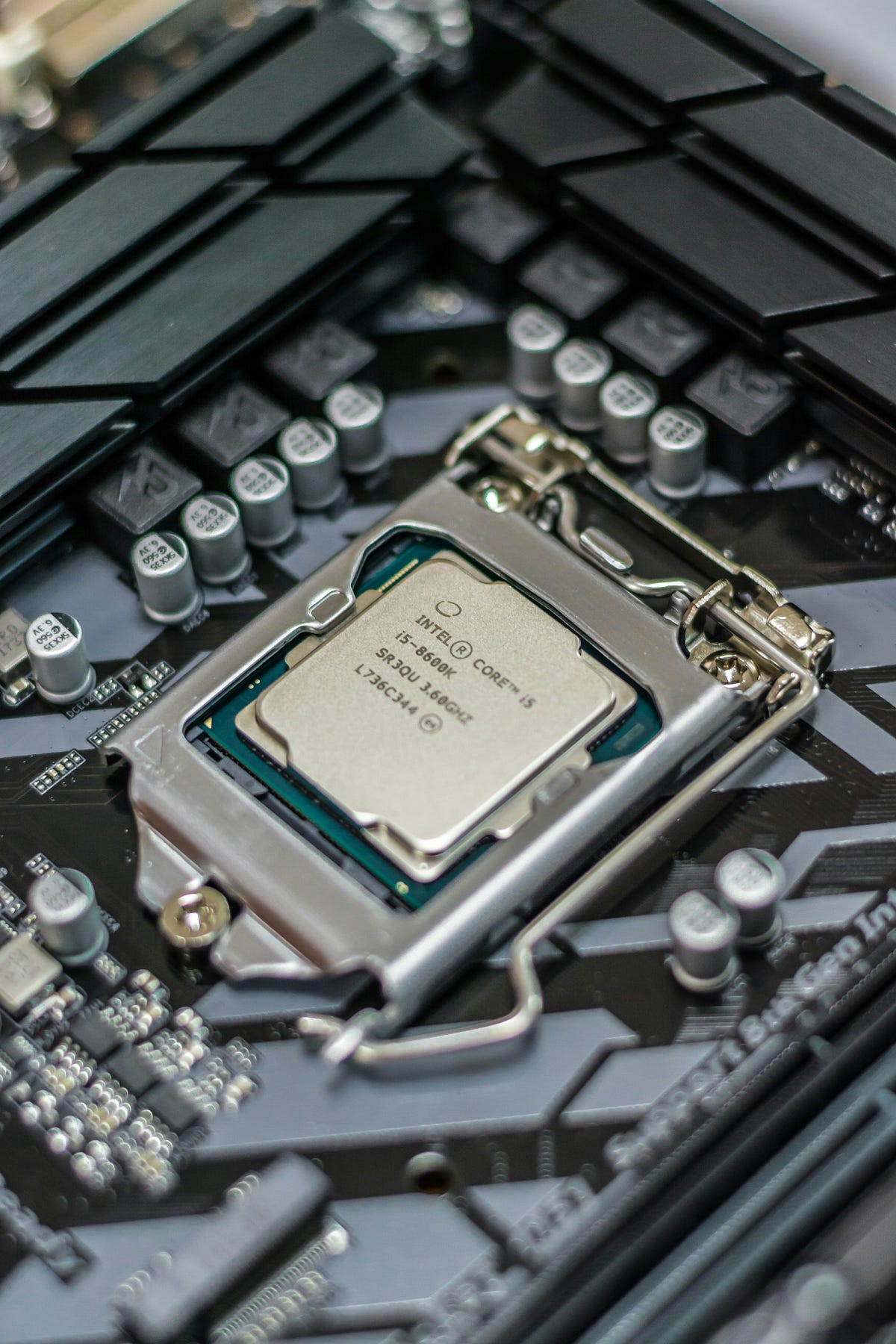
Intel, Marvell, Electronic Arts Are Among The Top 10 Large-Cap Gainers Last Week (Sep. 22 - Sep. 26): Are The Others In Your Portfolio? - Intel (NASDAQ:INTC)
Benzinga· 2025-09-28 13:25
Core Insights - The article highlights ten large-cap stocks that were top performers in the previous week, suggesting potential investment opportunities for portfolios [1] Group 1: Stock Performance - The article identifies ten large-cap stocks that excelled in performance last week, indicating strong market interest and potential for continued growth [1]

Did Nvidia Just Repeat Cisco's Mistake and Build a House of Cards With OpenAI Investment?
The Motley Fool· 2025-09-28 08:15
Core Viewpoint - Nvidia's investment of up to $100 billion in OpenAI is seen as a significant commitment to the future of artificial intelligence, but it raises concerns about circular financing and potential risks associated with funding its own demand [1][10]. Group 1: Investment Details - Nvidia plans to invest $10 billion initially, with the total investment of $100 billion tied to the deployment of Nvidia systems requiring 10 gigawatts of power, equivalent to 4 million to 5 million GPUs [2]. - The investment is part of a broader $300 billion deal with Oracle for cloud infrastructure, indicating a strong partnership between Nvidia and OpenAI [1]. Group 2: Circular Financing Implications - The investment represents a form of circular financing, where Nvidia is essentially funding one of its largest customers to ensure continued demand for its chips [4][5]. - This strategy mirrors past practices seen during the internet bubble, where Cisco provided credit to telecoms, leading to unsustainable sales when capital dried up [5][10]. Group 3: Competitive Landscape - Nvidia faces increasing competition as major customers like Alphabet, Amazon, and Microsoft develop their own custom AI chips, which could threaten Nvidia's market position [6]. - The shift towards inference in AI computing, where Nvidia's competitive advantage is less pronounced, adds to the urgency of maintaining customer loyalty through investments [8][9]. Group 4: Risk Assessment - While Nvidia currently holds a dominant position in AI infrastructure, the reliance on OpenAI, which has not yet proven a sustainable business model, introduces significant risk [12]. - If the AI boom slows or if hyperscalers opt for cheaper alternatives, Nvidia's growth could be jeopardized, potentially leading to a collapse of its investment strategy [11][12].
12 Most Undervalued Dow Stocks to Buy According to Analysts
Insider Monkey· 2025-09-27 20:21
Core Insights - The article discusses the 12 most undervalued Dow stocks recommended by analysts, highlighting the significance of the Dow Jones Industrial Average as a benchmark for the top 30 US firms [1][2] Economic Context - On September 26, 2025, the Dow Jones Industrial Average increased by 0.6%, ending a three-day decline, as inflation data met expectations, leading to optimism about potential rate cuts [3] - The core PCE index rose by 2.9% year-over-year and 0.2% month-over-month in August, remaining above the 2% target but easing concerns about tighter monetary policy [3] Company Highlights - **3M Company (NYSE:MMM)**: - Recognized as one of the most undervalued Dow stocks with a price target upside of 1.68% and a P/E ratio of 21.22 [10] - The company is implementing a "back to basics" strategy aimed at achieving a 25% margin expansion by 2027 and launching 1,000 new products over the next three years [11] - Financially, 3M reported strong Q2 2025 results with a 1.4% year-over-year organic revenue increase and a dividend yield of 1.9% [14] - **The Travelers Companies, Inc. (NYSE:TRV)**: - Showcasing resilience with a price target upside of 2.29% and a P/E ratio of 12.25 [15] - Q2 2025 results showed a 183% year-over-year net income increase to $1.51 billion, driven by improved operational efficiency [16] - The company is leveraging AI to automate claims processing, enhancing efficiency and customer satisfaction [17] - **The Boeing Company (NYSE:BA)**: - Recognized for its potential with a price target upside of 5.22% [19] - Recent regulatory changes allow Boeing to expedite production and delivery timelines for select aircraft, signaling renewed confidence from regulators [20] - Secured significant orders from Turkish Airlines and Norwegian Group, reinforcing strong global demand for its aircraft [21][22]


NVIDIA Expands AI Presence with Intel Partnership and £2 Billion UK Investment
Yahoo Finance· 2025-09-27 18:16
Core Viewpoint - NVIDIA Corporation is recognized as a high-risk, high-reward growth stock, with significant investments in the UK AI market and a positive Q2 performance [1]. Group 1: Financial Performance - NVIDIA reported revenue of $46.74 billion in Q2 2025, achieving a 56% year-over-year growth [2]. - The Blackwell Data Center revenue increased by 17% quarter-over-quarter [2]. Group 2: Strategic Partnerships - NVIDIA announced a collaboration with Intel to develop custom data center and PC products, integrating NVIDIA's AI and accelerated computing with Intel's x86 CPU technologies [3]. - As part of the partnership, NVIDIA will invest $5 billion in Intel, acquiring approximately 5% stake at $23.28 per share [3]. Group 3: Investment in AI Ecosystem - NVIDIA is investing £2 billion in the UK AI startup ecosystem to foster future market development [4]. - The CEO emphasized the commitment to empower the UK in leading the next wave of AI innovation with new capital and advanced infrastructure [5]. Group 4: Company Overview - NVIDIA Corporation, founded in 1993 and headquartered in California, is a global leader in designing GPUs for gaming and professional markets [6].