Akash Systems

Search documents
氮化镓,格局生变
半导体行业观察· 2026-01-31 03:49
公众号记得加星标⭐️,第一时间看推送不会错过。 军费开支攀升、雷达现代化改造、电子战发展以及安全卫星通信网络的扩张,正共同推动射频 (RF)技术从单纯的性能升级,转变为关乎国家安全的战略必需品。 本文由 Yole Group 射频与化合物半导体领域分析师 Ahmad Abbas 和 Cyril Buey 联合撰写。这 份行业简报深入探讨了国防与卫星通信两大领域,如何推动射频解决方案迈入具有战略意义的全 新发展阶段。 基于 Yole Group《2025 年射频行业现状报告》(2026 版即将发布)、《2026 年氮化镓射频市 场报告》、《2026 年国防射频技术报告》等多份研究成果,两位分析师对射频技术的发展现状进 行了最新梳理,重点聚焦氮化镓(GaN)基解决方案。他们分析了驱动当前市场格局的核心技 术、参与企业及供应链变化趋势,并清晰阐述了氮化镓射频技术缘何成为未来国防与太空基础设 施的基石。 国防与卫星通信需求:推动射频技术向氮化镓转型 从市场出货量来看,硅基射频技术凭借成本优势和高集成度,目前仍占据主导地位。但在硅基技术难 以突破的高功率、高频段应用场景中,以氮化镓为代表的化合物半导体正不断扩大市场份额 ...

第四代散热材料:金刚石材料
材料汇· 2025-10-23 13:43
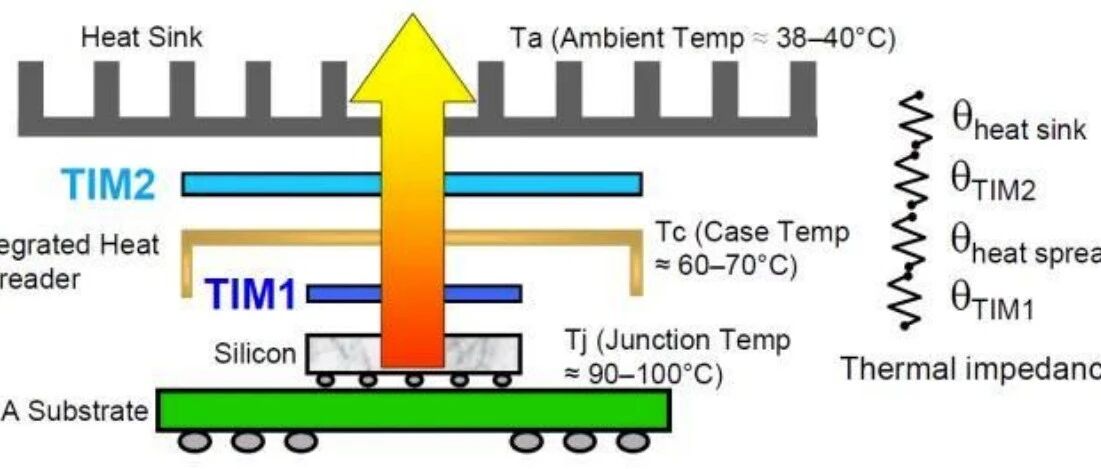
Core Viewpoint - The article emphasizes the urgent need to address the "hotspot" issues in semiconductor chips due to increasing power density and shrinking sizes, highlighting diamond as an ideal thermal management material due to its superior thermal conductivity and other advantageous properties [2][5][10]. Group 1: Thermal Management Challenges - The semiconductor industry is progressing towards smaller nodes (2nm, 1.6nm, and 1.4nm), leading to unprecedented thermal management challenges as chips generate significant heat during operation [2][5]. - Ineffective heat dissipation can create hotspots within chips, resulting in performance degradation, hardware damage, and increased costs. For instance, when chip surface temperatures reach 70-80°C, reliability decreases by 10% for every 1°C increase [5][6]. Group 2: Advantages of Diamond as a Thermal Material - Diamond exhibits the highest thermal conductivity among known materials, reaching 2000 W/m·K, which is significantly higher than silicon, silicon carbide, and gallium arsenide [3][10]. - Diamond's bandgap of approximately 5.5 eV allows it to operate stably in high-temperature and high-voltage environments, making it suitable for high-power electronic devices [3][11]. - The material's exceptional current-carrying capacity, mechanical strength, and radiation resistance further enhance its reliability and lifespan in demanding conditions [3][11]. Group 3: Applications and Innovations - Diamond can be utilized in various forms, including diamond substrates, heat sinks, and microchannel structures, to effectively manage heat in semiconductor applications [10][11]. - Companies like Akash Systems have developed diamond cooling technologies that can reduce GPU hotspot temperatures by 10-20°C, cut fan speeds by 50%, and extend server lifespans while saving millions in cooling costs [10]. - The Diamond Foundry has made significant advancements in producing single-crystal diamond wafers, which can enhance GPU performance by three times and reduce temperatures by 60% [38][40]. Group 4: Industry Developments and Company Cases - The diamond industry in China is concentrated in regions like Henan, Shandong, and Jiangsu, with companies like Zhongnan Diamond and Huanghe Whirlwind dominating the market [31]. - Wald has reported a revenue of 679 million yuan in 2024, with a focus on CVD diamond heat sink products, indicating a growing market for diamond-based thermal management solutions [54][59]. - Power Diamond is collaborating with Taiwan's Jiesao Enterprise to enhance its capabilities in diamond functional materials, particularly for semiconductor cooling applications [65].

突然火起来的钻石散热是AI的终极散热?
傅里叶的猫· 2025-10-20 09:41
Core Insights - The demand for optical modules is strong, but there is a shortage of components, which may hinder supply [1] - The diamond cooling technology has emerged as a revolutionary solution to the heat dissipation challenges faced by next-generation AI chips [7][19] Group 1: Diamond Cooling Technology - Diamond cooling technology can significantly enhance GPU performance, increasing computing power by three times while reducing core temperature by 60% [19] - The unique thermal conductivity of diamond allows for rapid heat dissipation, addressing the heat accumulation issues in high-power chips [20] - Akash Systems has developed a diamond cooling solution that can lower GPU hotspot temperatures by 10-20 degrees Celsius, leading to reduced fan speeds and extended device lifespan [20][30] Group 2: Market Potential and Growth - The diamond cooling market is projected to grow from $0.5 million in 2025 to $15.24 billion by 2030, with a compound annual growth rate (CAGR) of 214% [33] - The penetration rate of diamond cooling technology in various markets, including data centers and electric vehicles, is expected to increase significantly over the next decade [33] Group 3: Industry Challenges - The industrialization of diamond chips faces challenges such as stringent material quality requirements, doping technology limitations, and high cost pressures [26][27] - The cost of synthetic diamond remains significantly higher than traditional semiconductor materials, posing a barrier to widespread adoption [27] Group 4: Company Developments - Companies like Akash Systems are receiving significant funding to advance diamond cooling technologies, highlighting the strategic importance of this innovation [30] - Various companies are actively developing diamond-based materials for semiconductor applications, with notable advancements in heat sink products for 5G and AI technologies [32]