Boston Scientific Corporation

Search documents
Halper Sadeh LLC Encourages PEN and RAPT Shareholders to Contact the Firm to Discuss Their Rights
Globenewswire· 2026-01-27 19:16
Group 1 - Halper Sadeh LLC is investigating potential violations of federal securities laws and breaches of fiduciary duties related to the sale of Penumbra, Inc. to Boston Scientific Corporation for $374.00 in cash or 3.8721 shares of Boston Scientific common stock [1] - RAPT Therapeutics, Inc. is being investigated for its sale to GSK plc for $58.00 per share [2] - The firm may seek increased consideration for shareholders, additional disclosures, and other relief on behalf of shareholders, operating on a contingent fee basis [3] Group 2 - Shareholders are encouraged to contact Halper Sadeh LLC free of charge to discuss their legal rights and options [4] - Halper Sadeh LLC represents investors globally who have experienced securities fraud and corporate misconduct, recovering millions for defrauded investors [4]



Penumbra (PEN) Climbs to All-Time High on $14.5-Billion Merger
Yahoo Finance· 2026-01-16 16:33
Core Viewpoint - Penumbra Inc. is set to be acquired by Boston Scientific Corporation for $14.5 billion, leading to a significant increase in its stock price, reaching an all-time high of $352.15 during intra-day trading before closing at $350.49, an increase of 11.82% [1][3]. Group 1: Acquisition Details - Boston Scientific has entered into a definitive agreement to acquire Penumbra at a price of $374 per share, which will be a combination of cash and stock [2][3]. - Shareholders of Penumbra will have the option to receive either $374 in cash or 3.8721 shares of Boston Scientific common stock for each share of PEN they own [3]. Group 2: Strategic Implications - The acquisition is expected to be completed in 2026, pending regulatory approvals and other customary closing conditions [3]. - Adam Elsesser, Chairman and CEO of Penumbra, will join the board of directors at Boston Scientific upon the transaction's completion [4]. - Boston Scientific views this acquisition as an opportunity to enter new, fast-growing segments within the vascular space, enhancing their revenue and margins over time [4][5].
SHAREHOLDER ALERT: The M&A Class Action Firm Announces An Investigation of Penumbra, Inc. (NYSE: PEN)
Prnewswire· 2026-01-15 20:30
Core Viewpoint - Monteverde & Associates PC is investigating the proposed sale of Penumbra, Inc. to Boston Scientific Corporation, questioning the fairness of the deal for Penumbra shareholders [1]. Company Overview - Monteverde & Associates PC is recognized as a Top 50 Firm in the 2024 ISS Securities Class Action Services Report and has recovered millions for shareholders [1]. - The firm is located in the Empire State Building, New York City, and specializes in class action securities litigation [2]. Transaction Details - Under the proposed transaction, Penumbra shareholders are expected to receive either 3.8721 shares of Boston Scientific common stock or $374.00 in cash for each share of Penumbra common stock [1].

AMN Stock Gains Following Q3 Earnings & Revenue Beat, Margins Down
ZACKS· 2025-11-07 18:51
Core Insights - AMN Healthcare Services, Inc. reported adjusted earnings per share (EPS) of 39 cents for Q3 2025, a decline of 36.1% year over year, but exceeded the Zacks Consensus Estimate by 105.3% [1] - The company's revenues for the third quarter were $634.5 million, down 7.7% year over year, yet surpassed the Zacks Consensus Estimate by 3.2% [2][9] - AMN Healthcare's gross profit fell 13.4% year over year to $184.4 million, with a gross margin contraction of 193 basis points to 29.1% [7][9] Revenue Breakdown - The Nurse and Allied Solutions segment generated revenues of $361.5 million, down 9.5% year over year, with travel nurse staffing revenues declining by 20% [4] - The Physician and Leadership Solutions segment reported revenues of $178.2 million, a decrease of 1.3% year over year, while locum tenens revenues increased by 3% to $146 million [5] - The Technology and Workforce Solutions segment's revenues totaled $94.8 million, down 11.8% year over year, with a significant 32% decline in vendor management systems revenue [6] Margin Analysis - AMN Healthcare's adjusted operating profit for the quarter was $45.8 million, reflecting a 27.7% decline from the prior year, with an adjusted operating margin contraction of 200 basis points to 7.2% [7][9] - Selling, general & administrative expenses decreased by 7.4% year over year to $138.6 million [7] Financial Position - At the end of Q3 2025, AMN Healthcare had cash and cash equivalents of $52.6 million, up from $41.5 million at the end of Q2 2025, while total debt decreased to $850 million from $920 million [10] - Cumulative net cash provided by operating activities was $193.9 million, down from $247.6 million a year ago [10] Future Guidance - For Q4 2025, AMN Healthcare expects revenues in the range of $715 million to $730 million, indicating a decline of 1-3% compared to the prior year [11] - The company anticipates a 1-3% increase in revenues for the Nurse and Allied Solutions segment, while expecting a 14-16% decline in the Technology and Workforce Solutions segment [12] Overall Assessment - The overall top-line performance in Q3 2025 was disappointing, with declines across all segments and margin pressures [13] - However, there were positive indicators such as an increase in Allied revenues and expectations for strong sequential volume growth in travel nursing for Q4 [14]

Elutia Reports Third Quarter 2025 Financial Results; Closes $88 Million Sale of BioEnvelope Business to Boston Scientific Corporation; Funds NXT-41x Development
Globenewswire· 2025-11-06 21:05
Core Insights - Elutia Inc. is advancing its NXT-41x biomatrix technology to address a significant unmet medical need in plastic and reconstructive surgery, targeting a market opportunity estimated at $1.5 billion in the U.S. [1][5] Business Highlights - The CEO emphasized the importance of addressing infection in breast reconstruction, which affects 15-20% of cases, and highlighted the company's antibiotic-eluting technology aimed at preventing such infections [4]. - Elutia sold its BioEnvelope business to Boston Scientific for $88 million, with proceeds allocated to eliminate debt and fund the NXT-41x development program [5]. - The company is progressing with the NXT-41x biomatrix, which is expected to receive FDA clearance for the base matrix in the second half of 2026 and for the drug-eluting version in the first half of 2027 [5]. - Elutia's balance sheet has been strengthened through the sale of the BioEnvelope business, allowing for the full funding of the NXT-41x platform development without shareholder dilution [5]. - Guido J. Neels has been appointed to the Board of Directors, bringing experience from his previous role as COO of Guidant Corporation [5]. Financial Results - For Q3 2025, Elutia reported net sales of $3.3 million, a decrease from $3.7 million in Q3 2024, with SimpliDerm sales at $2.4 million and cardiovascular products at $0.9 million [6]. - The gross margin on a GAAP basis improved to 55.8% from 48.9% year-over-year, while the adjusted gross margin rose to 63.9% from 56.3% [6][20]. - Total operating expenses decreased to $7.1 million from $11.0 million, resulting in a loss from operations of $5.2 million, down from $9.2 million in the prior year [6]. - The net loss from continuing operations was $0.4 million, compared to a net income of $3.3 million in Q3 2024 [6]. - As of September 30, 2025, the cash balance was $4.7 million, bolstered by $80.3 million received from the BioEnvelope business sale [7]. Market Opportunity - The NXT-41x biomatrix is positioned to tackle serious complications faced by one in three patients undergoing breast reconstruction, addressing a critical need in the $1.5 billion U.S. market [5].

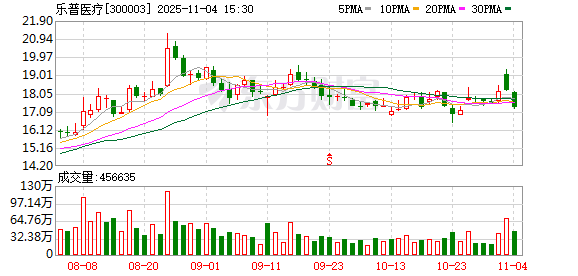
300003 突破国际巨头垄断
Shang Hai Zheng Quan Bao· 2025-11-04 15:47
Core Viewpoint - Lepu Medical's newly approved rechargeable implantable deep brain stimulation (DBS) device marks a significant breakthrough in China's neuroregulation field, traditionally dominated by international giants, providing new treatment options for Parkinson's disease patients [2][3][8] Product Approval - Lepu Medical announced that its subsidiary has received NMPA registration approval for its rechargeable implantable DBS system, which includes the stimulator, electrode components, and extension lead kit, aimed at assisting late-stage primary Parkinson's disease patients whose symptoms are not effectively controlled by medication [3] - The DBS device is expected to contribute to revenue growth in the coming year, with plans for additional products like the implantable cardiac contractility modulator (CCM) to be submitted for approval in early 2024 [3] Treatment Mechanism - Deep Brain Stimulation (DBS) involves implanting electrodes in specific brain areas to deliver electrical pulses, helping to alleviate symptoms of Parkinson's disease, which affects over 5 million patients in China as of 2021 [4] - The new product is positioned as a key component of Lepu Medical's neuroregulation business, expected to drive performance growth [4] Market Potential - The global deep brain stimulation system market is projected to grow from approximately $1.738 billion in 2024 to $3.919 billion by 2031, with a CAGR of 12.5% from 2025 to 2031 [6] - The rechargeable implantable DBS market is expected to reach around 690 million yuan in 2024, with a projected CAGR of 4.7% until 2031 [6] Domestic Market Landscape - The global DBS market is currently dominated by companies like Boston Scientific, Medtronic, and Abbott, while domestic competitors include Lepu Medical and Beijing Pinchi Medical [7] - The neuroprosthetics market is anticipated to grow at a CAGR of 13% from 2025 to 2031, driven by the rising prevalence of neurological diseases due to an aging population [7] Industry Trends - The increasing incidence of neurological diseases such as Parkinson's and Alzheimer's is expected to boost demand for neuroprosthetic devices [7] - Future advancements in neuroprosthetic devices are likely to incorporate AI and machine learning technologies to enhance functionality and precision [7]


Here’s Why Masimo Corporation (MASI) Declined in Q3
Yahoo Finance· 2025-11-04 12:11
Core Viewpoint - Baron Health Care Fund's performance in Q3 2025 was 5.39%, slightly outperforming the Russell 3000 Health Care Index at 5.05%, but lagging behind the broader Russell 3000 Index at 8.18% [1] Fund Performance - The fund's performance was primarily impacted by solid stock selection, which was offset by negative effects from active sub-industry allocations and cash holdings during a rising market [1] - The fund's top five holdings were highlighted as key picks for 2025 [1] Company Focus: Masimo Corporation - Masimo Corporation (NASDAQ:MASI) is a medical technology company known for its non-invasive patient monitoring technologies, particularly pulse oximeters [2][3] - In the last month, Masimo's stock returned -3.52%, and over the past 52 weeks, it lost 4.35% of its value, closing at $144.96 with a market capitalization of $7.87 billion on November 3, 2025 [2] - The fund noted that poor stock selection in health care equipment, including Masimo, was a significant drag on performance, contributing to a 160 basis point decline [3] Performance Concerns - Masimo's recent quarterly results raised concerns about a steep decline in incremental contract value, although the company maintains a strong backlog of unrecognized contract revenue [3] - The company aims to more than double its earnings per share within five years through stable compounding in its core business and disciplined spending [3] Hedge Fund Interest - Masimo Corporation was held by 36 hedge fund portfolios at the end of Q2 2025, a slight decrease from 37 in the previous quarter [4] - While Masimo is recognized for its potential, the company is not considered among the most popular stocks among hedge funds, with certain AI stocks viewed as having greater upside potential and less downside risk [4]

Resonant Link Medical Appoints MedTech Industry Leader Raymond W. Cohen as Chair of its Board of Directors
PRWEB· 2025-09-30 10:41
Cohen's appointment comes as the company accelerates growth and its Aurion WPT™ wireless power platform advances toward becoming the standard for implantable medical devices. BURLINGTON, Vt., Sept. 30, 2025 /PRNewswire-PRWeb/ -- Resonant Link Medical, an innovative medical technology company redefining wireless power and data transfer for implantable devices, today announced the appointment of veteran medical technology executive Raymond W. Cohen as the Chair of its Board of Directors. Cohen's appointment c ...


Medtech Leader Erica Rogers Joins Ceribell Board of Directors
Globenewswire· 2025-09-22 12:00
Core Insights - CeriBell, Inc. has appointed Erica Rogers to its Board of Directors, bringing over 30 years of experience in leading high-growth medical device companies [1][2] - The company aims to expand patient access to timely brain monitoring in acute care settings, leveraging Rogers' expertise in scaling healthcare companies [1][3] Company Overview - CeriBell is a medical technology company focused on transforming the diagnosis and management of serious neurological conditions [5] - The Ceribell System is a point-of-care EEG platform designed for rapid diagnosis and continuous monitoring of patients, currently utilized in over 550 hospitals across the U.S. [5][3] - The system is FDA-cleared for detecting suspected seizure activity and combines portable hardware with AI-powered algorithms [5] Leadership Experience - Erica Rogers previously served as CEO of Silk Road Medical, leading the company from a 25-person startup to a publicly traded entity with over 500 employees and revenue exceeding $175 million [2] - Rogers has held board positions in various healthcare companies, emphasizing innovation and culture [2] Strategic Goals - The appointment of Rogers is seen as pivotal for CeriBell's growth phase, aiming to establish the Ceribell System as the standard of care in brain monitoring [3] - The company is focused on broadening access to its EEG technology to improve patient outcomes in critical care [3]
DXCM Stock Falls as FDA Warnings Raise Concern for 15-Day G7 Approval
ZACKS· 2025-03-27 14:05
Core Viewpoint - DexCom (DXCM) is under regulatory scrutiny from the FDA due to a warning letter that may impact the approval of its upcoming 15-day G7 continuous glucose monitor (CGM) [1][2][10] Regulatory Concerns - The FDA's warning letter highlighted multiple violations, including the failure to submit a premarket notification for significant modifications to its sensors, which poses increased risks for users [1][2] - Concerns were raised regarding Dexcom's testing procedures for glucose and acetaminophen concentrations in both G6 and G7 CGMs, as well as issues related to dissolved oxygen content values in G6 sensors [2] Market Impact - Following the warning letter, DXCM shares fell by 1.9% on March 25, with a year-to-date decline of 7.2%, compared to a 2% decline in the industry and a 2.1% decrease in the S&P 500 Index [3] - A potential delay in obtaining clearance for the G7 sensor could result in a loss of market share, especially against competitors like Abbott's Libre, which has a longer wearable life [4] Sales and Distribution - Although the warning letter does not mandate an immediate recall, it may cause delays in regulatory approvals, and the company has halted commercial distribution of G7 with faulty sensors, potentially impacting first-quarter sales [5][6] Company Response - Dexcom has reaffirmed its commitment to regulatory standards and is working with the FDA to resolve issues, although the FDA has deemed the company's response as inadequate [9] - Despite the regulatory challenges, Dexcom remains confident that the warning letter will not materially affect the approval or launch of the 15-day G7 CGM, expected in the second half of the year [10]