Hewlett Packard Enterprise Company

Search documents
ExxonMobil Integrates 4D Seismic Tech for Faster Oil Discovery
ZACKS· 2025-03-17 15:25
Core Insights - Exxon Mobil Corporation (XOM) is enhancing its oil and gas exploration capabilities by integrating 4D seismic technology with its high-performance computing system, Discovery 6, which is expected to reduce seismic processing times and improve subsurface imaging [1][2][4] Group 1: Technology Integration - The integration of 4D seismic technology with Discovery 6 supercomputer, developed in collaboration with Hewlett Packard Enterprise and NVIDIA, aims to provide up to four times the computational power compared to its predecessor, Discovery 5 [2][6] - The use of 4D seismic imaging allows ExxonMobil to create high-resolution time-lapse models of underground reservoirs, leading to more accurate predictions of oil and gas movements [3][8] - The elastic full wavefield inversion (eFWI) technology will significantly reduce the seismic data processing time from months to weeks, enhancing subsurface imaging [4][6] Group 2: Financial Implications - ExxonMobil estimates that these technological advancements could unlock over $1 billion in potential value from its first six floating production storage and offloading (FPSO) units in Guyana's Stabroek Block [5] - The company is focused on increasing efficiency while maintaining capital discipline, aligning with its broader strategic goals [5][8] Group 3: Future Developments - Discovery 6 is scheduled for installation in the first half of 2025 and will feature energy-efficient direct liquid cooling to optimize performance [6][7] - The investment in Discovery 6 represents a significant leap in computational capabilities, following the recognition of Discovery 5 as the 16th fastest supercomputer globally in 2022 [7]



Will Trump's Latest Tariff War With China Hurt QCOM Stock?
ZACKS· 2025-03-10 13:01
Core Viewpoint - Qualcomm is facing significant challenges due to increased tariffs on imports from China, which have negatively impacted its stock performance and revenue generation, particularly as China accounts for 66% of its total revenues in fiscal 2024 [1][3]. Group 1: Market Challenges - The U.S.-China trade tensions have led to various trade restrictions, affecting Qualcomm's ability to sell high-tech equipment and components to China, which has resulted in adverse revenue impacts [3]. - Qualcomm's operations in China are becoming increasingly difficult, with the company having a significant presence in over 12 cities and being a key supplier to local smartphone manufacturers [2]. - High operating expenses and R&D costs have contributed to declining margins for Qualcomm, with expectations of continued softness in the handset market and increased competition from low-cost chip manufacturers [4]. Group 2: Growth Opportunities - Despite short-term challenges, Qualcomm is benefiting from its investments in a licensing program and solid growth in its Snapdragon portfolio, which is expected to drive long-term revenue targets [5]. - The company is expanding its AI capabilities with the launch of the Snapdragon X chip for mid-range AI desktops and laptops, aiming to diversify its revenue stream beyond the smartphone industry [9][10]. - Qualcomm's automotive business is experiencing significant growth, with automotive revenues surging 61% to a record high of $961 million in the first quarter of fiscal 2025, driven by its Snapdragon Digital Chassis platform [11]. Group 3: Financial Performance - Qualcomm shares have declined 5.6% over the past year, underperforming the industry growth of 13.7%, although it has outperformed some peers [12]. - Earnings estimates for Qualcomm for fiscal 2025 have increased by 12.4% to $11.76, indicating positive sentiment among investors [15]. - The company is focusing on operational efficiency and portfolio enhancements to drive value for customers, which is reflected in improving earnings estimates [16].


HPE(HPE) - 2025 Q1 - Earnings Call Transcript
2025-03-07 01:18
Financial Data and Key Metrics Changes - The company reported Q1 revenue of $7.9 billion, representing a 17% year-over-year growth, marking the fourth consecutive quarter of accelerated revenue growth [36][38] - Non-GAAP diluted net earnings per share were 49 cents, consistent with the company's outlook range [41] - Non-GAAP gross margin was 29.4%, down 680 basis points year-over-year, primarily due to a higher mix of server revenue and lower contributions from Intelligent Edge [39] - Free cash flow was negative $877 million, in line with normal seasonal patterns [54] Business Line Data and Key Metrics Changes - Server revenue reached $4.3 billion, up 30% year-over-year, although it fell sequentially due to the timing of AI systems deals [42] - Intelligent Edge revenue was $1.1 billion, up 2% quarter-over-quarter but down 4% year-over-year [48] - Hybrid cloud revenue grew 11% year-over-year to $1.4 billion, although it declined 12% sequentially [50] - Financial services generated $873 million in revenue, up 2% year-over-year and flat quarter-over-quarter [53] Market Data and Key Metrics Changes - The company experienced double-digit year-over-year orders growth across all key geographies and products, including campus switching [20] - AI systems revenue was $900 million in Q1, up from about $400 million last year, but down sequentially as expected due to chip availability and customer readiness [44][24] - The AI systems backlog was $3.1 billion, up 29% quarter-over-quarter [22] Company Strategy and Development Direction - The company plans to reduce its employee base by 5% over the next twelve to eighteen months, targeting approximately 2,500 positions to better align its cost structure with its business mix and long-term strategy [16] - The company is committed to closing the Juniper acquisition, which is expected to deliver at least $450 million in gross annual run rate synergies to shareholders within three years [10] - The company aims to leverage its global supply chain to mitigate the impact of recent tariff policies [12] Management's Comments on Operating Environment and Future Outlook - Management acknowledged that while Q1 performance met expectations, execution could have been better, particularly in the server segment [13][33] - The company expects continued pressure on server operating margins in the near term but anticipates improvements in the back half of fiscal 2025 [15][34] - Management expressed confidence in achieving revenue growth of 7% to 11% for fiscal 2025, with a significant portion weighted towards the second half [60] Other Important Information - The company is implementing cost-saving measures, targeting discretionary spending, and has reduced non-GAAP operating expenses to a record low of 19% of revenue [40] - The company expects to achieve at least $350 million in gross savings by fiscal 2027, with about 20% of the savings expected by the end of this year [57] Q&A Session Summary Question: How much of the operating profit dollar headwind is from tariff assumptions? - Management indicated that the guidance includes a seven cents impact from tariffs for the year, with four cents expected in Q2, primarily affecting the server business [91][92] Question: What gives confidence in revenue growth and operating margin expansion in the back half of the year? - Management highlighted three critical areas: improved server execution, mitigation of tariffs, and the impact of the cost efficiency program as drivers for profitability [122] Question: How is the customer mix changing? - Management noted a balanced approach targeting both service provider model builders and enterprise customers, with a focus on maintaining a solid pipeline and addressing the needs of various segments [110][112]

Data Center Market Research 2024: Exponential Increase in Data Generation from Digital Transformation Initiatives Fueling Demand and Growth - Global Trends and Forecasts to 2029
Globenewswire· 2025-03-05 09:42
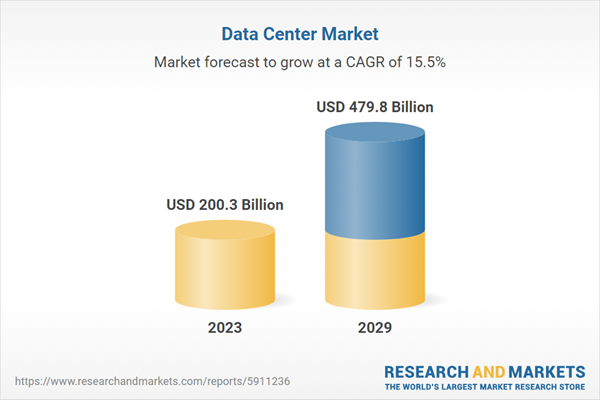
Core Insights - The Data Center Market was valued at USD 200.3 Billion in 2023 and is projected to reach USD 479.80 Billion by 2029, with a compound annual growth rate (CAGR) of 15.50% [1][13]. Market Drivers - The growth of the data center market is driven by the exponential increase in data generation due to digital transformation, the rise of cloud computing, and the adoption of technologies such as artificial intelligence (AI), machine learning (ML), and the Internet of Things (IoT) [1][4]. - The demand for cloud services is a significant growth driver, as businesses migrate to cloud-based environments, necessitating robust and scalable data centers [5][6]. - Edge computing is becoming increasingly important, requiring data centers to be deployed closer to end-users to enhance performance and reduce latency [4][9]. Energy Efficiency and Sustainability - Data centers are exploring alternative cooling methods, such as liquid cooling and free cooling, to improve energy efficiency and reduce energy consumption [7][8]. - The adoption of energy-efficient hardware and virtualization technologies is crucial for optimizing overall energy usage in data centers [8]. - There is a growing emphasis on sustainability, with companies investing in renewable energy sources to power their operations and reduce their carbon footprint [11][12]. Edge Computing and 5G Impact - The need for real-time data processing drives the adoption of edge computing, which reduces latency and enhances user experiences [9][10]. - The rise of 5G networks is expected to further propel the demand for edge data centers, enabling new applications that require ultra-fast connectivity [10]. Competitive Landscape - Major players in the data center market include NTT Communications, IBM, Hitachi, Cisco, Amazon, Oracle, SAP, Microsoft, Hewlett Packard Enterprise, and Equinix [14][17]. Market Outlook - The report covers various aspects of the data center market, including types, density, end-users, and regional analysis, providing a comprehensive outlook for the period from 2023 to 2029 [15][20].