
Jefferies Financial

Search documents
Jefferies Financial Continues To Be A Bullish Case, Ahead Of Upcoming Earnings Call
Seeking Alpha· 2025-12-30 16:40
Core Insights - Albert Anthony is a Croatian-American business author and analyst contributing to Seeking Alpha and other financial platforms, with a focus on Real Estate Investment Trusts (REITs) [1] - He has a background in business information systems and experience at Charles Schwab, which supports his analytical capabilities in equities research [1] - Anthony operates his own boutique equities research firm, Albert Anthony & Company, remotely from Texas, and is actively involved in the REIT investment space [1] Company Overview - Albert Anthony & Company is a Texas-registered business that provides general market commentary and research based on publicly available data [1] - The firm does not manage client funds or provide personalized financial advisory services, focusing instead on delivering actionable insights [1] Industry Engagement - Anthony has participated in numerous business and innovation conferences in both the US and Croatia, enhancing his industry knowledge and network [1] - He is also expanding his presence on YouTube, discussing REITs and sharing insights from his investment experiences [1]



刚刚!黑色星期五!原因找到了
Zhong Guo Ji Jin Bao· 2025-10-17 07:55
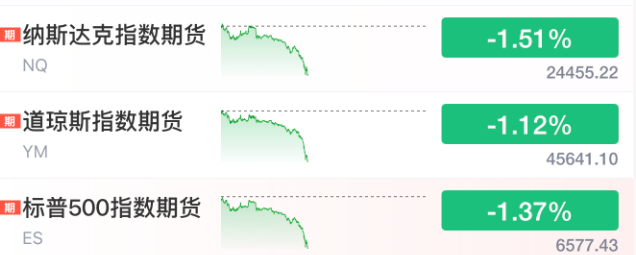
Market Overview - On October 17, global markets experienced a significant downturn, with major indices in the US, Japan, and Europe all reporting declines [2][3][4] - The US stock futures continued to fall, with the Nasdaq 100 futures down 1.5%, S&P 500 futures down 1.4%, and Dow futures down 1% [2] - The Japanese Nikkei futures dropped approximately 2% after market close, while European markets opened with collective declines [3] A-share Market Performance - The A-share market opened lower and continued to decline throughout the day, with the Shanghai Composite Index down 1.95%, the Shenzhen Component down 3.04%, and the ChiNext Index down 3.36% [4] - Only 602 stocks rose, while 4,783 stocks fell, indicating a broad market sell-off [4][5] Hong Kong Market Performance - The Hang Seng Index fell by 2.5%, and the Hang Seng Tech Index dropped over 4% [6] Key Factors Behind the Decline - Concerns over a potential credit crisis were triggered by the significant drop in stock prices of two US regional banks, Zions Bancorp and Western Alliance Bancorp, due to fraudulent loans related to commercial mortgage-backed securities [6] - Zions Bancorp's stock plummeted 13% after announcing a $50 million loan write-off, while Western Alliance Bancorp's stock fell nearly 11% [6] - The KBW Bank Index recorded its largest decline in six months, with a total market value loss exceeding $100 billion across 74 large US banks [6] - Additional loan defaults, including the bankruptcy of Tricolor Holdings and First Brands Group, have raised further concerns about the stability of the credit market [7] - Market fears were compounded by potential setbacks in US-China trade relations, particularly with Micron's plans to halt the supply of server chips to data centers in China [7]
First Brands Boss Resigns and Jefferies Seeks to Calm Its Investors
Yahoo Finance· 2025-10-13 13:07
Core Insights - First Brands, an auto-parts supplier, has filed for bankruptcy with $10 billion in debt, leading to the resignation of CEO Patrick James due to accounting irregularities [2][3] - Jefferies Financial has limited exposure to First Brands, estimated at approximately $45 million, which it claims can be easily absorbed without impacting its financial stability [4][7] Company Developments - Patrick James, the founder and sole equity owner of First Brands, resigned after the company faced scrutiny over its financial practices [3] - The company expanded rapidly by acquiring 25 automotive-parts suppliers, primarily using debt [2] Financial Implications - Jefferies Financial reported a significant exposure of about $715 million to First Brands through its Point Bonita Capital investment fund, but reassured investors that losses would be manageable [4][5] - First Brands had $2.3 billion owed to purchasers of receivables that were unpaid at the time of bankruptcy, indicating potential steep losses for lenders [6] Market Reactions - Jefferies Financial's stock fell 18% following the news of First Brands' bankruptcy, but the bank's leadership believes the market reaction was exaggerated and expect a correction as more information becomes available [4][8]
Vitesse (VTS) FY Conference Transcript
2025-08-27 20:02
Vitesse Energy (VTS) FY Conference Summary Company Overview - Vitesse Energy operates primarily as a non-operated participant in oil and gas development, focusing on the Bakken Play in North Dakota, with over 95% of production from this region [3][4] - The company has a diversified asset base with interests in over 7,000 wells, averaging 2.5% to 3% ownership [4] Key Financial Metrics - Vitesse currently offers a dividend yield of approximately 9%, with an annual dividend of $2.25 per share [6][29] - The company has a conservative balance sheet, targeting a debt-to-EBITDA ratio of less than 1, currently at 0.6 [10] Recent Developments - Vitesse completed the acquisition of Lucero Energy for $200 million, which included operated properties and enhanced free cash flow, allowing for increased dividends [9][10] - The company has engaged in over 200 small acquisitions, investing more than $750 million to build its asset base [8] Operational Insights - Vitesse's assets are primarily undeveloped, with 80% still available for future drilling, indicating long-term growth potential [7] - The company has benefited from advancements in drilling technology, such as longer lateral wells, which have improved production efficiency [8][21] Production and Cost Efficiency - In Q2 2025, Vitesse reported a production increase of 46% year-over-year, averaging 19 Mboe per day [26] - The average cost to drill a well has decreased by 26% since 2014, from $973 to $716 per lateral foot, adjusted for inflation, representing a 46% decline [18][19] Strategic Focus - Vitesse prioritizes returning capital to shareholders through dividends rather than share buybacks or variable dividends [29] - The company employs a robust database for analyzing acquisitions, integrating public data with proprietary information to assess investment opportunities [12][38] Risk Management - Vitesse maintains a strong hedging strategy, with 70% of its oil production hedged for 2025 at an average price of $70 [43] - The company uses a combination of swaps for oil and natural gas callers to optimize its hedging strategy [44] Market Position and Competitive Landscape - The non-operated model has gained popularity, with increased competition from private equity and family offices, but Vitesse believes it retains a competitive edge due to its deep knowledge of the Bakken region [54][56] Long-term Outlook - Vitesse aims to leverage technological advancements and its extensive undeveloped acreage to sustain growth over the next 30 years [22][24] - The company is focused on maintaining a long-term annuitized cash flow stream, positioning itself favorably against inflation [47] Conclusion - Vitesse Energy's strategic focus on dividends, conservative financial management, and technological innovation positions it well for future growth in the oil and gas sector, particularly within the Bakken Play [48][56]

Retail Sales Data Signals a Surge: The E-Commerce Stock Picks
MarketBeat· 2025-03-19 12:46
Core Insights - The retail sector is experiencing a shift where consumers are reducing discretionary spending and focusing on defensive items, while non-store retailers are seeing significant sales growth [2][5]. Retail Sector Analysis - Retail sales data indicates a 2.4% increase over the past month and a 6.5% increase year-over-year, benefiting e-commerce companies like Amazon, Shopify, and eBay [3]. - Non-store retailers, particularly Amazon, have seen the largest sales expansion, attributed to their competitive pricing and delivery services [5]. Company-Specific Insights Amazon - Amazon's stock forecast shows a target price of $260.65, indicating a potential upside of 35.18% from the current price of $192.82 [3][6]. - Institutional investment in Amazon reached $81 billion in the last quarter, with Mackenzie Financial increasing their holdings by 28.1% to a total of $1.4 billion [4]. Shopify - Shopify's stock forecast is set at $126.31, suggesting a 34.52% upside from the current price of $93.90, with a price-to-book ratio of 10.8x, indicating a premium valuation [8][9]. - Analysts from Jefferies Financial estimate Shopify's fair value at around $130 per share, implying a potential upside of 37% [10]. eBay - eBay's stock forecast is $65.54, with a slight upside of 0.46% from the current price of $65.24, showing strong momentum as it trades at 94% of its 52-week high [11]. - Short interest in eBay has decreased by 9.3% over the past month, indicating a shift in sentiment among short sellers [12]. - Ameriprise Financial increased their holdings in eBay by 12.4%, reflecting bullish confidence in the stock [13].


