
Staples

Search documents
‘Staples Baddie’ went viral. Here’s what the retailer is doing about its Gen Z employee’s internet fame
Yahoo Finance· 2026-02-19 20:45
By now, the so-called “Staples Baddie” may have crossed your feed with her tutorials and informational videos exploring her workplace. TikTok creator @blivxx, known online as Oblivion, started getting attention in January for highlighting niche services and products offered at Staples. Most Read from Fast Company It’s a distinctly Gen Z approach to social media. Videos from Staples Baddie (whose real name is Kaeden) feature ASMR, heavy slang, and an authenticity that has viewers hooked. Comments on Ka ...
CFOs On the Move: Week ending Jan. 30
Yahoo Finance· 2026-01-30 09:29
Executive Changes - Progressive CFO John Sauerland will retire on July 3, having been with the company since 1990 and CFO since 2015. Andrew Quigg, the current chief strategy officer, will succeed him [2] - Trade Desk appointed Tahnil Davis as interim CFO while searching for a permanent replacement. Davis has been with the company for nearly 11 years and was previously the chief accounting officer [3] - Frank Sluis will join athletics brand On as CFO on May 1, having previously served as CFO for Europe and Indonesia at Ahold Delhaize. He succeeds Martin Hoffmann, who will continue overseeing the finance organization until Sluis starts [4] - Brunt Workwear hired Stephen Stanton as CFO and COO, coming from ButcherBox where he was finance chief for over three years. He has a background in finance leadership roles at Athenahealth and Staples [5]


恒林股份:公司与IKEA等国际客户建立长期稳定合作
Zheng Quan Ri Bao Wang· 2026-01-09 13:54
证券日报网讯1月9日,恒林股份(603661)在互动平台回答投资者提问时表示,公司持续推动全球化战 略布局,与IKEA、NITORI、SHAW、LivingStyle、OfficeDepot、Staples、HomeDepot、Walmart、 Target等国际行业知名客户群体建立了长期稳定的合作关系,并打造多维度线上营销网络,着力提升渠 道覆盖率和市场占有率。 ...

恒林股份:公司与IKEA、NITORI、SHAW等国际行业知名客户群体建立了长期稳定的合作关系
Mei Ri Jing Ji Xin Wen· 2026-01-09 11:10
Core Viewpoint - The company is actively pursuing a global strategy and has established long-term partnerships with several well-known international clients in the office furniture sector, enhancing its market presence and channel coverage [2]. Group 1: Global Strategy and Partnerships - The company is focused on expanding its global presence and has formed stable collaborations with major international clients such as IKEA, NITORI, and Walmart [2]. - The company is enhancing its online marketing network to improve channel coverage and market share [2]. Group 2: Product Supply and Clientele - Investors inquired whether the company's ergonomic chairs and office furniture are supplied to major tech firms like NVIDIA and Apple [2].


Best of HR Works Podcast (Video)
HR Daily Advisor· 2025-12-30 10:00
Core Insights - The HR landscape is evolving with a focus on actionable solutions and expert advice to address pressing HR issues [1] - The concept of "Talent Outliers" is introduced, emphasizing the need for individuals who can transform and reframe existing systems [2] - The limitations of AI in HR are highlighted, stressing the importance of human judgment and the potential biases of algorithms [3] - A shift towards skills-based hiring is discussed, questioning the relevance of traditional filters like degrees and job titles [5] - The changing nature of entry-level jobs is examined, with a decline in job openings and the need for HR to adapt to the strengths of young workers [8] Group 1 - HR Works has been addressing key HR issues and providing solutions through expert discussions [1] - The emergence of "Talent Outliers" is crucial for driving technological transformation in organizations [2] - AI's inability to fully replace human judgment is a significant consideration for companies [3] Group 2 - The transition to skills-based hiring is gaining traction, focusing on what talent can do rather than traditional qualifications [5] - The future of entry-level jobs is uncertain, with a notable decline in openings and a need for HR to rethink these roles [8] - HR professionals are encouraged to leverage the strengths of young workers to enhance business outcomes [8]

Best of HRDA Frankly Speaking (Part 2)
HR Daily Advisor· 2025-12-29 10:00
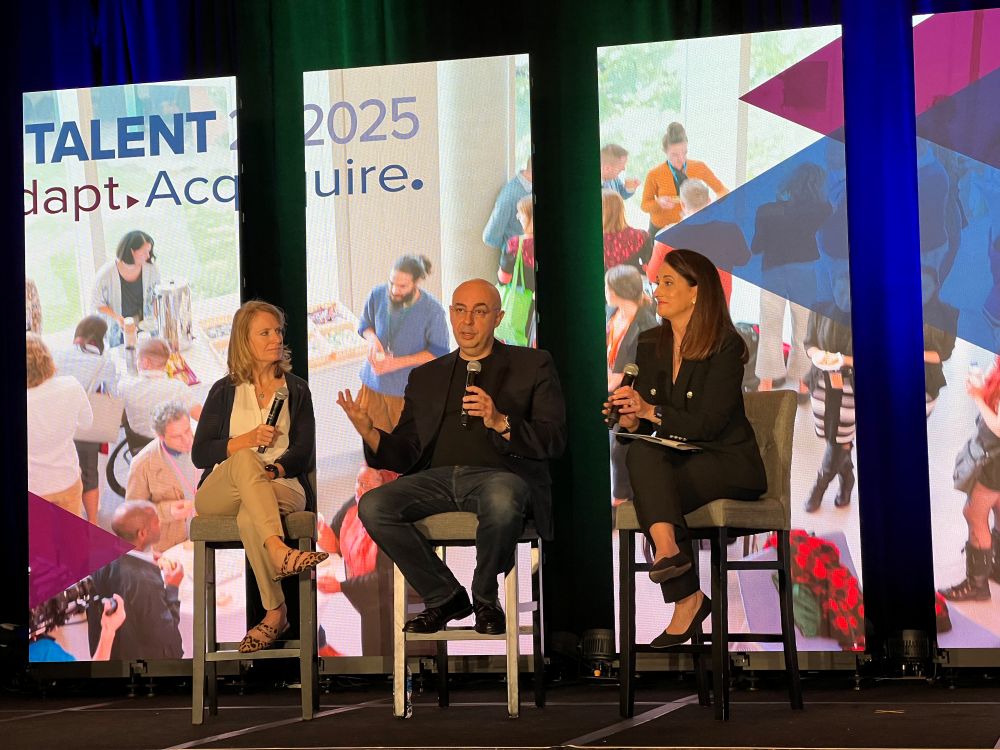
Core Insights - The HR industry is facing challenges such as employee engagement crises, the impact of AI on the workplace, and a skills gap between employer needs and employee capabilities [4] - The importance of creating an ecosystem for talent programs that work in conjunction is emphasized [4] - AI is seen as a tool for enhancing recruiting efficiency and cost savings, but HR leaders face challenges in gaining executive buy-in [7][8] Group 1: AI and Workforce Planning - AI was a central theme at SPARK Talent 2025, with discussions on its potential to improve recruiting efficiency [7] - HR professionals are encouraged to adopt predictive modeling technology for workforce planning to address business needs more rapidly [6] - The need for HR to transition from being order-takers to strategic architects of the workforce is highlighted as essential for demonstrating HR's value [9] Group 2: Talent Acquisition and Culture - The future workforce requires talent outliers who can change and reframe existing systems [1] - A supportive workplace culture is crucial for maintaining a confident and productive team [8] - The rise of workplace political conflict is noted, with 64% of U.S. employees experiencing political disagreements at work, which can distract from job performance [12][13] Group 3: Insights from Industry Leaders - Bertrand Dussert from Staples emphasizes the need for talent that can innovate within the workforce [1] - Tabitha Wright from GE Healthcare challenges organizations to define their business goals and create an environment conducive to achieving them [3] - Peter Lynch from Cardinal Group Companies argues that AI can enhance the "Human Advantage" in the workplace [11]
AI is reshaping how Americans shop. Here’s how Target’s top tech leader says the retailer is adapting
Yahoo Finance· 2025-11-26 17:10
Core Insights - Target's chief information and product officer, Prat Vemana, recently engaged in a new shopping experience by purchasing sleepwear through OpenAI's ChatGPT, indicating a shift in consumer behavior towards AI-assisted shopping [1][2] Group 1: Retail Trends - Retailers are experiencing a significant transformation as they approach the holiday season, with U.S. spending projected to exceed $1 trillion for the first time [2] - Consumers are evolving from traditional web-based shopping to mobile commerce and now to AI-driven platforms like ChatGPT, indicating a new phase in shopping behavior [2] Group 2: Target's Strategy - Target aims to leverage AI technologies, including integration with ChatGPT, to reach its 800 million weekly active users and provide personalized shopping recommendations [3] - The company has introduced an AI-powered gift finder on its website and app, allowing users to receive natural-language responses to gift inquiries [3] Group 3: Financial Performance - Despite ongoing sales challenges, Target has seen a positive trend in digital sales, with a 2.4% increase in comparable digital sales reported for the fiscal third quarter [4][5] - Digital comparable sales have risen for seven consecutive quarters, showcasing a strong performance in the digital segment [5] Group 4: AI Implementation - Target has rolled out ChatGPT Enterprise to approximately 18,000 employees for various internal applications, including data summarization and spreadsheet queries [6] - A recent training session on ChatGPT was attended by 4,300 employees, with a satisfaction rate of 92% reported [6]

Major office supply retail chain closes another 100 stores.
Yahoo Finance· 2025-10-27 18:37
Core Insights - The Covid pandemic highlighted the decline in relevance of office supply stores like Office Depot and Office Max, as consumers turned to alternative sources for essential items like toilet paper [3][4][5] - The shift towards e-commerce and changing consumer habits have significantly impacted the demand for traditional office supplies, leading to store closures and reduced foot traffic [8][9] Group 1: Decline of Office Supply Stores - Office supply stores have become less essential over time due to changing consumer habits and increased competition from e-commerce giants like Amazon and Walmart [4][8] - The chains have closed over 1,110 stores since 2013, with more closures likely as the market continues to evolve [7][8] - The decline in demand for office supplies is attributed to the rise of remote and hybrid work models, which have reduced the need for in-store purchases [8] Group 2: Financial and Operational Changes - ODP Corporation, which owns Office Depot and Office Max, is undergoing a transition to private ownership under Atlas Holdings, aiming for operational efficiency and a leaner cost structure [9][10] - The move to go private may allow ODP to focus on long-term investments in various business areas, potentially strengthening its market position [10] - Financial strain from falling sales has led to restructuring efforts and a planned acquisition by Atlas Holdings [8][9]

How AI Challenges Recruiters to Shift from Admin to Strategy
HR Daily Advisor· 2025-10-16 09:58
Core Mandate - The strategic goal for Talent Acquisition (TA) should be augmentation rather than automation, emphasizing the importance of human involvement in HR functions [4] Accountability and Governance - As AI takes over more stages in TA, the need for accountability and trust among HR leaders increases significantly [5] - The concept of "red teaming" is essential, where teams actively challenge AI models to identify vulnerabilities, ensuring safety and effectiveness [7] Personal Branding - Individual HR professionals are encouraged to leverage insights to enhance their personal brand and influence within their organizations [6][9] Role Elevation - Recruiters should minimize time spent on administrative tasks and focus on understanding the business and collaborating with managers, allowing them to engage in more fulfilling tasks [7] - AI should be utilized for self-coaching and upskilling recruiters, with successful examples of creating effective learning plans to expedite development [7] Performance Standards - The introduction of AI will necessitate a significant improvement in productivity among the bottom 50th percentile of performers to match the top half [9] Small Team Advantage - Smaller organizations can capitalize on their agility to outpace larger competitors, leveraging speed to implement AI tools effectively [9]
Women We Admire Announces Top 50 Chief Creative Officers of 2025
PRWEB· 2025-10-03 15:30
Core Insights - Women We Admire has announced The Top 50 Chief Creative Officers of 2025, highlighting the importance of Chief Creative Officers in shaping brand identity and long-term strategy for organizations [1] - The honorees represent a diverse range of creative leadership, reflecting the evolving landscape of the industry [1] Group 1: Notable Honorees - Tuesday Poliak, Chief Creative Officer at RP3 Agency, has over two decades of experience and has led award-winning campaigns for major brands like Verizon Wireless and Pfizer [2] - Rosie Bardales, Chief Creative Officer of VML, oversees significant accounts such as Coca-Cola and Unilever, while also mentoring young creative talent [3] - Price Latimer, Chief Creative Officer and Co-Founder of Alkemis Paint, has 25 years of experience in various creative fields, focusing on wellness and sustainability [4] Group 2: Additional Honorees - The list includes other notable figures such as Lora Lukin (Publicis Groupe), Cathy Dean (Levi Strauss & Co.), and Renata Maia (Ogilvy), among others [6] - The full list of honorees can be accessed through the Women We Admire website [7]
