UnitedHealth Group Incorporated

Search documents
AM Best Assigns Credit Ratings to Berkshire Hathaway International Insurance Limited
Businesswire· 2026-02-04 14:50
Core Viewpoint - AM Best has assigned a Financial Strength Rating of A++ (Superior) and a Long-Term Issuer Credit Rating of "aaa" (Exceptional) to Berkshire Hathaway International Insurance Limited (BHIIL), indicating strong financial health and stability in its operations [1] Group 1: Ratings and Financial Strength - BHIIL is a wholly owned subsidiary of National Indemnity Company, which is the lead operating company of the National Indemnity Group, ultimately owned by Berkshire Hathaway Inc. [1] - The outlook for these Credit Ratings is stable, reflecting the strong consolidated balance sheet strength of National Indemnity, assessed as the strongest by AM Best [1] - BHIIL's ratings are supported by its very strong operating performance, favorable business profile, and appropriate enterprise risk management [1] Group 2: Business Operations - BHIIL plays a key role within the National Indemnity group, serving as a primary platform for accessing insurance business in the United Kingdom, Switzerland, and Italy, as well as international business in the London market [1] - The ratings also reflect the material reinsurance support from its parent company, enhancing BHIIL's operational capabilities [1]


UnitedHealth Exits South America With Banmedica Sale
Yahoo Finance· 2025-12-17 18:53
Core Insights - UnitedHealth Group has sold its last remaining business in South America, Banmedica, to Patria Investments for $1 billion [2] - The company has been exiting Latin America since 2022, with Banmedica being the final asset after previous sales in Brazil and Peru [3] - The exit from South America is part of CEO Stephen Hemsley's strategy to refocus the business [4] Financial Performance - UnitedHealth raised its annual profit forecast in October and anticipates growth to return in 2026, with momentum expected to build in 2027 [5] - The company incurred an $8.3 billion loss related to its South American exits, with $7.1 billion attributed to Brazil and $1.2 billion linked to Banmedica [5] Business Operations - Banmedica served approximately 1.7 million health insurance members and operated seven hospitals and 47 medical centers prior to the sale [4] - UnitedHealth operates primarily through two units: UnitedHealthcare and Optum, which encompass insurance, care delivery, data, and health services [6]
Stock Of The Day: Has United Health Found A New Trading Range?
Benzinga· 2025-10-17 16:57
Core Viewpoint - UnitedHealth Group Incorporated (NYSE:UNH) is currently presenting potential trading opportunities as its stock consolidates within a defined range between key support and resistance levels, making it the Stock of the Day [1]. Trading Strategies - Traders typically employ two strategies when a stock is rangebound: buying near the bottom of the range and selling close to the top, or waiting for a breakout either upwards or downwards [1]. Resistance Levels - The upper boundary of the trading range is approximately $372, which has become a resistance level due to remorse from buyers who purchased at this price previously [2][4]. - Many of these buyers placed sell orders when the stock rallied back to $372, creating significant resistance at this level [5]. Support Levels - The lower boundary of the trading range is around $352, where support has been established due to previous resistance at this level [6]. - Sellers who experienced remorse after selling at around $354 decided to repurchase their shares when the price dropped back to this level, resulting in strong buy orders that created support [7]. Market Psychology - Successful traders recognize that buyer's remorse can transform support into resistance, while seller's remorse can convert resistance into support, providing insights for profitable entry and exit points [7].


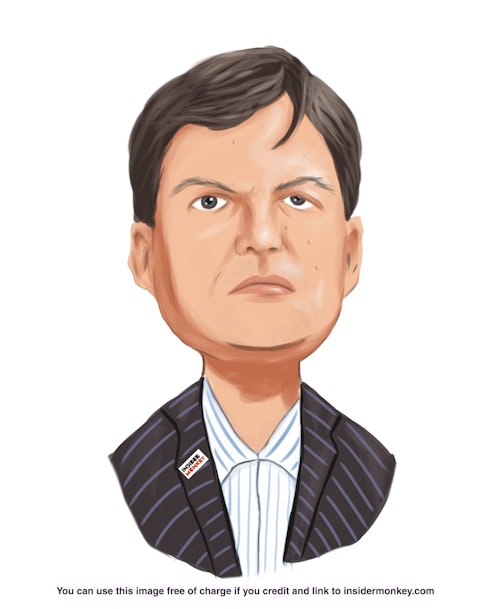
Michael Burry Stock Portfolio: 6 Stocks to Buy
Insider Monkey· 2025-10-10 05:58
Core Insights - Michael Burry, known for predicting the 2008 financial crisis, has made significant adjustments to his stock portfolio, reducing the number of stocks to roughly half and exiting Chinese stocks while betting against the US tech sector [1][2][3] Group 1: Portfolio Adjustments - Burry's portfolio adjustments include a focus on healthcare, retail, and biotechnology sectors, moving away from technology stocks amid the AI boom [5] - Scion Asset Management has achieved an 11.01% return over the past year and a 113.55% return over the past five years, showcasing Burry's successful investment strategy [4] Group 2: UnitedHealth Group Incorporated (NYSE:UNH) - UnitedHealth Group is a significant holding in Burry's portfolio, with an equity stake of $6.24 million and a stock performance increase of 16.58% from the end of Q2 to October 9 [9] - The company is facing pressure from shareholders to adopt an independent board chair due to concerns over governance and recent earnings misses [10][11] Group 3: MercadoLibre Inc. (NASDAQ:MELI) - MercadoLibre holds an equity stake of $7.84 million in Burry's portfolio, with a stock performance decline of 14.78% from the end of Q2 to October 9 [13] - The company is experiencing competitive pressures from Amazon and Shopee in Brazil, which may impact its earnings in the upcoming quarters [14][15] - Despite expected revenue growth, analysts forecast that MercadoLibre's EBIT and earnings will fall short of consensus estimates, indicating potential challenges ahead [16]

Baron WealthBuilder Fund Q2 2025 Shareholder Letter
Seeking Alpha· 2025-09-29 15:09
Core Viewpoint - The Baron WealthBuilder Fund has shown strong performance, recovering losses from the previous quarter and appreciating 10.45% in the June quarter, closely aligning with the S&P 500 Index and slightly lagging the MSCI ACWI Index [3][4]. Performance Summary - The Fund's annualized return since inception (December 29, 2017) is 12.91%, which is comparable to the S&P 500 Index's 13.76% and significantly ahead of the MSCI ACWI Index's 9.96% [5][6]. - For the June quarter, the Fund's performance was 10.45% for Institutional Shares, 10.31% for Retail Shares, and 10.39% for TA Shares, while the S&P 500 Index and MSCI ACWI Index returned 10.94% and 11.53%, respectively [6][9]. - The Fund's performance over the past year was 18.29% for Institutional Shares, outperforming the S&P 500 Index's 15.16% and the MSCI ACWI Index's 16.17% [6][9]. Sector and Holdings Analysis - The Fund's performance was driven by underlying Baron Funds with significant exposure to large-cap technology-oriented businesses, including Meta Platforms, NVIDIA, and Microsoft, which performed well due to strong financial results [9][10]. - Shopify reported a 27% year-over-year revenue growth, contributing positively to the Fund's performance, driven by its expansion into offline retail and international markets [9]. - Tesla's shares rebounded following the rollout of its robotaxi business, indicating a transformative shift in the automotive industry, while Spotify's share price was supported by solid results and growth in user subscriptions [10][11]. Economic and Market Context - The Fund has navigated a challenging economic environment characterized by political uncertainty and macroeconomic volatility, with investor concerns about tariffs and government spending cuts subsiding in the recent quarter [8][12]. - The Fund's strategy focuses on investing in growth quality businesses that are expected to thrive in less competitive environments, which has been beneficial during transitional economic periods [7][12]. Investment Strategy - The Fund employs a strategy that invests in companies across various market capitalizations, primarily focusing on U.S. securities but allowing up to 35% in non-U.S. securities [17][18]. - The Fund's investment philosophy emphasizes long-term business fundamentals rather than short-term market fluctuations, aiming for durable growth through technology advancements [18][19].

Is UnitedHealth Stock Still a Buy Despite Its Premium Price Tag?
ZACKS· 2025-03-19 16:10
Core Viewpoint - UnitedHealth Group Incorporated (UNH) is currently perceived as expensive, trading at a forward 12-month Price/Earnings (P/E) ratio of 16.61X, which is above the Zacks Medical – HMOs industry average of 14.47X, indicating strong market confidence in its future prospects [1][2] Valuation and Market Comparison - UNH's current P/E ratio is below its five-year median of 19.19X, while competitors Humana Inc. (HUM) and Elevance Health, Inc. (ELV) are trading at 17.21X and 12.41X, respectively [2] - The stock has experienced a 12.3% decline over the past six months, slightly outperforming the industry's 12.8% drop but lagging behind the S&P 500's 0.2% dip [4] Challenges and Headwinds - The stock has faced pressure following the tragic shooting of top executive Brian Thompson, which led to a significant market value loss of nearly $100 billion [6] - Rising medical costs are impacting margins, with medical expenses increasing to $67 billion from $62.2 billion year-over-year, and the medical care ratio (MCR) rising to 85.5% from 83.2% [7] - Regulatory risks are increasing, with ongoing healthcare reform discussions that could affect the profitability of large pharmacy benefit managers like UnitedHealth's OptumRx [8] Growth Drivers - UnitedHealth is managing costs through contract negotiations and investments in AI and digital healthcare solutions to enhance efficiency [9] - Optum Health is projected to serve 5.4 million value-based care patients in 2024, an increase of 650,000 from 2023, positioning the company to benefit from rising healthcare spending [10] - The company has a strong track record of shareholder returns, with over $16 billion allocated to share repurchases and dividends in 2024, and a dividend yield of 1.67%, higher than the industry average of 1.57% [11] Financial Health - UnitedHealth's total debt-to-capital ratio stands at 42.41%, lower than the industry average of 43.74%, with cash and short-term investments of $29.1 billion to manage short-term borrowings [12] - The Zacks Consensus Estimate for 2025 and 2026 EPS indicates a year-over-year increase of 6.8% and 12.5%, respectively, with stable revenue growth estimates of 12.7% and 8% [14] Price Target and Market Sentiment - The average price target from 24 analysts is $637.13 per share, suggesting a potential upside of 27.68% from current levels [15] - Despite current challenges, the long-term outlook for UnitedHealth remains strong, supporting its above-industry-average valuation, with a Zacks Rank of 3 (Hold) [18]

Rosen Law Firm Announces Investigation of Breaches of Fiduciary Duties by the Directors and Officers of UnitedHealth Group Incorporated - UNH
Prnewswire· 2025-03-11 00:24
Core Viewpoint - Rosen Law Firm is investigating potential breaches of fiduciary duties by the directors and officers of UnitedHealth Group Incorporated in relation to a Department of Justice investigation into the company's billing practices [1] Group 1 - The investigation by Rosen Law Firm is focused on UnitedHealth Group's billing practices and the possible implications for its directors and officers [1] - Investors who own shares of UnitedHealth are encouraged to seek more information and can contact Rosen Law Firm directly [2] - Rosen Law Firm has a strong track record in securities class actions, having achieved significant settlements and recognition in the field [3]

Rosen Law Firm Announces Investigation of Breaches of Fiduciary Duties by the Directors and Officers of UnitedHealth Group Incorporated
Prnewswire· 2025-02-26 18:56
Core Viewpoint - Rosen Law Firm is investigating potential breaches of fiduciary duties by the directors and officers of UnitedHealth Group Incorporated in relation to a Department of Justice investigation into the company's billing practices [1]. Group 1 - The investigation by Rosen Law Firm focuses on UnitedHealth Group's compliance with fiduciary duties amid allegations regarding its billing practices [1]. - The firm encourages current shareholders of UnitedHealth to seek more information and participate in the investigation [2]. - Rosen Law Firm has a strong track record in securities class actions, having secured significant settlements for investors, including over $438 million in 2019 [3].