Volvo

Search documents
Volvo recalls over 40,000 electric SUVs worldwide over battery fire concerns
Fox Business· 2026-02-24 00:01
Core Viewpoint - Volvo Cars is recalling over 40,000 EX30 SUVs due to a risk of battery overheating and potential fire hazards, which is critical for its competitive strategy against cheaper Chinese brands [1][2]. Group 1: Recall Details - The recall affects 40,323 model year 2024-2026 EX30 Single-Motor Extended Range and Twin-Motor Performance vehicles equipped with high-voltage battery cells [2]. - Volvo is replacing the affected battery modules free of charge and advises owners to limit charging to 70% until repairs are completed [5][8]. - The company has identified 189 affected vehicles in the U.S. that will be inspected and repaired if necessary [6]. Group 2: Financial Implications - The estimated cost for replacing the battery packs could reach $195 million, based on analysis from a Chinese battery maker, excluding logistics and repair costs [9]. - Volvo is in discussions with its battery supplier, Shandong Geely Sunwoda Power Battery Co., which has reportedly resolved the issue [10]. Group 3: Brand Reputation - Volvo's safety reputation is crucial, and the company cannot afford safety issues as they directly impact its brand identity [13][14]. - The automaker is proactively contacting owners of affected vehicles to guide them through the recall process [14].

Renault to take full ownership of electric van joint venture Flexis
Reuters· 2026-02-23 07:25
Renault to take full ownership of electric van joint venture Flexis February 23, 20267:25 AM UTCUpdated ago By Reuters A logo of Renault is seen outside a Renault car dealer in Arnhem, Netherlands February 18, 2025. REUTERS/Piroschka van de Wouw/File Photo Purchase Licensing Rights, opens new tab Feb 23 (Reuters) - Renault (RENA.PA), opens new tab will acquire truckmaker Volvo's (VOLVb.ST), opens new tab and shipping group CMA CGM's respective stakes in new generation electric vans joint venture Flexis, the ...

Park Place Dealerships Breaks Ground on New Porsche Dealership and Expanded Volvo Store
Businesswire· 2026-02-13 19:00
Core Insights - Park Place Dealerships, part of Asbury Automotive Group, Inc. (NYSE: ABG), has initiated the construction of a new Porsche dealership and an expanded Volvo facility in Dallas, indicating a strong commitment to enhancing the luxury automotive retail experience in North Texas [1] Company Developments - The project involves a significant investment in client experience and is expected to shape the future of luxury automotive retail in the region [1] - Park Place Dealerships acquired 15 acres of land in December 2024 for this development [1] - The state-of-the-art Porsche dealership is projected to be completed by 2027 [1]


Aurora Innovation(AUR) - 2025 Q4 - Earnings Call Transcript
2026-02-11 23:02
Financial Data and Key Metrics Changes - Fourth quarter 2025 revenue totaled $1 million, reflecting a 25% sequential increase from the third quarter [18] - Fiscal year 2025 adjusted revenue was $4 million, including pilot revenue earned before the commercial launch [19] - Fourth quarter operating loss was $238 million, with R&D costs at $155 million and SG&A at $30 million [19] - The company ended the year with nearly $1.5 billion in cash and short-term investments [20] - Revenue expectations for 2026 are projected to be between $14 million and $16 million, representing a 400% year-over-year increase at the midpoint [21] Business Line Data and Key Metrics Changes - The Aurora Driver achieved a record number of commercial miles driven during the fourth quarter, contributing to revenue growth [18] - The company plans to exit 2026 with over 200 driverless trucks in operation, translating to approximately $80 million in revenue on a run-rate basis [21] Market Data and Key Metrics Changes - The company has expanded its operational domain significantly, with the Aurora Driver now capable of operating in inclement weather, which previously constrained operations about 40% of the time [8][9] - The launch of supervised autonomous freight delivery supports multiple customer sites, indicating a growing market presence [11] Company Strategy and Development Direction - The company aims to fundamentally improve safety and restructure the economics of the logistics industry through its driverless technology [7] - Plans for 2026 include scaling driverless operations and transitioning to a driver-as-a-service business model in 2027 [12][13] - The company is focused on executing strategic investments necessary to scale and extend its leadership position in autonomous trucking [22] Management's Comments on Operating Environment and Future Outlook - Management expressed confidence in achieving significant revenue growth in 2026, driven by the scaling of driverless operations [21] - The company anticipates a strong demand for its services, with customer interest supporting a pipeline of thousands of trucks [13][71] - Management highlighted the importance of customer demand in driving the expansion of operational lanes and capabilities [40][74] Other Important Information - The company has made significant progress in its partnerships with OEMs, including Volvo and PACCAR, to support the production of autonomous trucks [14][15] - The second-generation commercial hardware kit is expected to reduce hardware costs by over 50% [21][36] Q&A Session Summary Question: Clarification on end-of-year truck guidance and revenue expectations - Management indicated that revenue will be back-end loaded, with significant growth expected in the second half of 2026 as the fleet launches in Q2 [24] Question: Timeline for serial commercial production - Management described serial production as a gradual increase in driverless miles and revenue, with expectations for incremental volume in 2027 [26][28] Question: Details on the target for more than 200 trucks by year-end - Management confirmed that the target refers to fully driverless trucks without an observer, emphasizing the importance of scaling operations [30][31] Question: Improvement in driver hardware costs - Management explained that cost reductions stem from design improvements, scale efficiencies, and advancements in technology [34][36] Question: Customer interest and sales process - Management highlighted strong customer interest and the ability to respond quickly to demand, exemplified by the Detmar agreement [39][40] Question: Composition of trucks and OEM partnerships - Management expressed confidence in achieving the target of 200 trucks, with a mix of vehicles from various OEM partners [64][65] Question: Visibility into 2027 plans and potential risks - Management reassured that partnerships and production plans are on track, with a focus on scaling operations effectively [66][67]

Aurora Innovation(AUR) - 2025 Q4 - Earnings Call Transcript
2026-02-11 23:00
Financial Data and Key Metrics Changes - In Q4 2025, revenue totaled $1 million, reflecting a 25% sequential increase from Q3 2025, driven by a record number of commercial miles driven [18] - Total year-adjusted revenue for fiscal year 2025 was $4 million, including pilot revenue from Q1 2025 [18] - The operating loss for Q4 2025 was $238 million, with R&D expenses at $155 million and SG&A at $30 million [18] - The company ended the year with approximately $1.5 billion in cash and short-term investments, indicating a strong balance sheet [19] - For 2026, the company expects revenue between $14 million and $16 million, representing a 400% year-over-year increase at the midpoint [19][20] Business Line Data and Key Metrics Changes - The Aurora Driver achieved 250,000 driverless miles, nearly tripling the cumulative miles from early October 2025 [5] - The company plans to exit 2026 with over 200 driverless trucks in operation, translating to approximately $80 million in revenue on a run-rate basis [21] - The second-generation commercial kit is expected to drive a 50% reduction in hardware costs, contributing to a target of break-even gross margin by the end of 2026 [21] Market Data and Key Metrics Changes - The company is expanding its operational domain across the Sunbelt, with new routes including Dallas to Laredo and El Paso to Fort Worth [9][11] - The expansion of driverless capabilities in inclement weather is expected to significantly increase operational availability, which was constrained 40% of the time in Texas during 2025 [8] Company Strategy and Development Direction - The company aims to fundamentally improve safety and restructure the economics of the logistics industry through its driverless technology [7] - The transition to a driver-as-a-service (DAS) model is planned for 2027, with a strong pipeline of customer interest supporting this strategy [12][21] - Partnerships with OEMs like Volvo and PACCAR are crucial for scaling production and enhancing the supply chain for autonomous trucks [14][49] Management's Comments on Operating Environment and Future Outlook - Management expressed confidence in achieving positive free cash flow by 2028, supported by a strong liquidity position [22] - The company anticipates significant growth in 2026, with a focus on executing strategic investments necessary for scaling operations [22] - Management highlighted the importance of customer demand in driving lane expansions and operational decisions [35] Other Important Information - The company has begun supervised autonomous operations to support multiple customer facilities, indicating a shift towards broader commercial applications [11] - The latest software release has expanded the operational capabilities of the Aurora Driver, allowing for driverless operations in various weather conditions [8] Q&A Session Summary Question: Clarification on end-of-year truck guidance and revenue expectations - Management indicated that revenue is expected to be back-end loaded, with significant growth anticipated in the second half of 2026 as the fleet launches in Q2 [24] Question: Timeline for serial commercial production in 2027 - Management described serial production as a gradual increase in driverless miles and revenue, with expectations for incremental volume from new platforms in 2027 [25][26] Question: Details on the target for more than 200 trucks by year-end - The target of over 200 trucks refers to fully driverless operations without an observer, with expectations for sequential growth starting in Q2 2026 [27][28] Question: Insights on customer interest and demand for autonomy - Management noted strong customer interest and contracted demand, emphasizing the importance of delivering value through increased asset utilization [40][41] Question: Impact of observerless launch on OEM partners - Management expressed confidence that continued demonstrations of the product will enhance engagement with OEM partners [43] Question: Performance of Aurora Trucks in winter weather conditions - Development operations were conducted under adverse conditions, but current driverless capabilities were not tested in those scenarios [46]
Volvo Car Sales Fell in Three Months to End of January
WSJ· 2026-02-04 08:53
Group 1 - Global sales for the Swedish automaker decreased by 7.2% year-on-year [1] - The company now reports sales figures on a rolling three-month basis [1]
汽车-高度自动驾驶时代已至-Autos & Shared Mobility-Global Auto Monitor The Era of Abundant Autonomy Is Upon Us
2026-02-02 02:22
January 30, 2026 05:10 PM GMT Autos & Shared Mobility | North America Global Auto Monitor: The Era of Abundant Autonomy Is Upon Us After TSLA and GM earnings, autonomy looks less like a moonshot and more like a roadmap. Tesla sunsets S/X to prioritize robotaxi and Optimus, while GM pairs strong 2026 guidance and buybacks with a growing Super Cruise software base. What Others Are Reading - Our Most Read Reports [NORTH AMERICA] Exit Model X/S, Enter Robots: PT to $415 (29 Jan 2026) The wind down of Model X/S ...
How the EV pullback is affecting factories and jobs in the South
CNBC· 2026-02-01 12:00
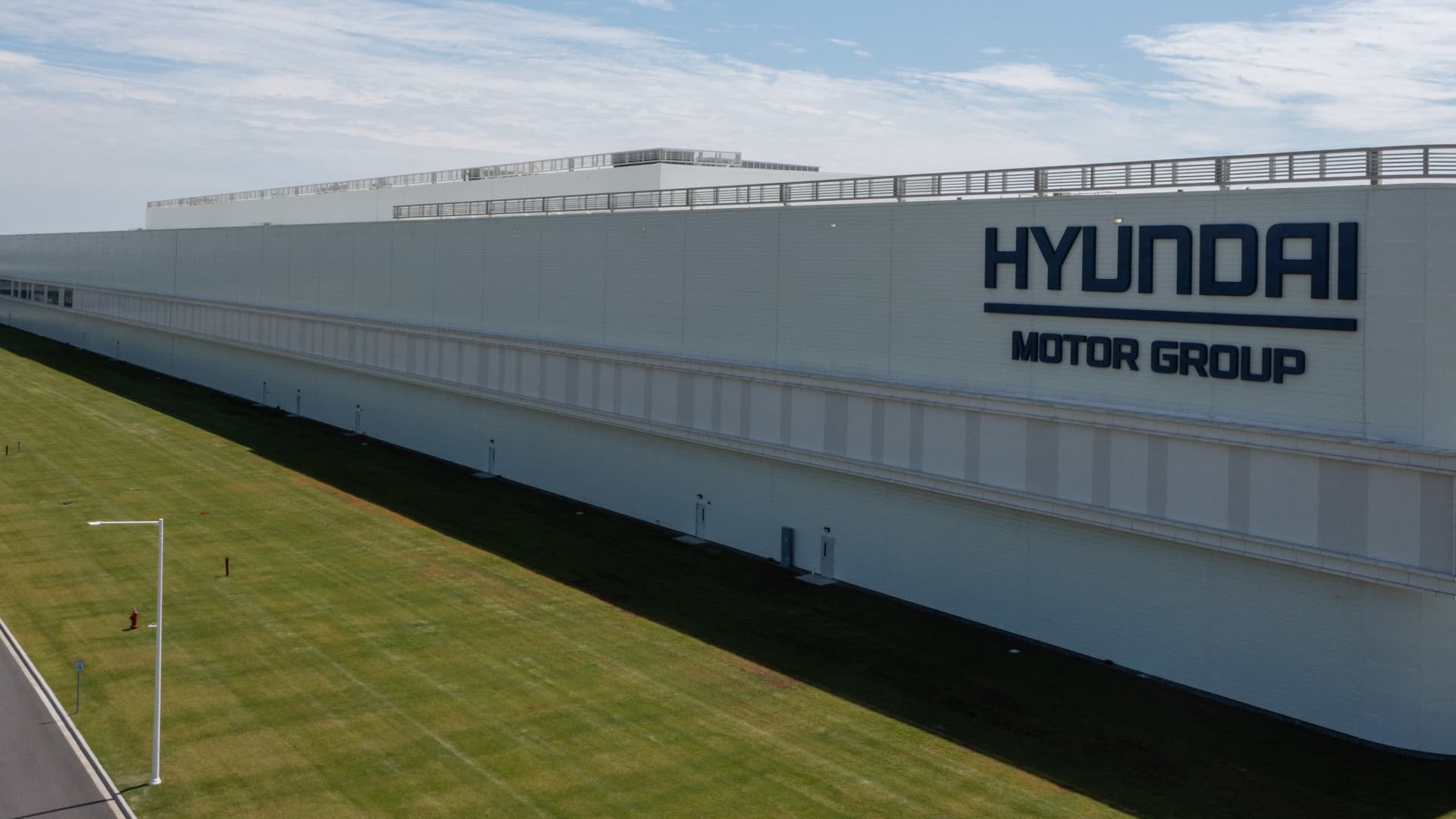
Core Insights - The majority of electric vehicle (EV) investments in the U.S. have historically favored Republican-led districts, particularly in the Southeast, raising questions about the future of these investments as the industry shifts focus away from EVs [1][2]. Investment Overview - Automakers and battery manufacturers have invested over $200 billion in EV and battery manufacturing in the U.S. from 2000 to 2024, with 84% of battery investments and 62% of EV manufacturing investments directed towards Republican-led districts [2]. - These investments were projected to create over 200,000 jobs, with 77% of these jobs located in Republican districts [2]. Regional Focus - Nearly 40% of the total investment in EVs and batteries has been allocated to the Southeastern U.S., which has been a manufacturing hub for the automotive industry for over 50 years [3]. Impact of Federal Policies - The removal of federal incentives for EVs under the Inflation Reduction Act has led to a significant decline in sales, prompting companies to pivot towards other vehicle types to mitigate losses [4][6]. Hyundai's Strategic Moves - Hyundai Motor Group, previously a leading EV seller in the U.S., has seen a 50% drop in EV sales by the fourth quarter following the end of federal incentives [6]. - The company has made a historic $12.6 billion investment in the Hyundai Metaplant in Georgia, which is expected to create approximately 8,500 jobs by 2031 [7][8]. - Hyundai plans to increase production capacity at the Metaplant by investing an additional $2.7 billion, targeting an annual output of 500,000 vehicles, with a mix of 30% EVs and 70% hybrids and gas vehicles [10]. Industry Challenges - Analysts estimate that U.S. automakers may face at least $100 billion in write-downs on EV investments, indicating that these investments may not yield the anticipated profits [11]. - Major automakers like Ford and General Motors have already announced significant financial charges related to their EV businesses, with Ford reporting a $19.5 billion charge and GM a $7.6 billion charge [12]. Market Projections - EV sales forecasts have drastically decreased from initial projections of 50% of new car sales by 2030 to a current estimate of only 17% [14][15]. - Bosch, a major automotive supplier, has had to adjust its investment strategies in light of these changing projections, moving employees from its EV motors division to other departments [16].
Volvo (OTC:VLVLY) Maintains Positive Outlook with RBC Capital's "Outperform" Rating
Financial Modeling Prep· 2026-01-30 23:17
Group 1 - Volvo is recognized for its commitment to safety and innovation in the automotive industry, competing with major companies like Daimler and Scania [1] - RBC Capital maintains an "Outperform" rating for Volvo, indicating confidence in the company's future performance [5] - The stock price target for Volvo was raised to SEK 350 from SEK 340, reflecting optimism for growth [3][5] Group 2 - On January 30, 2026, Volvo's stock was priced at $36.42, aligning with positive sentiment and an upgrade to a Zacks Rank 2 (Buy) [2] - The recent upgrade suggests an upward trend in earnings estimates, which could drive the stock price higher [3][5] - Currently, Volvo's stock is trading at $36.51, with a market capitalization of approximately $74.9 billion [4]
Gentex(GNTX) - 2025 Q4 - Earnings Call Transcript
2026-01-30 15:32
Financial Data and Key Metrics Changes - For Q4 2025, consolidated net sales were $644.4 million, a 19% increase from $541.6 million in Q4 2024. Core Gentex revenue was $541 million, essentially flat year-over-year [5][10] - Consolidated gross margin improved to 34.8% from 32.5% in the previous year, with core Gentex gross margin at 35.5%, a 300 basis point increase [6][11] - Consolidated net income for Q4 was $93 million, compared to $87.7 million in Q4 2024, with earnings per diluted share at $0.43, up from $0.39 [9][12] Business Line Data and Key Metrics Changes - Gentex Automotive generated $527.6 million in net sales for Q4 2025, slightly down from $531.3 million in Q4 2024, despite a 3% decline in auto-dimming mirror shipments [14] - The "Other" category, including dimmable aircraft windows and medical products, saw Q4 net sales rise to $13.3 million from $10.3 million [15] - Vox contributed $103.4 million in net sales during Q4 2025, with a total of $267.2 million for the nine-month period since acquisition [16] Market Data and Key Metrics Changes - Sales into China totaled $34.5 million for Q4, down 33% year-over-year due to tariffs [6] - Revenue in primary markets grew approximately 3% despite a 2% decline in light vehicle production [5][10] Company Strategy and Development Direction - The company aims to maintain gross margins in the 35%-36% range, achieved through cost control and operational efficiencies [7][31] - Focus on innovation and product launches, including driver monitoring systems and dimmable visors, to drive growth [32] - The strategy includes leveraging core competencies to achieve above-market growth through existing and new technologies [32] Management's Comments on Operating Environment and Future Outlook - Management noted challenges in 2025 due to tariffs, production declines, and cost inflation, but expressed confidence in the team's ability to adapt [30][31] - Expectations for 2026 revenue are between $2.6 billion and $2.7 billion, with a gross margin forecast of 34%-35% [28] - The company anticipates continued headwinds from tariffs and commodity pricing, particularly precious metals [49] Other Important Information - The company repurchased 3.8 million shares in Q4 at an average price of $23.43, totaling $319 million for the year [16] - Cash and cash equivalents decreased to $145.6 million from $233.3 million at year-end 2024, primarily due to acquisitions and share repurchases [17] Q&A Session Summary Question: Can you discuss the revenue guidance range and risks? - Management acknowledged the uneven revenue growth in 2025 and noted potential stability in North America and Western Europe, while expressing concerns about the China market [36] Question: What were the drivers behind the better-than-expected gross margins? - Positive factors included product mix and operational efficiencies, while tariff impacts were significant in Q4 [40] Question: What is the outlook for the China market? - Management expects continued headwinds in exports to China due to high tariffs, but sees potential for recovery if tariffs normalize [89] Question: How is the integration of Vox progressing? - The integration is on track, with expectations of achieving $40 million in positive cash flow from Vox by 2026 [62] Question: What are the expectations for free cash flow and buybacks? - The company aims to maintain strong cash flow levels, with buybacks being a primary use of generated cash [84]