党政机关厉行节约反对浪费

Search documents
浙江发文:党政机关严格控制视频、PPT在会议中使用
Yang Shi Wang· 2026-01-30 04:16
Core Viewpoint - The Zhejiang Provincial Government has implemented strict measures to promote frugality and oppose waste within party and government agencies, as outlined in the "Implementation Measures" document, which includes regulations on travel, receptions, vehicle use, meetings, and office space [1][2][3][4][5] Group 1: Travel Regulations - Party and government agencies must strictly control domestic travel and official trips abroad, ensuring that travel has a clear official purpose and is not used for personal leisure [1][2] - Annual plans for official trips must be carefully planned, limiting the number of delegations, countries visited, and duration of stay to enhance trip effectiveness [2] Group 2: Reception Standards - Agencies are required to adhere to strict domestic reception standards, controlling total expenditure and ensuring that meals do not include high-end dishes or alcohol [2][4] - Reception for investment activities must also follow these standards, with strict approval and auditing processes to prevent excessive or inappropriate spending [2] Group 3: Vehicle Management - The document mandates a unified management system for official vehicles, including centralized procurement and prioritization of domestic and new energy vehicles [3] - Agencies are prohibited from exceeding vehicle quotas or standards and must continue using vehicles that have not reached their replacement age [3] Group 4: Meeting Management - Agencies are instructed to minimize meetings and utilize modern technology to improve efficiency, with strict controls on the use of videos and presentations during general meetings [3] - Meetings must be held in designated venues, and arrangements should be simple and frugal, avoiding unnecessary decorations or lavish settings [3] Group 5: Office Space Regulations - The document emphasizes strict controls on the construction and renovation of office spaces, requiring adherence to approval processes and budget limits [5] - Agencies must establish mechanisms for supervision and information disclosure regarding wasteful practices, with penalties for violations [5]
中共福建省委 福建省人民政府印发《福建省贯彻〈党政机关厉行节约反对浪费条例〉实施细则》
Xin Lang Cai Jing· 2025-12-28 23:34
Core Viewpoint - The revised implementation rules for the "Regulations on Strict Economy and Opposition to Waste by Party and Government Agencies" in Fujian Province aim to enhance frugality and reduce waste across all levels of government, promoting a culture of thriftiness and efficiency in public spending [1][3]. Summary by Sections General Principles - The implementation rules are designed to promote a culture of hard work and thriftiness within party and government agencies, aligning with the central government's eight-point decision [3][4]. - The rules apply to various government bodies, including party organizations, legislative bodies, administrative agencies, and other public organizations [3]. Financial Management - Strict budget execution is mandated, prohibiting overspending or unauthorized expenditures, and emphasizing the need for a dynamic monitoring mechanism for budget execution [5][6]. - The use of public funds for travel, receptions, and other expenses is to be strictly controlled, with a focus on adhering to budget limits [5][6]. Travel and Foreign Affairs - Domestic travel must be approved in advance, with strict controls on the number of travelers and duration of trips [9][10]. - Foreign travel plans are to be carefully managed, with limits on the number of trips and participants [9][10]. Public Reception - A centralized management system for domestic receptions is to be established, with strict adherence to approval processes and spending limits [11][12]. - The rules prohibit using public funds for lavish receptions or unnecessary expenditures [11][12]. Vehicle Management - A standardized vehicle management system is to be implemented, focusing on efficient use and maintenance of government vehicles [14][15]. - The use of electric vehicles is encouraged, with specific targets for their adoption in government fleets [15][16]. Meeting Activities - Meeting expenses are to be strictly controlled, with prohibitions on lavish meals and entertainment [18][19]. - The organization of meetings should be efficient, utilizing digital platforms where possible to reduce costs [18][19]. Office Space Management - The construction of new office spaces is to be tightly regulated, with strict penalties for non-compliance [21][22]. - Existing office spaces must be efficiently utilized, with measures in place to manage and repurpose underused facilities [22][23]. Resource Conservation - Agencies are required to implement systems for measuring and reporting energy and water consumption, promoting resource-saving practices [25][26]. - The promotion of green practices, such as food waste reduction in government cafeterias, is emphasized [40][41]. Education and Supervision - Education on frugality and waste reduction is to be integrated into training programs for government employees [28][29]. - A robust supervision mechanism is to be established to ensure compliance with the regulations, with penalties for violations [30][31].
陕西出台党政机关厉行节约反对浪费实施办法
Shan Xi Ri Bao· 2025-11-22 00:35
Core Points - The implementation of the "Implementation Measures for Strictly Practicing Frugality and Opposing Waste in Party and Government Agencies in Shaanxi Province" aims to institutionalize and sustain frugality practices within government operations [1][2] - The measures include 52 specific actions targeting key areas such as financial management, official receptions, and asset utilization to tighten controls on waste [1] - The initiative emphasizes problem-oriented strategies, addressing issues identified in audits and inspections, and aims to enhance operational efficiency in government agencies [2] Financial Management - The measures include strict regulations on financial management, ensuring that official receptions do not involve inflated claims for days, numbers, or false invoices [1] - Local meetings are to be held internally, and a "walking meeting" system is implemented for local participants [1] Asset Utilization - Leaders are required to vacate their office spaces within one month after retirement or transfer, and idle official vehicles will be reallocated with tracking systems [1] - The procurement of new energy vehicles is prioritized for official use to promote resource conservation [1] Green and Low-Carbon Initiatives - The measures promote the use of new energy vehicles in official capacities, aligning with broader environmental goals [1] Institutional Coordination - The implementation measures integrate previous regulations and guidelines to enhance policy coherence, including the prohibition of snacks in meeting rooms and the establishment of a digital management system for official meals [1] - A platform for asset sharing and adjustment is reinforced, with strict actions against units that exhibit severe waste [1] Supervision and Accountability - The measures incorporate frugality into staff training and daily management, fostering a culture where saving is honored and waste is condemned [2] - Wasteful behaviors will be subject to disciplinary actions, ensuring strict adherence to the new regulations [2]
公物仓全国“一张网”建设加快推进(厉行节约 反对浪费)
Ren Min Ri Bao· 2025-07-03 00:19
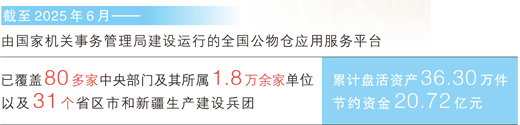
Core Insights - The national public property warehouse application service platform, managed by the National Government Affairs Administration, is set to cover over 80 central departments and more than 18,000 affiliated units by June 2025, having already activated 363,000 assets and saved 2.072 billion yuan [2] - The platform facilitates the redistribution and reuse of idle assets among administrative units, thereby reducing operational costs and enhancing the efficiency of public spending [3][5] - The establishment of public property warehouses has been supported by a series of regulations and guidelines aimed at promoting frugality and resource optimization within government agencies [5][6] Group 1 - The public property warehouse is defined as a unified management platform for idle, disposed, and over-standard assets of administrative and public institutions, allowing for asset sharing and reducing redundancy [3] - The first public property warehouse was established in Shenzhen in 1996, leading to the development of various management frameworks and operational procedures across different regions [4] - Since the 18th National Congress, there has been a strong emphasis on promoting a culture of frugality and opposing waste, which has created a favorable institutional environment for the development of public property warehouses [5] Group 2 - From 2022 to 2023, the National Government Affairs Administration organized pilot projects involving 10 central departments and 33 local units to innovate and optimize the public property warehouse system [6] - The construction of a nationwide public property warehouse network is accelerating, with the introduction of a national application service platform that integrates information across various administrative units [7] - The implementation of the "Guidelines for the Construction and Operation of Public Property Warehouses" aims to enhance the efficiency and standardization of warehouse operations [7]

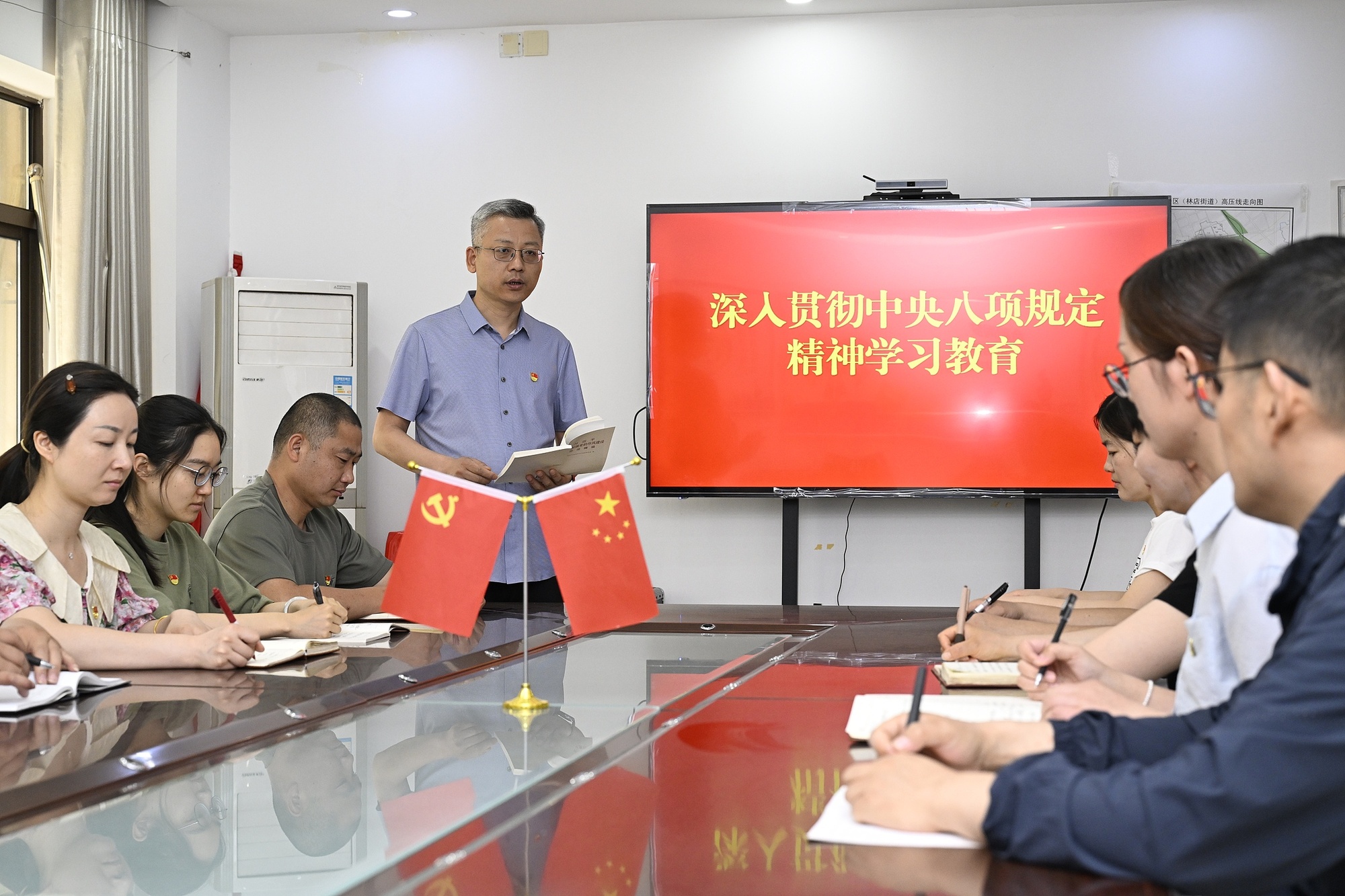
省委常委会召开会议认真学习贯彻《党政机关厉行节约反对浪费条例》研究集中整治违规吃喝问题 部署台风“蝴蝶”防御工作黄坤明主持会议
Nan Fang Ri Bao Wang Luo Ban· 2025-06-14 01:25
Group 1 - The meeting emphasized the importance of implementing the revised "Regulations on Strict Economy and Opposition to Waste by Party and Government Agencies," highlighting the central government's commitment to strict governance and the continuous improvement of party conduct [2] - The meeting called for a deep understanding of the significance of the regulations, urging local party organizations to integrate party education and discipline into daily practices, promoting a culture of frugality and hard work among party members [2] - The meeting outlined a problem-oriented approach to strengthen discipline, focusing on rectifying violations related to extravagant dining and establishing a robust supervision mechanism to combat waste [2] Group 2 - The meeting addressed the imminent threat of Typhoon "Butterfly," which is expected to bring the strongest rainfall since the onset of the flood season, urging all departments to prepare thoroughly for potential impacts [3] - It was stressed that effective monitoring, early warning, and safety measures must be implemented, including strict adherence to established protocols for disaster response and management of vulnerable populations [3] - The meeting highlighted the need for proactive risk assessment and emergency preparedness, ensuring that resources and personnel are ready to respond swiftly to any disaster situations [3]
【央广时评】厉行节约新规彰显执政为民本色
Yang Guang Wang· 2025-05-20 08:35
Core Points - The newly revised "Regulations on Strictly Practicing Frugality and Opposing Waste by Party and Government Organs" aims to address the issue of extravagance within government agencies, emphasizing practical measures and clear guidelines to curb wasteful practices [1][2] - The regulations specifically target "hidden waste" and impose strict constraints on seemingly minor issues, such as prohibiting high-end meals and luxury configurations for official vehicles, thereby closing loopholes in daily operations [2][3] - The regulations are designed to combat formalism and bureaucratism, which are seen as significant challenges to governance, by halting unnecessary projects that waste public resources and financial assets [3][5] Implementation and Oversight - Effective implementation of the new regulations requires rigorous internal supervision, with government agencies expected to align their practices with the new rules and conduct thorough audits of expenditures related to public funds [5][6] - There is an emphasis on public involvement in monitoring compliance, with mechanisms in place for accountability and penalties for officials responsible for significant waste [6] - The ultimate goal of these regulations is to ensure that government savings translate into improved living standards for citizens, directing funds towards essential services such as education, healthcare, and rural revitalization [6]
【8点见】CBA开出重磅罚单
Yang Shi Wang· 2025-05-19 00:09
Group 1 - The Central Committee of the Communist Party and the State Council issued regulations on frugality and waste reduction in government agencies [1] - The Ministry of Commerce announced the final ruling on anti-dumping investigations for imported urea-formaldehyde from the US and Europe [1] - The number of visitors to museums nationwide reached 1.49 billion in 2024 [1] Group 2 - The Beidou system has fully entered the standard systems of 11 international organizations [1] - The AG600 "Kunlong" aircraft has completed its production test flight [4] - The "Happiness Connection" marriage service by the All-China Women's Federation has conducted over 10,000 matchmaking events [4] Group 3 - The FBI confirmed the suspect in the explosion incident in Palm Springs, California [6] - The Mexican Navy training ship collided with the Brooklyn Bridge, resulting in 2 deaths and multiple injuries [10] - Severe weather in the US has caused at least 28 deaths and left over 400,000 users without power [10]

最新明确!公务接待工作餐不得提供高档菜肴,不得提供香烟,不上酒
21世纪经济报道· 2025-05-18 22:48
Group 1 - The revised "Regulations on Strict Economy and Opposition to Waste by Party and Government Agencies" has been issued, emphasizing the need for strict adherence by all regions and departments [1] - The regulations establish a centralized management system for domestic official receptions, requiring approval control and strict adherence to standards for reception expenses [1] - Official receptions must not include non-official activities, and high-end meals, cigarettes, and alcohol are prohibited [1] Group 2 - The regulations mandate unified management for official vehicles, including centralized procurement and prioritization of domestic and new energy vehicles [2] - Official vehicles must adhere to specified service years, and early replacements due to personnel changes are not allowed [2] - Insurance, maintenance, and fuel for official vehicles will also be managed through centralized procurement to reduce operational costs [2]
中共中央、国务院印发《党政机关厉行节约反对浪费条例》 坚持从严从简 带头过紧日子 勤俭办一切事业
Xin Hua She· 2025-05-18 19:18
Core Points - The revised "Regulations on Strict Economy and Opposition to Waste by Party and Government Agencies" has been issued by the Central Committee of the Communist Party of China and the State Council, emphasizing the importance of frugality and responsibility in government spending [1][2] - The regulations aim to enhance the management of government funds, domestic travel, official overseas trips, receptions, vehicle use, meetings, office space, and resource conservation, aligning with the spirit of the Central Eight Regulations [1][2] Summary by Sections Implementation and Objectives - The regulations require all regions and departments to earnestly study, promote, and implement the guidelines, fostering a culture that values saving and opposes waste [1] - The focus is on the relationship between work style and the image of the Party, as well as the success of the Party and national affairs [1] Principles of the Regulations - The regulations emphasize strictness and simplicity, leading by example in frugality, and reducing costs of official activities to allocate more funds for development and public welfare [2] - Compliance with internal Party regulations and national laws is mandated, ensuring that all actions are conducted according to established systems [2] - The regulations advocate for quality and efficiency, scientific allocation of financial resources, and strict control over expenditure [2] - A practical approach is encouraged, eliminating unnecessary official activities while ensuring essential functions are maintained [2] - Transparency is required in the use of public funds and resources, with provisions for public oversight [2] - The regulations call for reform and innovation to address systemic barriers and establish a long-term mechanism for promoting frugality and opposing waste [2]
中共中央 国务院印发《党政机关厉行节约反对浪费条例》
证监会发布· 2025-05-18 14:32
Core Viewpoint - The revised "Regulations on Strict Economy and Opposition to Waste by Party and Government Agencies" aims to enhance fiscal management and promote a culture of thriftiness within government institutions, aligning with Xi Jinping's thoughts on socialism with Chinese characteristics for a new era [1][4]. Summary by Sections General Principles - The regulations are designed to promote a spirit of hard work and thriftiness, applicable to various government bodies and organizations [4][5]. - Waste is defined as unnecessary public activities or improper use of public funds that lead to losses for the state and society [4][5]. Financial Management - Emphasis on strict budget management, requiring all income and expenditures to be included in the budget [8][9]. - Prohibition of overspending and unauthorized expenditures, with a focus on controlling travel, reception, and meeting costs [9][10]. Domestic Travel and Official Overseas Trips - Strict control over domestic travel, requiring clear purposes and limiting unnecessary trips [15][16]. - Regulations on overseas trips include limiting group sizes and ensuring all expenses are pre-approved [17][19]. Official Reception - Establishment of centralized management for domestic receptions, with strict adherence to approval processes and expenditure limits [21][22]. - Prohibition of extravagant receptions and the use of public funds for non-official activities [23][24]. Official Vehicles - Implementation of a unified vehicle management system, promoting the use of domestic and electric vehicles [22][25]. - Strict regulations on vehicle usage, preventing personal use of official vehicles [31][32]. Meetings and Activities - Meetings should be minimized and managed efficiently, with strict controls on costs and unnecessary activities [27][28]. - Emphasis on using technology to improve meeting efficiency and reduce costs [27][28]. Office Space - Strict controls on the construction and use of office space, with penalties for non-compliance [31][32]. - Emphasis on practical and economical use of office resources [31][32]. Resource Conservation - Promotion of resource efficiency in energy, water, and materials, with a focus on reducing waste [35][46]. - Encouragement of recycling and the use of sustainable practices in government operations [35][46]. Education and Awareness - The importance of promoting a culture of thriftiness through education and public awareness campaigns [39][40]. - Regular training for government employees on the importance of resource conservation and waste reduction [39][40]. Supervision and Accountability - Establishment of a robust supervision mechanism to ensure compliance with the regulations [41][42]. - Clear accountability measures for violations, including potential disciplinary actions for responsible parties [45][46].