
古树保护

Search documents
广州黄埔:护绿夫妻档,执手护古树丨寻美南粤 ⑬
Nan Fang Nong Cun Bao· 2026-02-12 11:33
Core Viewpoint - The article highlights the dedication of a couple, Cheng Weizhen and Lu Yonghong, who have been actively involved in the protection and management of ancient trees in Guangzhou's Huangpu District, showcasing the importance of grassroots efforts in environmental conservation [6][8]. Group 1: Couple's Commitment - Cheng Weizhen has been a guardian of ancient trees for six years, overseeing 2,494 trees, while Lu Yonghong has been involved for over five years, managing 2,634 trees [5]. - The couple's daily routine involves thorough inspections of ancient trees, ensuring their protection from construction and other potential threats [11][12]. - They have developed a strong emotional connection with the trees they protect, often relating their experiences to the health and vitality of these ancient beings [33][35]. Group 2: Community and Technological Support - Guangzhou has established a comprehensive system for ancient tree protection, involving government leadership, local responsibility, and community participation [61]. - The city has implemented a smart management information system for ancient trees, which includes QR codes for identification and utilizes advanced technologies for tree health assessments [65][66]. - Community engagement initiatives, such as the "Green Beautiful Guangzhou" fund and partnerships with organizations, have raised awareness and support for ancient tree conservation [72][78]. Group 3: Challenges and Achievements - The couple faces various challenges, including negotiating with construction teams to ensure tree safety and addressing community members who may inadvertently harm the trees [16][18]. - They have successfully documented and reported tree conditions using a dedicated app, facilitating timely interventions for tree health issues [24][32]. - The couple's efforts have contributed to a broader cultural shift in Guangzhou, where ancient trees are increasingly recognized as vital components of the city's heritage and community identity [52][80].


三百年古树告急 专家现场开“药方”
Zhong Guo Zi Ran Zi Yuan Bao· 2026-01-22 00:49
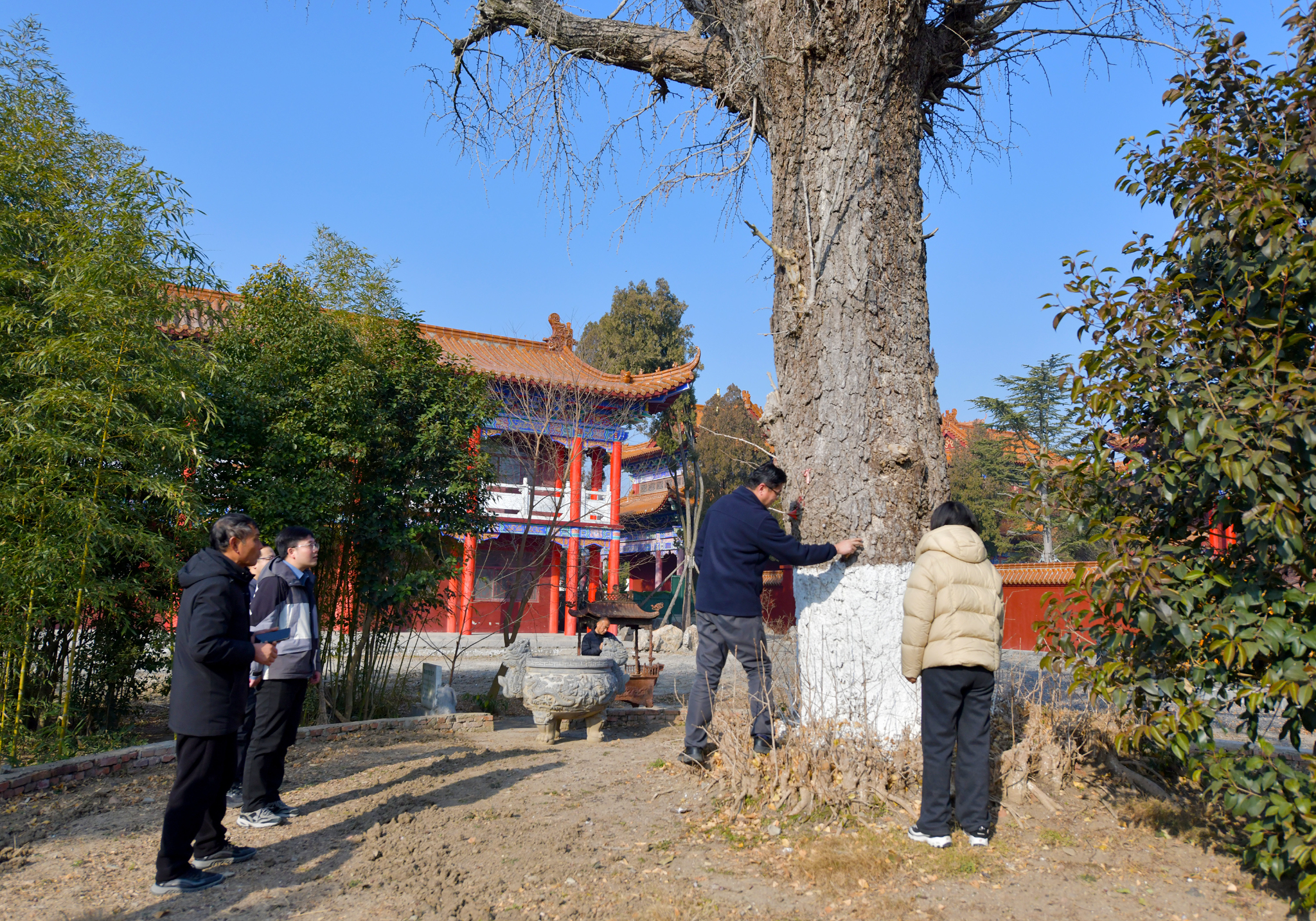
Core Viewpoint - A 300-year-old ginkgo tree in Hongze District, Jiangsu Province, is experiencing poor growth, prompting an expert health check and restoration guidance [2][3] Group 1: Health Assessment - Experts conducted a thorough examination of the ancient tree, identifying three main issues: exposed wounds on the trunk, internal structural damage indicated by hollow sounds, and excessive root competition affecting nutrient absorption [3] - The tree's condition reflects its historical and ecological significance, serving as a living archive of local heritage [3] Group 2: Restoration Measures - Targeted restoration measures proposed by experts include sealing trunk wounds with antiseptic agents, removing most surface roots while retaining a few, applying microbial fertilizers, and implementing regular pest and disease control throughout the seasons [3] - The local government plans to monitor the restoration progress and enforce the "Huai'an Ancient Trees Protection Regulations" to ensure the tree's preservation and vitality [3]
成都东部新区:给1700岁“生病”古银杏“做手术”
Zhong Guo Xin Wen Wang· 2026-01-21 09:05
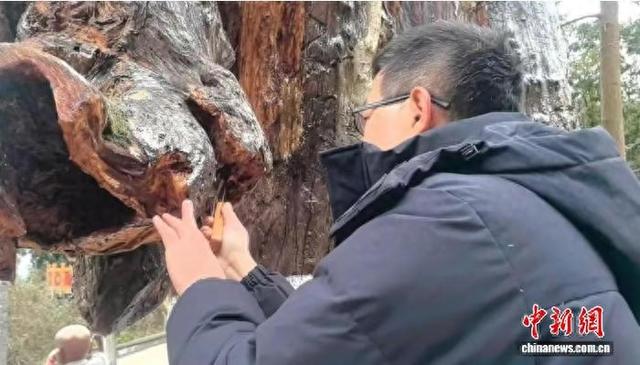
Core Viewpoint - The ancient ginkgo tree, over 1700 years old, is undergoing a meticulous restoration process to address its deteriorating condition, which includes issues like hollowing and decaying bark [1][3][4]. Group 1: Restoration Process - The restoration plan for the ancient ginkgo tree was initiated in October of the previous year, with a detailed three-year action plan developed by the Chengdu Eastern New District Park City Construction Bureau [3][4]. - The first phase of the restoration involved "cleaning the rot," where technicians meticulously removed decayed material and filled cavities with resin, followed by applying waterproof and anti-corrosion agents [4][7]. - The root system is being rehabilitated to improve oxygen supply, which includes replacing heavy soil with a scientifically mixed substrate and implementing a grafting technique to enhance nutrient absorption [7]. Group 2: Historical Significance - The ancient ginkgo tree has survived numerous adversities over its long history, including lightning strikes, axe cuts, and fires, making its preservation a matter of cultural importance [3][4]. - The tree's restoration is not only a technical challenge but also a cultural heritage effort, reflecting the community's commitment to preserving historical natural landmarks [3][4]. Group 3: Future Plans - The Chengdu Eastern New District Park City Construction Bureau plans to conduct a comprehensive survey of ancient trees in the area to assess their conditions and develop further protection strategies [7]. - The restoration efforts will continue to be phased, with specific activities planned for both winter and spring to ensure the tree's health and longevity [7].
长辛店老镇11株国槐已达古树标准
Xin Lang Cai Jing· 2026-01-08 11:46
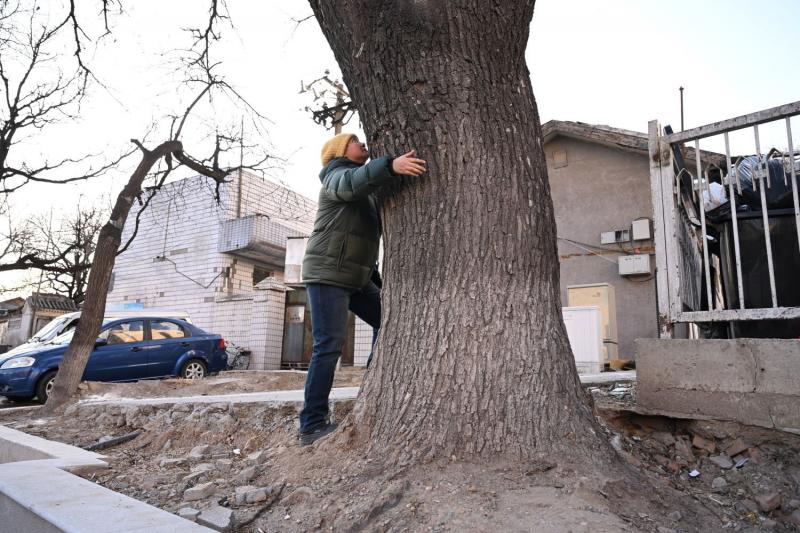
Core Viewpoint - The article highlights the discovery of ancient trees in Changxindian, a historical area in Beijing, emphasizing the need for their protection and recognition as cultural heritage [1][2]. Group 1: Historical Significance - Changxindian, located along the Yongding River, was a significant commercial hub during the Ming and Qing dynasties, with a main street that has been preserved for over 2.5 kilometers [1]. - The area has undergone urban renewal, attracting attention from various sectors due to its rich historical background [1]. Group 2: Ancient Tree Identification - According to the Beijing Ancient Tree Evaluation Standards, trees are classified based on their age and trunk diameter, with specific thresholds for ancient tree status [2]. - Eleven Chinese scholar trees (Gongqiao) in Changxindian have been identified as meeting the criteria for secondary ancient trees, with diameters ranging from 60 to 69 centimeters [2]. - Notably, one tree has a circumference of 255 centimeters, translating to a diameter of approximately 81 centimeters, exceeding the secondary ancient tree standard by 21 centimeters [2][3]. Group 3: Cultural and Scenic Value - The "Changxin Huaiyin" is recognized as one of the ten cultural landscapes of Fengtai, highlighting the aesthetic and historical importance of the tree-lined streets [6]. - Urban planning documents emphasize the need to protect the tree-lined landscape along Changxindian Street, restricting tree removal unless in exceptional circumstances [6]. Group 4: Current Protection Measures - Initial protective measures have been implemented, including wrapping tree trunks and placing warning signs to prevent vehicle collisions [9]. - Currently, there are six officially recognized ancient trees in the area, which receive specialized care, while ordinary street trees lack similar protection [9][11].
8.守望银叶五百年:欧薇与坝光古银叶树群的在地守护之路
Nan Fang Nong Cun Bao· 2025-12-26 20:33
Core Viewpoint - The article highlights the efforts of Ouwei and the Ba Guang Natural School in protecting the ancient silver leaf tree population and promoting ecological education in the Ba Guang area, emphasizing the importance of community involvement and cultural heritage in conservation efforts [11][14][68]. Group 1: Conservation Efforts - The Ba Guang area is home to a significant population of ancient silver leaf trees, which are integral to the local ecosystem and cultural identity [10][11]. - Ouwei has been leading conservation efforts since 2020, focusing on the relationship between ancient trees and urban ecological civilization [14][15]. - The Ba Guang Natural School has developed educational programs that integrate local cultural heritage with environmental conservation, including courses on silver leaf trees and traditional salt-making [23][24]. Group 2: Community Engagement - Ouwei's approach involves engaging the local community, with 700 families participating in tree adoption programs and utilizing a WeChat mini-program for ongoing management and education [28][29]. - The initiative has attracted significant public interest, with over 4,719 students participating in environmental education activities [45]. - Collaborative efforts with local communities and organizations have led to the establishment of a comprehensive network for tree protection, involving government, businesses, schools, and community members [41][42]. Group 3: Educational and Research Initiatives - The Ba Guang Natural School has created a physical exhibition space and developed three educational routes to narrate the history of the silver leaf trees and their relationship with local residents [25][26]. - Partnerships with universities have resulted in the establishment of research and practice bases, fostering a connection between academic research and practical conservation efforts [46][47]. - Ouwei has contributed to the publication of educational materials and has been involved in international discussions on mangrove conservation, showcasing local practices on a global stage [60][66]. Group 4: Recognition and Impact - The silver leaf tree conservation plan has been recognized as a model for natural education in Shenzhen, receiving awards for its innovative approach [31][36]. - The initiative has gained media attention, with 181 reports highlighting its impact and outreach efforts [63]. - The Ba Guang silver leaf tree population is positioned as a successful example of community-driven conservation within the broader context of ecological development in Guangdong [70].
9.莫秀全:十年守望千年红锥王,把一份光荣传统延续在树下
Nan Fang Nong Cun Bao· 2025-12-26 20:33
Core Viewpoint - The article highlights the dedication of Mo Xiuchuan, a villager in Guangdong, who has been protecting a thousand-year-old red fir tree, known as the "Red Fir King," for over ten years, emphasizing the importance of preserving natural and cultural heritage [20][21]. Group 1: Protection Efforts - Mo Xiuchuan integrates tree inspection and maintenance into his daily life, conducting over 200 inspections annually, regardless of weather conditions [23][24]. - He has successfully identified and mitigated potential risks, such as a termite infestation, through his vigilant monitoring [25][26]. - Mo reports any unusual findings to local forestry departments, providing more than 10 effective reports annually [30]. Group 2: Emergency Response - During a typhoon, Mo quickly reported damage to the "Red Fir King," leading to immediate action by forestry experts to prevent further loss [31][32][34]. - He acts as a liaison between the forestry department and the community, facilitating environmental cleanup and protective measures [35][36]. Group 3: Cultural Transmission - Mo is also a cultural ambassador for the "Red Fir King," sharing its history and ecological significance with visitors and local communities [39][40]. - His efforts have fostered a collective understanding of the importance of tree protection, leading to a supportive environment for preserving ancient trees [41][42]. Group 4: Legacy and Impact - Mo Xiuchuan's commitment exemplifies responsibility and dedication, ensuring the "Yueshan Afforestation" spirit continues to thrive under the ancient red fir tree [49].
10.何树志:守在贡园边,把一园古荔枝护成一生的记忆
Nan Fang Nong Cun Bao· 2025-12-26 20:33
Core Viewpoint - The article highlights the importance of preserving ancient trees in Guangdong, particularly the ancient lychee trees in the "Gongyuan" garden, emphasizing the role of local guardians like He Shuzhi in maintaining cultural heritage and environmental sustainability [4][36]. Group 1: Preservation Efforts - There are over 85,000 ancient trees in the Lingnan region, which serve as both natural landmarks and cultural symbols [3]. - The tradition of protecting ancient lychee trees in Baqiao Village has been passed down through generations, with a system established to link the trees' value to collective benefits, fostering a sense of responsibility among villagers [16][18]. - He Shuzhi has taken on the responsibility of caring for 93 ancient lychee trees, reflecting a commitment to preserving collective memory through daily actions [20][22]. Group 2: Daily Responsibilities - He Shuzhi inspects the growth of the ancient lychee trees almost daily, documenting changes and addressing pest issues promptly [23][24]. - With the increasing popularity of "Gongyuan," He Shuzhi has also taken on the role of educating visitors about tree protection, encouraging them to respect the trees while enjoying their beauty [25][30]. Group 3: Recognition and Cultural Significance - He Shuzhi's dedication has been recognized by various governmental and media organizations, highlighting the cultural significance of his work [36][37]. - He views the guardianship of "Gongyuan" as a lifelong commitment, emphasizing the importance of cultural heritage and environmental stewardship [40][42].
古树“医生”翁振坚:行医潮州山水间 守护千年绿脉丨古树守护人手记
Nan Fang Nong Cun Bao· 2025-12-26 12:05
Core Viewpoint - The article highlights the efforts of a dedicated individual, Weng Zhenjian, who has been protecting ancient trees in Chaozhou for 16 years, emphasizing the importance of both technical expertise and legislative support in the conservation of these natural treasures [10][12][46]. Group 1: Ancient Tree Conservation Efforts - There are over 85,000 ancient trees in Guangdong, which are vital to the region's culture and history, requiring continuous protection from dedicated individuals [2][3]. - Weng Zhenjian employs a method inspired by traditional Chinese medicine to diagnose and treat the health of ancient trees, ensuring their longevity and vitality [23][24]. - He has conducted extensive surveys, covering nearly 1,000 ancient trees across various towns, documenting their health and identifying issues such as pest infestations and environmental hazards [32][35]. Group 2: Legislative and Community Engagement - Weng has played a crucial role in drafting the "Chaozhou Ancient Tea Tree Protection Regulations," providing technical support to ensure legal protection for these trees [12][18]. - He actively promotes community involvement in tree conservation through media appearances and educational initiatives, fostering a collective responsibility for protecting local natural resources [39][40]. - Innovative outreach programs, such as "classes under ancient trees," engage students and the community, instilling a love for nature and conservation from a young age [43][44].
柯欢:古树“技术派”守护人 为每棵古树建立厘米级档案丨古树守护人手记
Nan Fang Nong Cun Bao· 2025-12-26 12:04
Core Viewpoint - The article highlights the efforts of Ke Huan, a senior engineer and expert in ancient tree protection in Foshan, who has dedicated 17 years to establishing precise identity records for ancient trees, integrating technology and community engagement to enhance conservation efforts [9][10][12][41]. Group 1: Ancient Tree Protection Efforts - Foshan is home to over 85,000 ancient trees, which are vital to the region's cultural heritage and ecological diversity [2][3]. - Ke Huan has developed a scientific and precise identity record system for ancient trees, addressing previous issues of vague positioning and incorrect information [12][18]. - The introduction of advanced RTK technology has improved the positioning accuracy of ancient trees to centimeter-level, facilitating better urban planning and conservation [16][17]. Group 2: Community Engagement and Education - Ke Huan has initiated various educational projects, including the creation of ecological signage and the publication of a comprehensive collection of ancient trees in Foshan, aimed at raising public awareness [20][21][26]. - He has organized art projects and media campaigns to promote the cultural significance of ancient trees, making them symbols of urban cultural transmission [27][29][31]. - Training sessions for tree management personnel have been conducted to enhance the professional skills of the conservation workforce [32][34]. Group 3: Contributions to Biodiversity - Ke Huan's work has led to the discovery of previously undocumented ancient tree species, contributing to the biodiversity of Foshan [39][40]. - His efforts not only ensure the health of ancient trees but also help in preserving the cultural narratives associated with them, making them "green living fossils" of the city [42][44].
李宗敏:守护四百年古樟 筑起乡村乡愁地标丨古树守护人手记
Nan Fang Nong Cun Bao· 2025-12-26 12:04
Core Viewpoint - The article highlights the efforts of local leaders and community members in Guangdong to protect ancient trees, particularly the ancient camphor trees in Jinggang Village, emphasizing their cultural and emotional significance to the community [2][3][30]. Group 1: Importance of Ancient Trees - There are over 85,000 ancient trees in the Lingnan region, which serve as both natural heritage and cultural symbols [2][3]. - Ancient trees are seen as emotional anchors for the villagers, representing their history and connection to the land [14][24]. Group 2: Community Efforts in Protection - Li Zongmin, the village party secretary, has prioritized the protection of ancient trees since taking office in 2008, viewing it as an essential mission alongside economic development [11][12]. - The community has mobilized various resources, including government policies and funding, to support the restoration of these trees [15][17]. Group 3: Restoration and Maintenance Initiatives - Restoration efforts included professional assessments and targeted measures such as pruning dead branches and nourishing root systems, leading to the rejuvenation of the ancient trees [18][19]. - A daily monitoring system has been established to ensure the ongoing health of the trees, involving local party members and volunteers [19][20]. Group 4: Cultural and Economic Impact - The area around the ancient trees has been developed into a recreational space, enhancing the quality of life for villagers and creating a "ten-minute living circle" with essential facilities [25][27]. - The ancient trees have become a central part of village cultural life, hosting community events and serving as a gathering place for residents [22][24].