
国家安全概念泛化

Search documents
美国悄悄撤回对中国无人机限制计划
Huan Qiu Wang· 2026-01-11 23:54
Group 1 - The U.S. Department of Commerce has quietly withdrawn a proposal to restrict the import of Chinese-made drones, which was initially announced in September last year citing information and communication technology supply chain security [1][3] - The proposal was submitted for White House review on October 8 last year and was officially withdrawn on January 8 this year, as indicated by updates on the White House website [1] - The timing of the withdrawal coincides with President Trump's planned visit to China this year, suggesting a diplomatic context behind the decision [3] Group 2 - The withdrawal follows consultations between the White House and the Department of Commerce, which included meetings with representatives from Chinese drone manufacturer DJI, who argued that comprehensive restrictions on Chinese drones were unnecessary and would severely harm U.S. stakeholders [3] - On January 7, the Federal Communications Commission (FCC) announced exemptions for certain foreign-made drones and key components from a comprehensive import ban, effective until the end of 2026, primarily benefiting products from France and Switzerland [4] - The FCC had previously placed all foreign-made new drones and key components on a "regulated list" in December, citing unacceptable risks to U.S. national security, which raised concerns among various domestic groups, including the American Soybean Association [4][5]

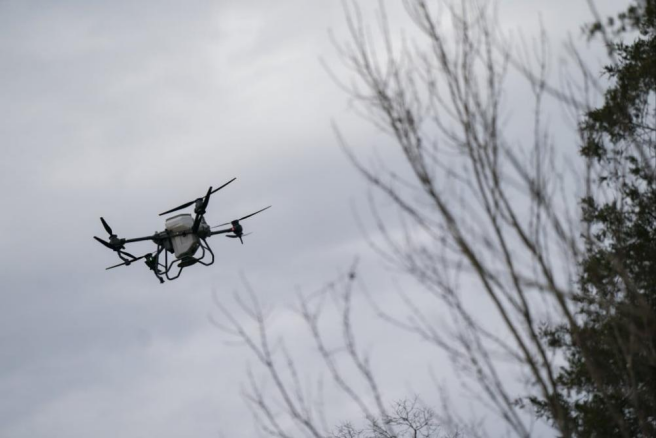
外媒:美国悄悄撤回对中国无人机限制计划
Huan Qiu Shi Bao· 2026-01-11 22:40
Group 1 - The U.S. Department of Commerce has quietly withdrawn a proposal to restrict the import of Chinese-made drones, which was initially announced in September last year under the premise of information and communication technology supply chain security [1] - The proposal was submitted for White House review on October 8 last year and was officially withdrawn on January 8 this year, following discussions between the White House and the Department of Commerce that continued until mid-December [1] - The withdrawal of the drone restriction coincides with President Trump's planned visit to China this year, indicating a potential diplomatic consideration behind the decision [1] Group 2 - Concurrently, the Federal Communications Commission (FCC) announced on January 7 that certain foreign-made drones and key components would be exempt from a comprehensive import ban that was implemented in December, with exemptions valid until the end of 2026 [2] - The exempted products primarily come from companies in France and Switzerland, while key components include those from Nvidia, Sony, and Samsung [2] - The FCC's December 22 decision to list all foreign-made new drones and key components as "regulated" raised concerns among various U.S. domestic groups, particularly regarding the economic burden on farmers who lack domestic alternatives [2]
中美,大消息!事关无人机!
Zheng Quan Shi Bao· 2026-01-10 06:32
Core Viewpoint - The U.S. Department of Commerce has withdrawn its plan to list Chinese-manufactured drones on a "regulated list" due to national security concerns, which was initially proposed to restrict imports of Chinese drones [1][2]. Group 1: U.S. Government Actions - The U.S. Department of Commerce announced the withdrawal of a proposal aimed at restricting Chinese drones, which was submitted for White House review in October 2022 and retracted on January 8, 2023 [1]. - The Federal Communications Commission (FCC) had previously placed all foreign-manufactured drones and components on a "regulated list" citing unacceptable national security risks [1][2]. Group 2: Chinese Response - The Chinese government has strongly opposed the U.S. actions, arguing that they distort the market and unfairly target Chinese companies under the guise of national security [2]. - Chinese officials have called for the U.S. to correct its actions and provide a fair and non-discriminatory environment for Chinese enterprises [2]. Group 3: Market Impact - Chinese drones, particularly from DJI, dominate the U.S. commercial drone market, with over half of the drones in use coming from this manufacturer [3]. - The proposed restrictions have led to significant backlash among U.S. drone operators, many of whom rely on DJI products for their businesses in various sectors such as agriculture and construction [3]. - Some drone operators have begun stockpiling DJI drones and components, expressing concerns that the ban could jeopardize their livelihoods, as there are no viable alternatives to Chinese-made drones in the Western market [3].
中美,大消息!事关无人机!
证券时报· 2026-01-10 06:04
Group 1 - The U.S. Department of Commerce has withdrawn its plan to list Chinese-manufactured drones on a so-called "restricted list" due to national security concerns [1] - The proposal was initially submitted for White House review on October 8, but was retracted on January 8 [1] - The Federal Communications Commission (FCC) had previously placed all foreign-manufactured drones and components on a "restricted list," citing unacceptable risks to national security, which sparked opposition from China and dissatisfaction among U.S. consumers [1][2] Group 2 - The Chinese drone market holds a dominant position in the U.S. commercial drone sector, with over half of the drones coming from DJI [3] - Following the announcement of the ban, there was significant backlash in the U.S., with many drone operators relying on DJI equipment for their small businesses [3] - Operators expressed concerns that the ban could jeopardize their livelihoods, stating that there are no viable alternatives to Chinese-manufactured drones in the West [3] Group 3 - The FCC has indicated that it will exclude certain "non-Chinese manufactured drones" from the restrictions imposed last month [4]
涉中国产无人机,美方:已撤销
Shang Hai Zheng Quan Bao· 2026-01-10 05:08
Group 1 - The U.S. Department of Commerce has withdrawn a plan to impose restrictions on Chinese-made drones, which was aimed at addressing "national security concerns" [1] - The Federal Communications Commission (FCC) had previously banned the import of new foreign-manufactured drones and components, listing Chinese companies DJI and Daotong as "untrusted suppliers" [1] - The U.S. government had planned to introduce new measures to limit or prohibit the import of Chinese drones to address issues in the information and communication technology supply chain [1] Group 2 - Chinese drones dominate the commercial drone market in the U.S., with over half of the drones coming from DJI [1] - The Chinese Ministry of Commerce has expressed strong opposition to the U.S. actions, stating that the U.S. is distorting the market and engaging in unilateral bullying by using national security as a pretext [1][2] - China urges the U.S. to stop its erroneous practices and to immediately revoke the related measures, warning that it will take necessary actions to protect the legitimate rights of Chinese companies if the U.S. continues its current approach [2]
大疆称美限制中国无人机没必要
Xin Lang Cai Jing· 2026-01-10 05:03
Core Viewpoint - The U.S. Department of Commerce has revoked a plan to restrict imports of Chinese-made drones, which was initially proposed to address "national security" concerns [1] Group 1: U.S. Regulatory Actions - The Federal Communications Commission (FCC) had previously placed all foreign-made drones and components on a "covered list" due to perceived national security risks [1] - The FCC announced that some "non-Chinese manufactured drones" would be excluded from the restrictions imposed last month [1] - The Department of Commerce submitted the proposal to limit imports of Chinese drones for White House review on October 8, 2022, and withdrew it on January 8, 2023 [1] Group 2: DJI's Position - DJI, a major Chinese drone manufacturer, argued that the comprehensive restrictions on Chinese drones were unnecessary and unreasonable, potentially harming U.S. stakeholders [1] - DJI's products have been validated for safety and reliability by global markets and independent third-party organizations [1] - The company expressed its intention to explore all viable paths to protect its and its global users' legitimate rights [1] Group 3: Market Impact - Chinese-made drones hold a significant position in the U.S. consumer drone sales market [1] - The restrictions led to widespread backlash in the U.S., with many drone operators relying on DJI equipment for small businesses in various sectors [1] - Concerns were raised that the ban could jeopardize livelihoods, as many operators noted the lack of alternatives to Chinese-made drones in the Western market [1]
报道:美国商务部撤销将中国制造无人机列入所谓“受管制清单”的计划
Huan Qiu Wang· 2026-01-10 03:15
Core Viewpoint - The U.S. Department of Commerce has withdrawn a proposal to restrict the import of Chinese-manufactured drones, which was initially aimed at addressing "national security" concerns [1] Group 1: U.S. Regulatory Actions - The FCC had previously placed all foreign-manufactured drones and their components on a "regulated list" due to "unacceptable risks to national security" [2] - The FCC announced that it would exclude some "non-Chinese manufactured drones" from the restrictions imposed last month [1][2] - The Department of Commerce submitted the proposal to limit imports of Chinese drones for White House review on October 8, 2022, and withdrew it on January 8, 2023 [1] Group 2: Industry Impact and Reactions - DJI, a major Chinese drone manufacturer, expressed regret over the FCC's decision, stating it limits consumer choice and undermines fair market competition [3] - The ban has sparked significant backlash in the U.S., with many drone operators relying on DJI products for various applications, including agriculture and construction [3] - Concerns have been raised that the ban could jeopardize the livelihoods of drone operators, as there are no suitable alternatives to Chinese-manufactured drones in the Western market [3]
外媒:美国商务部撤销将中国制造无人机列入所谓“受管制清单”的计划
Huan Qiu Wang· 2026-01-10 03:00
Core Viewpoint - The U.S. Department of Commerce has withdrawn a proposal to restrict the import of Chinese-made drones, which was initially aimed at addressing "national security" concerns. This decision follows backlash from both Chinese manufacturers and U.S. consumers regarding the restrictions imposed by the Federal Communications Commission (FCC) on foreign-made drones and components [1][3]. Group 1: U.S. Regulatory Actions - The FCC had previously placed all foreign-made drones and their components on a "covered list," citing "unacceptable risks to national security," which led to significant opposition from China and dissatisfaction among U.S. consumers [1][3]. - The FCC announced that it would exclude some "non-Chinese manufactured drones" from the restrictions imposed last month [1]. - The Department of Commerce submitted the proposal to limit imports of Chinese drones for White House review on October 8 of the previous year and officially withdrew it on January 8 [1]. Group 2: Industry Impact and Reactions - DJI, a major Chinese drone manufacturer, expressed regret over the FCC's decision to include all non-U.S. manufactured drones on the "covered list," arguing that it restricts consumer choice and undermines fair market competition [4]. - The company emphasized that its products have been validated for safety and reliability by global markets and independent third-party organizations [4]. - Following the announcement of the restrictions, there was significant backlash in the U.S., with many drone operators relying on DJI equipment for their businesses, leading to concerns about the impact on their livelihoods [5].
中资半导体出海再遇“国家安全”壁垒:FTDI事件背后的全球产业博弈
Huan Qiu Wang· 2025-12-27 12:39
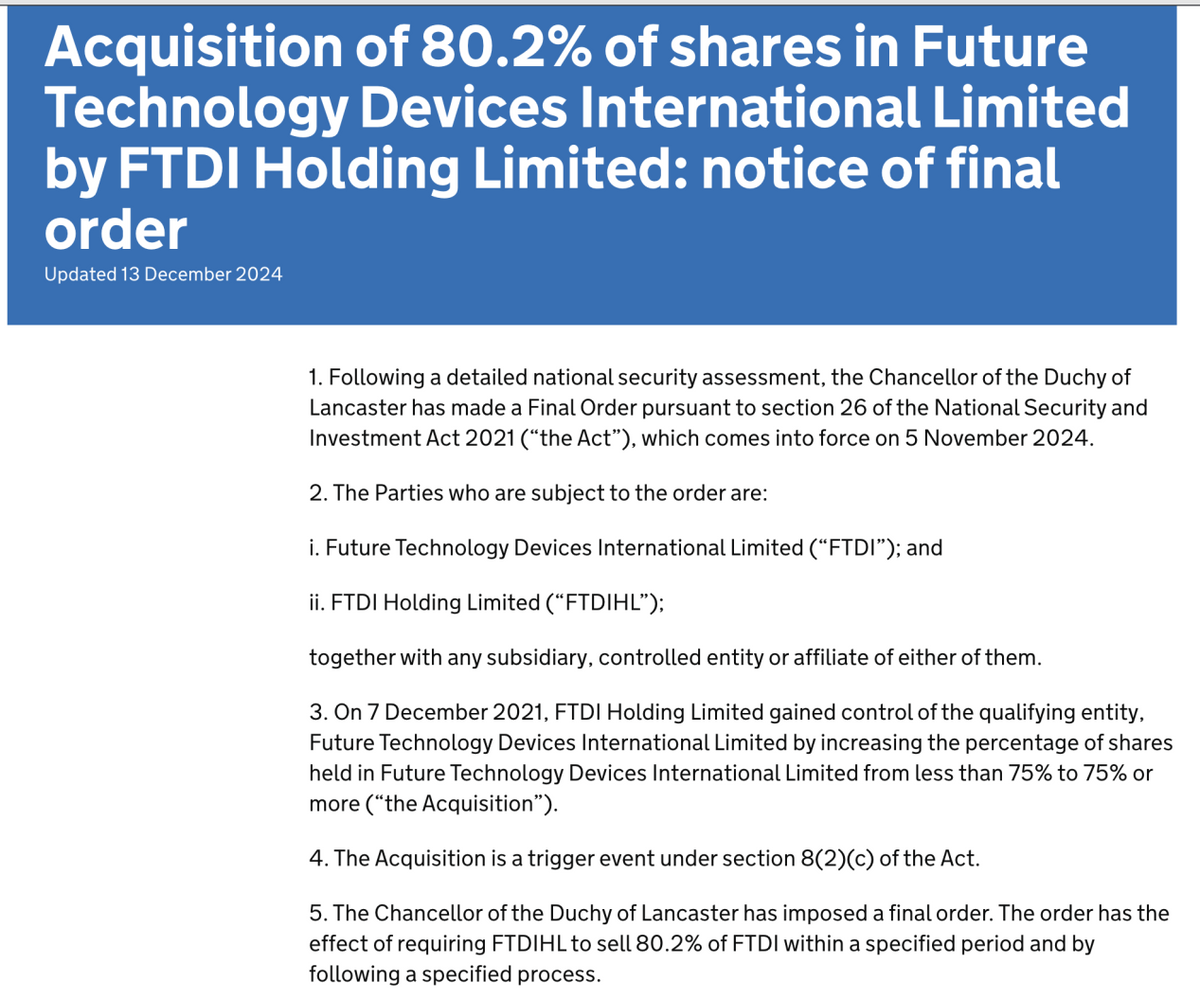
Core Viewpoint - The forced divestment of FTDI by the UK government highlights the increasing fragmentation and geopolitical tensions within the global semiconductor industry, particularly affecting Chinese investments in high-end technology sectors [1][5][7]. Group 1: Acquisition Details - In December 2021, Jian Guang Asset acquired 80.2% of FTDI for $414 million, marking a strategic move into the high-end analog chip sector by Chinese capital [1][3]. - FTDI, established in 1992, is a leading company in the USB bridge chip market with nearly 20% market share, crucial for various applications including automotive electronics and IoT [3][4]. - The acquisition was intended to integrate FTDI into the Chinese semiconductor ecosystem, addressing long-standing technological gaps [3][4]. Group 2: Regulatory Actions - The UK government initiated a security review under the National Security and Investment Act, classifying the acquisition as a "trigger event" [4][5]. - On November 5, 2024, the UK government mandated the sale of FTDI due to concerns over potential misuse of technology and threats to critical infrastructure, setting a deadline for divestment by December 2025 [1][4]. - Despite legal challenges from the Chinese entity, the UK High Court upheld the government's decision, removing legal obstacles to the forced sale [4][6]. Group 3: Implications for the Semiconductor Industry - The case reflects a broader trend of Western nations using "national security" as a rationale to restrict foreign investments, potentially leading to increased scrutiny of any Chinese semiconductor investments [5][6]. - The forced divestment of FTDI may undermine global supply chain stability and efficiency, as the semiconductor industry relies on international collaboration [7]. - The situation raises concerns about the potential for further fragmentation of the semiconductor market, which could exacerbate global chip shortages and price volatility [7]. Group 4: Future Considerations - The FTDI incident serves as a catalyst for reevaluating semiconductor governance rules, emphasizing the need for transparent and non-discriminatory international regulations [7]. - China advocates for open cooperation and fair competition in the semiconductor sector, contrasting with the political motivations observed in some Western countries [7].

美针对无人机领域增列“不可信供应商清单” 中国商务部回应
Zhong Guo Xin Wen Wang· 2025-12-23 17:14
Core Viewpoint - The Chinese Ministry of Commerce urges the U.S. to stop its erroneous practices and immediately revoke the inclusion of foreign-produced drone systems and their key components in the "untrusted suppliers list" [1] Group 1: U.S. Actions - The U.S. Federal Communications Commission (FCC) has announced the inclusion of all foreign-produced drone systems and their key components in the "untrusted suppliers list" [1] - The U.S. justifies this action under the guise of "national security," which China firmly opposes [1] Group 2: China's Response - China criticizes the U.S. for disregarding normal business transactions and trade relations between Chinese and American companies [1] - The Chinese government highlights the strong voices from the industry against the U.S. actions, labeling them as market distortion and unilateral bullying [1] - China warns that if the U.S. continues its current course, it will take necessary measures to firmly protect the legitimate rights and interests of Chinese enterprises [1]