
海啸预警

Search documents
除夕守海
Zhong Guo Zi Ran Zi Yuan Bao· 2026-02-25 03:11
Core Viewpoint - The article highlights the dedication and operational efficiency of the Tsunami Warning Center during the Chinese New Year, emphasizing the importance of continuous monitoring and rapid response to potential tsunami threats [2][3]. Group 1: Operational Efficiency - The Tsunami Warning Center conducts regular inspections of its monitoring and warning systems every six hours to ensure all operational nodes are functioning properly, aiming for early detection and accurate alerts [2]. - The current tsunami warning system in China has achieved a rapid response time of under 10 minutes from detecting a potential tsunami-triggering earthquake to issuing a warning, significantly enhancing public safety [3]. Group 2: Commitment During Holidays - During the Spring Festival, staff at the Tsunami Warning Center remain vigilant, providing tsunami warning consultation services for surrounding countries in the South China Sea, thereby reinforcing regional disaster defense [2]. - The working environment during the holiday season is made more comfortable with festive decorations and provisions, allowing staff to celebrate while fulfilling their responsibilities [4]. Group 3: Future Goals and Innovations - The Tsunami Warning Center aims to leverage artificial intelligence and new technologies to enhance tsunami monitoring and warning capabilities, focusing on continuous innovation and improvement in emergency response [4]. - The center is committed to maintaining high standards in disaster prevention and mitigation, ensuring the safety of the public and supporting the high-quality development of the national economy [4].


台湾发生5.8级地震,自然资源部海啸预警中心:不会引发海啸
Yang Shi Wang· 2025-12-24 10:54
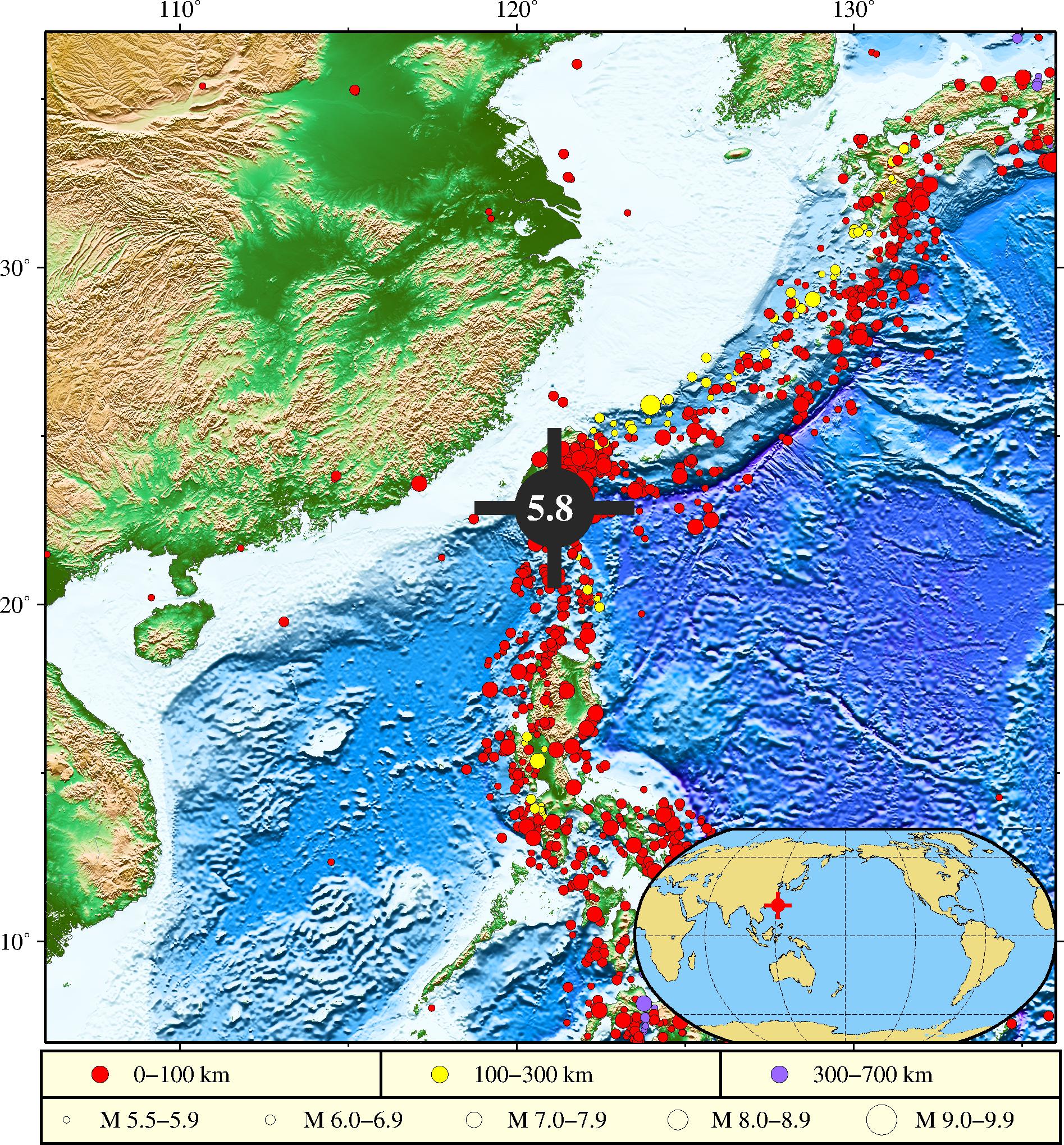
Core Viewpoint - A 5.8 magnitude earthquake occurred in the waters surrounding Taiwan on December 24, 2025, at a depth of 10 kilometers, with no tsunami expected as per the preliminary assessment by the National Marine Environmental Forecasting Center [1] Group 1 - The earthquake's epicenter was located at coordinates 22.86°N, 121.12°E [1] - The earthquake was officially measured by the China Earthquake Networks Center [1] - The Natural Resources Ministry's Tsunami Warning Center will continue to monitor and analyze seismic and tsunami data [1] Group 2 - Tsunami warning products are categorized into tsunami information and tsunami alerts, with the former indicating no significant impact on coastal areas [4] - Tsunami alerts are issued based on the maximum expected tsunami wave height and potential destructive impact, classified into three levels: yellow, orange, and red [4]
刚刚,日本再发6.6级强震!多人受伤,超10万人需避难,中国游客亲历:整栋楼都在晃!警告:后续或有更大地震!我使馆发布提醒
Mei Ri Jing Ji Xin Wen· 2025-12-09 00:47
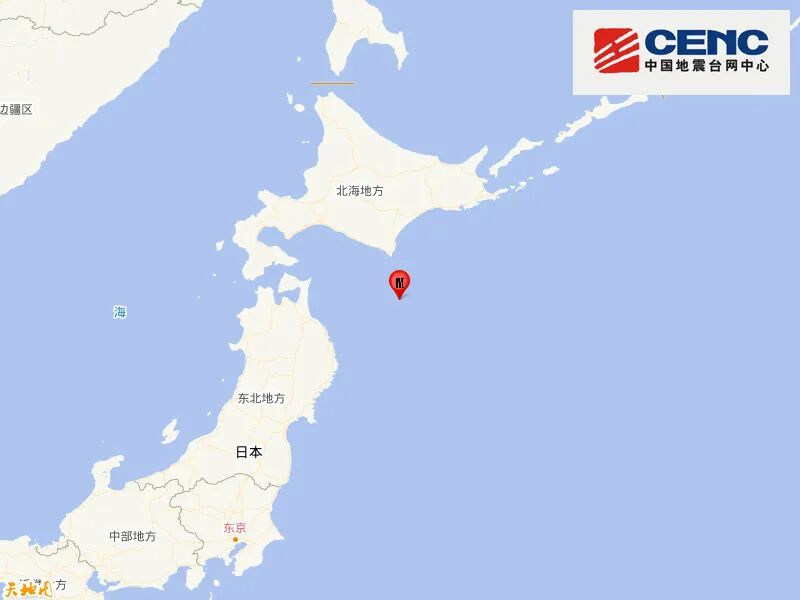
Core Viewpoint - A significant earthquake of magnitude 7.5 struck off the eastern coast of Honshu, Japan, on December 8, causing injuries, prompting tsunami warnings, and leading to evacuation orders for over 100,000 people [1][8][10]. Group 1: Earthquake Details - The earthquake occurred at 22:15 local time with a depth of 50 kilometers, followed by a 6.6 magnitude quake at 05:52 the next day [1][5]. - The Japan Meteorological Agency initially issued tsunami warnings predicting waves up to 3 meters, later downgrading to a "tsunami advisory" and eventually lifting all warnings [6][21]. Group 2: Impact and Response - The earthquake resulted in injuries to at least 16 individuals, with 12 in Hachinohe City and others in nearby areas [8][10]. - Approximately 3,900 households in Aomori Prefecture and 300 in Iwate Prefecture experienced power outages due to the earthquake [10]. - Evacuation orders were issued for over 100,000 residents across Aomori, Iwate, and Hokkaido [10][11]. Group 3: Nuclear Safety - No abnormalities were reported at nuclear power plants in the affected areas, although a nuclear waste treatment facility in Aomori confirmed water overflow from a spent fuel pool [17][20]. - The Japan Atomic Energy Agency stated that the cooling function of the spent fuel pool remained normal, indicating no safety issues [17][18]. Group 4: Future Risks - The Japan Meteorological Agency warned of the potential for larger aftershocks in the coming week, advising residents to remain vigilant [21][22]. - The Chinese Embassy in Japan issued a reminder for Chinese citizens to stay informed about earthquake developments and follow local safety instructions [22].
菲律宾南部发生6.9级地震 引发海啸预警
Xin Hua Wang· 2025-10-10 13:29
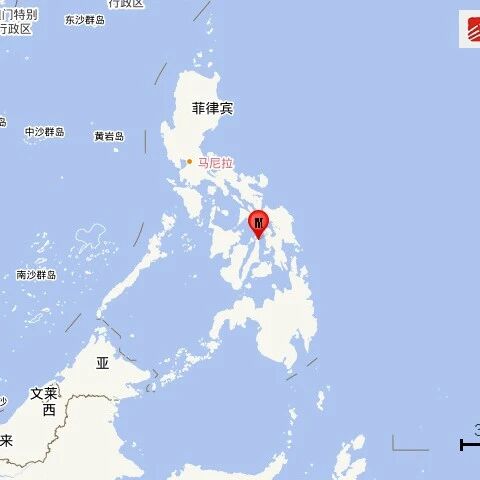
Core Points - A 6.9 magnitude earthquake occurred near Davao Oriental, Mindanao, Philippines, on October 10, triggering a tsunami warning [1] - The earthquake struck at 19:12 local time with a depth of 10 kilometers, located 36 kilometers southeast of Manay, Davao Oriental [1] - The Philippine Institute of Volcanology and Seismology (PHIVOLCS) indicated that waves exceeding one meter above normal levels are expected, particularly in bays and straits, potentially lasting for several hours [1] - This earthquake is not an aftershock of a 7.4 magnitude earthquake that occurred earlier that day, which resulted in three fatalities [2] - The Philippines is situated in the Pacific Ring of Fire, making it prone to frequent seismic activity [3]
菲律宾突发6.9级地震,震中300公里范围内有16座大中城市
券商中国· 2025-09-30 15:20
Earthquake Event - A 6.9 magnitude earthquake occurred in the Philippines on September 30 at 21:59, with a depth of 10 kilometers [1][4] - The epicenter is located at latitude 11.20°N and longitude 124.10°E [1] Impact and Warnings - The earthquake's epicenter is within a 300-kilometer radius of 16 major cities, with the nearest being Cadiz, approximately 91 kilometers away [2] - The Philippine Institute of Volcanology and Seismology issued a tsunami warning, indicating potential minor sea level disturbances in areas such as Leyte Island, Cebu Island, and Biliran Island [4] - Residents are advised to be cautious of unusual waves and to avoid coastal areas, with recommendations for boat owners to secure their vessels and for those at sea to move to deeper waters [4]
堪察加东岸海域七级以上强震或引发局地海啸
Zhong Guo Xin Wen Wang· 2025-09-13 07:54
Core Viewpoint - A 7.1 magnitude earthquake occurred off the eastern coast of Kamchatka, with a potential for localized tsunamis, but no impact on China's coastline is expected [1] Group 1: Earthquake Details - The earthquake struck on September 13, 2025, at 10:37 AM Beijing time, with coordinates at 52.96°N and 160.42°E, and a depth of 15 kilometers [1] - A separate measurement indicated a 7.3 magnitude earthquake in the same vicinity, with a depth of 20 kilometers [1] Group 2: Monitoring and Response - The China Natural Resources Ministry's Tsunami Warning Center will continue to monitor and analyze earthquake and tsunami data, providing timely updates [1]
德雷克海峡海域7.4级地震或引发局地海啸
Zhong Guo Xin Wen Wang· 2025-08-22 21:58
Core Viewpoint - A 7.4 magnitude earthquake occurred in the Drake Passage on August 22, 2025, at a depth of 51 kilometers, with potential local tsunami implications but no impact on China's coastline [1] Summary by Relevant Sections - **Earthquake Details** - The earthquake struck at 10:16 AM Beijing time, with coordinates at latitude 60.17° S and longitude 61.72° W [1] - The depth of the earthquake was recorded at 51 kilometers [1] - **Tsunami Risk Assessment** - Preliminary assessments indicate that the earthquake may trigger a local tsunami in the surrounding area [1] - The epicenter's location in the Pacific region suggests no threat to the Chinese coastline [1] - **Monitoring and Response** - The China Natural Resources Ministry's Tsunami Warning Center will continue to monitor and analyze seismic and tsunami data, providing timely updates [1]
德雷克海峡地震引发海啸预警 智利沿岸三小时内或受影响
Ge Long Hui A P P· 2025-08-22 03:32
Core Points - A recent earthquake in the Drake Passage region has prompted the U.S. tsunami warning system to issue a tsunami threat alert [1] - The Pacific Tsunami Warning Center (PTWC) indicated that the tsunami generated by the earthquake could reach parts of the Chilean coast within the next three hours [1]
无迹象表明地震海啸活动呈增多趋势
Zhong Guo Zi Ran Zi Yuan Bao· 2025-08-06 06:50
Core Points - An 8.8 magnitude earthquake occurred off the eastern coast of Kamchatka on July 30, triggering a tsunami that affected multiple countries along the Pacific coast [1][3] - The tsunami's impact on China's eastern coastline has been lifted, with no significant tsunami waves observed [3] - The tsunami waves reached areas such as Chile and New Zealand, concluding their propagation across the Pacific [3] Tsunami Characteristics - The earthquake released a significant amount of energy, being located in the Pacific Ring of Fire, an area known for its seismic activity [3] - Historical context shows that the region has experienced large tsunamis before, such as the 9.0 magnitude earthquake in 1952 [3] - The maximum tsunami waves were observed near the Kamchatka sea area, with higher waves expected in the eastern Pacific regions like Hawaii [3] Tsunami Warning System - China has a national standard for tsunami warnings, categorized into red, orange, and yellow alerts based on wave height [5] - A red alert is issued for expected waves over 3 meters, orange for 1-3 meters, and yellow for 0.3-1 meter [5] - It is advised to evacuate the coastline immediately upon any tsunami warning, regardless of the alert level [5] Historical Context and Trends - The deadliest tsunami recorded occurred in 2004 in Indonesia, with a magnitude of 9.0, generating more energy than the recent event [6] - Approximately 80% of tsunamis occur in the Pacific Ocean, with the remainder in other regions like the Indian Ocean and Mediterranean [6] - There is currently no evidence suggesting an increase in the frequency of earthquake-induced tsunamis in recent years [6]
外交部提醒:近期谨慎前往日本旅游
Yang Shi Xin Wen Ke Hu Duan· 2025-07-31 07:18
Core Viewpoint - A strong earthquake of magnitude 8.7 struck off the eastern coast of the Kamchatka Peninsula in Russia, prompting Japan's Meteorological Agency to issue a tsunami warning for the Pacific coast, with expected wave heights of up to 3 meters in some areas [1] Group 1: Earthquake and Tsunami Impact - The earthquake occurred on July 30, leading to tsunami waves reaching 22 prefectures in Japan, with observed heights of 1.3 meters in certain localities [1] - The Japanese government has issued emergency alerts and warnings for coastal areas, advising residents and visitors to take precautions [1] Group 2: Safety Measures and Emergency Contacts - The Chinese Ministry of Foreign Affairs and Chinese consulates in Japan have advised Chinese citizens to exercise caution when traveling to Japan, particularly in high-risk coastal areas [1] - Emergency contact numbers for various services in Japan have been provided, including police, fire, and maritime accident assistance [1]