
核能

Search documents
高盛闭门会-对话-从历次重大能源冲击中汲取的经验教训
Goldman Sachs· 2026-03-30 05:15
Investment Rating - The report indicates that the energy sector is currently at a bottoming stage, with an expected absolute free cash flow yield outperforming the market by approximately 4% in 2026 [1]. Core Insights - The report argues against the "peak oil demand" theory, suggesting that consumption upgrades in Asia and strategic stockpiling will support oil price expectations for 2027 [1][7]. - The shale oil outlook is seen as overly pessimistic, with potential for production increases in the Permian Basin, despite challenges at the $70 per barrel price level [1][10]. - The report highlights a shift towards energy independence driven by de-globalization, with coal becoming a primary alternative to intermittent renewable energy sources [1][9]. - The energy sector's representation in the S&P 500 is currently low at 4%, but it is expected to rise to double digits in the future [1][12]. Summary by Sections Energy Market Dynamics - The closure of the Strait of Hormuz has led to a daily production loss of 12-13 million barrels, causing a "super volatility" market rather than a stable "super cycle" [1][2]. - Historical comparisons indicate that the current market turmoil resembles the 1970s oil crisis, but with significant differences, particularly in demand dynamics [2][3]. Supply and Demand Outlook - The report notes that the energy industry is at a bottoming phase, with previous overproduction concerns being overstated [3][4]. - If the Strait remains closed, correcting the daily demand gap of 10-12 million barrels will be challenging, and price adjustments will be critical [4][5]. Regional Trends and Strategic Moves - The report discusses the potential for regionalization in the oil market but concludes that the global oil market is unlikely to end, despite some countries possibly implementing temporary export bans [8][9]. - The report emphasizes the importance of strategic reserves and redundancy in energy supply chains, which may enhance energy intensity and economic growth [9][12]. Investment Strategies - Companies are advised to maintain liquidity and prioritize cash reserves during downturns, as the industry may be entering a super cycle of capital returns [11][12]. - The report suggests that the energy sector, including renewables and new technologies, should be a focal point for investors, especially in light of ongoing market changes [16].
海外政策周聚焦:特殊时期的访美,日本在中东问题上的困局
Western Securities· 2026-03-28 15:06
Investment and Economic Relations - Japanese Prime Minister Fumio Kishida's visit to the U.S. from March 18 to 22 resulted in the announcement of a second batch of investment projects totaling $73 billion, representing 20% of the $550 billion investment framework[1] - Japan's total investment in the U.S. has reached $109 billion, focusing on energy, electricity, and mineral projects, aligning with former President Trump's support for traditional energy[1] - Key projects include the construction of small modular reactors by GE and Hitachi in Tennessee and Alabama, and natural gas power facilities in Texas and Pennsylvania[1] Trade Relations and Economic Dependencies - Japan is progressing rapidly in trade agreements with the U.S., with American exports to Japan accounting for 18% of Japan's total exports in 2025, heavily reliant on automotive and semiconductor industries[2] - Japan's economic interests are intertwined with U.S. security alliances, making it difficult for Japan to adopt a confrontational stance against the U.S. in trade matters[2] Geopolitical Risks and Market Implications - Japan's energy security is precarious, with over 94% of its oil imports coming from the Middle East, leading to a complicated diplomatic relationship with Iran[3] - Optimistic scenarios suggest that if the Strait of Hormuz reopens, Japanese stocks could rise, particularly in the automotive and export manufacturing sectors, with potential yen appreciation[3] - Conversely, if Middle Eastern tensions persist, Japan could face heightened inflation risks, a widening trade deficit, and significant yen depreciation, leading to a bearish outlook for the stock market[3] Risk Factors - The report highlights the potential for geopolitical risks to exceed expectations, which could further complicate Japan's economic landscape[4]
中核集团党组决定:吴来水履新
中国能源报· 2026-03-20 12:43
Group 1 - The core viewpoint of the article is the appointment of Wu Laishui as the new General Manager and Director of China National Nuclear Corporation Capital Holding Co., Ltd. [2] - The announcement was made during a cadre meeting held by CNNC Capital on March 17 [2]. - Wu Laishui has also been appointed as the Deputy Secretary of the Party Committee of CNNC Capital [2]. Group 2 - The decision was made by the Party Leadership Group of China National Nuclear Corporation [2]. - This leadership change is part of the company's ongoing organizational adjustments [2]. - The article is published by China Energy News, indicating its relevance to the energy sector [3].


可控核聚变系列报告(一):未来能源,聚变已至
Guotou Securities· 2026-03-20 10:41
Investment Rating - The report maintains an investment rating of "Outperform the Market - A" [5] Core Insights - Nuclear fusion is considered one of humanity's ultimate energy solutions, currently in the engineering verification stage, characterized by its infinite resources, high energy density, safety, and cleanliness [1][15] - The D-T (deuterium-tritium) reaction is the most feasible fusion reaction on Earth, with global research primarily focused on magnetic confinement fusion and inertial confinement fusion technologies [2][22] - The global fusion industry is experiencing active financing, with a total of $9.766 billion raised by 2025, and 78% of companies expect to have their first commercial demonstration plant operational between 2030 and 2035 [3][4] Summary by Sections 1. Transition from Laboratory to Engineering in Controlled Nuclear Fusion - Controlled nuclear fusion is viewed as the ultimate energy solution, with characteristics such as infinite resources, high energy density, safety, and cleanliness [1][15] - Achieving fusion ignition requires meeting the Lawson criteria, with energy balance being a crucial indicator for commercial viability [17][20] - The main technical paths for achieving fusion include magnetic confinement and inertial confinement [25] 2. Magnetic Confinement Fusion: Tokamak as the Main Pathway - The Tokamak is recognized as the most promising method for achieving controlled nuclear fusion, with ITER being the largest experimental Tokamak reactor [27][29] - The core components of the Tokamak include superconducting magnet systems, vacuum chambers, and blanket systems, which are critical for maintaining plasma stability and achieving fusion [42][43] 3. Global Acceleration of Nuclear Fusion Commercialization - The fusion industry is seeing a surge in financing, with a total of $9.766 billion raised by 2025, and a fivefold increase in new financing from 2024 to 2025 [3][4] - In China, a dual-driven model involving state-owned enterprises and private companies is emerging, with significant milestones such as the establishment of China Fusion Energy Co., which is pivotal for commercialization [3][4][11] 4. Investment Recommendations - Focus on companies involved in materials and equipment manufacturing that have received validation or orders from large scientific installations in the short term [11] - Long-term attention should be directed towards operational companies in the fusion energy sector [11]



俄罗斯:国内电价远低于欧洲水平
中国能源报· 2026-03-20 10:15
Core Viewpoint - Russia's electricity prices are lower than those in Europe due to the presence of nuclear power plants, which act as a stabilizing factor in the energy market [3]. Group 1: Electricity Pricing - The general director of the Russian State Atomic Energy Corporation, Likhachov, stated that the electricity prices in Russia, particularly in the first pricing zone, are significantly lower than those in Europe [3]. - The recent events in the Middle East have restricted natural gas supplies to Europe, causing price shocks in major European electricity wholesale markets [3]. Group 2: Uranium Supply - Likhachov emphasized that there is no risk of uranium supply shortages for Russia and its partners, as Russia possesses a resource base that can sustain mining for decades [3]. - Russia holds a leading position in the global uranium market, with advantages not only in uranium mining but also in technological advancements [3].

高盛闭门会-走向全球-韩国与新兴市场亚洲
Goldman Sachs· 2026-03-20 02:27
Investment Rating - The report indicates a strong bullish outlook for the Korean market, particularly driven by the semiconductor sector, with a projected profit growth of 130% in 2026 [1][2]. Core Insights - The Korean market is experiencing a "giant cycle" driven by storage chips, with a supply-demand gap in DRAM/NAND expected to persist until 2028 [1]. - The "Value Enhancement Plan" reforms in Korea and the anticipated upgrade of MSCI to developed market status are key catalysts, potentially leading to a net inflow of $40-50 billion [1][6]. - The semiconductor industry is characterized by strong pricing power, translating into high net profit elasticity, particularly due to the increasing demand from AI and cloud services [1][5]. - The Korean stock market has seen a significant rebound of 176% since April 2025, with a recent 20% correction viewed as a technical adjustment [2][3]. - The report highlights the potential for a large semiconductor company to go public in the U.S. in 2026, which could correct valuation discrepancies [6]. Summary by Sections Market Overview - The report discusses the impact of geopolitical tensions, particularly in the Gulf region, on market performance, noting a 10% drop in the MXAPJ index before a partial recovery [2]. - The overall earnings growth expectation for Asian markets has been adjusted from 31% to 29% for 2026, primarily due to the strong memory cycle [2]. Fund Flows and Market Sentiment - Korean market sentiment is optimistic, bolstered by governance reforms and the central role of major semiconductor firms in the global supply chain [3]. - Hedge funds have a 99th percentile allocation to Korean stocks, indicating strong institutional interest [3]. AI and Market Dynamics - The narrative around AI is seen as a positive for the Korean stock market, while it poses risks for India's IT services sector [4][5]. - The semiconductor supply chain is under pressure due to shortages in critical materials, exacerbating the supply-demand gap [5]. Catalysts for Future Growth - Potential catalysts for the Korean market include the listing of major companies in the U.S. and the upgrade of MSCI status, which could attract significant passive investment [6][7]. - The report also identifies investment opportunities in the Hong Kong real estate market, driven by demographic and economic factors [7]. Investment Strategies - Suggested strategies include focusing on sectors benefiting from geopolitical tensions, such as nuclear energy and defense [8][9]. - A specific investment basket related to the "Value Enhancement Plan" is recommended, targeting companies undergoing governance reforms and restructuring [9].
国家能源局负责人会见新加坡贸工部副常秘
国家能源局· 2026-03-19 11:15
Core Viewpoint - The meeting between China's National Energy Administration and Singapore's Ministry of Trade and Industry aims to enhance cooperation in the energy sector, focusing on advanced technologies and modernization efforts in both countries [1][3]. Group 1: Energy Cooperation - China and Singapore have a close energy cooperation relationship and are willing to strengthen policy communication and collaboration in key areas [3]. - The framework for cooperation is outlined in the Memorandum of Understanding on Energy Cooperation between the National Energy Administration of China and Singapore's Ministry of Trade and Industry [3]. Group 2: Areas of Collaboration - Singapore is advancing its energy modernization efforts and seeks to deepen cooperation with China in areas such as advanced nuclear energy, solar power generation, grid modernization, and new energy technologies [3].

伊朗核电站遭袭
财联社· 2026-03-18 06:06
Core Viewpoint - The article discusses a recent incident involving a projectile hitting the Bushehr nuclear power plant in southern Iran, emphasizing the lack of damage or casualties reported and the potential risks associated with military actions against nuclear facilities [1][2]. Group 1 - The International Atomic Energy Agency (IAEA) received a report from Iran regarding a projectile hitting the Bushehr nuclear power plant on the evening of the 17th, with no reports of damage or casualties [1]. - IAEA Director General Grossi urged all parties to exercise maximum restraint during the conflict to prevent the risk of a nuclear accident [2]. - The Iranian Atomic Energy Organization stated that such attacks violate international regulations prohibiting military actions against peaceful nuclear facilities and could lead to irreversible consequences [3].
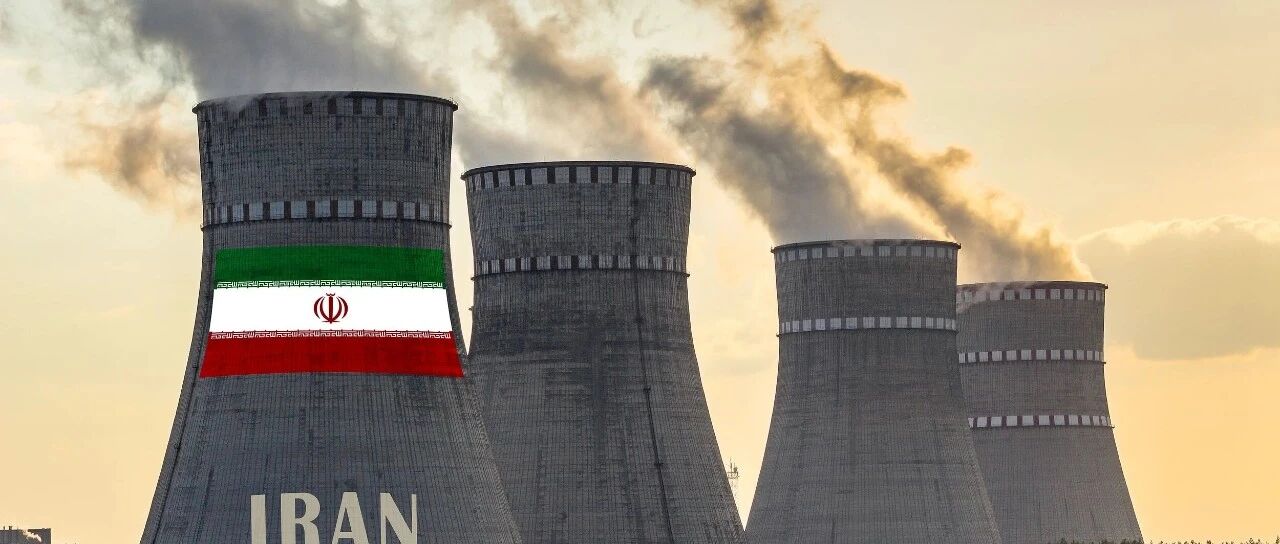
中国加入《三倍核能宣言》,全球核能加速复兴,看好中国核工业的成长性
China Post Securities· 2026-03-17 12:59
Investment Rating - The industry investment rating is "Outperform the Market" and is maintained [1] Core Insights - The report highlights the growth potential of the nuclear industry in China, especially following China's announcement to join the "Triple Nuclear Declaration" at the second Nuclear Energy Summit in Paris on March 10, 2026. This declaration aims for a global nuclear power capacity of 1200 GW by 2050, which is three times the capacity in 2020. The number of signatory countries has expanded to 38, indicating a strong global revival of nuclear energy [4][5] - The report emphasizes the strategic importance of advanced reactor technologies, particularly high-temperature gas-cooled reactors, and suggests that companies like Shanghai Electric, Dongfang Electric, Harbin Electric, and Zhejiang Fu Holdings are key players to watch in this sector [5] Industry Overview - The closing index for the industry is 11569.47, with a 52-week high of 11731.28 and a low of 6107.84 [1]
电力设备行业点评报告:“十五五”规划纲要解读-“未来能源”锚定新能源行业发展趋势
Zhong Guo Yin He Zheng Quan· 2026-03-14 08:24
Investment Rating - The report maintains a "Recommended" rating for the electric power equipment industry [3]. Core Insights - The "14th Five-Year Plan" emphasizes the development of future energy sectors, including hydrogen and nuclear fusion, marking a significant policy direction for sustainable energy [1]. - The report highlights the rapid growth potential of xBC technology and perovskite-silicon tandem solar cells, with the latter achieving a certified efficiency of 34.85% [2]. - China's nuclear power capacity is projected to reach approximately 70 million kilowatts by 2025 and 150 million kilowatts by 2035, with a compound annual growth rate (CAGR) of 13% from 2025 to 2035 [5]. - The hydrogen energy industry in China is expected to produce over 37 million tons by 2025, with green hydrogen capacity exceeding 250,000 tons per year [5]. - The domestic photovoltaic (PV) market is anticipated to add 315.1 GW of new capacity by 2025, reflecting a year-on-year growth of 14% [5]. Summary by Sections Future Energy Development - The report identifies future energy as a sustainable energy strategy distinct from traditional fossil fuels, focusing on nuclear energy, hydrogen, and biomass [1]. - The implementation of a comprehensive future energy system is emphasized, including the development of new solar cells and energy storage technologies [1]. Nuclear Energy - China leads in global nuclear power construction, with 74 reactors under construction and a net installed capacity of 76.4 GWe as of December 2025 [5]. - The approval rate for new nuclear units remains high, with 11 new units approved in 2024 and 10 in 2025 [5]. Hydrogen Energy - The report notes that the hydrogen sector is becoming increasingly significant in high-energy-consuming industries, supporting industrial decarbonization [5]. - The demand for electrolyzers is projected to grow significantly, with a 155.6% year-on-year increase in bidding volume expected by 2025 [5]. Photovoltaic Industry - The report anticipates a stable high demand for the photovoltaic industry, driven by favorable policies and market conditions [5]. - The average annual new installed capacity for PV during the "14th Five-Year Plan" is projected to be between 238 GW and 287 GW [5].