AI literacy

Search documents
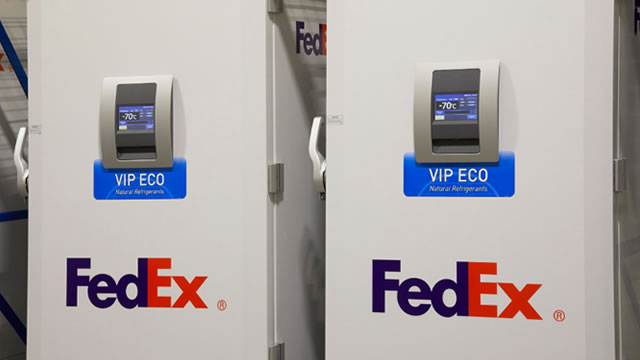
FedEx has started delivering 'promotion-ready' AI training to over 400,000 workers
CNBC· 2026-03-21 13:56
Core Insights - FedEx is implementing a comprehensive AI literacy initiative aimed at enhancing employee knowledge, efficiency, and readiness for promotions, in partnership with Accenture [1][4] - The logistics sector, including FedEx, is facing challenges such as tariffs, policy changes, and cost-cutting measures, leading to layoffs and plant closures [2] - FedEx's recent earnings reports have been positively received by investors, with shares increasing nearly 50% over the past year [2] Employee Training and Development - The AI literacy program includes personalized, role-based training that evolves with technology, utilizing Accenture's LearnVantage platform [4] - Employees are encouraged to participate in communities of practice and hackathons to foster collaboration and innovation [5] - The initiative has received full support from the C-suite, with executives actively engaging in learning experiences to ensure organizational alignment [6] Measurement and Progress - FedEx is focusing on measuring progress in AI adoption rather than just success, emphasizing the integration of AI into all aspects of operations [7] - The company is tracking AIQ (AI quotient) as employees complete training modules, although they are cautious not to over-measure [6][7] Industry Context - Other companies in the logistics and tech sectors, such as DHL Express and Citigroup, are also pursuing AI literacy initiatives, indicating a broader trend in the industry [10] - The ongoing nature of FedEx's initiative is a distinguishing feature, aiming to provide continuous training and support for all employees [11]


Turning Africa From The Lowest To Highest AI Literate Continent | Dev Aditya | TEDxMizner Boulevard
TEDx Talks· 2026-03-09 15:50
Good afternoon everyone. I want you to imagine a 12-year-old girl named Aliyah sitting under an acassia tree in rural Kenya. No electricity at home, no internet for miles. But in her hands is a simple smartphone being solar charged. And on it, an AI teacher is patiently explaining her digital skills and then AI skills. Exciting, right? She as this AI teacher is also a female avatar is also using local examples as it moves on to explaining to Alia how neural networks work. She says think of it like the roots ...

AI Should Augment, Not Replace | Aarush Panda | TEDxYouth@JBCNBorivali
TEDx Talks· 2026-03-02 15:59
I am a self-taught CGI artist who makes 3D art and animations like the ones you see in animated films and short films. For example, the DreamWorks Animations film like the Kung Fu Panda. This hobby took me more than 3 years to get good at.But these days I can generate models, textures, and entire setups with just a prompt. It has become too easy. But this made me question something important.Is the art really mine if I haven't worked on it from scratch. Would it even feel rewarding. These were the questions ...

Professional credentials and certifications are booming, but 'many of them are crap'
Yahoo Finance· 2026-03-01 17:01
Core Insights - The prevalence of nondegree credentials is increasing in the U.S., with over 1.5 million unique options available for workers seeking to enhance their employability, particularly in the context of AI literacy [1] - The impact of these credentials on workers' salaries varies significantly, with some providing minimal or no financial benefit, creating confusion for job seekers [2] - The effectiveness of nondegree credentials is influenced by the type of program and its relevance to the worker's field, with industry-recognized certifications yielding stronger returns [4] Group 1 - Nondegree credentials are becoming more common on U.S. résumés, with a wide array of options available, especially following legislative changes that allow certain programs to qualify for federal aid [1] - The market for nondegree credentials lacks accountability, leading to a mix of valuable and ineffective programs [2] - Career-relevant certifications that require rigorous verification tend to offer better financial returns compared to less recognized credentials [5] Group 2 - Certifications that are recognized by the industry and require proctored exams are associated with higher wage benefits, while digital badges provide only modest, one-time wage increases [6] - College-educated and experienced workers are more likely to pursue these credentials, despite early-career workers and those without degrees experiencing greater wage gains from upskilling [7]
Reimagining AI education and supporting the next generation of learners
Microsoft· 2026-02-05 17:17
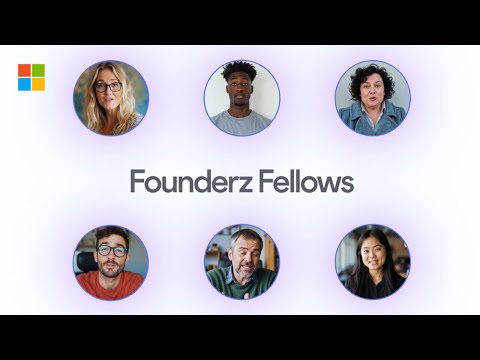
Founderz is an online and AI business school where we help professionals and organizations learn the skills they need to thrive in the AI era. We started building massive online courses around how to adopt AI and how to start using AI with Microsoft and suddenly we moved from having like 10,000 learners to having 100,000 learners. So it's about AI literacy, but most importantly, we teach learners to think for themselves, to have critical thinking, and to question things and everything that they can get from ...
Seeing Beyond the Algorithm | Jenna Hammoud | TEDxYouth@JeffersonStreet
TEDx Talks· 2025-12-03 17:27
AI Bias and its Impact - AI systems learn and repeat biases and inequalities present in the world due to being trained on biased data [5] - AI bias can lead to exclusion, such as in hiring processes where AI tools favor certain demographics over others [7][8][10][11] - Lack of representation in AI training data can result in systems that do not accurately recognize or serve all users [15][20] The Importance of Awareness and Critical Thinking - Awareness and AI literacy are crucial for challenging biased AI systems and promoting change [6][23] - Questioning AI responses and outcomes can help break the cycle of reinforcing existing biases [6][18] - Individuals have the power to shape the future of AI by being informed, curious, and unafraid to challenge the systems around them [24] Examples of AI Bias and Exclusion - An AI hiring tool favored men due to being trained on 10 years of resumes primarily from men [7][9] - Facial recognition systems have difficulty accurately detecting darker-skinned and female faces [20] - Voice recognition systems may not be trained to recognize higher-pitched voices, excluding women [15] Call to Action - Individuals should understand the biases rooted within technology to question and challenge outcomes [18] - Promoting ethical and equitable AI systems requires collective effort and awareness [22] - The goal is to lead AI and the world towards a future that is fair, inclusive, and human-centered [25]

‘Evolving faster than we can keep up’: Bipartisan lawmakers on improving AI literacy
NBC News· 2025-12-02 23:00
Welcome back now to the latest in our Finding Common Ground series, spotlighting lawmakers working across the aisle on a specific issue or piece of legislation. Today, we have a bipartisan pair of lawmakers working to help small businesses embrace and utilize the power of AI. The legislation would require the Small Business Administration to develop resources on its online platform to help small business owners become more literate about AI.Joining me now are the two lawmakers who introduced that legislatio ...

X @Bloomberg
Bloomberg· 2025-11-20 04:55
Former UK Prime Minister Rishi Sunak says having AI literacy skills is “critical” as he dishes out advice on how to navigate the job market in the age of AI.More from the Bloomberg #NewEconomyForum https://t.co/ZpDJrhjvTo https://t.co/b3NTmzHiWU ...
How Philips is scaling AI literacy across 70,000 employees
OpenAI· 2025-11-14 06:00
AI Adoption & Literacy - Philips is elevating AI literacy across its 70,000 employees to ensure everyone knows how to use AI [2] - Philips initiated a journey with OpenAI a few months ago, deploying it among a few thousand users to observe adoption and benefits in daily practices [2] - Philips' XCO members were personally trained to use the enterprise chat GPT tool [3] - A summer challenge was launched to encourage employees to propose AI applications for the company, with licenses awarded to the best ideas [3][4] Healthcare Efficiency & Innovation - Philips aims to reduce the administrative burden on healthcare practitioners, freeing up time for patient care [5] - The goal is to fully utilize AI's potential in healthcare, going "for the moon" and "Mars" [5] - Clinicians spend an equivalent amount of time on administration as they do on saving lives, highlighting the need for AI to improve efficiency [4] AI Integration - AI is already embedded in many Philips products, utilizing traditional AI and machine learning [2] - Philips views AI as a tool for playing, working, and innovating [1]
The most powerful AI skill? Saying ‘I don’t know’
Fastcompany· 2025-10-30 07:00
Core Insights - The concept of "AI literacy" is becoming essential for job seekers and employees, with mentions of related terms in earnings calls increasing by nearly 800% in the past year [2][4] - A significant number of professionals feel nervous or embarrassed about their AI knowledge, with 35% feeling too anxious to discuss AI at work and 33% feeling inadequate in their understanding [4][5] - The workplace culture is fostering a "shame spiral" that discourages curiosity and open discussions about AI, leading to a lack of engagement and understanding [4][5] Industry Impact - Companies are rapidly replacing roles with AI tools without adequately training workers, leading to feelings of impostor syndrome among employees [4][5] - AI systems are making critical decisions without sufficient oversight, which can result in biased outcomes, as seen in cases like Amazon's AI recruiting tool and Workday's screening tools [5][6] - The need for a cultural shift towards vulnerability and openness in discussing AI is emphasized, as leaders should model the behavior they wish to see in their teams [6][7] Recommendations for Improvement - Organizations should create environments that allow employees to ask basic questions and admit gaps in their knowledge, fostering a culture of learning [6][7] - Companies like JPMorgan and Johnson & Johnson have successfully implemented low-stakes experimentation with AI, encouraging leaders to admit when they are unsure, which builds trust and accelerates adoption [8][9] - Emphasizing the importance of saying "I don't know" can empower employees to engage with AI more confidently and contribute to a more inclusive workplace [9]