
Economic Outlook

Search documents
US Runs Annual Trade Deficit Up to $901 Billion, One of Biggest Since 1960
Bloomberg Television· 2026-02-19 22:06
Shall we take a little step back on the trade data. Because there's been a lot of volatility underneath the hood over the last 12 months. So let me just say, we've seen this widening in the deficit.Couple of things to remember, that the deficit narrowed a lot in the first half of last year. There was a lot of uncertainty about trade. Then all of that was unwound in the second half of the year.And now we're seeing some normalization in trade data finally. So it's been a very volatile 2025. Now, the next thin ...


X @Bloomberg
Bloomberg· 2026-02-17 18:06
RBA Saw ‘Material’ Shift in Economic Outlook in Rate U-Turn https://t.co/FrgwQID0s1 ...
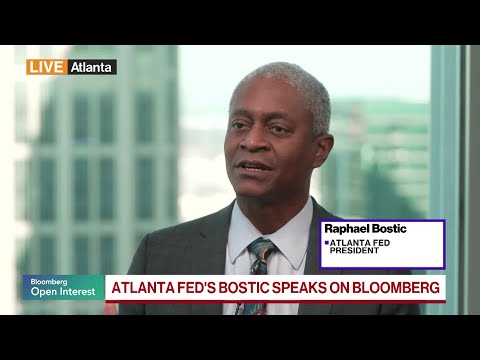
Bostic Talks Career With Fed, Inflation Risk and Warsh
Bloomberg Television· 2026-02-06 15:07
Good morning, i Michael McKee the international economics and policy correspondent for bloomberg. And we are here in atlanta. Welcome to all of our viewers and listeners around the world on bloomberg television and radio.We're speaking with the Atlanta Fed president Raphael Bostic, who is retiring at the end of this month. So this is sort of your exit exit interview. Mike, it's always good to see you.I want to ask you, as you travel around your district for the past year, what's the mood like among companie ...
WSJ Chief Economics Correspondent Explains Fed’s Outlook for the U.S. Economy | WSJ News
WSJ News· 2026-01-28 23:46
The Fed is feeling better about the economy. That was the takeaway from the press conference JPAL just finished here at the Federal Reserve, where the central bank decided to keep interest rates steady for the first time since last summer. >> While job gains have remained low, the unemployment rate has shown some signs of stabilization and inflation remains somewhat elevated.>> There wasn't a lot of drama around the rate decision, but there was loads of political intrigue given what's happened since the beg ...

Bloomberg Surveillance: The Fed Decides 1/28/2025
Bloomberg Television· 2026-01-28 22:29
JONATHAN: FOR THE AUDIENCE WORLDWIDE, GOOD AFTERNOON. THE FED DECIDES STARTS RIGHT NOW. >> THIS IS A SPECIAL EDITION OF "BLOOMBERG SURVEILLANCE." WITH JONATHAN FERRO, LISA ABRAMOWICZ AND TOM KEENE."BLOOMBERG SURVEILLANCE: THE FED DECIDES." JONATHAN: HERE WE GO AGAIN. FOR THE FIRST TIME IN 2026 THE RATE DECISION FROM THE FOMC 27 MINUTES AWAY. 30 MINUTES AFTER THAT, A NEWS CONFERENCE WITH CHAIRMAN POWELL.IT IS FAIR TO SAY THE LEAST ANTICIPATED FED MEETING OF THE LAST 12 MONTHS. TOM: YOU HAVE TAKEN THE KOOL-AI ...
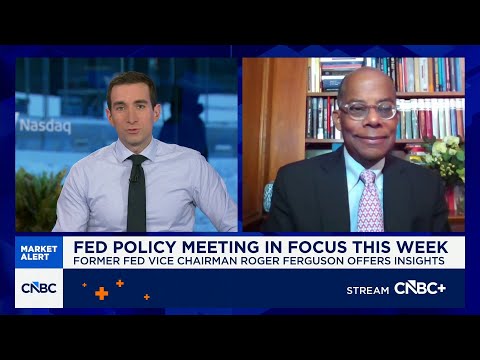
Expect a wait-and-see meeting from the Fed this week, says Roger Ferguson
CNBC Television· 2026-01-26 14:40
Markets are going to be focusing on the Fed's two-day policy meeting this week. For insights on what to expect, want to bring in Roger Ferguson, former Fed vice chairman and a CNBC contributor. Before we even go there, uh my friend, uh help us understand what you think is going on.We keep looking at these markets. You heard Steve talking about is it one of the Kevin now, now we're talking about Kevin Worsh, uh Rick Reer. Where do you land.And and how important is it or not at this point. Well, obviously, yo ...
JPMorgan and Citi Aren’t Feeling the Affordability Crisis
MINT· 2026-01-14 18:53
Core Viewpoint - Despite an affordability crisis affecting many Americans, major banks are reporting strong consumer spending and a positive economic outlook for 2026 [1][2]. Group 1: Bank Performance and Consumer Behavior - Fourth-quarter earnings from major banks like Bank of America, Citigroup, JPMorgan Chase, and Wells Fargo indicate that households and small businesses are resilient, with no signs of deterioration in their financial health [2]. - JPMorgan's CEO Jamie Dimon noted that consumers have money and job availability remains, contributing to a positive outlook for the next 6 to 12 months [3]. - Bank of America's CFO Alastair Borthwick reported a 16% increase in invested assets held by retail clients, reaching approximately $600 billion, with $19 billion in inflows over the year [3]. Group 2: Economic Indicators and Consumer Spending - Retail sales data for November showed the strongest growth since July, driven by increased car buying and holiday shopping, supporting the view of a growing economy [4]. - Wells Fargo's CEO Charlie Scharf mentioned that early indicators, such as checking accounts and direct deposit amounts, have not shown significant negative trends [5]. Group 3: Affordability Issues and Credit Trends - While affordability issues exist in sectors like housing and healthcare, the overall sentiment is mixed, with lingering effects of past inflation impacting consumer perceptions [6]. - The Federal Reserve Bank of New York reported that the share of borrowers more than 90 days late on credit card debt rose to over 12% late last year, up from less than 8% at the end of 2022 [7]. - Despite rising delinquencies among lower-income borrowers, major banks are not experiencing increased late payment rates on credit cards, and actual losses on bad debts have decreased as a proportion of total balances [8]. Group 4: Regulatory Concerns and Industry Response - President Trump's focus on high credit card interest rates and corporate ownership of rental homes has prompted pushback from major banks, which argue that such measures could harm profits and restrict credit access [9][10]. - Citigroup's CFO Mark Mason warned that proposed policies could negatively impact credit availability for those who need it most, potentially harming the economy [10]. Group 5: Future Outlook - Smaller U.S. banks reporting later may reveal more consumer strain, but with unemployment contained, significant issues are not anticipated [11]. - Overall, American consumer spending is expected to continue driving economic growth and bank profits [11].

JPMorgan's Jamie Dimon Trades 'Hurricane' Warning For 'Pretty Positive' Outlook
Benzinga· 2026-01-13 21:57
Core Viewpoint - JPMorgan Chase & Co. CEO Jamie Dimon expresses short-term optimism about the economy while remaining concerned about long-term geopolitical risks and fiscal deficits [2][3][6]. Economic Outlook - Dimon indicates a positive short-term outlook for the economy, citing a resilient American consumer and a robust labor market despite some cooling [2]. - He attributes current economic momentum to fiscal policy, specifically referencing significant stimulus from government spending [3]. Fiscal Concerns - Dimon warns about projected annual budget deficits of $2 trillion, stating that endless borrowing is unsustainable and will eventually have negative consequences [4]. - He predicts that bond markets will face challenges in absorbing this debt, although the timing of such an event is uncertain [5]. Geopolitical Risks - Dimon emphasizes that geopolitical issues now take precedence over domestic economic data in his concerns, expressing greater worry about global conflicts than the economy [6]. - He advocates for the U.S. to maintain its global leadership role, cautioning against a shift towards a bilateral world that undermines multilateral systems like NATO and the EU [7].


Investors See Bright Side in Economic Outlook, Push Stocks to New Highs
WSJ· 2026-01-09 21:55
Core Insights - The stock market has experienced a strong start in 2026, indicating a positive outlook for the remainder of the year [1] Group 1 - The initial performance of the stock market in 2026 is described as "hot," suggesting robust investor confidence and activity [1]

2026 日本经济展望:基本面稳健,政策风险待察_ 2026 Japan Economic Outlook_ Steady Fundamentals, Policy Risks Ahead
2026-01-07 03:05
Summary of Japan Economic Outlook 2026 Industry Overview - **Industry**: Japanese Economy - **Forecast**: The Japanese economy is expected to grow steadily, with a projected real GDP growth of **0.8%** in 2026, primarily driven by domestic demand [2][4] Key Points and Arguments Economic Growth - **Domestic Demand**: The growth is led by solid domestic consumption and capital expenditure (capex), supported by a structural shift towards a labor shortage economy and continued high wage growth [2][4] - **Private Consumption**: Expected to grow by **0.9%** in 2026, aided by wage growth and a decrease in inflation [4][12] - **Capex Growth**: Anticipated to continue its upward trend, driven by investments in software and R&D to address labor shortages [4][23] Inflation and Wages - **Inflation**: Underlying inflation is expected to rise moderately, with core CPI likely to fall below **2%** year-on-year by mid-2026 due to slowing food prices and government price controls [6][69] - **Wage Growth**: The 2026 shunto wage negotiations are expected to yield wage growth in the low **3%** range, despite a potential slowdown due to weaker earnings at large manufacturers [6][69] Monetary Policy - **Bank of Japan (BOJ)**: Expected to increase the policy rate to **1%** with a **25 basis points** hike in July 2026, transitioning from annual to semi-annual rate hikes [8][9] - **Terminal Rate**: The terminal rate is projected at **1.5%**, which aligns with the neutral rate level [8][9] Fiscal Policy and Debt Management - **Fiscal Soundness**: Japan's government debt-to-GDP ratio has been declining, but concerns remain regarding the sustainability of fiscal policies under the Takaichi administration [9][12] - **Impact of Tax Cuts**: Permanent tax cuts and spending increases could reverse the declining trend of the debt-to-GDP ratio, necessitating careful monitoring of fiscal policies [9][12] External Demand and Exports - **Export Trends**: Exports are expected to decelerate slightly due to Japan-China diplomatic tensions and US tariff policies, with a forecasted contribution of external demand to GDP growth at **-0.2 percentage points** in 2026 [5][46] - **US Tariffs**: The effective US tariff rate on Japan remains high, impacting export prices and volumes [46][47] Risks and Considerations - **Labor Shortages**: The structural labor shortage is a significant factor influencing wage growth and capex, with companies increasingly investing in software and R&D to mitigate these shortages [23][32] - **Market Confidence**: Securing market confidence in fiscal policy and appropriate debt management will be crucial as interest rates rise [9][12] Additional Important Insights - **Consumer Behavior**: Households aged 60 and older, which constitute over 50% of Japanese households, are less affected by real wage improvements, impacting overall consumption growth [20][21] - **Capex Characteristics**: The current capex uptrend is characterized by a shift from machinery investment to software investment, with growing order backlogs amid tightening supply constraints [31][32][33] This comprehensive outlook highlights the steady growth trajectory of the Japanese economy, driven by domestic demand, while also addressing the potential risks and challenges posed by external factors and fiscal policies.
