
Food inflation

Search documents
ECB expects food inflation to settle just above 2%
Reuters· 2026-02-26 08:43
Read Next Skip to main content Exclusive news, data and analytics for financial market professionalsLearn more aboutRefinitiv ECB expects food inflation to settle just above 2% February 26, 20268:43 AM UTCUpdated ago By Reuters European Central Bank (ECB) President Christine Lagarde addresses the press following the ECB's Governing Council meeting, at the ECB headquarters in Frankfurt, Germany, February 5, 2026. ... Purchase Licensing Rights, opens new tab Read more FRANKFURT, Feb 26 (Reuters) - The Europea ...


Antitrust enforcement weakens under Trump
MSNBC· 2025-12-20 19:40
Alleged Anti-Competitive Practices - The FTC may have buried a case alleging PepsiCo and Walmart colluded to rig grocery prices, inflating costs for Walmart's competitors [1] - PepsiCo allegedly policed and punished grocery chains that competed with Walmart on Pepsi products [1] - Pepsi's soft drink prices soared 67% since 2019, outpacing the general grocery price increase of over 35% [1] - Trump's Department of Justice announced a settlement with Real Page, accused of helping corporate landlords coordinate rent hikes [8] - Nine states refused to sign on to the settlement between the DOJ and Real Page [15] Company Statements and Market Share - PepsiCo took in $92 billion last year [1] - Walmart controls more than 20% of the US grocery market [1][3] - Walmart spokesperson stated their commitment to negotiating on behalf of customers to deliver value and everyday low prices [2] - Pepsi spokesperson claimed the FTC complaint included inaccuracies and unsubstantiated allegations [3] Government Actions and Criticisms - Trump's FTC chair, Andrew Ferguson, dropped the antitrust case against PepsiCo and Walmart [1] - Ferguson dismissed the investigation as purely political, claiming no evidence of corporate abuse [6] - Assistant Attorney General Abigail Slater called the settlement with Real Page a victory for consumers [12]


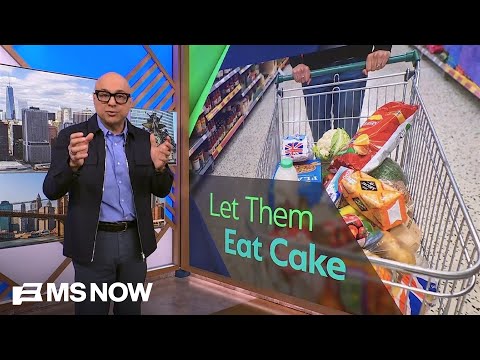
'Appetizer economy': Food inflation is on restaurant table as diners go smaller with menu choices
CNBC· 2025-12-12 15:17
Core Insights - The current dining trend in the U.S. is characterized by an increase in appetizer orders, reflecting a shift in consumer behavior towards more affordable dining options amid food inflation [1][2][3] Restaurant Industry Trends - Appetizer orders have risen by 20% year over year, while orders for entrees and desserts remain flat or declining [2] - The "appetizer economy" is emerging, with some appetizers experiencing growth rates exceeding 30% [3] - Dessert orders have decreased by 2% year over year, indicating a shift in consumer preferences [3] Consumer Behavior - Consumers are increasingly opting for appetizers due to their association with promotions and drink specials, making dining out more affordable [4] - The trend towards frozen or shelf-stable appetizers is also growing, helping restaurant operators manage costs and reduce waste [4] Grocery and Private Label Trends - The food spending landscape reflects a K-shaped economy, with affluent consumers increasing spending on novel products while the majority shift towards private label brands [5][6] - Consumers can save 10-20% by switching to private label products, which have gained acceptance and are now perceived similarly to national brands [6] - Retailers like Albertsons, Costco, and Kroger are expanding their private label offerings, with expectations that private label could represent 30% of sales for some companies [7] Food Inflation and Pricing - Food inflation remains persistent, with food-at-home prices increasing between 1.9% to 2.7% year-over-year [9] - The consumer price index for September indicated a 3.1% increase in food prices, with specific categories like meat and poultry seeing a surge of 5.2% [10] - The "food away from home" sector is experiencing even higher inflation at 3.7%, prompting a shift towards private label spending in various dining establishments [11] Supply Chain Challenges - Tariffs and supply chain issues have contributed to price increases, particularly for perishable items, with no immediate relief expected [12] - The complexity of the food supply chain means that consumers may not understand the time required to stabilize supply after disruptions [13]

Chef Lidia Bastianich on food inflation, new PBS special and top Thanksgiving tips
Youtube· 2025-11-24 13:21
Core Insights - The discussion centers around food inflation and its impact on consumers and restaurants, highlighting the challenges faced in the food industry [2][3] - The importance of community and neighborly support through food is emphasized, showcasing how food can unite people [7][10] Food Inflation - Food prices are rising across restaurants, wholesale, and retail, affecting both businesses and consumers [3] - Strategies such as seasonal buying and using cost-effective ingredients are recommended to navigate food inflation [4][5] Community and Food - The new PBS special "Lydia Celebrates America: A Nation of Neighbors" focuses on the role of food in fostering community connections [7] - Examples of community initiatives, such as restaurants offering meals in exchange for work or food donations, illustrate the spirit of neighborly support [10][12] Thanksgiving Insights - Thanksgiving dinner costs are reportedly lower this year, with turkey prices down by 17%, providing relief to consumers [13] - Tips for preparing a special Thanksgiving meal include maximizing oven use and incorporating unique flavors, such as balsamic vinegar for turkey [14][15][16]

The fast-casual bowl boom is over. Wall Street isn't sold on Cava, Chipotle deals to lure back spenders
CNBC· 2025-11-22 15:01
Core Insights - Fast-casual restaurants like Chipotle, Cava, and Sweetgreen are experiencing a decline in customer traffic, particularly among younger consumers due to economic pressures such as food inflation and job insecurity [2][3] Industry Trends - Nearly 40% of consumers perceive fast-casual dining as too expensive, which aligns with Chipotle's efforts to combat the perception of high menu prices [2] - The fast-casual segment is seeing a shift in consumer behavior, with younger diners becoming more cautious about discretionary spending, leading to fewer weekday lunch visits [3] Company Strategies - Chipotle has shifted its focus towards loyalty programs and promotions to attract customers, with two-thirds of consumers indicating that promotions influence their dining decisions [3][4] - In October, Chipotle launched a month-long rewards program and special promotions, including a Halloween offer for customers in costume, to drive traffic and engagement [5]


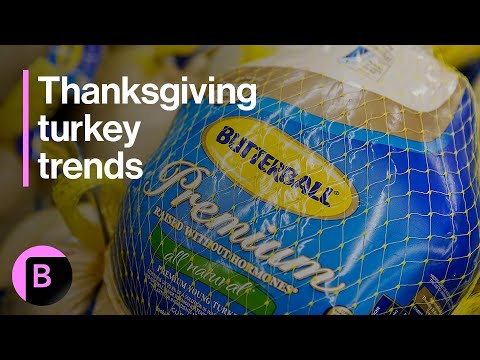
Thanksgiving Turkey Trends and Tips from Butterball CEO
Bloomberg Television· 2025-11-21 18:49
Market Trends & Consumer Behavior - Turkey prices are the same or lower than last year for Thanksgiving, with retailers offering strong pricing [2] - Consumers do not plan to compromise on turkey for Thanksgiving, with 84% planning to have it on the table, consistent with previous years [2][4][5] - There's a growing consumer focus on protein, particularly low-fat protein, making turkey a suitable option [7] - Ground turkey is experiencing double-digit growth, indicating a shift towards everyday consumption [8] Company Strategy & Operations - Butterball has a network of over 600 family farmers across the country, ensuring a constant supply of turkeys [10] - The company can plan carefully and make adjustments throughout the year to ensure adequate supply [11] - About one-third of Butterball's business revolves around holidays, while the rest is year-round [17] - Butterball is adapting its communication strategies to reach younger consumers who are now making purchasing decisions [18] Industry Challenges & Opportunities - Bird flu has impacted the turkey industry for the last several years, but supply is expected to be adequate for Thanksgiving [12][13] - The federal government has allocated $1 billion to help prevent the spread of bird flu [14] - Turkey is positioned as a healthy and economical protein, fitting well with current dietary trends [19]
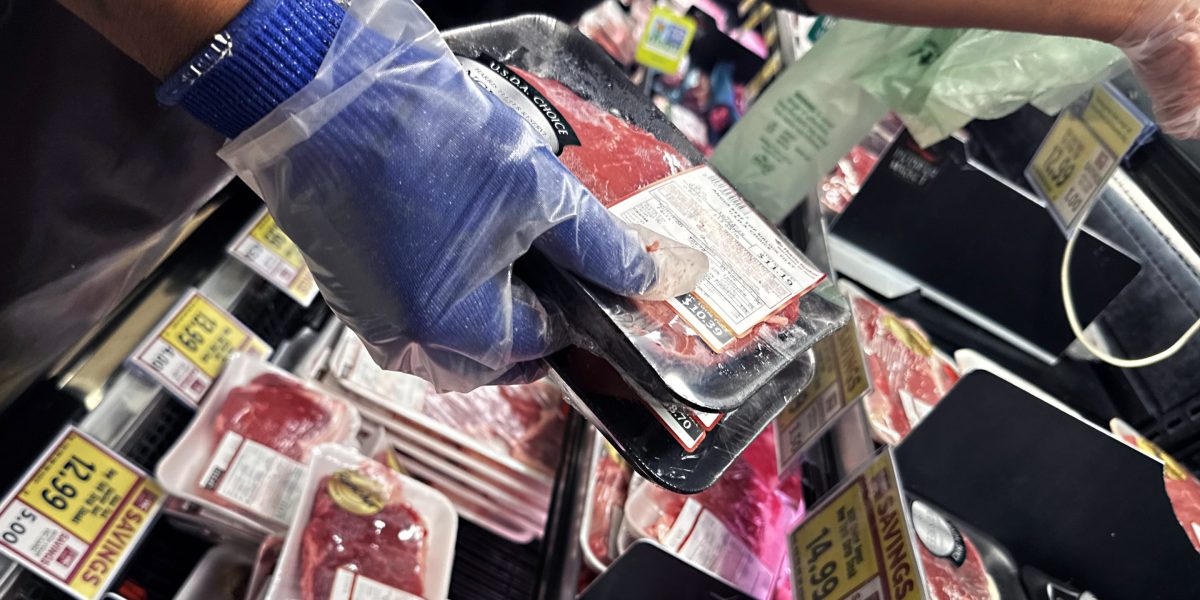
Trump asks Justice Department to probe meatpackers on prices
Fortune· 2025-11-07 22:51
Industry Overview - President Trump has requested the Justice Department to investigate the meatpacking industry for alleged price manipulation and collusion, claiming it is driving up beef prices [1] - The retail price of ground beef has reached record highs, contributing to food inflation concerns [3] Company Impact - Shares of JBS NV, the world's largest meatpacker, fell by as much as 6.2% following Trump's comments, while Tyson Foods Inc. saw a drop of up to 2% before recovering [1] - The price of boxed beef has increased despite a substantial drop in cattle prices, raising suspicions of potential wrongdoing in the industry [4] Economic Context - The U.S. cattle herd has significantly decreased due to high interest rates, expensive feed, and drought conditions, making herd rebuilding a lengthy process [3] - Trump's imposition of a 50% tariff on Brazilian products due to diplomatic issues has also impacted beef exports from companies like JBS and Minerva SA [5]

Global Markets React to Geopolitical Tensions, Commodity Trades, and Economic Policy Shifts
Stock Market News· 2025-11-06 05:38
Geopolitical Developments - Russia reported the downing of 75 Ukrainian drones, indicating ongoing volatility and human cost in the conflict, which may influence energy markets and defense sector outlooks [2][8] Commodity Market Insights - China has purchased approximately 120,000 tons of US wheat across two cargoes for December delivery, highlighting continued demand from China and potentially impacting global grain prices and trade relations [3][8] Economic Policy and Investment Climate - Argentine President Javier Milei rejected investor calls to allow the peso to float freely, suggesting a continuation of currency controls that may affect foreign investment flows and the broader economic reform agenda [4][8] - JPMorgan Chase & Co. CEO Jamie Dimon indicated that Argentina might not require a bank loan, suggesting a potentially improving financial position for the country [5][8] - Dimon emphasized the importance of the Federal Reserve's independence for market stability and confidence in U.S. monetary policy [5][8]

Lineage trims full-year outlook on tariff overhang
Yahoo Finance· 2025-11-05 16:34
Core Insights - Lineage Inc. is experiencing a net loss of $112 million in Q3, with adjusted funds from operations (AFFO) of 85 cents per share, which is 5 cents lower year-over-year [2] - The company reported consolidated net revenue of $1.38 billion, reflecting a 3% year-over-year increase, aligning with consensus estimates [2] - High food prices are affecting customer inventory levels, leading to a lowered full-year outlook due to ongoing trade uncertainties [1][4] Financial Performance - The AFFO guidance for full-year 2025 has been reduced by 10 cents, now ranging from $3.20 to $3.30 per share [4] - Adjusted earnings before interest, taxes, depreciation, and amortization (EBITDA) guidance has been slightly lowered to a range of $1.29 billion to $1.305 billion [4] - Physical occupancy was reported at 75.2%, which is 110 basis points lower year-over-year but improved by 60 basis points sequentially [3] Operational Metrics - On a same-warehouse basis, pallet throughput declined by 2% year-over-year, while storage revenue per pallet increased by 1% [3] - Despite the challenges posed by food inflation, Lineage anticipates capturing low-single-digit net rent increases next year, consistent with inflation trends [5] Market Context - Container imports to the U.S. remain weak, impacting inventory levels as seafood customers are reducing stock in anticipation of tariff clarity [4] - Shares of Lineage (NASDAQ: LINE) fell by 2.2% on the day of the report, contrasting with a 0.3% increase in the S&P 500 [6] - Lineage operates over 485 facilities with a total space of 3.1 billion cubic feet across North America, Europe, and the Asia-Pacific region, also providing freight forwarding and customs brokerage services [6]

UK supermarkets ask chancellor for exclusion from business rates surtax
Yahoo Finance· 2025-10-27 10:05
Core Viewpoint - Several of the UK's largest supermarket operators are requesting an exemption from a proposed business rates surtax, arguing that it would increase costs and potentially lead to higher food prices for consumers [1][2]. Group 1: Request for Exemption - Major supermarket chains including Aldi, Asda, Lidl, Morrisons, Marks & Spencer, Sainsbury's, and Tesco have signed a letter to Chancellor Rachel Reeves seeking exemption from the surtax on properties valued above £500,000 ($666,220) [1][2]. - The letter emphasizes that including supermarkets in the surtax would add to the sector's costs, risking higher prices for households and challenging their ability to deliver value [2][3]. Group 2: Impact on Food Prices and Retail Sector - The signatories highlight that large retail premises, while a small proportion of all stores, account for a third of the total business rates bill in the retail sector, indicating that further tax increases could exacerbate food inflation [2][4]. - The British Retail Consortium (BRC) argues that addressing the retail sector's tax burden would demonstrate government support for the industry and commitment to tackling food inflation [3][4]. Group 3: Employment and Economic Contribution - The BRC CEO noted that large retail stores sustain nearly one million jobs in the UK and contribute significantly to the retail sector's business rates, despite being a small fraction of total stores [4]. - The letter suggests that exempting supermarkets from the surtax would not only help mitigate food inflation but also support jobs and investment across the country [4][5].