
Gen AI

Search documents
Meta Preparing to Deploy Four New Homegrown Chips to Handle AI
Bloomberg Technology· 2026-03-11 16:11
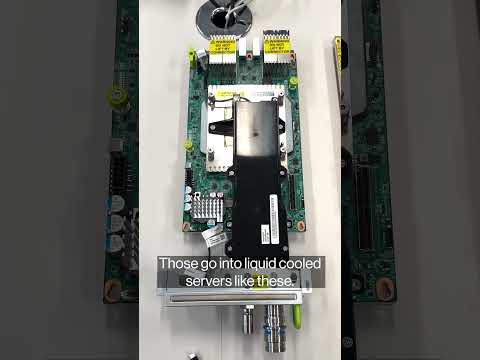
This is Meta's chip lab in Fremont, California. Inside the company is developing the next generations of MTIA. A short for Meta Training and inference Accelerator, its in-house A.I. program. It's a long term effort to build the most efficient architecture for matters internal workloads.With four new generations of chips planned over the next two years, from ranking and recommendations to large scale gen AI inference, when chips come in from the fab, this is where they're validated, tested at the chip rack a ...



Inside Meta’s AI chip lab
Bloomberg Television· 2026-03-11 14:35
This is Meta's Chip Lab in Fremont, California. Inside, the company is developing the next generations of MTIA, short for Meta Training and Inference Accelerator, its in-house AI chip program. It's a long-term effort to build the most efficient architecture for Meta's internal workloads.With four new generations of chips planned over the next two years, from ranking and recommendations to large-scale Gen AI inference. When chips come in from the fab, this is where they're validated, tested at the chip rack ...
IT stocks in focus after Oracle’s strong results; Nuvama says valuations now attractive after correction
The Economic Times· 2026-03-11 04:19
Group 1: Oracle's Financial Performance - Oracle reported total revenue of $17.19 billion for Q3 of fiscal year 2026, surpassing analysts' expectations of $16.91 billion [1] - The company raised its revenue forecast for fiscal 2027 to $90 billion [1] Group 2: Market Impact and Investor Sentiment - Oracle's strong earnings positively influenced Wall Street, with the Nasdaq Composite gaining 0.01%, while the Dow Jones Industrial Average fell 0.07% and the S&P 500 dropped 0.21% [3] - Investors are closely analyzing Oracle's earnings for insights into the broader AI and cloud computing economy, as Oracle positions itself against competitors like Amazon Web Services and Microsoft Azure [2] Group 3: IT Services Industry Outlook - Nuvama remains bullish on IT stocks, suggesting that a 20% correction since the beginning of the year has made valuations attractive [6] - The Indian IT services industry faces disruption from Gen AI, but Nuvama believes there is no existential threat and that the need for system integrators will persist [8][9] - Nuvama anticipates that the adoption of Gen AI will follow a technology adoption curve, leading to initial revenue cannibalization for IT services firms [9] - The total addressable market (TAM) for IT services is expected to expand to USD 300 to USD 400 billion by 2030, with a shift from headcount-driven to outcome-based revenue models [10] - Nuvama has a 'Buy' call on all top ten IT services stocks, upgrading several companies including HCLTech, Wipro, and Tech Mahindra [12]



MSCI Inc. (MSCI) Presents at RBC Capital Markets Global Financial Institutions Conference 2026 Transcript
Seeking Alpha· 2026-03-10 20:40
Core Insights - The discussion focuses on the impact of Generative AI (Gen AI) on data collection and the competitive advantages (moats) in the Private Asset business [1] Group 1: Data Collection and Moats - Gen AI is significantly enhancing the ability to collect data at scale, which poses threats to traditional operational moats that relied on large organizations for data collection [1] - The cost of data collection has been greatly reduced, leading to diminished defensibility for businesses that previously relied on operational scale as their moat [1] - The Private Assets business at MSCI primarily operates on proprietary data, which provides a competitive advantage despite the challenges posed by Gen AI [1]


X @Elon Musk
Elon Musk· 2026-03-09 18:14
Not badX Freeze (@XFreeze):Grok is officially the #3 most visited Gen AI site in the world surpassing both DeepSeek and ClaudeThe progress xAI has made in just one year is insane - from literally nothing to #3 worldwideGrok: ~314 million visits (up from ~271 million in December 2025 - fourth straight https://t.co/rcPlOy6jLb ...
X @Demis Hassabis
Demis Hassabis· 2026-03-08 17:09
RT Similarweb (@Similarweb)Gemini was the fastest-growing Gen AI tool in year-over-year website visits in February 2026. https://t.co/hn3HwAHVk5 ...
HSBC HOLDINGS(HSBC) - 2025 Q4 - Earnings Call Presentation
2026-02-25 13:00
Annual Report and Accounts 2025 Two iconic banks. One bright future. HSBC Holdings plc 4Q25 results Presentation to investors and analysts Progress on strategy execution Georges Elhedery Group CEO Progress on strategy execution 4Q25 results Appendix Strong momentum in our full year 2025 performance Achieved through growth in earnings, discipline in cost and capital Earnings Growing Distributing Dividend per Share2 $0.75 (+14%) Group Revenue REPORTED $68.3bn (+4% YoY) EX-NOTABLE ITEMS $71.0bn (+5% YoY) Depos ...

CES: Backstage with Sean McClain from Absci
AMD· 2026-02-16 15:00
From sick care to preventative care, Gen AI is helping researchers make breakthroughs in drug discovery, ushering in a new world of AI for healthcare. Absci Founder and CEO, Sean McClain shares how their collaboration with AMD is helping engineer better biologics for patients, faster. #CES2026 #CES #AMD ...

Conduent(CNDT) - 2025 Q4 - Earnings Call Transcript
2026-02-12 15:02
Financial Data and Key Metrics Changes - Adjusted revenue for full year 2025 was $3.04 billion, down 4.2% from $3.18 billion in 2024 [15] - Adjusted EBITDA for the year was $164 million, compared to $124 million in 2024, with an adjusted EBITDA margin of 5.4%, up 150 basis points year-over-year [15][16] - Adjusted free cash flow was -$130 million for the year, with Q4 adjusted free cash flow being positive at $28 million [19][20] Business Line Data and Key Metrics Changes - Government Segment adjusted revenue was down 6.3% at $922 million, but grew 1.8% in Q4 year-over-year [17] - Transportation Segment adjusted revenue was $609 million for the year, an increase of 3.9%, with adjusted EBITDA margin up 300 basis points versus 2024 [18] - Commercial Segment adjusted revenue was $1.5 billion, down 5.9% compared to 2024, with adjusted EBITDA margin of 10.2%, down 30 basis points year-over-year [16][17] Market Data and Key Metrics Changes - New business Annual Contract Value (ACV) signed in Q4 was $152 million, up 11% versus Q4 2024, with full year 2025 new business ACV at $517 million, up 6% versus 2024 [12] - Government Segment new business ACV was up 50%, and Transportation Segment was up 14% versus 2024 [12] - Commercial Segment new capability ACV increased by 60% this year [13] Company Strategy and Development Direction - The company aims for consistent year-over-year revenue and EBITDA growth, supported by strong free cash flow generation [5][6] - Key priorities include faster decision-making, financial discipline, lowering cost structure, rationalizing the portfolio, and improving conversion rates of the ACV pipeline [9][10][11] - The company is focused on organic revenue growth and will categorize businesses as fix, sell, or grow [10] Management's Comments on Operating Environment and Future Outlook - The CEO emphasized the need for transparency and accountability in executing the turnaround strategy [7][22] - Management is optimistic about the government and transportation segments, while acknowledging challenges in the commercial segment [43] - The CEO highlighted the importance of adapting to technological changes, particularly in AI, to maintain competitive advantage [64] Other Important Information - The company plans to host an Analyst Day in New York City to discuss strategy and execution plans [7] - The qualified ACV pipeline stands at $3.2 billion, up 4% year-over-year, driven by the government segment [14] Q&A Session Summary Question: Metrics for evaluating business units for fix, sell, or grow - The CEO mentioned factors such as growth metrics, predictable EBITDA margins, capital allocation needs, and competitive moats as key considerations [25][26] Question: Philosophy on keeping related business units - The CEO stated the importance of focusing on core competencies and avoiding being everything to everyone, emphasizing the need for discipline in service offerings [31][35] Question: Evidence of revamped go-to-market strategy in commercial segment - Management acknowledged the need for improvement in the commercial segment but noted positive momentum in government and transportation segments [42][43] Question: Exposure to AI disruptors - The CEO estimated that 15%-20% of the business may be exposed to AI disruptors, emphasizing the need for partnerships with technology providers [64] Question: Free cash flow expectations for 2026 - The CEO expressed optimism about turning around free cash flow but did not provide specific guidance [75]

Conduent(CNDT) - 2025 Q4 - Earnings Call Transcript
2026-02-12 15:02
Financial Data and Key Metrics Changes - Adjusted revenue for full year 2025 was $3.04 billion, down 4.2% from $3.18 billion in 2024 [15] - Adjusted EBITDA for the year was $164 million, compared to $124 million in 2024, with an adjusted EBITDA margin of 5.4%, up 150 basis points year-over-year [15][16] - Adjusted free cash flow was -$130 million for the year, with Q4 adjusted free cash flow being positive at $28 million [19][20] Business Line Data and Key Metrics Changes - Government segment adjusted revenue was $922 million, down 6.3% from 2024, but grew 1.8% in Q4 [17][18] - Transportation segment adjusted revenue was $609 million, an increase of 3.9%, with adjusted EBITDA margin at 3%, up 300 basis points from 2024 [18] - Commercial segment adjusted revenue was $1.5 billion, down 5.9% from 2024, with adjusted EBITDA margin at 10.2%, down 30 basis points year-over-year [16][18] Market Data and Key Metrics Changes - New business annual contract value (ACV) for Q4 was $152 million, up 11% from Q4 2024, with full year 2025 new business ACV at $517 million, up 6% from 2024 [12][14] - Government segment new business ACV increased by 50%, while transportation segment was up 14% compared to 2024 [12] - Commercial segment new capability ACV increased by 60% year-over-year [13] Company Strategy and Development Direction - The company aims for consistent year-over-year revenue and EBITDA growth, supported by strong free cash flow generation [5][6] - Key priorities include faster decision-making, financial discipline, lowering cost structure, and rationalizing the portfolio [9][10] - The company is focusing on organic revenue growth and improving conversion rates from the qualified ACV pipeline, which stands at $3.2 billion [10][14] Management's Comments on Operating Environment and Future Outlook - Management acknowledges the current environment as a turnaround story, emphasizing the need for transparency and accountability [7][22] - The company is committed to executing its strategy and improving financial performance, with a focus on sustainable revenue growth and margin expansion [22][23] - Management is optimistic about the government and transportation segments, while acknowledging challenges in the commercial segment [43][44] Other Important Information - The company plans to host an Analyst Day in New York City to discuss strategy and execution plans [7] - Management is reviewing each business unit to categorize them as fix, sell, or grow, with clear accountability for results [10][26] Q&A Session Summary Question: Metrics for evaluating business units - Management will consider growth metrics, EBITDA margins, capital allocation needs, and competitive moats when evaluating business units [26][27] Question: Philosophy on business unit overlap - The company aims to focus on core competencies and avoid being everything to everyone, emphasizing the importance of client relationships [34][35] Question: Evidence of improved commercial performance - Management sees good momentum in public sector businesses but acknowledges the need for improvement in the commercial segment [42][43] Question: AI disruptors and revenue exposure - Approximately 15%-20% of the business may be exposed to AI disruptors, with a focus on partnering with technology providers [64][67] Question: Free cash flow expectations for 2026 - Management is focused on improving free cash flow and expects to provide more precise goals in future guidance [75] Question: Portfolio rationalization status - Portfolio rationalization is a high priority, with efforts to accelerate the process and focus on core business operations [76][77]