
智能手表

Search documents
张雪峰用生命讲完了最后一课
虎嗅APP· 2026-03-28 09:34
Core Viewpoint - The sudden death of Zhang Xuefeng has sparked a significant public concern regarding heart health, leading to a surge in the demand for health products and emergency medical devices [2][3]. Group 1: Public Reaction and Market Response - Following the news of Zhang Xuefeng's death, there has been an unprecedented increase in public interest in heart health, resulting in a buying frenzy for health products [3]. - Sales of emergency medications and devices, such as nitroglycerin and AEDs (Automated External Defibrillators), have surged by 2 to 5 times since the announcement of his death, with some AEDs selling out in major cities [3]. - The search volume for heart-protective supplements like Coenzyme Q10 increased by 10 times, while the search for emergency heart medications rose by 30 times [3]. Group 2: Health Statistics and Trends - The incidence of sudden cardiac death in China has been rising, with a crude mortality rate of 18.59 per 100,000 people reported in 2021, more than double the rate from 2013 [4]. - Men are approximately twice as likely to experience sudden cardiac death compared to women, and there is a growing trend of such incidents among younger populations, including middle-aged individuals and children [5]. Group 3: Market Potential for Health Products - The market for emergency and preventive health devices is expanding rapidly, with around 3 million AEDs in China and a market size nearing 60 billion yuan [7]. - The potential market for early screening related to sudden cardiac death is estimated to reach 80 billion yuan, with wearable devices for data collection and monitoring projected to have a market potential in the hundreds of billions [7]. - Major tech companies like Apple, Huawei, and Xiaomi are also entering the market with products aimed at preventing sudden cardiac death [7]. Group 4: Technological Developments and Limitations - Wearable devices, such as smartwatches, can monitor heart health indicators and provide valuable data to healthcare professionals, potentially saving lives [8]. - However, the effectiveness of these devices is limited by their reliance on specific technologies, which may not accurately capture heart health data in all situations, particularly during physical activity [9]. - The clinical evidence supporting the efficacy of these devices is still insufficient, and there are concerns regarding their ability to provide comprehensive health assessments [9]. Group 5: Behavioral and Awareness Issues - A significant challenge in preventing sudden cardiac death is the lack of awareness and understanding of health conditions among individuals, particularly those who appear healthy [15][16]. - Many individuals ignore early warning signs of health issues, attributing them to stress or fatigue, which can lead to missed opportunities for timely medical intervention [15][16]. - The need for a cultural shift towards proactive health management is emphasized, as reliance solely on technology without personal awareness and action may not be sufficient [16].


守护心脏健康,这份攻略请各位创业者查收 | 创业Lifestyle
红杉汇· 2026-03-26 00:03
Core Insights - The article serves as a heart health action guide specifically for entrepreneurs, covering risk identification, self-assessment, daily prevention, and emergency response [2][4] - Entrepreneurs face a high-risk environment due to chronic stress, lack of sleep, and overwork, which are often structural issues rather than isolated incidents [2][4] - A commonly overlooked health indicator in check-ups is mildly elevated troponin levels, which pose significant risks even in the absence of acute heart disease symptoms [2] - The belief that youth or regular exercise guarantees safety can be misleading, as many sudden cardiac events occur in so-called low-risk individuals [2][4] - In case of a heart attack, the first step is to call emergency services (120), as they have the necessary equipment and medical personnel to provide care en route [2] Risk Factors - Data indicates that approximately 1 million new heart attack patients emerge annually in China, with an increasing incidence among individuals under 50, particularly entrepreneurs [4] - Chronic psychological stress leads to elevated cortisol levels, which can damage blood vessel walls and accelerate atherosclerosis, a core mechanism of heart disease [5] - Insufficient sleep (less than 6 hours) is linked to elevated blood pressure and increased risks for both the heart and brain, significantly raising mortality risk [6] - Overwork is not just a metaphor but a medical diagnosis, with "overwork death" being a real threat, particularly for those with existing vascular conditions [7] - Traditional risk factors such as smoking, hypertension, hyperlipidemia, and diabetes are often neglected by entrepreneurs due to their busy schedules, leading to compounded health issues [8] Health Check Recommendations - Essential blood indicators include total cholesterol, LDL-C, HDL-C, triglycerides, fasting blood sugar, and blood pressure, with specific target values for each [10][11] - Cardiac structure assessments should include both standard and dynamic electrocardiograms, as well as echocardiograms to evaluate heart function [12] - Body metrics like BMI and waist circumference are critical, with specific thresholds for both men and women to monitor obesity-related heart risks [13] Self-Monitoring and Daily Practices - Entrepreneurs are encouraged to use smartwatches for heart rate monitoring and to regularly check blood pressure at home [15][16] - Certain symptoms, such as unexplained dizziness, chest discomfort, or irregular heartbeats, should be taken seriously, especially in men over 35 [17] - Misconceptions about heart health, such as the belief that regular exercise alone ensures safety, need to be addressed, as excessive exercise can also pose risks [19][20][21] - Recommended lifestyle changes include engaging in at least 150 minutes of moderate aerobic exercise weekly, controlling salt intake to less than 5g per day, and ensuring adequate sleep quality [22][24][26] Emergency Response - Recognizing symptoms of a heart attack is crucial, including persistent chest pain and associated symptoms like cold sweat and difficulty breathing [26][27] - The first step in an emergency is to call 120 for professional help, as self-transport can delay critical care [28] - Immediate actions include keeping the patient calm, administering nitroglycerin if available, and performing CPR if the patient loses consciousness [29][30] - Knowing the location of an AED (Automated External Defibrillator) can be life-saving, as these devices are often available in public spaces [32]

2025年中国智能手表市场发展状况与消费行为调查数据-艾媒智库
Sou Hu Cai Jing· 2026-02-28 03:17
Group 1 - The core viewpoint of the report indicates that the Chinese smartwatch market is expected to grow steadily by 2025, driven by advancements in smart hardware and artificial intelligence, becoming a significant segment in consumer electronics [1][6] - The Chinese smart hardware market is projected to reach 16,106.6 billion yuan by 2025, with the artificial intelligence core industry expected to reach 400 billion yuan [11][13] - The production of smartwatches in China is anticipated to rise to 80.95 million units by 2024, reflecting a vibrant market development [16][17] Group 2 - Consumer acceptance of smartwatches is high, with 88.40% of consumers expressing a purchase intention, indicating substantial growth potential in the market [21] - Health monitoring is the primary reason for purchasing smartwatches, accounting for 45.48%, followed by product design and sports tracking [23] - The majority of consumers have a basic understanding of smartwatches, with 50.19% having a rough understanding and 46.12% being well-informed [27][28] Group 3 - New media content platforms and comprehensive e-commerce platforms are the main channels for consumers to learn about smart products, while official online channels are the primary purchasing method [2][32][34] - The preferred price range for smartwatches is between 801-1000 yuan, with full payment being the dominant payment method [2] - Consumers show a preference for smartwatches with GPS and sports tracking features, with 75.29% favoring products that support SIM cards [2][19]
我省2026年家电数码补贴细则发布
Zheng Zhou Ri Bao· 2026-02-28 00:57
Group 1 - The core viewpoint of the news is the implementation of a subsidy program in Henan Province for the replacement of old home appliances and the purchase of new digital and smart products starting from January 1, 2026 [1] - The subsidy covers six categories of home appliances including refrigerators, washing machines, televisions, air conditioners, computers, and water heaters, with a maximum subsidy of 1500 yuan per item [1] - For digital and smart products, the subsidy includes mobile phones, tablets, smartwatches, and smart glasses, with a maximum subsidy of 500 yuan per item [1] Group 2 - Consumers can participate in the subsidy program by logging into the Cloud Flash Payment APP, completing real-name authentication, and accessing the "Henan Province Consumer Goods Replacement Service Platform" to obtain subsidy vouchers [2] - After obtaining the vouchers, consumers can purchase eligible products from participating merchants and enjoy immediate discounts at checkout, with vouchers valid for the same day [2] - Each consumer can receive one subsidy per product category, with the subsidy amount being 15% of the final sales price for both home appliances and digital products [1][2]
华米科技股价下跌4.98%,单日成交23.65万美元
Xin Lang Cai Jing· 2026-02-27 16:05
Group 1 - The core viewpoint is that Huami Technology's stock price has declined due to market conditions and sector linkage [1] Group 2 - On February 27, 2026, Huami Technology (ZEPP.N) experienced a stock price drop, influenced by several factors [2] - The U.S. tech stocks collectively adjusted on the evening of February 26, with the Nasdaq index dropping approximately 2%, impacting the sentiment in the tech sector, including Huami Technology [2] Group 3 - The electronic consumer sector, to which Huami Technology belongs, fell by 1.40% on the same day, while the company's stock price dropped by 4.98%, underperforming the sector [3] - Over the past five trading days, the stock has cumulatively decreased by 2.23%, with a price fluctuation range of 17.85%, indicating significant volatility [3] - On February 27, the trading volume was 11,161 shares, with a transaction amount of $236,500, reflecting relatively low liquidity [3] Group 4 - The smart wearable device market, valued in the hundreds of billions, has recently received policy support, with a notice from the National Development and Reform Commission and the Ministry of Finance offering a 15% subsidy on sales prices for smartwatches, capped at 500 yuan per consumer per product [4] - This policy may provide long-term support for the industry, although short-term market sentiment remains affected by overall tech stock fluctuations [4]
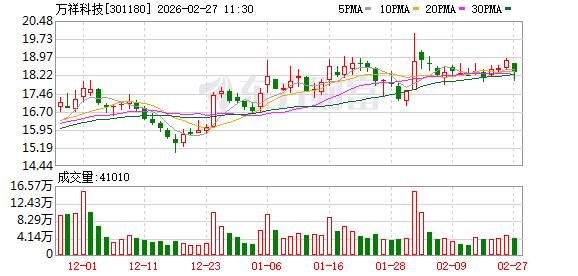
万祥科技:数电传控集成组件、微型锂离子电池及柔性功能零组件可应用于智能穿戴设备等小微型智能终端
Zheng Quan Ri Bao Wang· 2026-02-27 08:40
Core Viewpoint - Wanxiang Technology (301180) has indicated that its digital transmission control integrated components, micro lithium-ion batteries, and flexible functional components are applicable in smart wearable devices and other small smart terminals such as TWS earphones, smartwatches, and smart glasses [1] Group 1 - The company provides digital transmission control integrated components [1] - The company manufactures micro lithium-ion batteries [1] - The company produces flexible functional components [1] Group 2 - The applications of the company's products include smart wearable devices [1] - The products are suitable for small smart terminals [1] - Specific examples of applications include TWS earphones, smartwatches, and smart glasses [1]
县域即时消费潜力进一步释放
Zhong Guo Jing Ji Wang· 2026-02-27 07:47
Group 1 - The core viewpoint of the articles highlights the significant growth in instant retail consumption during the Spring Festival, particularly in county-level markets, driven by the holiday season and the Milan Winter Olympics [1][2][3] - Instant retail orders in county areas increased by approximately 30% year-on-year from February 16 to February 23, with electronic products, alcoholic beverages, and high-end fruits being the top three categories [1] - Smartwatch sales surged by 600%, while mobile phones and tablets saw a 200% increase; high-end fruits like durian and blueberries experienced up to a 300% rise in sales [1] Group 2 - The article notes a convergence in instant service experiences between the eastern and western regions of China, although distinct consumption preferences remain, with southern consumers favoring beer and dairy products, while northern consumers prefer spicy snacks and ice cream [2] - The overlap of the Spring Festival with key events of the Milan Winter Olympics spurred a nationwide interest in winter sports, leading to a 20% increase in revenue for merchants selling ice and snow sports equipment on the Meituan platform, with some products seeing sales increase by up to 300% [2] - The overall trend indicates a vibrant consumer market during the Spring Festival, reflecting strong economic recovery and growth potential, as noted by experts [3]
废电器回收新规3月1日实施!智能机器人的“后半生”有归处
2 1 Shi Ji Jing Ji Bao Dao· 2026-02-27 06:44
Core Viewpoint - The newly revised "Technical Specification for Pollution Control in the Treatment of Waste Electrical and Electronic Products" (HJ527-2026) will be implemented on March 1, 2026, expanding the scope of waste electrical and electronic products to include various new categories such as smart devices and medical service equipment [2][3]. Group 1: Overview of the New Technical Specification - The new specification includes pollution control and environmental management requirements for the storage, dismantling, and disposal of waste electrical products, applicable to enterprises engaged in waste electrical product treatment [3]. - It aims to enhance resource recycling standards, broaden the coverage of management objects, and clarify pollution control requirements at each stage of waste electrical product recovery and treatment [4]. Group 2: Historical Context and Need for Revision - China is the world's largest manufacturer and consumer of electrical and electronic products, with the annual regulated dismantling volume of waste products increasing from over 10 million units in 2012 to approximately 100 million units by 2025 [3]. - The previous version of the specification, issued in 2010, had limitations in terms of regulatory alignment, coverage of waste product categories, and comprehensive technical requirements, necessitating the revision to meet the growing challenges of waste electrical product management [3][4]. Group 3: Future Directions and Enforcement - The Ministry of Ecology and Environment will ensure that treatment enterprises fulfill their responsibilities and continuously improve pollution prevention facilities for waste electrical product recovery and treatment [4]. - There will be ongoing monitoring of the implementation of the new specification, addressing emerging issues in the waste electrical product recovery process, and enhancing public participation and social supervision to combat illegal disposal practices [4].


万祥科技:公司的数电传控集成组件、微型锂离子电池及柔性功能零组件可应用于智能穿戴设备等小微型智能终端
Mei Ri Jing Ji Xin Wen· 2026-02-27 04:30
Group 1 - The company, Wanxiang Technology (301180.SZ), has indicated its technological layout for AI glasses, focusing on digital transmission control integrated components, micro lithium-ion batteries, and flexible functional components [2] - These components are applicable to smart wearable devices and small smart terminals, including TWS earphones, smartwatches, and smart glasses [2]
一春烟火气 九州消费潮
Qi Huo Ri Bao Wang· 2026-02-27 01:23
Core Insights - The article highlights the robust performance of the consumer market during the Spring Festival, showcasing a diverse and resilient new consumption landscape across various regions and sectors [1] Group 1: Data Highlights - Cultural and tourism consumption emerged as the biggest highlight, with 596 million domestic trips taken during the 9-day holiday, an increase of 95 million trips compared to 2025, and total spending reaching 803.48 billion yuan, up by 126.48 billion yuan [2] - Retail and dining sectors also showed strong performance, with average daily sales of key retail and dining enterprises increasing by 5.7% compared to 2025, and foot traffic and sales in 78 monitored pedestrian streets rising by 6.7% and 7.5% respectively [2] - Smart and quality consumption gained traction, with sales of smart glasses, intelligent robots, and organic food increasing by 47.3%, 32.7%, and 26.5% respectively [2] Group 2: Structural Changes - There is a notable shift towards quality consumption, with high-quality products like energy-efficient appliances and organic foods becoming more popular, and health-oriented products such as sugar-free snacks seeing rapid sales growth [3] - The trend towards smart consumption is accelerating, with sales of smart wearables increasing by 130% and health products like smart blood pressure monitors growing by over 60% during the holiday [3] - Service consumption is evolving, with customized and experiential travel options gaining popularity, reflecting a trend towards spending on experiences and personal enjoyment [4] Group 3: Policy Support - The Ministry of Commerce, in collaboration with nine departments, launched the "Happy Shopping Spring Festival" initiative, releasing a series of consumption-promoting policies, including 62.5 billion yuan for trade-in subsidies, benefiting over 31 million people and driving sales of 207 billion yuan [5] - Local governments allocated 2.05 billion yuan for consumer vouchers and subsidies, directly reaching consumers and enhancing market vitality [5] Group 4: Open Integration - The expansion of visa-free countries and optimized transit visa policies contributed to a significant increase in international travel, with 17.8 million people entering and exiting the country during the holiday, a 10.1% increase from the previous year [7] - The use of Alipay for foreign visitors surged by over 80%, indicating a growing trend of international consumption in China [7] Group 5: Economic Vitality - The consumer data reflects a vibrant economy, with spending during the Spring Festival igniting a chain reaction in production, employment, and income, contributing to sustained economic growth throughout the year [8] - The collective spending choices of over 1.4 billion people during the festival not only define personal celebrations but also shape the future of China's vast market [8]