
Quantitative easing

Search documents
Jerome Powell knows the Fed’s balance sheet got too big—Kevin Warsh has a plan, he just has to sell it without freaking out the markets
Yahoo Finance· 2026-02-21 08:35
Investors and analysts already know Warsh is going to be dovish on the base rate. The president said any nominee would have to be open to cutting further. A tighter balance sheet might be a neat way for Warsh to deliver rate cuts without raising alarm bells over questions of Fed independence. As Professor Yiming Ma, of Columbia University’s Business School explained in a conversation with Fortune: “People often think: ‘Oh, economic conditions, inflation expectations, and unemployment are determining interes ...
Warsh Call for Fed-Treasury Accord Stirs Debate in $30 Trillion Bond Market
Yahoo Finance· 2026-02-09 08:39
And that was exactly what the 1951 agreement brought to an end. The Fed had capped both short- and longer-dated Treasury yields during World War II and its aftermath to hold down federal borrowing costs. That recipe caused postwar inflation to soar, however. The Truman administration — in a watershed moment that crystallized the Fed’s autonomy over monetary policy — then agreed to let policymakers set rates on their own.“Rather than insulating the Fed, it could look more like a framework for yield-curve con ...
Trump's Fed Chair Pick Triggers Gold, Silver's Worst Day Since 1980: What's Moving Markets Friday?
Benzinga· 2026-01-30 18:59
Core Viewpoint - Precious metals experienced a significant sell-off following President Trump's announcement of Kevin Warsh as the new Federal Reserve chairman, ending a prolonged rally in the sector [1]. Group 1: Precious Metals Market Reaction - Silver prices plummeted by as much as 33% to $78 per ounce during midday trading, marking a potential historic decline, the worst single-day drop since 1980 [2]. - Just a day prior, silver was on track for its best monthly performance since the U.S. Civil War, having surged approximately 60%, but this was reduced to a monthly gain of around 10% by the end of January [3]. - Gold prices fell below $5,000, dropping to $4,700 per ounce, which represents a 12% decline, potentially marking gold's worst session since March 1980 if sustained [4]. Group 2: Market Sentiment and Federal Reserve Implications - The sharp decline in precious metals reflects market interpretations of Warsh's nomination, as he is viewed as a hawk focused on inflation control rather than employment support [5]. - The perception of Warsh's stance has diminished earlier concerns regarding the Federal Reserve's credibility and independence under political pressure, leading to a significant reversal in the "debasement trade" that had characterized market trends throughout January [6]. Group 3: Broader Market Impact - Equity markets also reacted negatively, with the Nasdaq 100 falling 1.1%, the Dow Jones slipping 0.9%, and the S&P 500 declining 0.6%, although the sell-off magnitude was less severe than in precious metals [7]. - Macro data indicated that U.S. producer prices rose by 0.5% month over month in December, exceeding the 0.2% consensus forecast, which further reinforced inflation concerns [7].

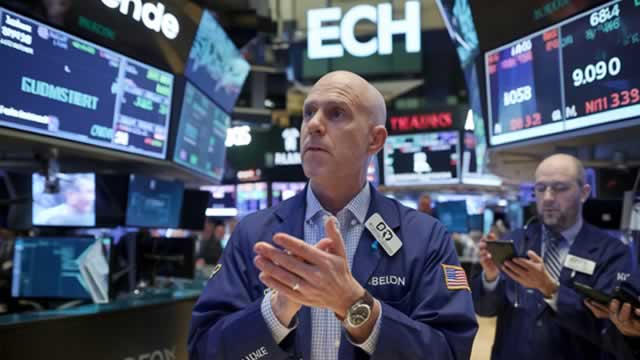
Who is Kevin Warsh? What to know about Trump's next Fed chair nominee
Yahoo Finance· 2026-01-30 18:42
Core Viewpoint - President Donald Trump nominated Kevin Warsh to lead the Federal Reserve, succeeding Jerome Powell, amid a divided Federal Open Market Committee [1] Group 1: Kevin Warsh's Background and Views - Warsh served on the Fed's Board of Governors from 2006 to 2011, during the U.S. financial crisis, and was previously viewed as a hawk favoring high interest rates to control inflation [2] - Recently, Warsh has shown a more dovish stance, aligning with Trump's calls for further easing of the Fed's benchmark federal funds rate [2] - Warsh has criticized the Fed's quantitative easing measures and has suggested a need for reform regarding the Fed's role in markets [3] Group 2: Nomination Process and Challenges - Warsh's nomination is expected to face a confirmation process that includes approval from the Senate Banking Committee and a full Senate vote [4] - The confirmation may be complicated by opposition from Sen. Thom Tillis, who has vowed to oppose any of Trump's Fed nominations until the Justice Department concludes its investigation into Powell [4] Group 3: Market Expectations - There is an expectation that Warsh will drive reforms in the Fed's approach to market interventions, although his response to future crises or inflation remains uncertain [3]
Fed’s interest rate history: The federal funds rate from 1981 to the present
Yahoo Finance· 2026-01-28 19:15
Like a chain of dominoes falling one by one, a rate cut (or hike) from the Fed translates to cheaper (or more expensive) borrowing costs on almost every purchase a consumer finances: from credit card spending and auto loans to mortgages and home equity lines of credit. A silver-lining for consumers as interest rates rise, yields on certificates of deposit (CDs) and savings accounts also grow. On the flip side, though, lower interest rates from the Fed weigh on depositors’ earnings.When economists or investo ...
Silver Is Moving Faster Than Gold. That Almost Never Happens.
Forbes· 2026-01-26 18:30
Silver prices have surged 250% over the last year. (AP Photo/Paul Sakuma)Copyright 2012 AP. All rights reserved.By one measure, silver has caught up to gold. And then some.The gold-to-silver ratio (the price of an ounce of gold divided by the price of an ounce of silver) has dropped below 50 for the first time since March 2012. In simple terms, that means silver is trading at its highest level relative to gold in nearly 14 years amidst a rally that has seen gold rise by more than 80% over the last year to $ ...

Inflation likely to increase after midterms, says former Kansas City Fed President Thomas Hoenig
Youtube· 2026-01-26 17:20
Joining us now is former Kansas City Fed President Thomas Honig. It's great to have you back, Thomas. So, I actually want to start with what what I think is the biggest market story today, which is the strength in the Japanese yen on rumors and speculation of intervention by potentially the US here at the same time where gold is making new highs and up another 2%.Is is this something that you think will get discussed at the Fed meeting this week. I'm almost certain it will be discussed at the Fed meeting bo ...

Housing market affordability is so strained that Trump directs Fannie and Freddie to buy $200B mortgage bonds
Fastcompany· 2026-01-09 21:21
Core Viewpoint - President Trump announced that Fannie Mae and Freddie Mac will purchase an additional $200 billion in mortgage bonds to lower mortgage rates and make home ownership more affordable [1]. Group 1: Government Sponsored Enterprises (GSEs) Actions - Fannie Mae and Freddie Mac are instructed to buy $200 billion in mortgage bonds, which is expected to drive down mortgage rates and monthly payments [1]. - The GSEs have already increased their retained mortgage holdings by approximately $69 billion in the second half of 2025 [6]. - If the GSEs add another $200 billion in mortgage bond holdings in 2026, they would approach their legal limit of $450 billion, with $225 billion for each [7]. Group 2: Market Dynamics - Long-term yields, such as the 10-year Treasury yield and the average 30-year fixed mortgage rate, are influenced by the demand for underlying bonds, with yields moving inversely to bond prices [1]. - The "mortgage spread," which is the difference between the 10-year Treasury yield and the average 30-year fixed mortgage rate, peaked at 2.96 percentage points in June 2023, significantly above the historical average of 1.76 percentage points since 1972 [5]. - The goal of the $200 billion purchase is to accelerate the compression of the "mortgage spread," which has already decreased to 2.05 percentage points by December 2025 [6]. Group 3: Historical Context and Federal Reserve Actions - Prior to the Great Financial Crisis, Fannie Mae and Freddie Mac were significant buyers of mortgage-backed securities (MBS), providing stability to the market [9]. - The Federal Reserve took on the role of market stabilizer after the GSEs went into conservatorship, purchasing $1.25 trillion in agency MBS between January 2009 and March 2010 [9]. - The Federal Reserve's pivot to quantitative tightening in March 2022 removed a major buyer from the MBS market, leading to increased volatility and higher mortgage rates [11].


You're Being Lied To About Bitcoin.
Altcoin Daily· 2025-12-17 19:07
The mainstream media will try to trick you about Bitcoin. They will make you believe that this crypto bloodbath will never end when in fact it will end. People are fearful.Last time we saw levels this fearful was actually near the end of the 2022 bare market when FTX was collapsing. I've lived through multiple bare markets, multiple bull markets. You buy when there's blood in the streets, when people are fearful. You sell when people are greedy. people are euphoric.But of course, the other thing that I real ...

Precious metals are going to party like it’s the 1970s, reckons Albert Edwards
Yahoo Finance· 2025-12-17 12:43
Core Viewpoint - The investment outlook for gold and other precious metals is optimistic, with the potential for continued growth rather than a bubble scenario [1][2]. Group 1: Gold Market Analysis - Albert Edwards attributes the rising gold prices to government "fiscal incontinence" and expectations of quantitative easing (QE) and yield curve control (YCC) [3]. - The notion of gold being in a bubble is challenged by Bloomberg strategist Simon White, who argues that geopolitical events, such as the freezing of Russian forex reserves, have led emerging market central banks to shift their reserves from dollars to gold [4]. - Journalist Edward Chancellor notes the absence of "irrational exuberance" typically seen in bubbles, highlighting that many Wall Street banks have gold price targets significantly lower than current spot prices, and that speculators are more focused on cryptocurrencies than gold [5]. Group 2: Historical Context and Future Outlook - Edwards suggests that the current gold market may resemble the price behavior of the 1970s, when gold prices surged during a period of high inflation [6]. - Despite being a long-time bear on equities, Edwards acknowledges the positive predictions for U.S. equities made by SocGen's strategist Manish Kabra, indicating a nuanced view of the market [7].