
祖国统一

Search documents
铭记历史荣光 共话统一新篇——两岸暨港澳隆重庆祝首个台湾光复纪念日
Xin Hua She· 2025-10-28 15:45
Core Points - The National People's Congress Standing Committee has officially designated October 25 as Taiwan Recovery Memorial Day, marking the 80th anniversary of Taiwan's return to China [1][2][3] - Various commemorative activities are being held across the Taiwan Strait and in Hong Kong and Macau, emphasizing the historical significance of this day and the unity of the Chinese nation [1][4][5] Group 1: Commemorative Events - A grand ceremony was held at the Great Hall of the People in Beijing, attended by representatives from Hong Kong, Macau, Taiwan, and overseas Chinese, reflecting on the sacrifices made during the anti-Japanese war [2][3] - The opening of the exhibition "Unyielding Treasure Island, Loyalty to the Motherland" at the China Anti-Japanese War Memorial Museum showcased 387 historical photos and 453 artifacts, highlighting the resistance of Taiwanese people against Japanese rule [2][3] - Various activities, including a music concert and a themed exhibition, were organized to celebrate the historical moment and promote the spirit of unity among Chinese people [5][6] Group 2: Historical Significance - The establishment of Taiwan Recovery Memorial Day is seen as a reaffirmation of Taiwan's status as part of China, countering separatist narratives [3][4] - The events serve to strengthen the collective historical memory among people on both sides of the Taiwan Strait, fostering a sense of shared identity and purpose [6][9] - The activities aim to inspire future generations to remember and honor the sacrifices made during the anti-Japanese war, reinforcing the commitment to national unity [7][9] Group 3: Public Response - The announcement of the memorial day has generated significant excitement and support among Taiwanese people, with many expressing their pride and commitment to national unity [3][4] - The public's enthusiastic participation in commemorative events, such as the sale of commemorative envelopes, indicates a strong emotional connection to the historical significance of Taiwan's recovery [3][6] - Leaders and representatives from various organizations have emphasized the importance of this day in promoting national sovereignty and unity, reflecting a widespread consensus on the need for a unified China [6][9]
视频丨港澳台人士:牢记台湾光复的历史 坚决反对分裂
Yang Shi Xin Wen Ke Hu Duan· 2025-10-28 12:15
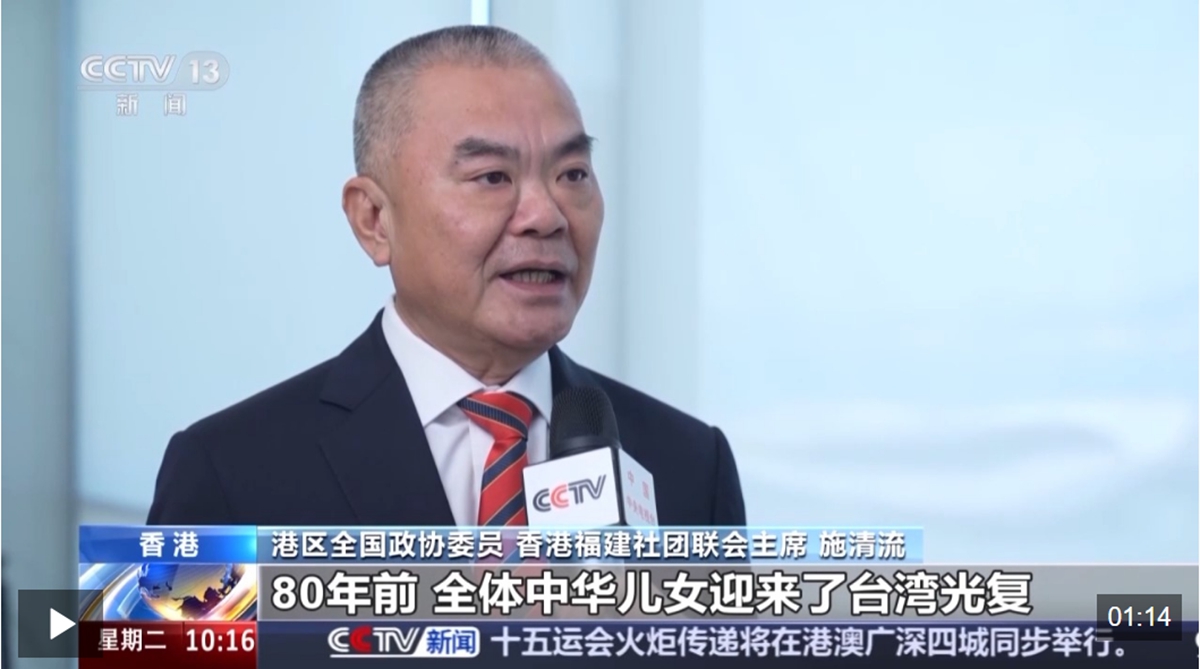
Core Viewpoint - The National People's Congress of China has officially established October 25 as Taiwan Liberation Day, marking the 80th anniversary of Taiwan's return to the motherland, and will hold commemorative activities to honor this historical event [1]. Group 1: Reactions from Hong Kong, Macau, and Taiwan - Hong Kong and Macau representatives express strong support for the establishment of Taiwan Liberation Day, emphasizing the importance of remembering the glorious history of Taiwan's liberation and opposing "Taiwan independence" [1][5]. - The chairman of the Hong Kong Fujian Association highlights the significance of this historical moment and calls for actions to promote cross-strait exchanges and cooperation for national development [3]. - The president of the Macau Peaceful Reunification Promotion Association underscores the establishment of Taiwan Liberation Day as a demonstration of the firm stance on safeguarding national sovereignty and territorial integrity [5]. Group 2: Shared Historical Memory - A Taiwanese commentator notes that Taiwan's liberation is a shared historical memory for both sides of the Taiwan Strait, emphasizing the common destiny of the Chinese people [7]. - There is a sentiment among many Taiwanese that they look forward to a future where both sides can share opportunities for development and rejuvenation of the Chinese nation [7].

铭记台湾光复历史 维护二战胜利成果——台湾光复80周年纪念活动在全球多地举办
Xin Hua She· 2025-10-28 11:32
新华社北京10月28日电 综合新华社驻外记者报道:在台湾光复80周年之际,全球多地陆续举行各种纪 念活动。出席纪念活动的各方人士表示,台湾是中国领土不可分割的一部分,这一事实任何时候都不容 任何势力歪曲篡改。中国人民一定能够克服一切干扰,实现国家的完全统一。台湾光复纪念日的设立有 助于人们更好了解历史真相,维护二战胜利成果。 中国常驻联合国代表团27日在联合国总部举办"纪念台湾光复80周年,维护联大第2758号决议权威"会 议。与会各方纷纷祝贺中国设立台湾光复纪念日,高度赞赏中华人民共和国恢复在联合国合法席位以来 为世界和平与发展所作突出贡献,强调将始终坚持一中原则,维护联大第2758号决议权威,支持中国实 现完全统一。 中国驻美国大使馆25日举办纪念台湾光复80周年座谈会。两岸侨胞代表回顾了台湾光复历史,表示坚决 反对"台独"分裂、热切期盼祖国完全统一,将继续积极推动中美和两岸交流合作,为促进祖国统一和民 族复兴贡献力量。 中国驻俄罗斯大使馆24日举行纪念台湾光复80周年座谈会。与会中俄人士表示,台湾光复不仅是中国人 民反抗侵略、捍卫国家主权和领土完整的重大胜利,也是世界反法西斯联盟共同奋斗的重要成果。台湾 ...
以真实铸信仰、以影像聚人心,爱奇艺《沉默的荣耀》创作座谈会在京举行
Sou Hu Wang· 2025-10-28 09:29
Core Viewpoint - The creation of the TV drama "Silent Glory" is a significant cultural project supported by various government bodies, aiming to honor historical heroes and promote national unity, particularly in the context of Taiwan's historical narrative [1][27][30]. Group 1: Creative Process and Themes - The drama is characterized by a deep historical restoration, aiming to create a vivid dialogue between heroes and the audience, reflecting the trend of national unity and the emotional resonance of the audience [3][4]. - The creative team emphasizes four core principles: authenticity, emotional connection, intellectual engagement, and historical reflection, which have contributed to the show's success and appeal to younger audiences [4][30]. - The production has achieved a completion rate of 78%, with 55.4% of viewers being under 35 years old, indicating its strong attraction to younger demographics [4]. Group 2: Cultural and Social Impact - The success of "Silent Glory" is seen as a reflection of the commitment to creating art that resonates with the people, reinforcing the spirit of heroism and national identity [6][32]. - The drama has sparked discussions about historical truths and the importance of recognizing the sacrifices made by historical figures, particularly in the context of Taiwan's history [27][30]. - Experts have praised the series for its artistic value and social impact, highlighting its ability to evoke deep emotional responses and convey the enduring spirit of faith and heroism [18][20][23]. Group 3: Future Directions and Initiatives - The production is viewed as a catalyst for further cultural initiatives, with plans to enhance the creation of red-themed artistic works and promote the historical narratives of local heroes [35][37]. - There is a call for continued collaboration between provinces to leverage local resources and talent in producing high-quality cultural content that reflects national values [28][33]. - The meeting emphasized the importance of using storytelling to convey positive spiritual values and contribute to the cultural strength and unity of the nation [37].
祖国必然统一势不可挡
Xin Hua Wang· 2025-10-28 09:20
Core Viewpoint - The unification of Taiwan with the mainland is an inevitable trend and a common aspiration of the Chinese people, essential for the great rejuvenation of the Chinese nation [1][5][8] Group 1: Historical Context - Throughout Chinese history, unification has been the mainstream development, with a shared understanding that "unity brings strength, division leads to chaos" [2] - Taiwan has been part of a unified multi-ethnic nation for most of its history, and the Taiwanese people have a strong patriotic tradition [2][4] - The Chinese Communist Party has consistently prioritized the resolution of the Taiwan issue as a historical mission since 1949 [5] Group 2: Current Relations and Developments - Under the leadership of the Chinese Communist Party, cross-strait relations have developed significantly, with increasing exchanges and cooperation benefiting both sides [3] - The desire for peace, development, and cooperation is the mainstream sentiment among Taiwanese society, supported by policies from the mainland [3] Group 3: Challenges and Opposition - "Taiwan independence" forces are seen as detrimental to the future of Taiwan and are accused of manipulating public sentiment for political gain [4] - These forces are viewed as acting against the interests of the Taiwanese people and the broader Chinese nation, ultimately facing historical judgment [4] Group 4: Future Prospects - The development and strength of the mainland are key factors in determining the future of cross-strait relations, with the potential for increased social and emotional connections [7] - The unification process is framed as not only a national interest but also a guarantee of the welfare of the Taiwanese people [5][6] - The international community is generally supportive of China's stance on unification, viewing it as a matter of upholding international law and order [6] Group 5: Conclusion - The unification of Taiwan is portrayed as a historical inevitability, supported by the collective will of the Chinese people and the ongoing progress of the mainland [8] - The narrative emphasizes that unity is essential for national prosperity and that the path forward is clear and unstoppable [8]
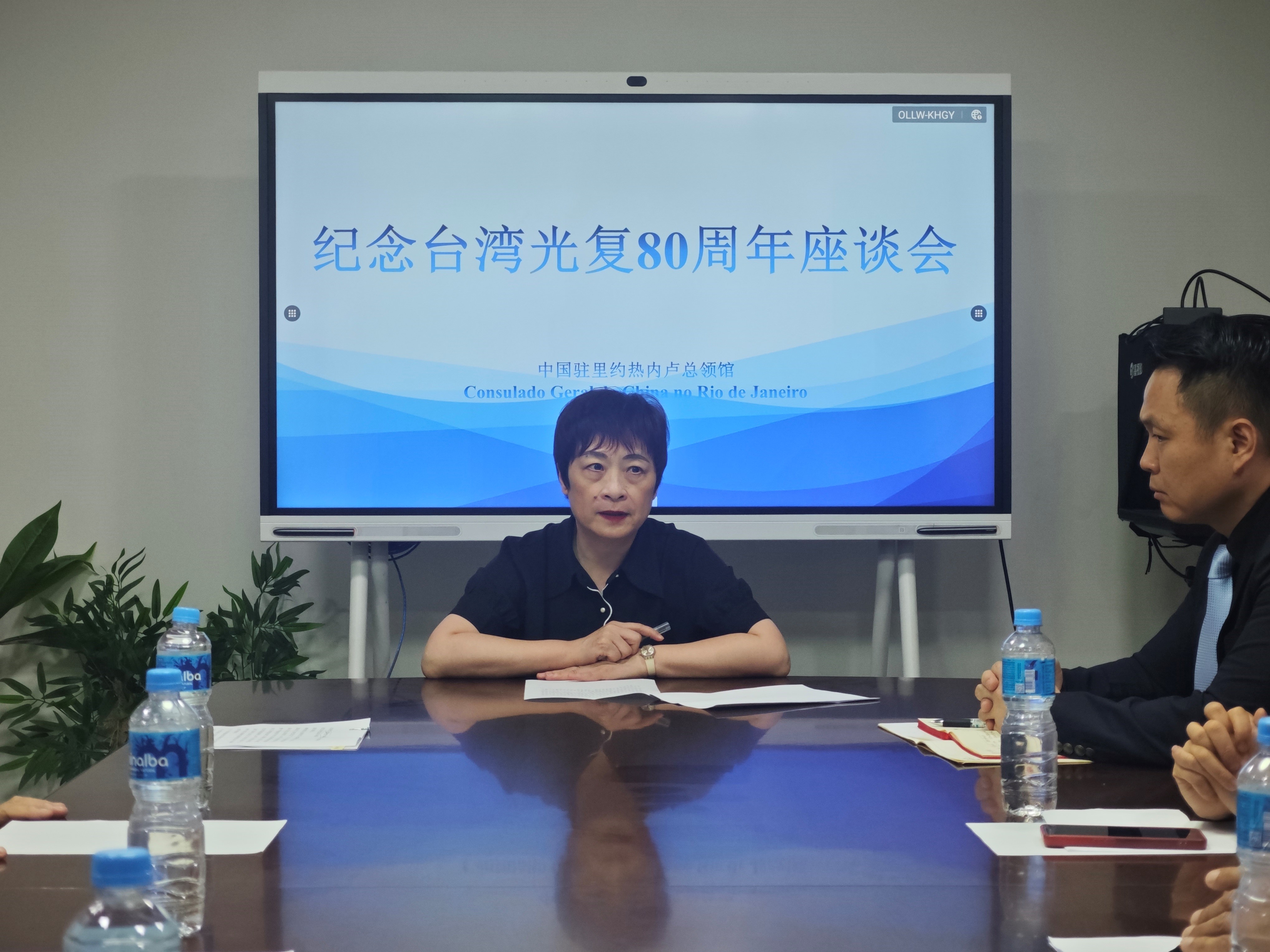
中国驻里约热内卢总领馆举办纪念台湾光复80周年座谈会
人民网-国际频道 原创稿· 2025-10-28 06:33
Core Viewpoint - The event commemorating the 80th anniversary of Taiwan's liberation reflects the shared aspirations of Chinese people both domestically and abroad, emphasizing the importance of national unity and the ongoing struggle against separatism [4]. Group 1 - The Chinese Consulate in Rio de Janeiro held a seminar to commemorate the 80th anniversary of Taiwan's liberation, attended by over 20 representatives from local Chinese communities and Taiwanese compatriots [1]. - The Consul General, Tian Min, elaborated on the significance of establishing Taiwan Liberation Memorial Day, highlighting the complex current situation regarding the struggle against separatism and the bright prospects for national reunification [4]. - Participants expressed their commitment to uphold national unity and oppose separatist actions, viewing the historical context of the Anti-Japanese War and Taiwan's liberation as a shared memory of the Chinese nation [6].
新华社发表署名文章:祖国必然统一势不可挡
21世纪经济报道· 2025-10-28 05:34
Core Viewpoint - The article emphasizes that the unification of Taiwan with the mainland is an inevitable trend and a shared aspiration of the Chinese people, essential for the great rejuvenation of the Chinese nation [2][4][10] Group 1: Historical Context - Throughout Chinese history, unification has been the mainstream development, with a strong recognition of the principle that "unity brings strength, while division leads to chaos" [4] - Taiwan has historically been part of a unified multi-ethnic nation, with a significant portion of its population participating in the anti-Japanese war, demonstrating a strong patriotic tradition [4] Group 2: Current Relations - Under the leadership of the Communist Party, cross-strait relations have developed significantly, with increasing exchanges and cooperation benefiting both sides [5] - The desire for peace, development, and cooperation is the mainstream sentiment among the Taiwanese people, supported by policies from the mainland [5] Group 3: Opposition to Separatism - The article describes "Taiwan independence" forces as insignificant and harmful, manipulating public sentiment and jeopardizing Taiwan's future [6] - It argues that these separatist forces are acting against the interests of the Taiwanese people and the broader Chinese nation, ultimately destined for historical judgment [6] Group 4: National Will and Sovereignty - The resolution of the Taiwan issue is framed as a matter for the Chinese people, including the 1.4 billion citizens, to decide, emphasizing national sovereignty and unity [9] - The article asserts that external interference cannot alter the objective reality of one nation and that unification is in the fundamental interest of the Chinese nation [9] Group 5: Future Prospects - The article posits that the development and strength of the mainland will facilitate unification, with the potential for a reasonable "two systems" approach for Taiwan [11] - It concludes that the historical trend towards unification is unstoppable, with the expectation that the complete unification of the motherland will be achieved [11]
祖国必然统一势不可挡,新华社连续三天重磅发布
第一财经· 2025-10-28 05:24
Core Viewpoint - The article emphasizes that the unification of Taiwan with the mainland is an inevitable trend and a shared aspiration of the Chinese people, essential for the great rejuvenation of the Chinese nation [2][6][9] Group 1: Historical Context - The pursuit of unification has been a mainstream historical trend throughout the thousands of years of Chinese history, with a strong recognition of the principle that "unity leads to strength, while division leads to chaos" [3] - Taiwan has historically been part of a unified multi-ethnic nation, and even during periods of foreign occupation, the Taiwanese people demonstrated a strong patriotic spirit [3][4] Group 2: Current Relations - Under the leadership of the Communist Party of China, cross-strait relations have developed significantly, with increasing exchanges and cooperation benefiting both sides [4] - The desire for peace, development, and cooperation is the mainstream sentiment among the Taiwanese people, supported by policies from the mainland that have positively impacted Taiwan [4][6] Group 3: Opposition to Separatism - The article describes "Taiwan independence" forces as detrimental to Taiwan's future, manipulating public sentiment and endangering the well-being of the Taiwanese people [5][6] - It asserts that these separatist forces are acting against the interests of the Chinese nation and will ultimately face historical judgment [5][6] Group 4: National Unity as a Priority - The resolution of the Taiwan issue is framed as a historical mission of the Communist Party, with a commitment to achieving national unity as part of the broader goal of national rejuvenation [6][8] - The article argues that external interference cannot alter the objective reality of one nation and that the unification process is a matter for the Chinese people to decide collectively [6][7] Group 5: Future Prospects - The article posits that the development and strength of the mainland will facilitate the unification process, as the advantages of the mainland will increasingly support the push for unity [8][9] - It concludes that unification is not only a historical necessity but also a moral imperative, with the potential for a reasonable "two systems" approach that respects Taiwan's existing social system [9]

钟台文:祖国必然统一势不可挡
Xin Hua She· 2025-10-28 05:13
Core Viewpoint - The unification of Taiwan with the mainland is an inevitable historical trend and a common aspiration of the Chinese people, essential for the great rejuvenation of the Chinese nation [1][5][8]. Group 1: Historical Context - Throughout Chinese history, unification has been the mainstream development, with a shared understanding that "unity leads to strength, while division leads to chaos" [2]. - Taiwan has been part of a unified multi-ethnic state for most of its history, and the Taiwanese people's resistance against foreign occupation reflects a strong patriotic tradition [2][4]. Group 2: Current Relations - Under the leadership of the Communist Party, cross-strait relations have developed significantly, with increasing cooperation and exchanges benefiting both sides [3][5]. - The desire for peace, development, and cooperation is the mainstream sentiment among the Taiwanese people, supported by policies from the mainland [3]. Group 3: Challenges and Opposition - The "Taiwan independence" movement is viewed as a minor force that undermines the collective interests of the Chinese nation and poses risks to Taiwan's future [4][5]. - External interference is seen as an obstacle to unification, but it is asserted that such efforts will ultimately fail [5][8]. Group 4: Future Prospects - The development of the mainland's economy and military strength is expected to facilitate the unification process, as it enhances the ability to promote social exchanges and deepen emotional connections between the two sides [8][9]. - A reasonable "two systems" proposal for Taiwan is suggested, which would respect its current social system while allowing greater participation in governance and international affairs [9].
署名文章:祖国必然统一势不可挡
Xin Hua She· 2025-10-28 04:25
祖国必然统一势不可挡 钟台文 解决台湾问题、实现祖国完全统一,是全体中华儿女的共同愿望,也是中华民族伟大复兴的应有之义。 两岸同属一个中国,祖国统一大势不可阻挡,这是中华民族走向伟大复兴的时、势、义所决定的。统一 不是一种选择,而是一种必然。在中华民族走向伟大复兴的历史征程中,两岸中华儿女一定能够早日解 决台湾问题,实现祖国完全统一,共享民族复兴荣耀。 两岸统一是民心所向 在中华民族几千年的历史长河中,统一始终是历史发展的主流。中华民族书写了辉煌的历史,创造了灿 烂的文明,深刻认识到"统则强、分则乱"的兴衰规律,形成了追求"大一统"的共同价值取向。自宋元以 来,台湾绝大多数时间都是统一的多民族国家的一部分。即便是在被日本非法侵占的50年里,台湾同胞 武装、非武装反抗日本殖民统治从未停止,更有数万人胸怀"欲救台湾,必先救祖国"的信念,奔赴祖国 大陆参加抗日战争,最终与大陆同胞共同取得抗战的伟大胜利,台湾随之光复、回归祖国。这充分表 明,台湾同胞具有光荣的爱国主义传统。两岸同胞同属中华民族,都是中国人,完成国家统一是全体中 华儿女孜孜以求的愿望。有全体14亿多中国人汇聚的智慧和力量作支撑,实现国家统一的民意无比坚 ...