民族复兴

Search documents
两会前瞻|多省份召开全国政协委员座谈会
Xin Lang Cai Jing· 2026-02-27 06:36
Group 1 - The National Committee of the Chinese People's Political Consultative Conference (CPPCC) is convening at a significant time, marking the 105th anniversary of the Communist Party of China and the beginning of the 14th Five-Year Plan [1][5] - The meetings emphasize the importance of political awareness and commitment among committee members, urging them to actively participate in discussions and proposals that align with national and regional development goals [6][9] - Various provinces, including Anhui and Ningxia, are holding preparatory meetings to ensure that their representatives are ready to present high-quality proposals at the national conference, focusing on key areas such as technology innovation, economic development, and social welfare [2][3][8] Group 2 - The CPPCC meetings are seen as crucial for integrating local development needs with national strategies, with a focus on high-quality governance and effective representation of public interests [3][8] - Committee members are encouraged to maintain discipline and uphold a positive image while actively sharing their regions' stories and achievements, particularly in areas like ethnic unity and ecological protection [4][9] - The preparation for the conference includes gathering proposal materials from various departments, with a total of 96 proposals collected from local governments to address pressing issues [2][7]
春联中的时代变迁
Xin Lang Cai Jing· 2026-02-26 17:41
Core Viewpoint - The article discusses the evolution of Spring Festival couplets in China, highlighting their cultural significance and how they reflect the changing times and sentiments of the Chinese people throughout history [1][2]. Group 1: Historical Significance - The first recorded Spring Festival couplet was written by Meng Chang of the Later Shu dynasty, expressing simple wishes for national peace and abundant harvests [1]. - In ancient times, couplets were primarily used for blessings and good fortune, symbolizing stability in agrarian society [1]. - The couplets evolved in modern times to express national awakening and revolutionary sentiments, marking the end of imperial rule and the birth of the Republic of China [1]. Group 2: Modern Context - After the establishment of the People's Republic of China, couplets began to reflect gratitude towards the Communist Party and the new life it brought to the people [1]. - During the reform and opening-up period, couplets adopted a tone of progress and optimism, celebrating policies that benefited the populace [1]. - The return of Hong Kong to China was also commemorated through couplets, showcasing the unity and transformation of the nation [1]. Group 3: Contemporary Relevance - In the new era, couplets embody the great dream of national rejuvenation, expressing aspirations for a prosperous future [2]. - The evolution of couplets from prayers for blessings to declarations of national spirit illustrates their deep connection with the times and the collective identity of the Chinese people [2]. - Couplets serve as a cultural root and spiritual pursuit for the Chinese nation, witnessing its journey from suffering to glory [2].
两岸圆桌派|馆长、波士顿圆脸:“落地大陆就会被公安逮捕?根本不会有人理你,好吗”
Guan Cha Zhe Wang· 2026-02-26 01:44
Core Viewpoint - The perception gap between Taiwan and mainland China is significant, with many Taiwanese still holding outdated stereotypes about the mainland, which are being challenged through increased personal interactions and social media exposure [1][2][4]. Group 1: Infrastructure and Economic Development - Taiwan's infrastructure and economic competitiveness have reportedly stagnated, while mainland China's infrastructure and commercial sectors, including e-commerce and logistics, are perceived to be a decade ahead [2][4][36]. - The rapid development in mainland China is highlighted by the observation that cities can change dramatically within a few years, contrasting with the slower pace of change in Taiwan [2][4]. Group 2: Social Media and Public Perception - Social media is playing a crucial role in reshaping perceptions, with a growing number of young Taiwanese sharing their positive experiences in mainland China, which is leading to a shift in public opinion [7][25]. - Despite political pressures, there is a notable increase in Taiwanese youth traveling to mainland China, with a reported 30% rise in tourism from Taiwan to the mainland, particularly among young adults [6][25]. Group 3: Personal Experiences and Testimonies - Personal testimonies from Taiwanese influencers, such as "馆长" Chen Zihan, reveal a transformative experience upon visiting mainland China, leading to a reevaluation of previously held beliefs [5][34]. - The emotional impact of witnessing the advancements in mainland China firsthand is emphasized, with many expressing a sense of envy and admiration for the progress made [4][34]. Group 4: Political and Media Environment - The political landscape in Taiwan is described as contentious, with media narratives often shaped by political affiliations, leading to a skewed perception of mainland China [12][16]. - There is a call for Taiwanese media and influencers to foster a more balanced narrative about mainland China, emphasizing the importance of direct experiences over politically charged rhetoric [11][12].

节俭高效 提升水平 扩大影响 确保拜祖大典安全隆重圆满举办
Zheng Zhou Ri Bao· 2026-02-26 00:56
Core Viewpoint - The meeting emphasized the importance of the Huangdi Ancestor Worship Ceremony as a platform for promoting Chinese culture and enhancing national identity, while ensuring the event is conducted safely and successfully [1][2] Group 1: Event Preparation - The committee meeting outlined the responsibilities and tasks for the preparation of the Huangdi Ancestor Worship Ceremony, with a focus on thorough planning and execution [1] - Key city leaders participated in the meeting, highlighting the collaborative effort required for the event [1] Group 2: Cultural Significance - The event aims to express the spirit of reverence for ancestors and the continuity of Chinese civilization, fostering cultural recognition among global Chinese communities [2] - There is a strong emphasis on innovation in organizing the ceremony to enhance its cultural impact and outreach [2] Group 3: Promotion and Outreach - The plan includes inviting distinguished cultural figures and outstanding youth from around the world to participate, promoting a sense of unity among the Chinese diaspora [2] - The strategy involves modernizing promotional efforts through creative media products to ensure sustained visibility and engagement [2] Group 4: Quality and Organization - The meeting stressed the importance of high-quality cultural activities and the need for meticulous organization to achieve impactful results [2] - There is a commitment to improving the city’s image to reflect a vibrant and orderly environment during the event [2]
年味蕴含万家安乐春风吹响奋进号角
Xin Lang Cai Jing· 2026-02-17 17:35
Core Viewpoint - The articles emphasize the importance of unity, hard work, and the spirit of striving for a better future in the context of the Chinese New Year celebrations, highlighting the connection between individual aspirations and national progress [1][2][3] Group 1: Cultural Significance - The Chinese New Year symbolizes joy, reunion, and hope, serving as a cultural and emotional bond for the Chinese people [3] - The festivities reflect the harmony between personal and national aspirations, showcasing the collective spirit of striving for a prosperous future [1][2] Group 2: Call to Action - The leadership encourages the populace to embrace the new journey of modernization with determination and optimism, emphasizing the need for continuous effort and innovation [1][3] - The articles stress the importance of individual contributions to societal progress, urging everyone to harness their inner drive and creativity for the betterment of society [3] Group 3: Economic and Social Development - The narrative connects the festive spirit with economic vitality, suggesting that the joy of the New Year is intertwined with ongoing development and prosperity [2] - The focus on investing in people as the foundation of development highlights the significance of human capital in achieving modernization [2]
2月15日晚间央视新闻联播要闻集锦
Yang Shi Xin Wen Ke Hu Duan· 2026-02-15 12:43
Group 1 - The core message emphasizes the importance of ensuring a happy life for the people as a top priority, with a series of reports titled "Emotional Chinese New Year" being launched to convey warmth and strength from the central government [4][5] - Xi Jinping's important speech at the Spring Festival gathering has inspired widespread enthusiasm, encouraging unity around the central leadership for national development and rejuvenation [5][6] - The festive atmosphere is palpable across the country as people prepare for the New Year, engaging in traditional activities such as purchasing goods and enjoying decorations [6][7] Group 2 - On the first day of the Spring Festival holiday, the expected cross-regional movement of people is projected to exceed 285 million, marking a year-on-year increase of 10.5% [7] - The upgraded "National Subsidy" policy has been fully implemented this Spring Festival, enhancing the variety of goods available for consumers and contributing to an upgrade in rural consumption [9]
春节团拜会上,总书记这些话语满怀深情
Xin Hua She· 2026-02-15 08:17
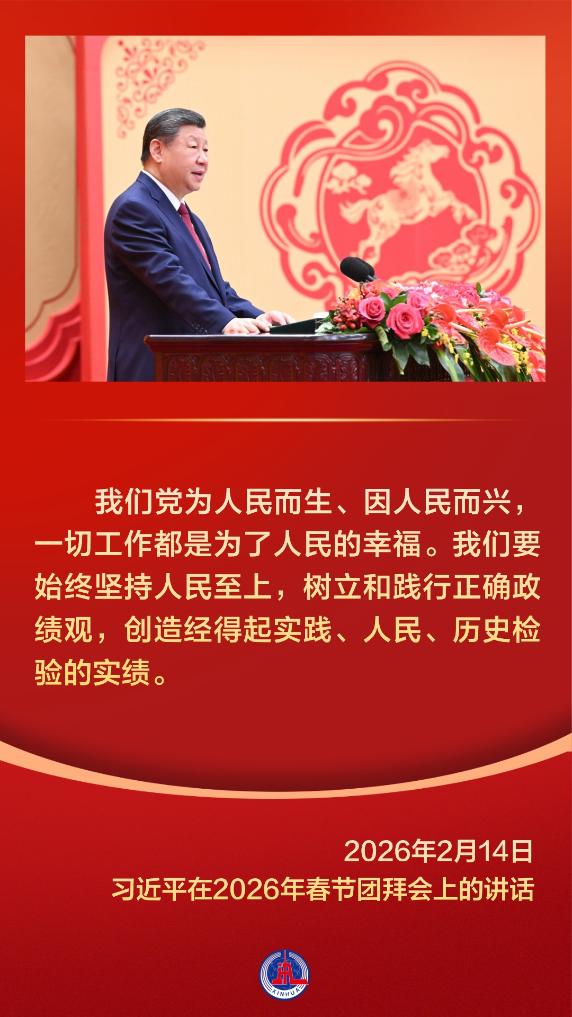
Core Viewpoint - The speeches delivered by Xi Jinping during the Spring Festival gatherings emphasize the importance of the people's well-being and the collective effort towards national rejuvenation, highlighting the theme of "struggle" as a driving force for progress and unity [1][9][11]. Group 1: People's Well-being - The primary focus of the speeches is to ensure that the people lead happy lives, which is considered the top priority [3]. - The commitment to a people-centered approach is reiterated, emphasizing the need for correct performance evaluation that withstands the test of practice, history, and the people's judgment [3]. Group 2: National Unity and Resilience - The speeches convey a strong message of unity between the Party and the people, asserting that no challenges can shake their resolve or hinder their progress [6]. - The notion that only through collective struggle can the Chinese people overcome obstacles in their pursuit of a better life and national strength is a recurring theme [11][14]. Group 3: Family and National Identity - The speeches reflect the deep connection between family values and national identity, emphasizing that a prosperous nation is essential for happy families [20][22]. - The importance of familial bonds during the Spring Festival is highlighted, reinforcing the idea that harmony at home contributes to national stability [25].
以笔墨奔腾绘就新时代气象
Xin Lang Cai Jing· 2026-02-13 22:47
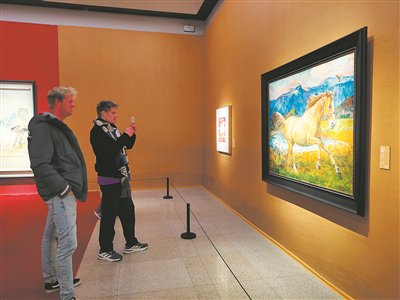
Core Viewpoint - The new spring exhibition at the National Art Museum of China, opening on February 9, showcases outstanding artworks that reflect the spirit of the new era, offering a cultural and artistic feast for the audience [3][4]. Group 1: Exhibition Overview - The exhibition features five major themed exhibitions, including "Tribute to Old Artists," "Horses in Chinese Art," "Couplets and Calligraphy," "Folk Art and Blessing Symbols," and "Craft Art Treasures" [4]. - A total of approximately 250 works from 129 artists are displayed, combining classic pieces from older artists with contemporary works from younger artists, highlighting the continuity and vitality of Chinese art [3][4]. Group 2: Featured Artists and Works - Notable works include靳尚谊's "Tajik Bride," 罗中立's "Father," and 詹建俊's "Heaven and Earth Walk," which form a significant aesthetic corridor that attracts viewers [3]. - The "Horses in Chinese Art" exhibition includes masterpieces from artists like 徐悲鸿, 傅抱石, and 黄胄, showcasing the cultural significance of horses in Chinese art history [5][6]. Group 3: Cultural Significance and Activities - The exhibition aims to celebrate both ancient and modern artistic achievements while conveying blessings for the new era, particularly in the context of the Year of the Horse [4][6]. - The museum will also launch a "Send Blessings for the New Year" activity on the first day of the lunar new year, continuing a 10-year tradition of cultural outreach [6].
经典常谈丨“按照美的规律来构造”
Zhong Yang Ji Wei Guo Jia Jian Wei Wang Zhan· 2026-02-09 23:59
Group 1 - The core viewpoint emphasizes the importance of aligning political efforts with the people's aspirations for a better life, focusing on material wealth, political clarity, spiritual richness, social stability, and ecological well-being [1] - Marx and Engels criticized the exploitation of the masses under capitalism, highlighting the concept of alienated labor and envisioning a future society where individuals can freely engage in various productive activities [2] - The historical context of Marx and Engels' revolutionary practices aimed at transforming the old world and exploring new societal structures, with a focus on the Paris Commune as a model for liberating labor from alienation [3] Group 2 - Lenin's emphasis on the rights of workers, including the implementation of an eight-hour workday and social insurance, reflects a commitment to ensuring the well-being and creative development of laborers [4] - The Chinese Communist Party has consistently prioritized the happiness of the Chinese people and national rejuvenation as its fundamental mission, focusing on addressing practical living issues [4] - Since the 18th National Congress, the Chinese leadership has recognized the changing social contradictions and has committed to a people-centered approach, aiming to enhance the quality of life for all citizens through equitable development [5]
天天学习|一纸福字 万千牵挂
Yang Shi Wang· 2026-02-09 00:52
Group 1 - The core message emphasizes that national prosperity and ethnic rejuvenation ultimately manifest in the happiness and well-being of countless families, reflecting the continuous improvement of people's lives [3] - The importance of individual households' well-being is highlighted, stating that when families thrive, the nation and ethnicity will also prosper [3] - The article illustrates the President's visits to various villages, where he expresses heartfelt wishes for the happiness of local communities, reinforcing the idea that the concerns of ordinary citizens are paramount [3] Group 2 - The symbolic act of pasting the "Fu" character represents the best wishes for happiness and conveys sincere hopes for the community [2] - The President's interactions with different ethnic groups and communities during the New Year celebrations showcase a commitment to fostering a sense of happiness and unity among diverse populations [3] - The narrative of visiting various villages serves to underline the government's focus on grassroots issues and the importance of addressing the needs of the common people [3]