
Quantitative Easing

Search documents
Why ALT Season Has Not Happened
Benjamin Cowen· 2025-11-04 05:37
Market Analysis & Altcoin Performance - Altcoins have been underperforming against Bitcoin since 2021 [2] - Altcoin/Bitcoin pairs recently hit a new low of 029% [3] - Historically, significant alt seasons have only occurred after altcoin/Bitcoin pairs reach 025% [3] - The current altcoin/Bitcoin pairs are at 036% [4] - The analysis suggests altcoin/Bitcoin pairs are likely to reach 025% [26][27] - An altcoin market cap is expected to be approximately 25% of Bitcoin's market cap [28] Social Interest & Market Cycles - Low social interest in crypto, similar to the period from January 2018 to the end of 2019, contributes to the underperformance of altcoins [7] - The current market cycle is being compared to the 2019 rally, where Bitcoin outperformed altcoins during quantitative tightening [11][12][14] - The entire 2019 rally for Bitcoin occurred during quantitative tightening, similar to the current cycle [14] - Bitcoin dominance is breaking through its bull market support band, indicating a likely continued rally [30] Monetary Policy Impact - The Federal Reserve is expected to end quantitative tightening in December [9] - Historically, altcoin/Bitcoin pairs bottomed when quantitative tightening ended, but this did not immediately trigger an alt season [9] - The end of quantitative tightening might lead to a bounce in altcoin/Bitcoin pairs [17] - The analysis suggests that high interest rates and quantitative tightening have contributed to Bitcoin's outperformance and the absence of an alt season [25] Bitcoin Performance & Dominance - Bitcoin is taking liquidity from the altcoin market to maintain its position above $100000, similar to how it took liquidity to stay above $10000 in 2019 [34] - Bitcoin dominance is expected to continue to rise, at least until early December [26] - A weekly close below the 50-week moving average, currently around $103000, could indicate the end of the cycle [32][33]


X @Doctor Profit 🇨🇭
Doctor Profit 🇨🇭· 2025-11-02 17:03
Macroeconomic Analysis - The Federal Reserve's Quantitative Tightening (QT) is distinct from Quantitative Easing (QE), with QT involving the reduction of liquidity by allowing bonds to mature without reinvestment, while QE involves expanding the balance sheet through asset purchases [1] - QT is scheduled to officially end on December 1, 2025, and the Fed continues to reduce liquidity until then [1] - Historically, the Fed initiates QE following a liquidity crisis, a pattern observed in 2008, the 2019 repo crisis, and the 2020 Covid crash [1] Liquidity and Repo Market Dynamics - A $50 billion liquidity operation through the Fed's Standing Repo Facility (SRF) is a short-term overnight loan, not a permanent injection of cash or money printing [2] - The SRF allows banks to borrow cash directly from the Fed, up to $500 billion per day, serving as a backstop introduced after the 2019 repo market collapse [3] - SRF usage of $50 billion in a single day signals market stress, as normal usage is around $0-5 billion per day, indicating that liquidity in the private repo market has dried up [4] - The reverse repo pool has been drained from approximately $2.2 trillion to about $14 billion, suggesting a lack of excess liquidity [4] Historical Context and Future Outlook - The Federal Reserve first conducted QT in 2017, which ended in the 2019 repo market collapse, followed by the COVID crash, and the current situation mirrors this setup [6] - The previous QT ran from October 2017 to September 2019, with a massive QE program launched six months later in March 2020 after the COVID market collapse [6] - The system is showing signs of cracking again, with liquidity drying up, suggesting that the real crisis has not yet started [7]
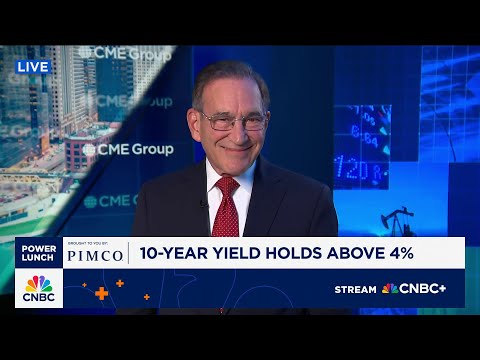
10-year Treasury yield holds above 4%
CNBC Television· 2025-10-31 19:02
Rick Santelli joining us now from Chicago with the bond report. Rick, I went on like a it was like a 10-second mini rant yesterday, but the the gist was basically this. The Federal Reserve can say and do what it wants. The bond market is the boss and the bond market is going to do what it wants and it wanted and wants clearly to take interest rates if not higher, not lower.Yeah, it's a very interesting dynamic, especially for those that are in the current administration or those that are looking towards hou ...
How will the fed rate cuts financially impact investors?
Youtube· 2025-10-30 10:04
Group 1 - The Federal Reserve is expected to cut rates by 25 basis points, with discussions around the future of its balance sheet being a key focus [4][5][6] - The term "T bill and chill" refers to the Fed's strategy of increasing its holdings of short-term treasuries as it ends its quantitative tightening (QT) process [2][8] - Global spending on artificial intelligence (AI) is projected to reach $375 billion this year and is expected to grow to $500 billion by 2026, which may influence US Treasury rates [3][28] Group 2 - The Fed's balance sheet is crucial for liquidity in the financial system, and its unwinding process from excessive expansion during COVID is nearing completion [5][6][14] - The current economic environment is characterized by a K-shaped recovery, where high-income consumers are increasing spending while low and middle-income consumers are pulling back [15][16] - Rate volatility is more significant than the absolute level of rates, with the stock market showing a stronger correlation with rate volatility than with rate levels [19][20] Group 3 - The relationship between AI spending and the bond market is becoming more relevant, as investors seek to understand whether projected productivity gains will materialize [30][32] - The potential impact of AI on productivity could lead to a disconnect between economic growth and labor market health, raising questions about the Fed's response to unemployment rates [34][36] - The Fed's approach to rate cuts may be influenced by its legacy considerations, with a higher risk of a 50 basis point cut in the near future [46][50]

Inflation is 'too high' and 'headed up' which calls for higher rates: Peter Schiff
Youtube· 2025-10-30 05:45
Core Viewpoint - The Federal Reserve's decision to cut rates is viewed as a mistake, with inflation remaining significantly above the target, necessitating higher rates instead [2][3][5]. Group 1: Federal Reserve's Actions - The Fed is perceived to have stopped hiking rates prematurely, which is considered a misstep [2][3]. - The current inflation rate is at least 50% above the Fed's target, indicating a need for higher interest rates [2]. - The Fed's balance sheet remains at $6.7 trillion, which is significantly larger than the $4 trillion at the end of QE3, suggesting ongoing debt monetization [4]. Group 2: Market Reactions - The market reacted negatively to the Fed's rate cut, with a notable flattening of the yield curve, particularly in the two-year and ten-year bonds [7][9]. - Long-term interest rates are expected to rise following the rate cut, as the bond market does not believe inflation will return to the 2% target [14][15]. - The price of gold is projected to increase significantly due to the anticipated decline in the dollar's value and the Fed's easing stance on inflation [13][16]. Group 3: Future Expectations - There is speculation that the December rate cut may be the last for a while, as dissenting opinions within the Fed indicate a shift in future policy [8][12]. - The end of quantitative tightening (QT) is seen as a precursor to a potential return to quantitative easing (QE) [16].
X @Ash Crypto
Ash Crypto· 2025-10-29 21:40
Market Outlook - Crypto market anticipates a final shakeout following the FED FOMC meeting [1] - Expectation of upward trend in crypto market post-shakeout [1] Price Targets - Bitcoin (BTC) projected to reach $150,000 - $180,000 [1] - Ethereum (ETH) projected to reach $7,500 - $12,000 [1] Macroeconomic Factors - Quantitative Tightening (QT) is expected to end on December 1st [1] - Anticipation of Quantitative Easing (QE) commencement [1] - Q4 is expected to be massive with QT ending and QE starting [1]
Looking at possibility for a steeper yield curve, says Jeffrey Gundlach
Youtube· 2025-10-29 20:46
Market Outlook - The Federal Reserve's future rate cuts are not guaranteed, with Chair Powell emphasizing that December is "far from a foregone conclusion" [2][3] - The market's previous assumption of a 90% certainty for a rate cut in December should be reconsidered, with a suggested probability of 50/50 [3] Treasury Yields - The 2-year Treasury yield has only decreased by 5 basis points since the Fed began cutting rates, despite a total cut of 150 basis points [4][5] - The 10-year Treasury rate has increased since the first rate cuts, indicating a steepening yield curve [4][6] Financial Asset Performance - Financial assets have experienced significant rallies this year, with the U.S. stock market, European markets, and emerging markets all performing well [6] - The investment-grade bond index is having its 11th best year in the last 49 years, following a poor performance in 2022 [7] Federal Reserve Strategy - The Fed plans to reinvest maturing mortgage-backed securities into Treasury bills, aiming to reduce the duration of its balance sheet [8] - This strategy may help lower interest expenses on the national debt, which exceeds $38 trillion [8] Housing Market Concerns - Despite a decrease in inflation levels, housing affordability remains a significant issue, with home prices and mortgage rates higher than five years ago [9] - There is speculation that the Fed may consider purchasing mortgage-backed securities to lower yields compared to Treasuries in the intermediate term [10]
X @Easy
Easy· 2025-10-29 20:29
TLDR- No data = no cut in December- Job market is cooling. That’s not great- Housing market still too high.- Quantitative Tightening ends Dec 1- Quantitative Easing should start shortly after.Buy Dips.Sell once Fed signals Rate Cuts are ending (mid next year).Enjoy profits in 2027 bear.Easy (@EasyEatsBodega):FOMC Recap n where the markets are headed- Short term, chop, and leverage traders will be smoked. No data means markets only trade on news. Rough.- Powell said QT is done December first. That means 1 th ...
X @IcoBeast.eth🦇🔊
IcoBeast.eth🦇🔊· 2025-10-28 20:09
Market Outlook - Market anticipates a 98% chance of a rate cut, potentially leading to Quantitative Easing (QE) [1] - Expectation of renewed "infinite money printing" in the near future [1] Risk Management - Strategy described as "derisking" the current financial situation [1]
What Bitcoin, Ethereum Traders Should Watch Ahead of Fed Rate Decision
Yahoo Finance· 2025-10-28 18:49
Core Viewpoint - The U.S. central bank is expected to cut interest rates, but the future of quantitative tightening (QT) remains uncertain, which could impact crypto markets [1][4]. Group 1: Interest Rate and Quantitative Tightening - Analysts predict a 90% chance of a 25-basis point rate cut by the Federal Open Market Committee (FOMC) [5]. - Futures trading data indicates a 97.8% probability of a rate cut on Wednesday and an 89% chance of another cut in December [6]. - The end of QT would signal a higher tolerance for inflation, potentially leading to inflation expectations closer to 3% over the medium term [5]. Group 2: Impact on Crypto Markets - A cessation of QT could create a favorable environment for Bitcoin and other crypto assets, as it implies a higher tolerance for inflation [2][5]. - Bitcoin was trading flat at approximately $114,850, while Ethereum saw a slight decline of 2.2% in the past day but remained above $4,100, indicating that investors may have already priced in the anticipated rate cut [3]. - The current liquidity growth in the U.S. and globally is expected to extend the bull market into 2026, with a potential risk-on scenario for Bitcoin and crypto assets [7].